Microgreens vs. Sprouts: Which One Packs More Nutritional Punch?
When comparing microgreens to sprouts, I find microgreens pack a much bigger nutritional punch. They often contain up to six times more vitamins, like C and E, thanks to their longer growth period. Microgreens also boast higher antioxidant levels, essential for fighting oxidative stress. Sprouts, while nutritious, primarily provide B vitamins and fiber. If you want to know more about their health benefits and culinary uses, there’s plenty to explore further.
Key Takeaways
- Microgreens contain higher concentrations of vitamins, with up to six times more vitamin C and E compared to sprouts.
- Antioxidants in microgreens are significantly greater, offering up to 40 times more nutrients than mature plants.
- Sprouts provide essential B vitamins and promote better digestion due to their high fiber content.
- Specific microgreens, like broccoli, are rich in sulforaphane, known for cancer-fighting properties.
- Both microgreens and sprouts are nutrient-dense, but microgreens generally offer a greater nutrient boost overall.
Understanding Microgreens: Definition and Growth Process
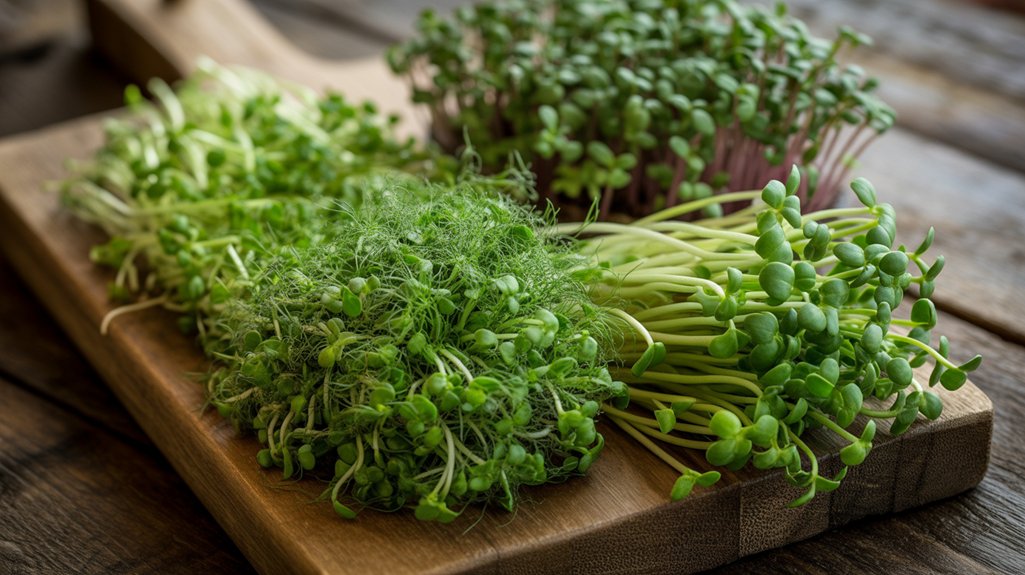
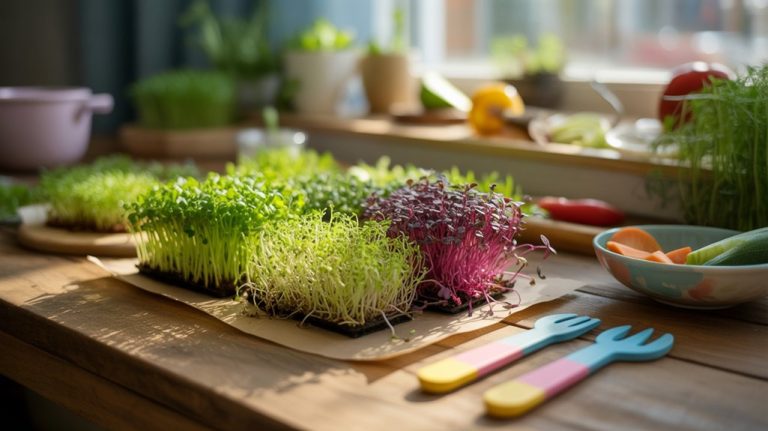
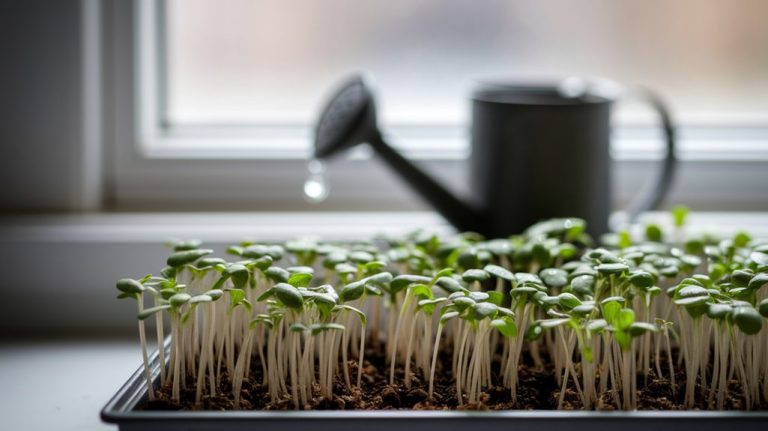
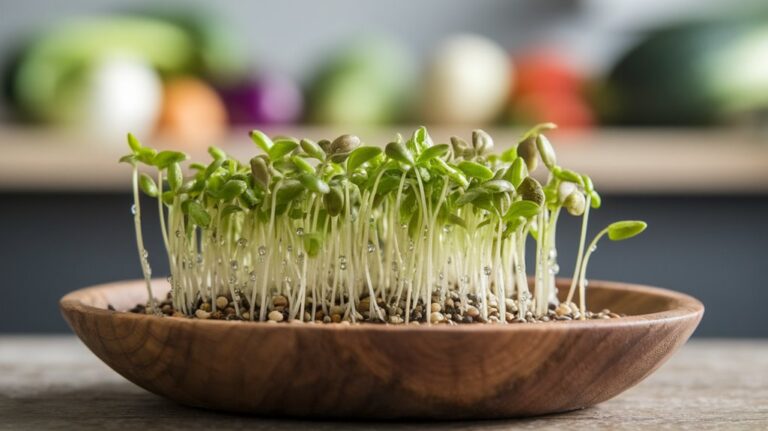
Microgreens are vibrant, nutrient-dense young plants harvested just after the first true leaves emerge. I love growing them because they’re easy and quick to cultivate.
Typically, I start with seeds like arugula, radish, or basil, which I sow in shallow trays filled with soil. Within 7 to 21 days, depending on the variety, I see them sprouting lush greens.
Their growth process involves a crucial phase where they absorb light, water, and nutrients, which enhances their flavor and nutritional profile. Research shows that microgreens can contain higher concentrations of vitamins and antioxidants than their mature counterparts.
Incorporating them into my meals not only boosts the visual appeal but also adds a nutritional punch that I find hard to resist.
Exploring Sprouts: Definition and Growth Process
While both sprouts and microgreens are nutritious additions to meals, sprouts have a unique growth process that sets them apart.
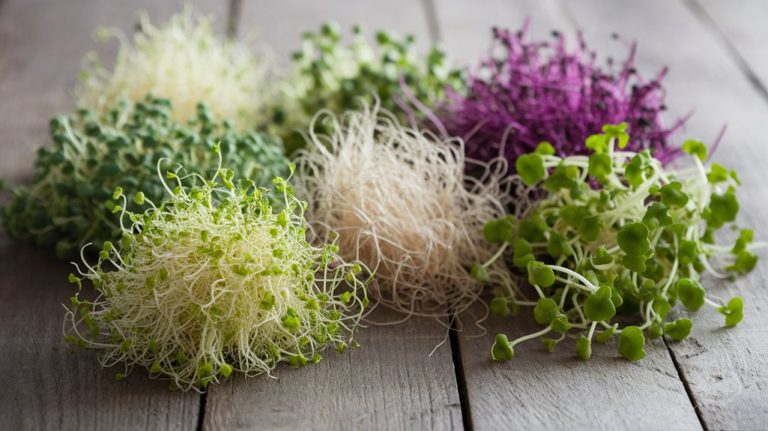
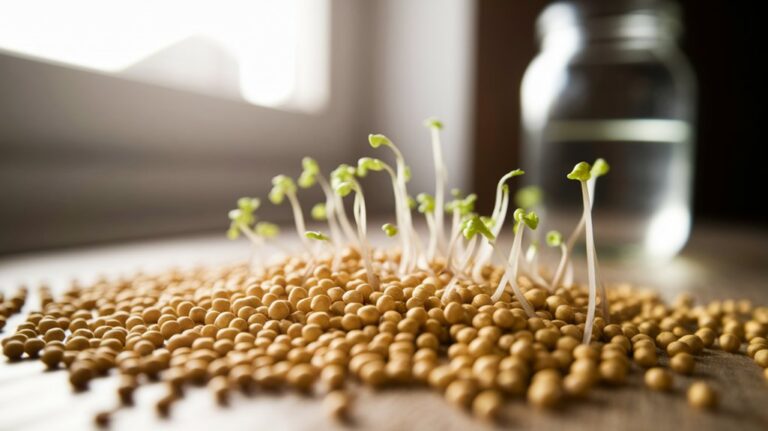
Sprouts are germinated seeds that typically grow for just a few days in a moist environment, usually without soil. I soak the seeds, like alfalfa or broccoli, in water for several hours, then rinse and drain them.
Over the next few days, I keep them in a jar or sprouting tray, ensuring they stay moist and well-aerated. Within a short time, tiny shoots emerge, ready to be harvested.
This quick process allows me to enjoy fresh, crunchy sprouts that add texture and flavor to salads, sandwiches, and smoothies. Their simplicity and speed make them an accessible option for any kitchen.
Nutritional Profiles: Microgreens vs. Sprouts
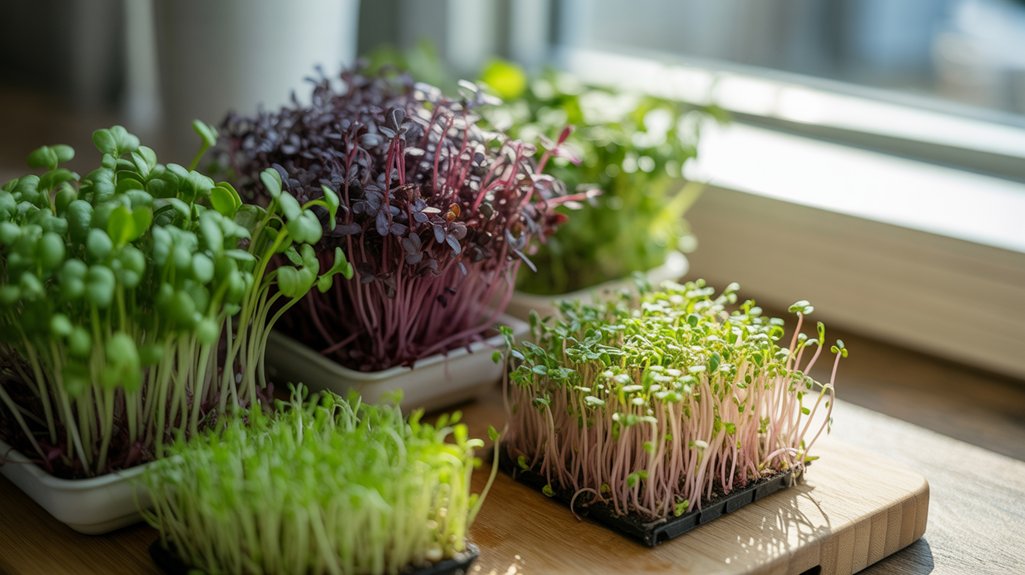
When comparing the nutritional profiles of microgreens and sprouts, I find it fascinating how their vitamin content varies significantly.
Microgreens often pack more vitamins and antioxidants than their sprouted counterparts.
Let’s explore these differences to see how each can contribute to our diets.
Vitamin Content Comparison
Although both microgreens and sprouts pack a nutritional punch, their vitamin content can vary significantly.
I’ve found that microgreens often contain higher concentrations of vitamins than sprouts. For instance, microgreens like kale and radish can boast up to six times more vitamin C and vitamin E than their sprouted counterparts.
Meanwhile, sprouts typically offer a good dose of B vitamins, which are essential for energy production. However, because microgreens are harvested later in the growth cycle, they develop more robust nutrient profiles.
This means when I choose microgreens, I’m often getting a richer supply of vitamins overall. Ultimately, both are nutritious options, but if you’re looking for a vitamin boost, microgreens may be the way to go.
Antioxidant Levels Analysis
Antioxidants play a crucial role in protecting our bodies from oxidative stress, and when I compare microgreens and sprouts, the differences in their antioxidant levels become clear.
Microgreens, often harvested at the cotyledon stage, tend to have significantly higher concentrations of antioxidants like vitamins C and E, as well as various phytochemicals. For instance, studies show that certain microgreens can contain up to 40 times more nutrients than their mature counterparts.
In contrast, sprouts, while still nutritious, generally offer lower antioxidant levels due to their younger developmental stage. This difference is essential to consider if you’re looking to maximize your antioxidant intake for better health.
Ultimately, incorporating both can provide a well-rounded nutritional boost, but microgreens often lead the way in antioxidant content.
Culinary Uses: How to Incorporate Microgreens and Sprouts
When I think about incorporating microgreens and sprouts into my meals, I see endless possibilities.
Microgreens add a gourmet touch to dishes, enhancing both flavor and presentation, while sprouts bring a refreshing crunch to smoothies and salads.
Let’s explore how to make the most of these nutritious additions in our everyday cooking.
Microgreens in Gourmet Dishes
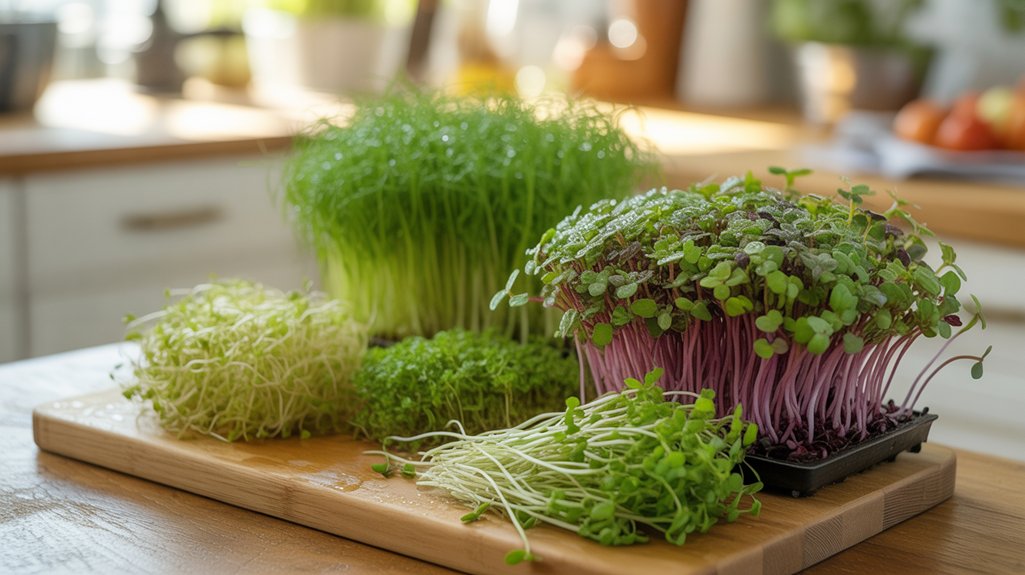
Microgreens can elevate gourmet dishes in ways that larger greens simply can’t, adding both visual appeal and intense flavor. When I sprinkle a handful of microgreens over a plate, it transforms the presentation instantly. Their vibrant colors and delicate textures catch the eye, making any dish look like a work of art.
I particularly love using varieties like arugula or radish microgreens to introduce a peppery kick that enhances the overall taste. They’re perfect for garnishing soups, salads, and even main courses.
Plus, microgreens are packed with nutrients, so I feel good knowing I’m incorporating health benefits into my meals. If you haven’t experimented with them yet, give it a try; you’ll be amazed at the difference they make!
Sprouts in Smoothies and Salads
How can you boost the nutritional profile of your smoothies and salads? One simple way is to add sprouts. These tiny powerhouses, like alfalfa, broccoli, and radish sprouts, are packed with vitamins, minerals, and antioxidants.
I love tossing a handful of alfalfa sprouts into my morning smoothie for an extra crunch and a dose of fiber. They blend seamlessly and enhance the nutritional value without overpowering the flavor.
In salads, I often sprinkle sunflower or pea sprouts on top. They not only add a delightful texture but also provide healthy fats and protein.
Incorporating sprouts into your meals is an easy way to elevate your diet and enjoy the myriad health benefits they offer. Give it a try!
Health Benefits of Microgreens
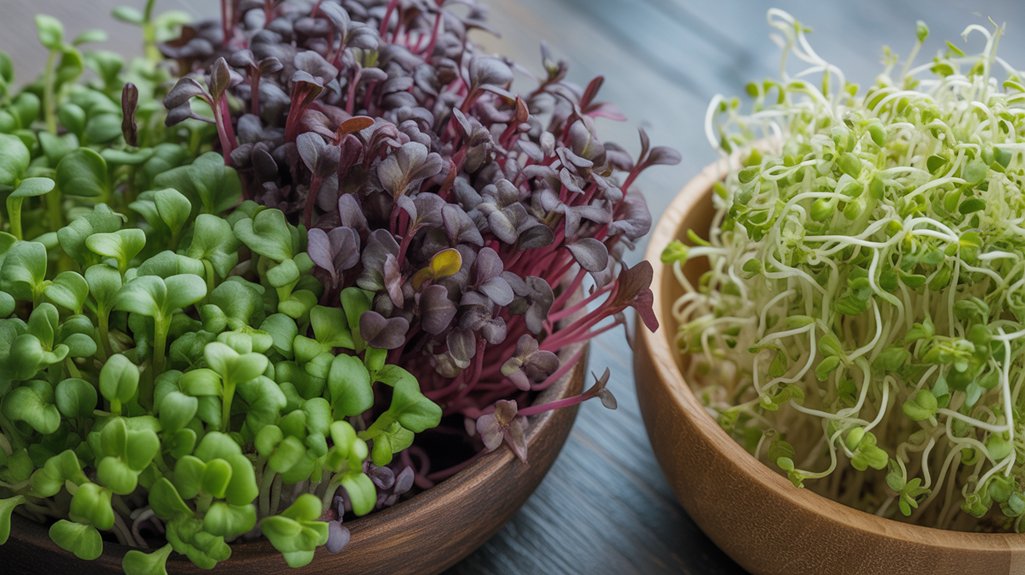
Although many people may overlook them, microgreens pack a powerful nutritional punch. These tiny greens are not only bursting with flavor but also rich in vitamins, minerals, and antioxidants. I’ve found that incorporating microgreens into my meals enhances both taste and nutrition.
Here’s a quick comparison of some popular microgreens and their benefits:
| Microgreen | Nutritional Benefit | Flavor Profile |
|---|---|---|
| Broccoli | High in sulforaphane | Mild, peppery |
| Radish | Rich in vitamin C | Spicy, zesty |
| Beet | Packed with folate | Earthy, sweet |
| Pea Shoots | Contains protein | Sweet, fresh |
Including microgreens in my diet has truly elevated my eating experience while supporting overall health. Give them a try; you won’t regret it!
Health Benefits of Sprouts
While many mightn’t realize it, sprouts offer a host of health benefits that can enhance your diet. These tiny powerhouses are rich in vitamins, minerals, and antioxidants, which can boost your immune system and improve overall health.
For instance, alfalfa sprouts are high in vitamin K, supporting bone health, while broccoli sprouts contain sulforaphane, known for its cancer-fighting properties. I’ve also found that including sprouts in meals promotes better digestion due to their high fiber content.
Plus, they’re low in calories, making them a perfect addition to weight management plans. By incorporating sprouts into your salads, sandwiches, or smoothies, you can easily elevate your nutritional intake and enjoy a delicious, crunchy texture.
Environmental Impact: Growing Microgreens vs. Sprouts
In exploring the health benefits of sprouts, it’s important to consider their environmental impact compared to microgreens.
I’ve found that microgreens generally require more resources like soil, water, and light for growth. However, they usually yield a higher crop density, making them efficient for small spaces.
On the other hand, sprouts are typically grown in water and can thrive in minimal light, often needing just a jar or a tray. This makes them incredibly resource-efficient.
Both methods have low carbon footprints, but sprouts tend to use fewer inputs overall.
Ultimately, if you’re looking for a more sustainable option, sprouts might be the way to go, but microgreens still offer impressive benefits in terms of yield and versatility.
Choosing the Right Option for Your Diet
When I consider my dietary choices, the decision between microgreens and sprouts becomes quite important. Both options are nutrient-dense, but they serve different purposes in my meals.
Microgreens, often harvested at a slightly later stage, tend to have more concentrated vitamins and minerals, making them great for salads and garnishes. On the other hand, sprouts are typically eaten raw and have a crunchy texture, which adds variety to sandwiches and smoothies.
I find that incorporating both into my diet maximizes nutritional benefits. If I’m looking for a rich source of antioxidants, I lean towards microgreens. However, for digestive health and added fiber, I reach for sprouts.
Ultimately, balancing both can enhance my overall nutrition.
Frequently Asked Questions
Can Microgreens and Sprouts Be Grown Indoors?
Absolutely, I’ve grown both microgreens and sprouts indoors!
They thrive in small spaces and require minimal equipment. Microgreens need soil and light, while sprouts can simply be grown in jars with water.
I’ve had great success with both, enjoying fresh greens year-round. Just make sure to keep them moist and provide adequate light for microgreens.
It’s a fun way to add freshness to my meals right from home!
Are There Any Safety Concerns With Eating Sprouts?
Yes, there are safety concerns with eating sprouts. I’ve learned that sprouts can harbor harmful bacteria like E. coli and Salmonella due to their warm, moist growing conditions.
To minimize risks, I always rinse my sprouts thoroughly and consider buying pre-packaged ones, which are often tested for safety.
If I grow my own, I ensure I use clean seeds and maintain good hygiene throughout the process to keep my meals safe and healthy.
How Long Do Microgreens and Sprouts Typically Last?
Microgreens typically last about 7 to 14 days when stored properly in the fridge, while sprouts can last around 3 to 7 days.
I find that keeping them in a breathable container helps maintain their freshness.
Always check for any signs of spoilage, like an off smell or slimy texture.
Using them promptly ensures I get the most nutrients and flavor, making my meals not just healthier, but also tastier!
Can You Grow Microgreens and Sprouts Together?
Yes, I can grow microgreens and sprouts together!
I’ve found that it’s possible to use separate trays to avoid cross-contamination while still maximizing your growing space. Microgreens typically need more light and can take longer to grow compared to sprouts, which just need moisture and warmth.
By staggering their planting times, I’ve managed to enjoy both delicious and nutritious additions to my meals without any hassle.
Give it a try!
Do Microgreens and Sprouts Require Special Lighting Conditions?
Microgreens and sprouts don’t require special lighting conditions, but the right light can enhance growth. I’ve found that bright, indirect sunlight works well for both.
If you’re growing indoors, using a grow light can help ensure they get enough exposure. For microgreens, about 12-16 hours of light a day promotes healthy growth, while sprouts mainly need a warm, dark environment until they’re ready to harvest.
Just pay attention to their needs!
Conclusion
In comparing microgreens and sprouts, both offer unique nutritional benefits and flavors that can enhance your meals. While microgreens tend to pack more vitamins and minerals, sprouts are easier to grow and can be enjoyed in various dishes. Ultimately, the choice depends on your dietary needs and culinary preferences. By incorporating both into your diet, you can enjoy a diverse range of nutrients and flavors, supporting your health and adding excitement to your meals.