Boost Your Salads: Flavor Combos Using Mustard, Sunflower, and Radish Microgreens
If you’re looking to boost your salads, I recommend using mustard, sunflower, and radish microgreens. Mustard microgreens add a spicy kick, while sunflower microgreens contribute a nutty crunch. Radish microgreens bring a crisp, peppery flavor that elevates the dish. Try combining all three for a vibrant mix of flavors and textures. Don’t forget to experiment with dressings that complement these greens—there are plenty of creative combinations waiting to be explored.
Key Takeaways
- Combine mustard microgreens with creamy dressings for a spicy kick in your salads.
- Use sunflower microgreens to add a nutty crunch alongside roasted vegetables.
- Radish microgreens enhance salads with a peppery flavor and vibrant color.
- Mix all three microgreens for a diverse texture and flavor profile in your salad.
- Pair microgreens with fresh herbs and citrus for a refreshing, flavorful twist.
The Unique Flavors of Mustard Microgreens
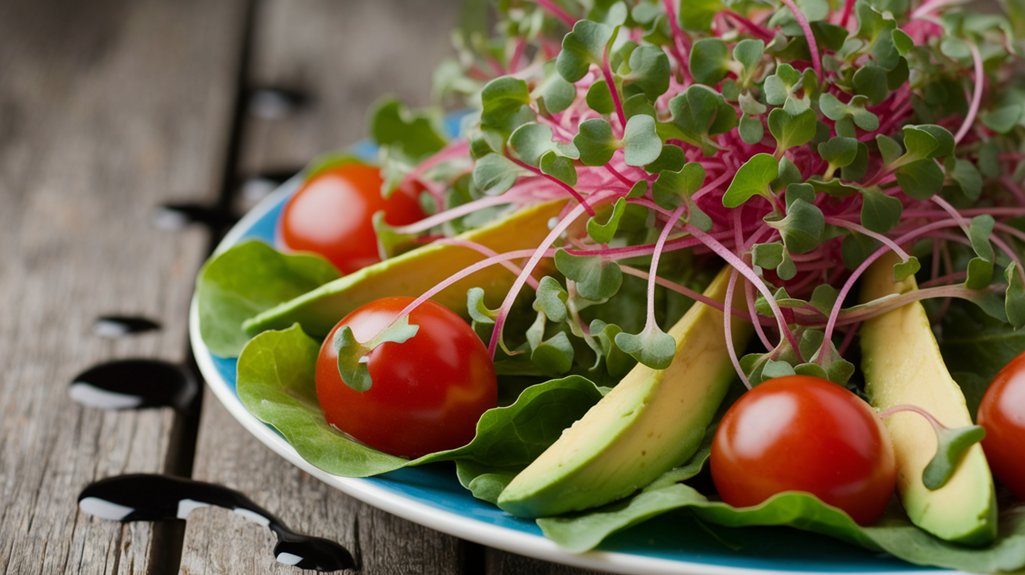
When I first tasted mustard microgreens, I was pleasantly surprised by their bold, peppery flavor, which adds a delightful kick to various dishes.
These tiny greens pack a punch, making them perfect for elevating salads and sandwiches. I love tossing a handful into my leafy greens for extra zest or layering them on a gourmet grilled cheese.
Their vibrant green color also enhances the visual appeal of my meals. Plus, they’re incredibly easy to grow at home, so I often have a fresh supply on hand.
If you’re looking to boost your dishes with a spicy twist, mustard microgreens are a fantastic choice. Trust me, once you try them, you’ll be hooked on their unique flavor.
Sunflower Microgreens: A Nutty Delight
Although I didn’t expect sunflower microgreens to captivate my taste buds, their nutty flavor quickly won me over.
These vibrant greens add a delightful crunch to my salads, making every bite exciting. I love how their earthy, slightly sweet notes pair beautifully with vinaigrettes or creamy dressings. When I toss them into salads, they elevate the whole dish, providing a fresh contrast to other ingredients.
I often combine sunflower microgreens with roasted vegetables or grains for a satisfying texture. They also work wonders sprinkled on sandwiches or wraps.
Whether you’re a seasoned chef or a home cook, incorporating sunflower microgreens into your meals brings a healthful boost and a unique flavor profile that’s hard to resist. Give them a try!
The Crisp and Spicy Notes of Radish Microgreens
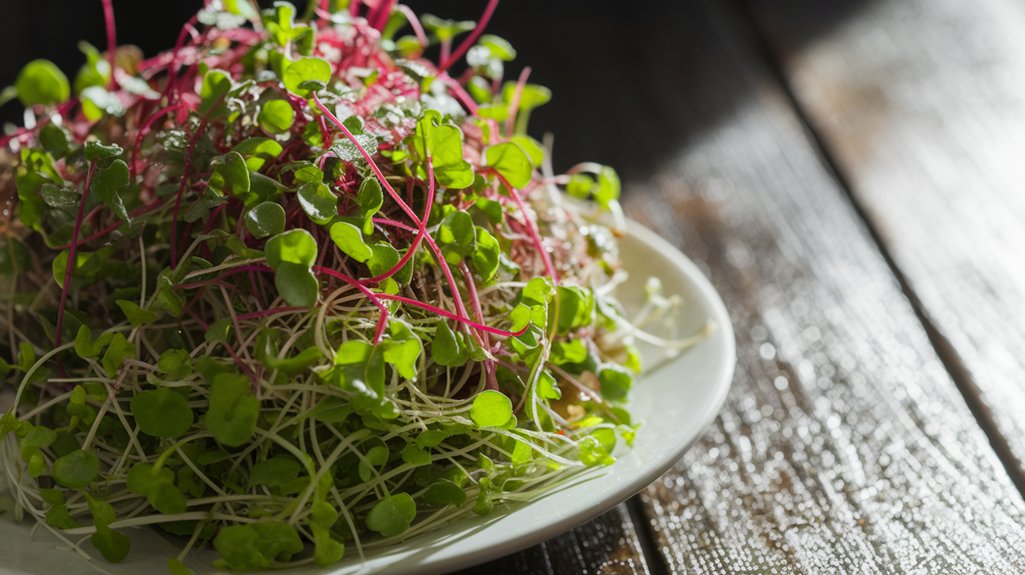
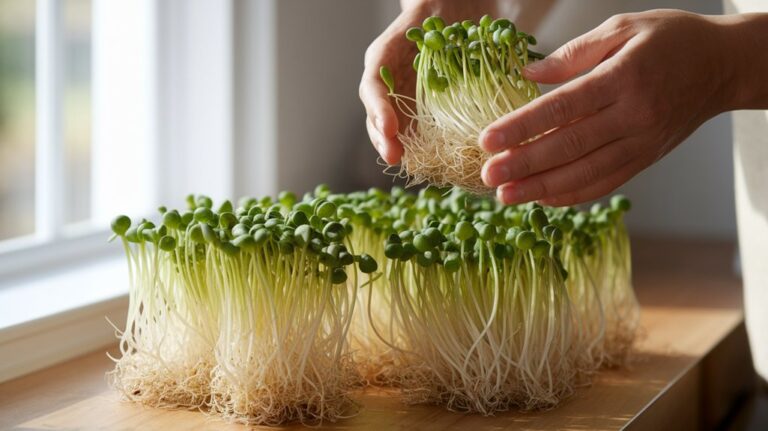
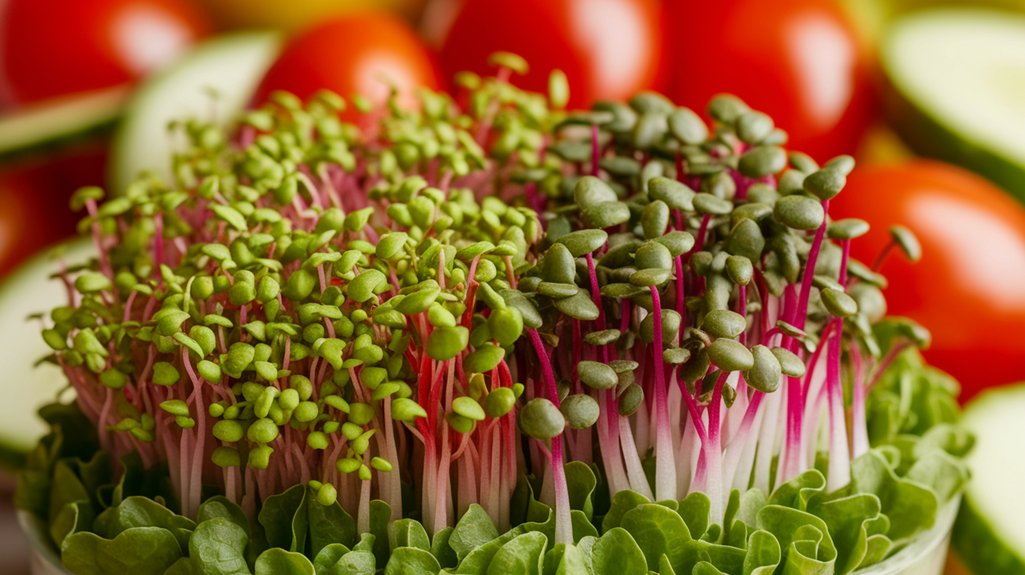
As I explore the world of microgreens, radish microgreens stand out with their crisp texture and spicy kick. These tiny greens pack a big punch, making them a fantastic addition to any salad. Their peppery flavor complements a variety of ingredients, enhancing dishes with just a sprinkle.
I love how their vibrant green color and delicate leaves add visual appeal as well.
Radish microgreens aren’t just flavorful; they’re also packed with nutrients, offering vitamins A, C, and E, along with antioxidants. When I toss them into my salads, I’m not only boosting taste but also health benefits.
If you’re looking to elevate your meals, give radish microgreens a try. You’ll appreciate their bold presence in your culinary creations!
Creative Salad Combinations Featuring Mustard, Sunflower, and Radish Microgreens
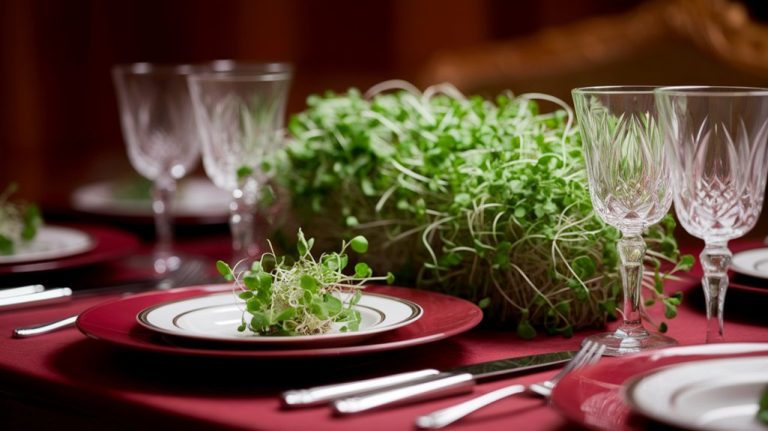
While exploring new salad ideas, I’ve discovered that combining mustard, sunflower, and radish microgreens creates an explosion of flavor and texture that elevates any dish.
For a refreshing option, I toss together mixed greens, sliced cucumbers, and cherry tomatoes, then top it with a generous handful of mustard microgreens. The peppery kick adds excitement!
Another favorite is a hearty grain salad; I mix quinoa, roasted sweet potatoes, and black beans, then finish it with sunflower microgreens for a nutty crunch.
Lastly, I love a vibrant slaw made with shredded cabbage, carrots, and radish microgreens, drizzled with a tangy vinaigrette.
These combinations not only look beautiful but also bring a nutritious boost to my meals. Give them a try!
Tips for Growing and Harvesting Your Own Microgreens
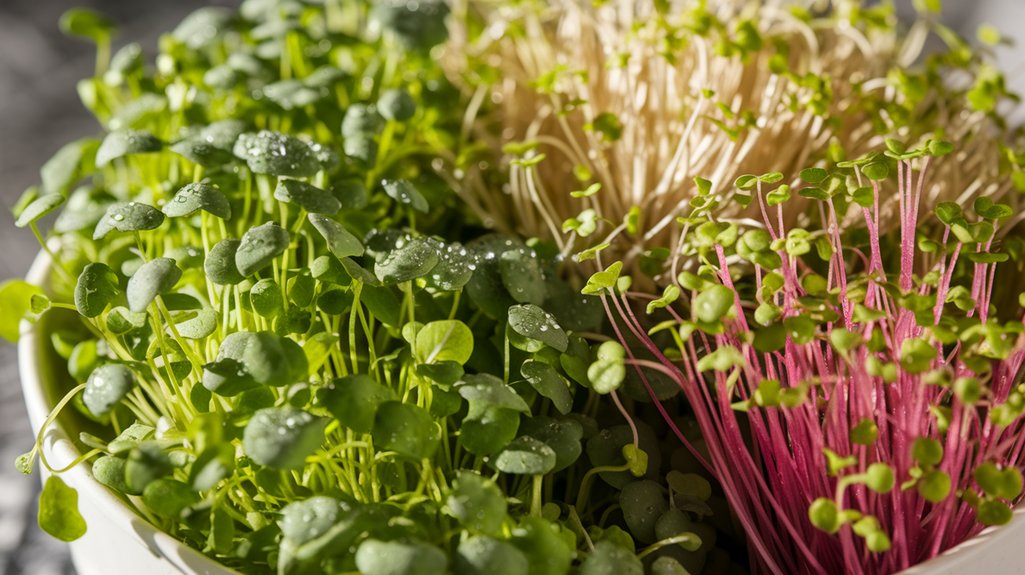
If you’re inspired by the vibrant flavors of mustard, sunflower, and radish microgreens in your salads, why not try growing your own? It’s easier than you might think!
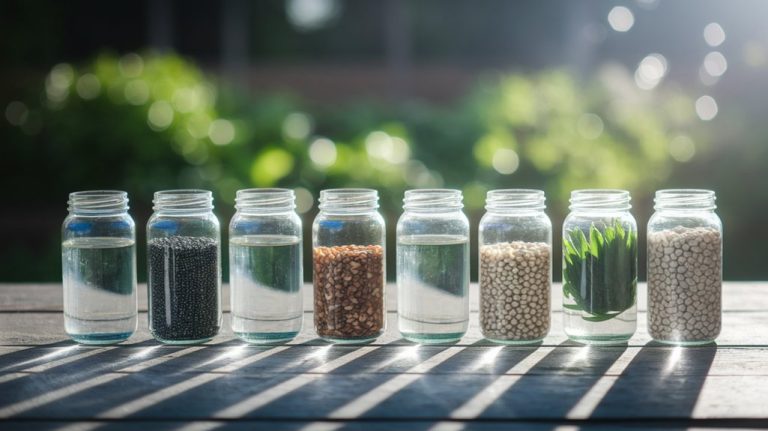
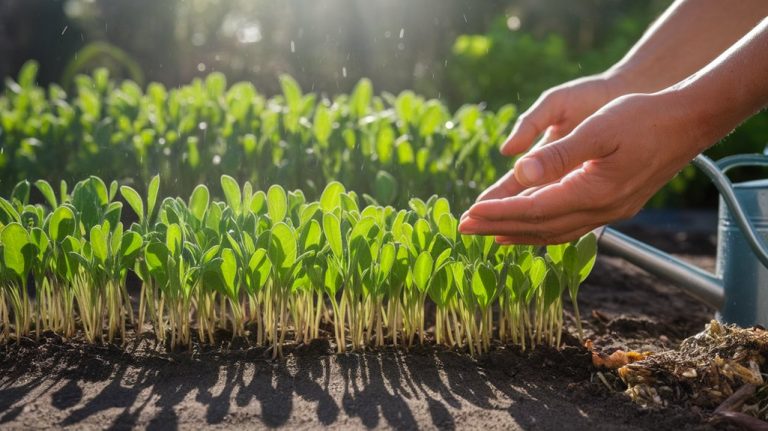
Start by selecting quality seeds and a shallow tray filled with potting soil. Lightly sprinkle the seeds, cover them with a thin layer of soil, and mist them with water.
Keep your tray in a warm, sunny spot, or use a grow light. In about 7-14 days, you’ll see sprouts peeking through!
When they reach about two inches tall, it’s time to harvest. Use scissors to cut them just above the soil. Rinse, dry, and enjoy the fresh, peppery crunch in your dishes!
Happy growing!
Frequently Asked Questions
Can I Use Microgreens in Smoothies or Juices?
Absolutely, you can use microgreens in smoothies or juices! I often toss a handful of them into my morning blend.
They add a fresh, vibrant flavor and pack a nutritional punch. Microgreens like spinach or kale are especially great for their mild taste.
Just remember to balance them with fruits like bananas or berries to enhance the flavor.
It’s a simple way to boost your smoothie’s health benefits while keeping it delicious!
How Long Do Microgreens Last After Harvesting?
After harvesting, microgreens typically last about 5 to 14 days if stored properly.
I always keep mine in a sealed container in the fridge to maintain freshness.
The key is to avoid excess moisture, which can lead to spoilage.
I check them daily, and if I see any signs of wilting or yellowing, I use them up right away.
Trust me, enjoying them at their peak flavor is worth it!
Are There Any Health Benefits to Eating Microgreens?
Absolutely, I’ve found that eating microgreens offers several health benefits. They’re packed with vitamins, minerals, and antioxidants, often containing higher nutrient levels than mature greens.
Incorporating them into my meals not only adds flavor but also boosts my overall nutrition. They can support heart health, improve digestion, and even enhance immune function.
What Soil Is Best for Growing Microgreens?
When I started growing microgreens, I learned that the best soil is lightweight and well-draining.
I’ve found that a mix of potting soil and coconut coir works wonders. This blend retains moisture without becoming waterlogged, which is crucial for healthy growth.
I also make sure to add some compost for nutrients.
Trust me, using the right soil makes a significant difference in the flavor and vitality of the microgreens you’ll harvest!
Can Microgreens Be Grown Indoors Year-Round?
Absolutely, I’ve grown microgreens indoors year-round with great success!
It’s all about creating the right environment. I use a sunny windowsill or grow lights to provide adequate light. Keeping the temperature between 60-75°F works wonders, too.
I’ve found that using quality soil and proper drainage makes a big difference. Plus, it’s incredibly satisfying to have fresh greens available anytime I want to spruce up my meals!
Conclusion
Incorporating mustard, sunflower, and radish microgreens into your salads not only elevates their flavor but also boosts their nutritional value. I encourage you to experiment with these vibrant greens and discover your favorite combinations. Whether you’re enjoying a nutty sunflower crunch or the peppery kick of radish, these microgreens bring excitement to every bite. Plus, growing them at home is easier than you think! So, why not start your microgreen journey today? Your taste buds will thank you!