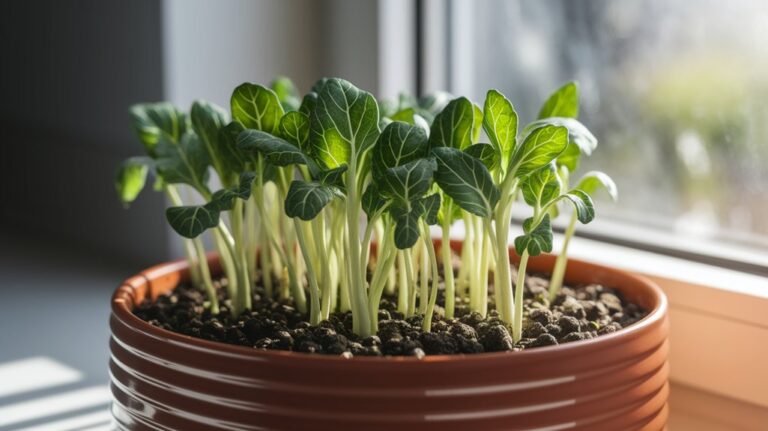
From Sprout to Meal: Creating Artful Dishes With Greens
Fresh greens bring vibrancy to my meals, transforming each dish into a colorful masterpiece. I love how a sprinkle of herbs or a drizzle of dressing can elevate their natural flavors. Using creative plating techniques, I arrange them playfully, making sure to highlight their textures. Whether I sauté them for a warm side or toss them in a fresh salad, greens are essential for both nutrition and visual appeal. Let’s explore even more ideas to make these greens shine!
Key Takeaways
- Start with fresh greens like spinach, arugula, and kale for vibrant flavors and essential nutrients in your dishes.
- Use contrasting plate colors and playful arrangements to create visually appealing presentations that highlight the greens.
- Enhance greens with flavor pairings like herbs, spices, and proteins to elevate their natural taste and create balanced meals.
- Employ cooking methods like steaming and sautéing to preserve color and nutrients while adding depth to the greens’ flavor.
- Experiment with creative salad compositions, layering ingredients and incorporating unique elements like edible flowers or toasted nuts for added texture.
The Importance of Fresh Greens in Culinary Creations
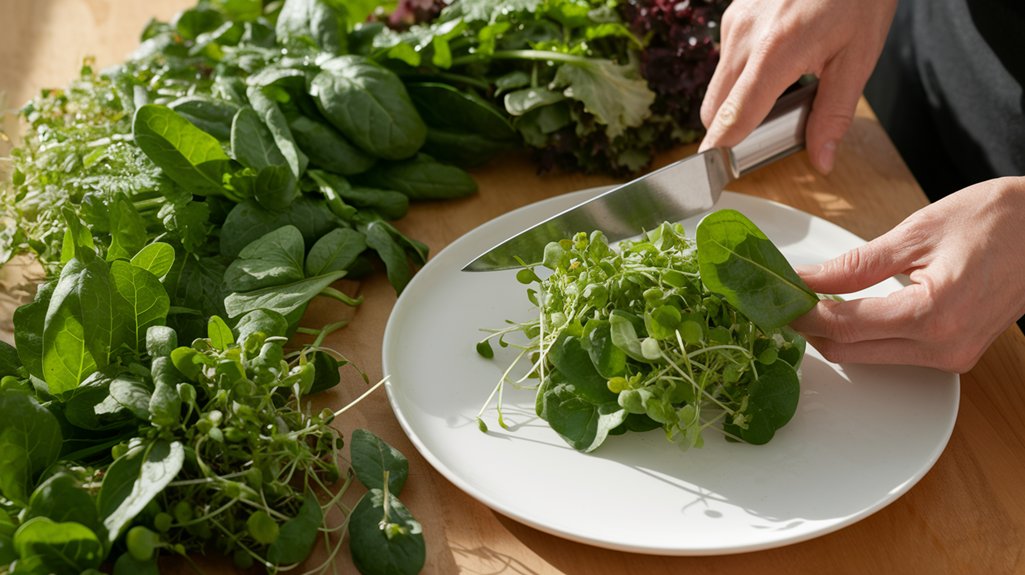
When I step into the kitchen, the vibrant colors and fresh scents of greens always inspire me to create something special.
Fresh greens are the heartbeat of my culinary creations, adding not just flavor but also a burst of nutrition. Whether it’s crisp spinach, peppery arugula, or earthy kale, each variety brings its own unique character to the dish.
I love how these greens can transform a simple meal into a vibrant feast. They’re packed with vitamins and minerals, making them essential for a balanced diet.
Plus, the crunch and freshness elevate the texture, making every bite a delight. When I cook with fresh greens, I’m not just preparing food; I’m crafting an experience that nourishes both body and soul.
Plating Techniques to Elevate Your Greens
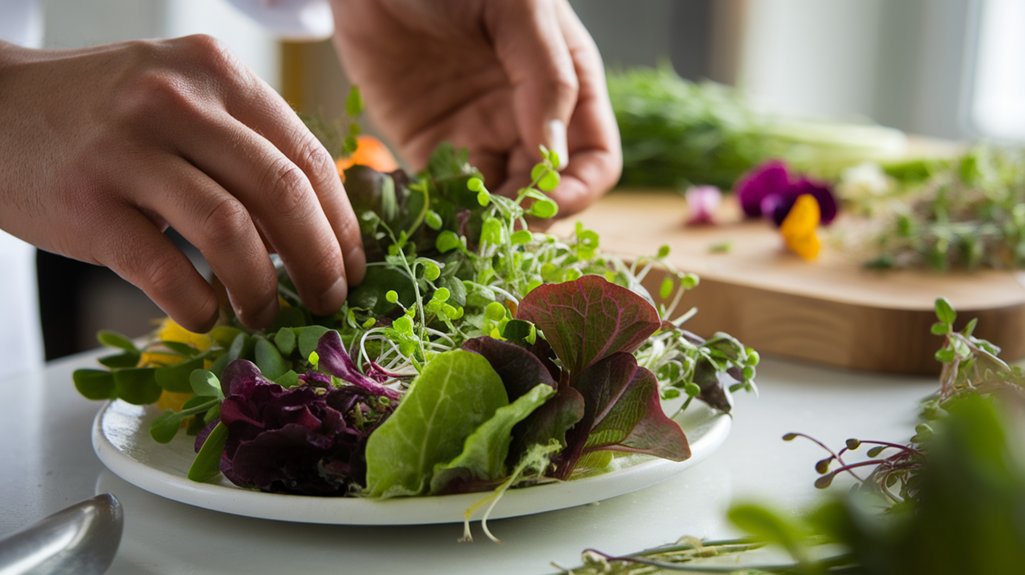
The art of plating can transform a dish filled with greens into a stunning visual masterpiece.
I love to start by choosing a contrasting plate color; a dark slate or vibrant white makes greens pop beautifully. Next, I arrange the greens in a playful, yet deliberate, manner—think of height and texture. A tuft of arugula perched atop a bed of wilted spinach adds dimension.
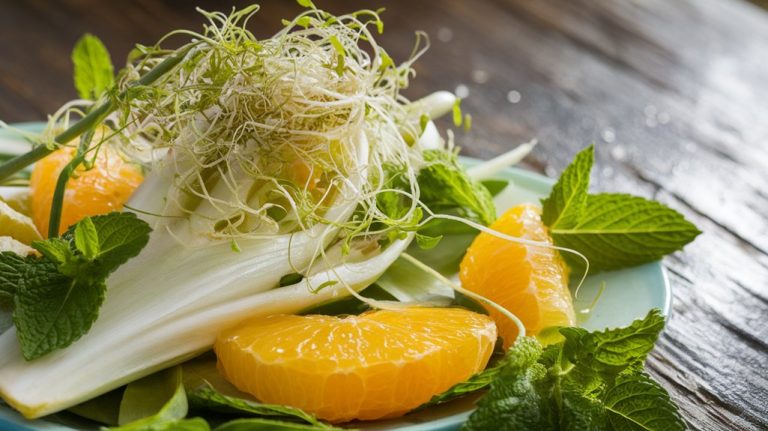
Drizzling a vibrant dressing creates a striking finish, while edible flowers or microgreens can provide delightful pops of color. Finally, don’t forget to consider negative space; leaving some areas empty can highlight your greens even more.
Flavor Pairing: Complementing Greens With Other Ingredients
When it comes to enhancing the flavor of greens, the right herbs and spices can truly elevate your dish.
I love experimenting with combinations like basil and lemon zest or cumin and cilantro to bring out their natural vibrancy.
Pairing greens with proteins like grilled chicken or chickpeas not only adds heartiness but also creates a delightful balance of textures and flavors.
Herb and Spice Combinations
Although we often focus on the greens themselves, herb and spice combinations can elevate a dish to new heights, creating a harmonious blend of flavors.
For instance, pairing basil with spinach brings a fresh, aromatic lift, while the warmth of cumin and coriander enhances kale’s earthiness.
If you’re working with arugula, try a sprinkle of lemon zest and a dash of chili flakes to complement its peppery bite.
Don’t forget about thyme and rosemary; they add depth to sautéed greens, making them irresistible.
Experimenting with different combinations not only enhances the taste but also adds a delightful aroma to your kitchen.
Protein Pairing Ideas
Building on the vibrant flavors brought forth by herbs and spices, let’s explore how protein can further enhance our greens.
Imagine a bed of peppery arugula topped with grilled chicken, its smoky char perfectly complementing the greens’ bite.
For a heartier option, I love pairing sautéed kale with crispy chickpeas; the crunch and protein balance the leafy texture beautifully.
If you’re in the mood for something lighter, try a refreshing spinach salad with poached salmon, the fish’s richness melding seamlessly with the greens’ freshness.
And don’t overlook the classic pairing of quinoa with roasted Brussels sprouts—each grain bursting with protein, enhancing the nuttiness of the sprouts.
These combinations create a symphony of flavors that elevate any dish.
Cooking Methods That Enhance the Natural Flavor of Greens
When it comes to cooking greens, I’ve found that steaming and sautéing are two of the best methods to enhance their natural flavors.
Steaming gently softens the leaves while preserving their vibrant color and nutrients, creating a tender balance.
On the other hand, sautéing with a splash of olive oil or garlic can really elevate their taste, adding a delicious depth that transforms the dish.
Steaming for Tender Balance
Steaming greens not only preserves their vibrant colors but also enhances their natural flavor, making them a staple in my kitchen.
When I steam my leafy favorites—spinach, kale, or Swiss chard—they become tender yet retain a satisfying crunch. The process is simple: I fill a pot with just a bit of water, bring it to a boil, and place the greens in a steamer basket.
Within minutes, they transform into a bright, flavorful side that pairs beautifully with any dish. I love how steaming keeps their nutrients intact, too. A drizzle of lemon juice or a sprinkle of sea salt after steaming elevates their taste, allowing the greens to shine on my plate.
It’s effortless and delicious!
Sautéing With Flavor Boost
After enjoying the tender crunch of steamed greens, I often turn to sautéing as another favorite method to bring out their vibrant flavors.
Sautéing not only enhances the natural taste but also adds a delightful texture. Here’s how I do it:
- Choose the Right Oil: Olive oil or sesame oil infuses unique flavors.
- Add Aromatics: Garlic and onion create a fragrant base that elevates the greens.
- Cook Quickly: High heat and quick cooking retain nutrients and color.
- Finish With Acidity: A splash of lemon juice or vinegar brightens the dish.
With these steps, I transform simple greens into a flavorful masterpiece that complements any meal!
It’s an artful way to enjoy the health benefits while savoring bold tastes.
Creative Salad Compositions: Beyond the Bowl
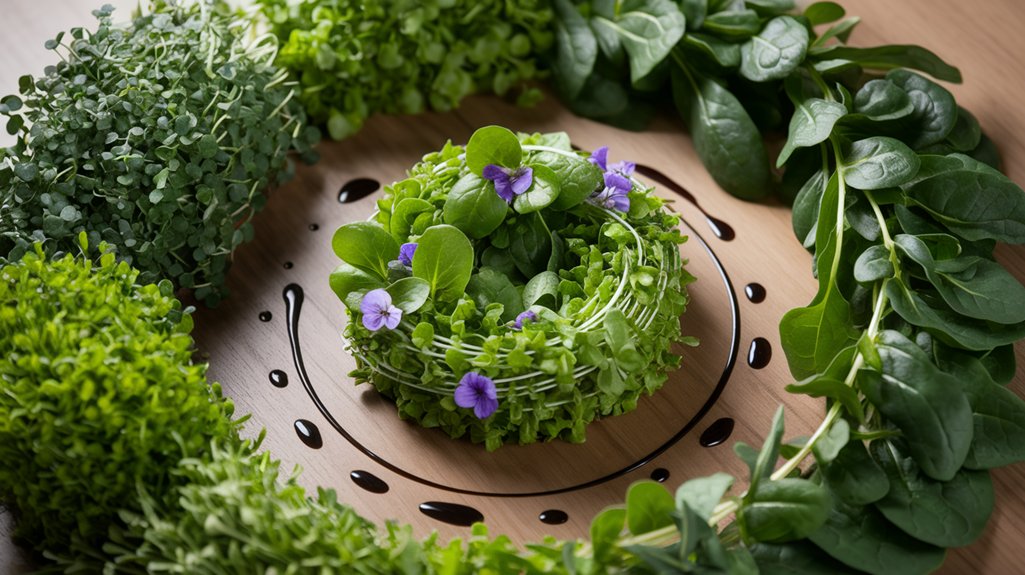
While salads often conjure images of simple bowls brimming with greens, I can’t help but think about the endless possibilities that lie beyond the conventional presentation.
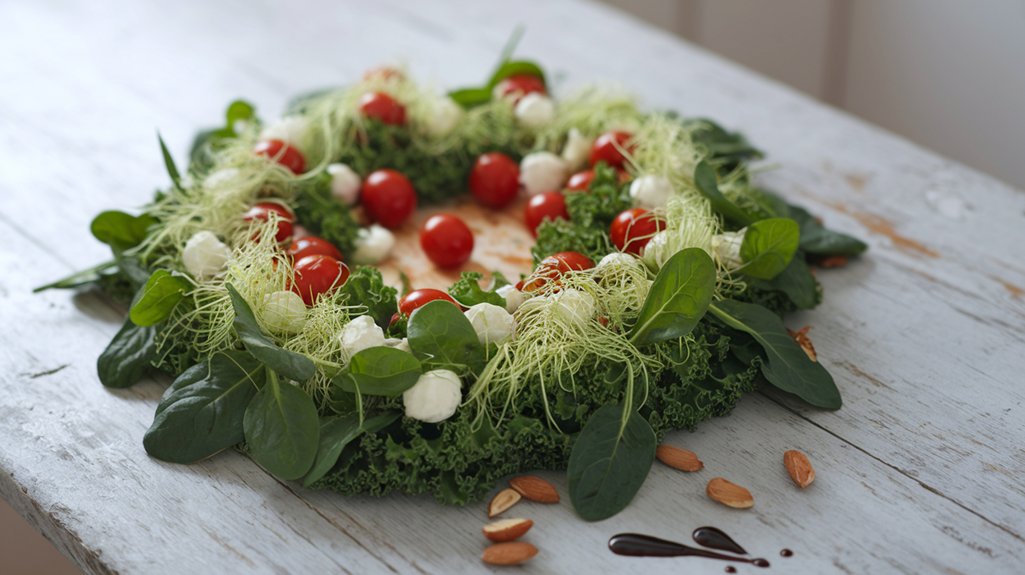
I love transforming salads into vibrant platters, artfully arranging ingredients like a painter with a canvas. Think vertical layers of crunchy vegetables, drizzled with zesty dressings that cascade down, or elegant stacks of grilled veggies topped with fresh herbs.
I’ve even experimented with jars, layering colorful ingredients for a grab-and-go option that looks stunning. By incorporating unexpected elements, like edible flowers or toasted nuts, I elevate the experience.
Each composition tells a story, inviting diners to explore flavors and textures in a way that a traditional bowl simply can’t capture. Let creativity guide your salad journey!
Showcasing Seasonal Greens: A Farm-to-Table Approach
As I wander through local farmers’ markets, I’m constantly inspired by the vibrant array of seasonal greens that beckon to be showcased in my dishes. Each season offers a unique selection, and I love to highlight their flavors and textures.
Here are four greens I can’t resist:
- Spinach – Tender and versatile, perfect for salads or sautéed with garlic.
- Kale – Robust and hearty, ideal for chips or massaged into a salad.
- Arugula – Peppery and bold, it elevates any dish with its bite.
- Swiss Chard – Colorful and slightly sweet, it adds a beautiful touch to pastas.
Frequently Asked Questions
What Are the Best Greens for Beginners to Grow at Home?
When I started growing greens at home, I found that spinach, lettuce, and kale were the easiest and most rewarding.
They sprout quickly and thrive in various conditions, which made my experience enjoyable. I loved the taste of fresh, homegrown greens in my salads!
Plus, they’re low-maintenance, perfect for beginners like me. If you’re thinking about starting your own garden, I highly recommend these greens. You won’t regret it!
How Can I Store Fresh Greens for Longer Shelf Life?
To store fresh greens for longer shelf life, I always wash them gently and spin them dry.
Then, I wrap them in a damp paper towel and place them in a perforated plastic bag. This keeps moisture in while allowing airflow.
I also make sure to store them in the crisper drawer of my fridge.
This method can keep my greens fresh for up to a week, ensuring I enjoy them longer!
Are There Any Health Benefits to Eating Greens Daily?
Absolutely, eating greens daily has incredible health benefits!
I’ve noticed that incorporating a variety of leafy greens into my meals boosts my energy levels and keeps my digestion smooth. They’re packed with vitamins, minerals, and antioxidants, which help strengthen my immune system.
Plus, they’re low in calories, making them perfect for maintaining a healthy weight. I can honestly say that my overall well-being has improved since I made greens a daily staple!
What Tools Do I Need for Preparing Greens Effectively?
When I’m prepping greens, I always grab a sharp chef’s knife for clean cuts, and a sturdy cutting board to keep things steady.
A salad spinner is essential for washing and drying them quickly, while a good peeler helps with any tough stems.
I also love using kitchen scissors for snipping herbs or delicate greens.
With these tools, I can efficiently transform fresh greens into delicious, vibrant dishes that really shine.
How Do I Know When Greens Are Fresh and Ripe?
When I’m picking greens, I look for vibrant colors and crisp textures. Fresh greens should feel firm and have a lively sheen.
I check for any wilting or browning—those are big red flags! I also give them a sniff; they should smell fresh and earthy, not sour.
If the leaves are tightly packed and free from holes, I know I’ve got a great batch ready to enjoy. Trust your senses; they’ll guide you!
Conclusion
As I explore the vibrant world of greens, I realize their transformative potential in every dish. By mastering plating techniques, flavor pairings, and creative compositions, I can truly elevate my culinary creations. Embracing seasonal greens not only supports local farmers but also brings freshness to my meals. So, let’s celebrate the journey from sprout to plate, infusing our kitchens with color, taste, and artistry. Together, we can turn humble greens into memorable culinary masterpieces.