How to Sprout Red Cabbage
I sprout red cabbage by selecting high-quality, organic seeds and preparing a clean glass jar with a breathable lid. I soak the seeds for 8 to 12 hours, then rinse and drain them twice daily to promote healthy growth. I keep an eye on their color, height, and texture, harvesting when they’re 1 to 2 inches tall and vibrant. My careful techniques ensure fresh, flavorful sprouts. Stick around to discover more about the harvesting process!
Key Takeaways
- Select high-quality, organic red cabbage seeds with a germination rate over 90% and no more than a year old.
- Soak seeds in water at 70°F for 8 to 12 hours, then rinse thoroughly under cool water.
- Use a clean glass jar or sprouting tray with a breathable lid for proper airflow and drainage.
- Rinse seeds at least twice daily and maintain consistent moisture for optimal growth conditions.
- Harvest when sprouts are 1 to 2 inches tall, with vibrant purple leaves and firm texture, using sharp scissors.
Choosing the Right Seeds
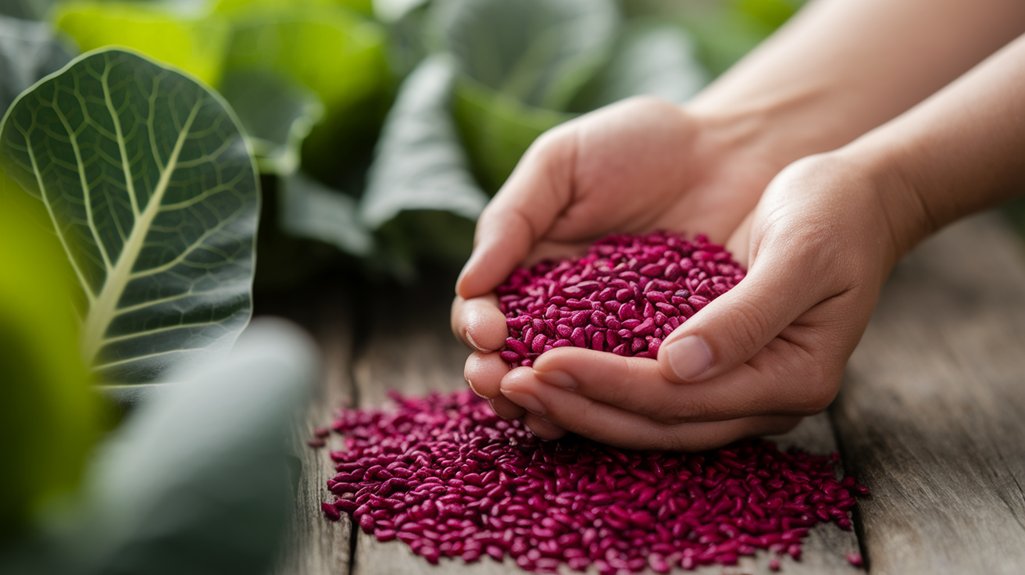
When I choose seeds for sprouting red cabbage, I look for high-quality, organic varieties that are specifically bred for sprouting.
It’s crucial to select seeds that are non-GMO and certified organic to ensure a healthy, chemical-free crop. I prefer varieties with high germination rates, typically over 90%, which I verify through seed suppliers’ information.
Checking for freshness is essential; seeds should be no more than a year old for optimal sprouting. I also examine the seed size and color; uniform, dark seeds often indicate quality.
Lastly, I consider the flavor profile of the sprouts, as certain varieties may have a more robust taste, enhancing my culinary creations. With the right seeds, I set the stage for successful sprouting.
Preparing Your Sprouting Container
A suitable sprouting container is essential for successfully growing red cabbage sprouts. I prefer using glass jars, mesh lids, or dedicated sprouting trays. These options provide adequate airflow and drainage, preventing mold growth.
Here’s a quick overview of the containers I recommend:
| Container Type | Pros | Cons |
|---|---|---|
| Glass Jar | Easy to clean, reusable | Can break easily |
| Mesh Lid | Great airflow | Requires a solid base |
| Sprouting Tray | Designed for sprouts | May be more expensive |
Before I start, I ensure my chosen container is clean and free from residues. This step is crucial, as it promotes a healthy environment for the sprouts to thrive.
Soaking the Seeds
Soaking the seeds is crucial for successful sprouting, as it helps to soften the seed coats and initiates the germination process.
I recommend soaking your red cabbage seeds for about 8 to 12 hours, which provides optimal hydration without risking damage.
It’s best to use water at a temperature of around 70°F (21°C) to encourage uniform swelling and germination.
Importance of Soaking
To achieve optimal germination rates, I always emphasize the importance of soaking red cabbage seeds before planting. Soaking initiates the seed’s metabolic processes, allowing them to absorb water and swell. This activation is crucial, as it signals the seeds to break dormancy and prepares them for sprouting.
Additionally, soaking helps to soften the seed coat, making it easier for the emerging root to penetrate. I’ve noticed that seeds soaked prior to planting typically germinate faster and more uniformly, leading to stronger seedlings.
Recommended Soaking Duration
When it comes to soaking red cabbage seeds, a duration of 8 to 12 hours is usually ideal. This soaking period allows the seeds to absorb enough moisture to kick-start the germination process.
If you soak them for less than 8 hours, they mightn’t fully hydrate, which can hinder sprouting. On the other hand, soaking them for more than 12 hours risks the seeds becoming waterlogged, leading to potential rot.
I recommend monitoring the seeds during soaking; if they appear to swell significantly before the 12-hour mark, it’s safe to move on to the next step.
This careful balance ensures that your seeds are primed for optimal germination, setting the stage for healthy, robust red cabbage plants.
Ideal Water Temperature
The water temperature during seed soaking plays a significant role in enhancing germination rates for red cabbage seeds.
I’ve found that optimal soaking occurs at around 65 to 70 degrees Fahrenheit (18 to 21 degrees Celsius). At this temperature, the seeds absorb water more effectively, promoting enzyme activity and nutrient uptake.
If the water’s too cold, germination could slow down, leading to uneven sprouting. Conversely, water that’s too hot can damage the seeds, causing them to lose viability.
To maintain consistent temperature, I often use a thermometer. Additionally, I recommend soaking the seeds for about 12 to 24 hours in this ideal temperature range.
This simple adjustment can significantly boost your chances of successful germination.
Rinsing and Draining
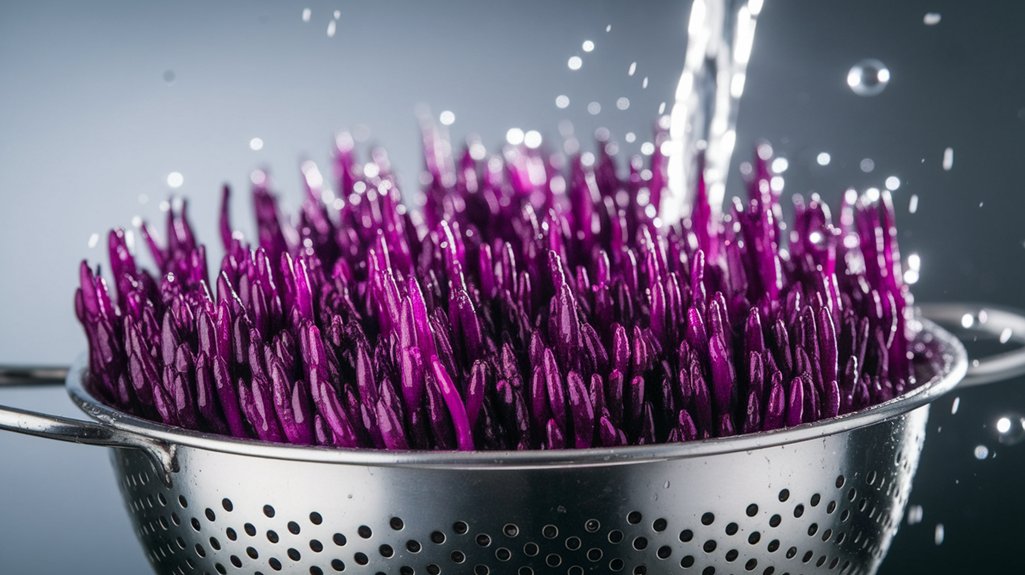
Rinsing your red cabbage seeds is crucial to remove any residue and promote healthy sprouting.
I’ve found that employing effective draining techniques, like using a fine mesh strainer, can prevent excess moisture that might hinder growth.
Timing your rinsing and draining just right ensures optimal conditions for germination, leading to robust sprouts.
Importance of Rinsing
While sprouting red cabbage can be a rewarding endeavor, I can’t emphasize enough the importance of rinsing and draining the seeds properly.
Rinsing helps remove any potential contaminants, such as dust or microbes, that could hinder germination or spoil your sprouts. It also ensures the seeds are adequately hydrated, promoting even swelling and improving sprout quality.
I recommend rinsing your seeds thoroughly under cool, running water for about 30 seconds. This process should be repeated at least twice a day during the sprouting phase to keep the environment moist but not waterlogged.
Effective Draining Techniques
Proper draining techniques are just as vital as rinsing when it comes to sprouting red cabbage. After rinsing your seeds, I find it essential to use a fine mesh strainer or cheesecloth to effectively remove excess water. This prevents the seeds from becoming waterlogged, which can lead to mold growth. I gently shake the strainer to ensure all moisture is expelled.
Next, I place the seeds back into the sprouting jar or container, slightly tilted to promote drainage. This angled position allows any residual water to escape, keeping the seeds drier.
I then cover them with a breathable lid or cloth to maintain airflow while still protecting them from contaminants. Following these steps ensures a healthy sprouting environment for my red cabbage.
Timing for Best Results
To achieve optimal results when sprouting red cabbage, timing plays a crucial role in both rinsing and draining processes.
I recommend rinsing the seeds thoroughly every 8 to 12 hours. This frequency ensures they remain hydrated while removing any debris or potential mold.
After each rinse, I let the seeds drain completely. I usually tilt the sprouting jar at a slight angle for about 10 minutes, allowing excess water to escape without drowning the seeds. Proper drainage is vital; if water accumulates, it can lead to rot.
I also keep an eye on the sprouts, adjusting my rinsing schedule based on their growth rate and moisture levels. This careful timing maximizes their health and flavor, resulting in vibrant sprouts.
Monitoring Growth
As I monitor the growth of my red cabbage sprouts, I pay close attention to several key indicators that signal their health and development.
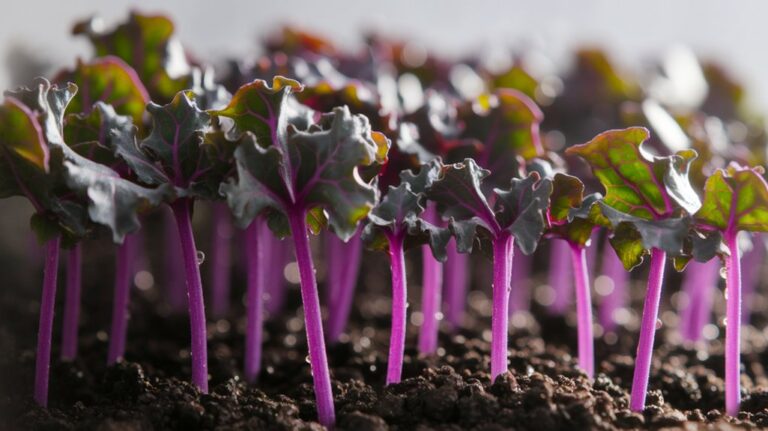
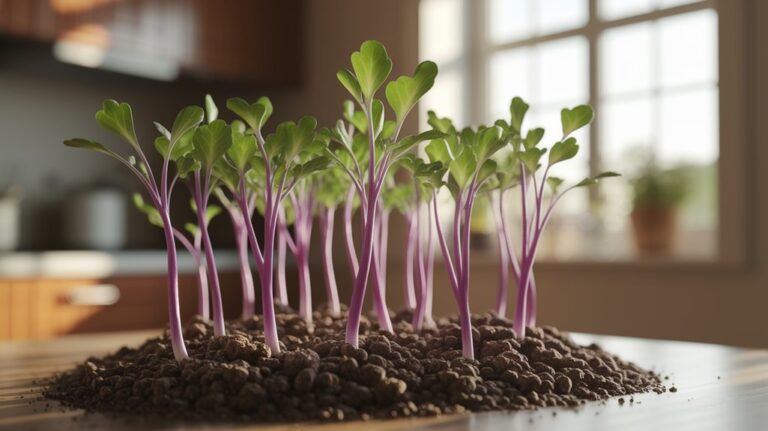
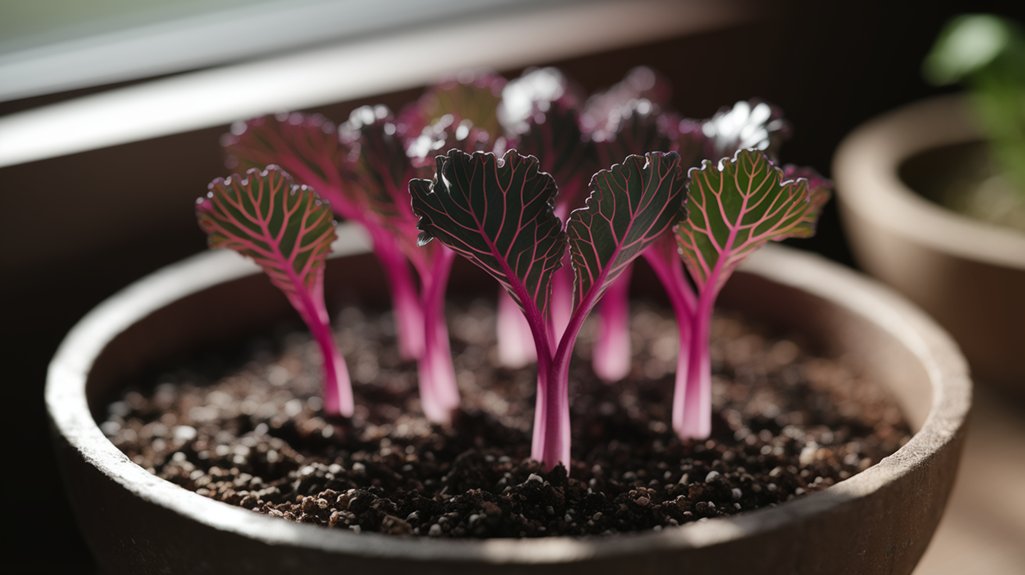
The first thing I look for is the color; vibrant purple leaves indicate proper light exposure and nutrient availability.
I also check the stem thickness; healthy sprouts should have sturdy stems, which suggest strong root systems.
Additionally, I observe the moisture level in the growing medium, ensuring it stays consistently damp but not waterlogged.
I watch for any signs of pests or disease, including discoloration or wilting.
Regularly measuring the height of each sprout helps me assess their growth rate, allowing me to make adjustments as needed for optimal conditions.
Harvesting Your Sprouts
When you’re ready to harvest your red cabbage sprouts, timing is crucial for achieving the best flavor and texture. I typically wait until the sprouts are about 1 to 2 inches tall, with vibrant color and crisp leaves.
To harvest, gently cut the sprouts just above the soil line using sharp scissors, ensuring not to damage the remaining roots, which might produce more sprouts. Here’s a quick reference table for optimal harvesting conditions:
| Condition | Best Time to Harvest |
|---|---|
| Height | 1 to 2 inches |
| Color | Deep purple and vibrant |
| Texture | Crisp and firm |
Frequently Asked Questions
Can I Sprout Red Cabbage Seeds Indoors or Outdoors?
Absolutely, I can sprout red cabbage seeds both indoors and outdoors.
If I choose to sprout them indoors, I use seed trays with good drainage and a light potting mix. I keep them in a warm, well-lit area.
Outdoors, I make sure the soil is well-prepared and the temperature is suitable. I always check the seed packet for specific requirements, ensuring I provide the best conditions for optimal growth.
How Long Do Red Cabbage Sprouts Typically Last After Harvesting?
After harvesting, red cabbage sprouts typically last about 5 to 7 days if stored properly.
I always keep mine in a breathable container in the fridge to maintain their freshness.
If I notice any wilting, I’ll use them immediately in salads or sandwiches.
For the best flavor and texture, I recommend consuming them within the first few days.
Proper storage really makes a difference in preserving their crunchy goodness!
What Nutrients Do Red Cabbage Sprouts Provide?
Red cabbage sprouts are packed with nutrients that I find incredibly beneficial. They’re rich in vitamins A, C, and K, which support my immune system and promote healthy skin.
I also appreciate their high levels of antioxidants and fiber, aiding digestion and reducing inflammation. Additionally, these sprouts contain essential minerals like calcium and potassium, crucial for bone health and maintaining proper blood pressure.
Incorporating them into my diet is a great way to boost nutrition!
Can I Use Store-Bought Red Cabbage Seeds for Sprouting?
Yes, you can use store-bought red cabbage seeds for sprouting.
I’ve found that these seeds often germinate well, provided they’re fresh and stored properly.
Before planting, I like to check the packaging for the harvest date to ensure viability.
Just remember to follow proper sprouting techniques, like soaking the seeds and providing adequate moisture and light, to maximize your success.
Happy sprouting!
Are There Any Pests to Watch Out for During Sprouting?
When I sprout seeds, I keep an eye out for common pests like aphids and fungus gnats.
Aphids can quickly infest young plants, so I regularly inspect the leaves for any signs.
Fungus gnats thrive in moist conditions, so I ensure I don’t overwater.
Keeping my growing area clean and using beneficial insects, like ladybugs, helps manage these pests effectively.
Prevention is key to maintaining healthy sprouts throughout the process.
Conclusion
In conclusion, sprouting red cabbage is a straightforward and rewarding process. By carefully selecting quality seeds, preparing an appropriate container, and diligently monitoring their growth, you can enjoy nutritious sprouts in no time. Remember to soak and rinse your seeds regularly to promote healthy development. Once harvested, these vibrant sprouts can enhance your meals with flavor and nutrition. Give it a try, and you’ll appreciate the satisfaction of growing your own fresh produce at home!