Microgreens for Gut Health: Prebiotics, Fiber, and How to Use Them
Microgreens are nutritional powerhouses packed with prebiotics and fiber, which can significantly enhance gut health. They provide essential nutrients that nourish beneficial gut bacteria and improve digestion. I love incorporating them into my meals for a burst of flavor and texture. Simple ways to use them include tossing them into salads, adding them to sandwiches, or sprinkling them over soups. If you want to explore popular microgreen varieties and easy recipes, I’ve got more insights for you.
Key Takeaways
- Microgreens are nutrient-dense, containing up to 40 times more vitamins and minerals than mature plants, enhancing gut health.
- They are rich in prebiotics and fiber, promoting the growth of beneficial gut bacteria for improved digestion.
- Popular microgreens like broccoli, pea shoots, and radish support gut health through their unique nutrients and antioxidants.
- Incorporate microgreens into meals by adding them to salads, sandwiches, or as toppings for soups and omelets.
- Experiment with different varieties and combinations of microgreens to discover unique flavors and maximize their gut health benefits.
What Are Microgreens?
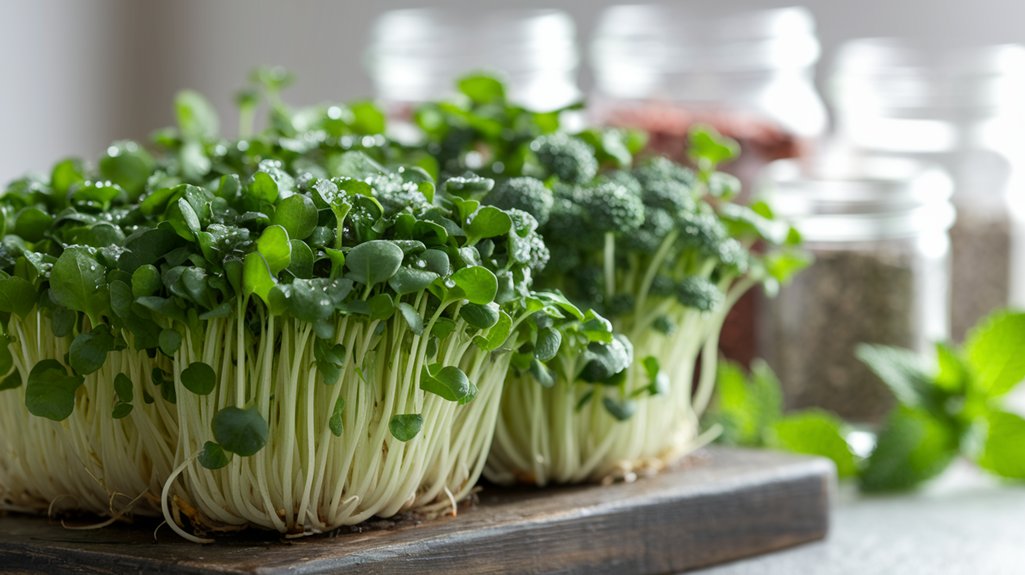
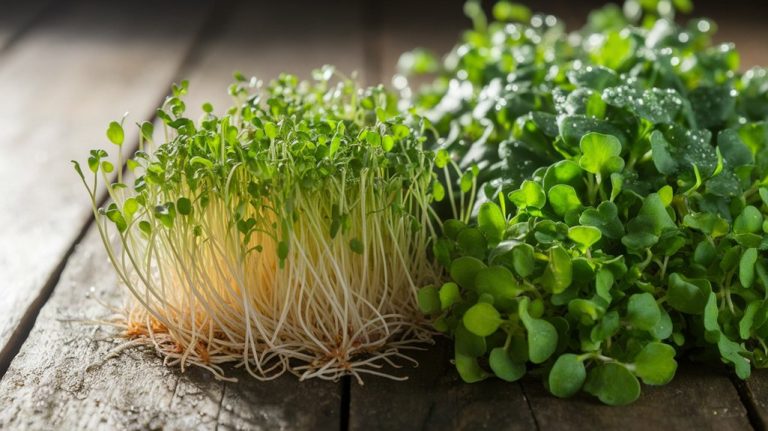
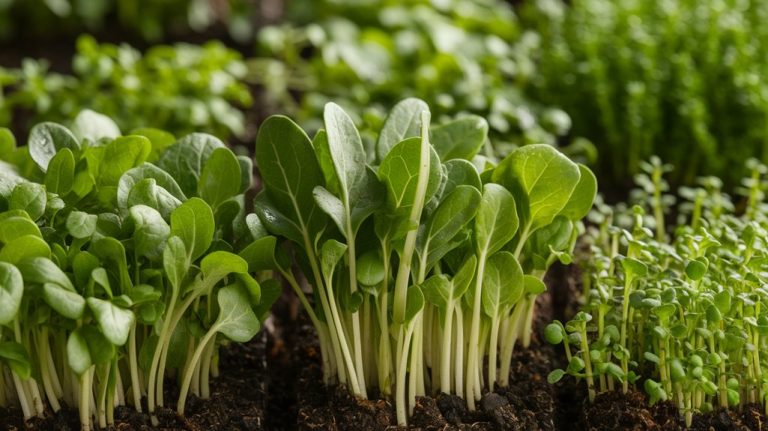
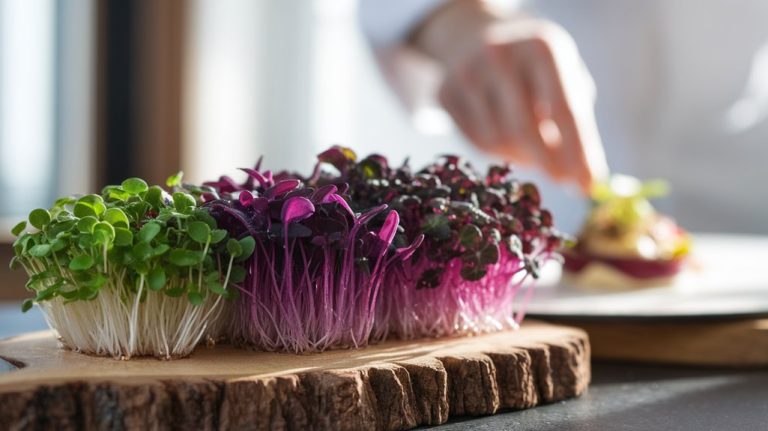
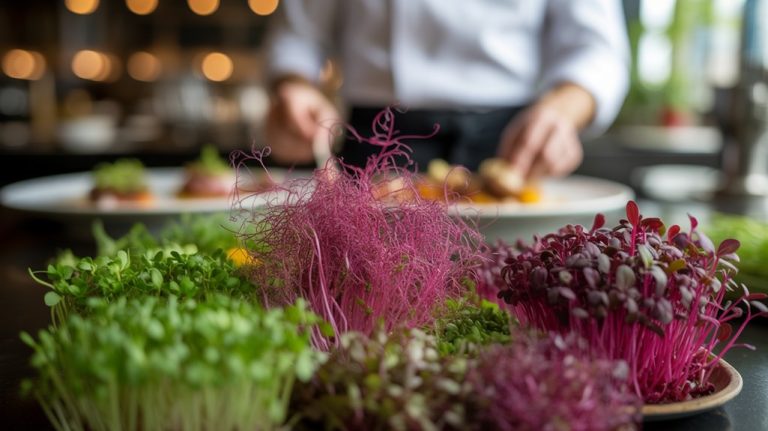
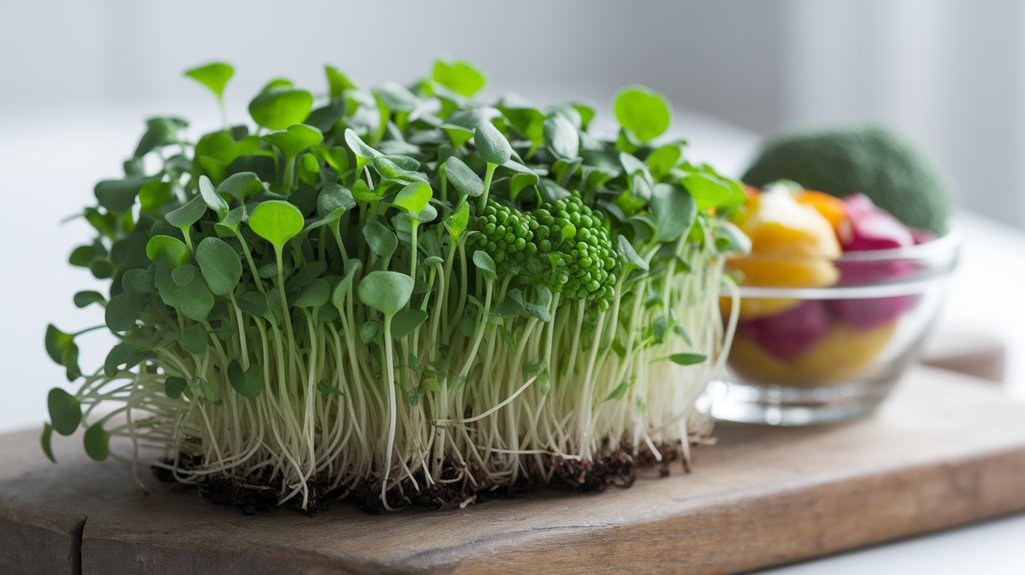
When I think about microgreens, I see them as tiny powerhouses of nutrition packed into small leaves and stems. These young plants, harvested just after their first true leaves emerge, are typically 1-3 inches tall. They come from a variety of vegetables, herbs, and even some grains.
What makes microgreens so appealing is their intense flavor and vibrant colors, which can elevate any dish. They’re incredibly easy to grow, whether in soil or hydroponically, making them accessible even for beginners.
Plus, they’re versatile; I often toss them into salads, smoothies, or sandwiches. With just a handful, you can add a burst of freshness to your meals while enjoying their unique textures and tastes.
Nutritional Profile of Microgreens
Microgreens boast an impressive nutritional profile that often surpasses their mature counterparts. These tiny powerhouses are packed with vitamins, minerals, and antioxidants.
For instance, studies show that microgreens can contain up to 40 times more nutrients than fully grown plants. They’re rich in vitamins A, C, E, and K, which support immune function and skin health. Additionally, they provide essential minerals like calcium, magnesium, and iron.
The fiber content in microgreens is also noteworthy, promoting digestive health and aiding in satiety.
I love incorporating them into my salads, smoothies, or as garnishes, making it simple to boost my nutrient intake. By adding microgreens to your meals, you’re not just enhancing flavor; you’re elevating your overall health.
The Role of Prebiotics in Gut Health
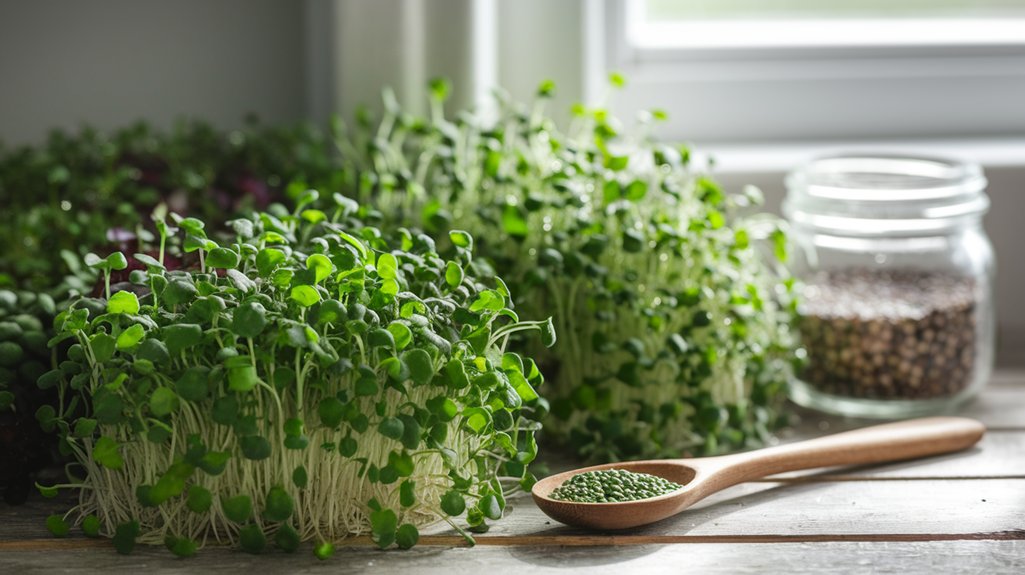
While many people focus on probiotics for gut health, I believe it’s equally important to consider the role of prebiotics.
Prebiotics are non-digestible fibers that feed the beneficial bacteria in our gut, promoting a balanced microbiome. Foods rich in prebiotics, like garlic, onions, and microgreens, help enhance gut health by stimulating the growth of these good bacteria.
Research shows that a well-fed microbiome can improve digestion, boost immunity, and reduce inflammation. Incorporating prebiotic-rich foods into my diet has made a noticeable difference in my gut health.
I’ve found that adding microgreens to salads or smoothies is an easy way to increase my prebiotic intake. These small greens pack a powerful punch for my overall well-being!
How Fiber Supports Digestion
Fiber plays a crucial role in digestion, and I’ve found that understanding its types can really enhance gut health.
Soluble fiber helps to regulate blood sugar and lower cholesterol, while insoluble fiber adds bulk to our stool, promoting regularity.
Role of Fiber
When we think about supporting digestion, one of the key players in the process is fiber. I’ve found that incorporating fiber into my diet makes a significant difference in how my digestive system functions.
Here’s how fiber supports digestion:
- Promotes regular bowel movements: It adds bulk to stool, making it easier to pass.
- Feeds beneficial gut bacteria: Fiber acts as a prebiotic, nurturing the good microbes in our gut.
- Stabilizes blood sugar levels: It slows down sugar absorption, preventing spikes in blood glucose.
- Enhances nutrient absorption: By keeping the digestive tract healthy, fiber helps our bodies absorb essential nutrients more effectively.
Adding fiber-rich microgreens to my meals has been a simple yet effective strategy for better gut health!
Types of Fiber
Although many people think of fiber as a single entity, it actually consists of two main types: soluble and insoluble.
Soluble fiber dissolves in water, forming a gel-like substance that helps regulate blood sugar and lowers cholesterol levels. Foods like oats, apples, and beans are rich in soluble fiber.
On the other hand, insoluble fiber doesn’t dissolve in water; it adds bulk to stools and promotes regular bowel movements. Whole grains, nuts, and vegetables like broccoli are excellent sources of insoluble fiber.
Incorporating both types into my diet supports a healthy digestive system. By enjoying a variety of microgreens, I can easily boost my fiber intake and promote gut health, making digestion smoother and more efficient.
Microgreens and the Gut Microbiome
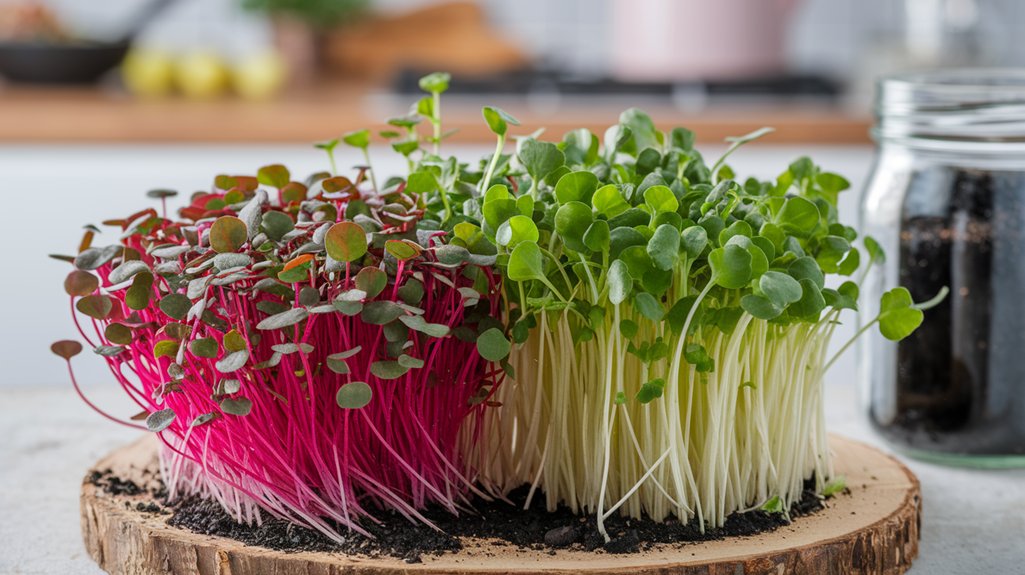
How can the tiny yet powerful microgreens contribute to a balanced gut microbiome? These nutrient-dense plants pack a punch when it comes to supporting gut health.
By incorporating microgreens into my meals, I’ve noticed how they can enhance the diversity of beneficial bacteria in my gut. Here are some key ways they help:
- Prebiotic properties: They contain fibers that feed good gut bacteria.
- Rich in antioxidants: They help reduce inflammation in the gut.
- Vitamins and minerals: Essential nutrients support overall digestive health.
- Low in calories: They’re an easy addition to meals without excess calories.
Adding microgreens to my diet has been a simple and effective strategy for promoting a thriving gut microbiome.
Popular Types of Microgreens for Gut Health
When I think about microgreens that support gut health, a few popular varieties come to mind.
These tiny greens aren’t just nutritional powerhouses packed with vitamins and minerals, but they also make easy culinary additions to any meal.
Let’s explore some of the best options you can incorporate into your diet for a happier gut.
Nutritional Powerhouses
Microgreens are more than just a trendy garnish; they’re nutritional powerhouses that can significantly benefit gut health.
I’ve found that incorporating them into my diet not only enhances flavor but also provides essential nutrients.
Here are some popular types you might want to consider:
- Broccoli Microgreens: Packed with sulforaphane, which promotes gut health and detoxification.
- Pea Shoots: High in fiber, they aid digestion and support a healthy gut microbiome.
- Radish Microgreens: Contain antioxidants that help reduce inflammation in the gut.
- Sunflower Microgreens: Rich in vitamins and minerals, they bolster overall digestive health.
Including these microgreens in your meals can be a simple yet effective way to enhance your gut health while enjoying vibrant flavors.
Easy Culinary Additions
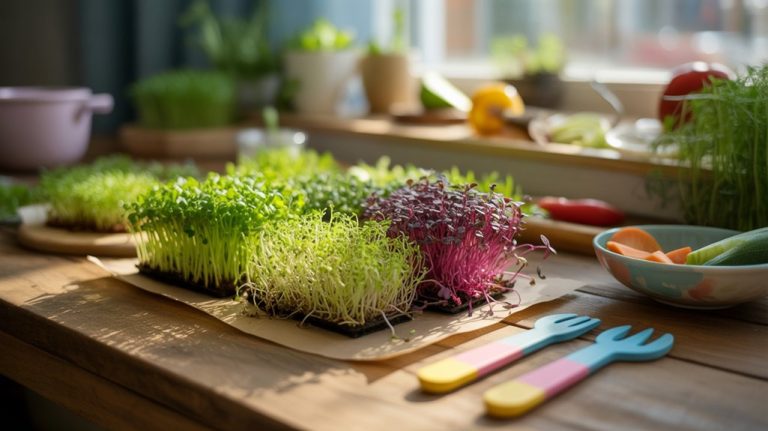
Incorporating microgreens into your meals can be a delightful way to amplify flavor while reaping their gut health benefits. Some popular types I love using include broccoli, which contains sulforaphane, and radish microgreens that add a peppery kick.
Pea shoots are another fantastic option; they’re sweet and packed with fiber. I often sprinkle them on salads or blend them into smoothies for added nutrients.
Mustard microgreens are excellent for their probiotics and intense flavor, making them a great addition to sandwiches.
How to Incorporate Microgreens Into Your Diet
How can you easily add microgreens to your meals? Incorporating microgreens isn’t just simple; it can elevate your dishes while benefiting your gut health. Here are a few practical ways I’ve found effective:
- Toss a handful of arugula microgreens into your morning omelet for a peppery kick.
- Sprinkle radish microgreens on avocado toast for an extra crunch and flavor.
- Mix basil microgreens into your salads for a burst of freshness.
- Blend sunflower microgreens into smoothies for added nutrients without altering the taste.
These tiny greens pack a nutritional punch, and their vibrant flavors can transform any dish.
Simple Recipes Featuring Microgreens
While I love experimenting with flavors in the kitchen, simple recipes featuring microgreens can be a game-changer for both taste and nutrition.
One of my favorites is a microgreen salad. I toss a mix of arugula, radish greens, and sunflower shoots with cherry tomatoes, cucumbers, and a light vinaigrette. This not only packs a punch of vitamins but also adds crunch and flavor.
Another easy option is a microgreen sandwich. I layer microgreens like basil or cilantro on whole-grain bread with avocado and turkey. It’s a quick way to boost fiber and nutrients.
Lastly, I sprinkle microgreens over soups or omelets for an instant uplift.
These simple recipes make it easy to enjoy the health benefits of microgreens daily!
Tips for Growing Your Own Microgreens
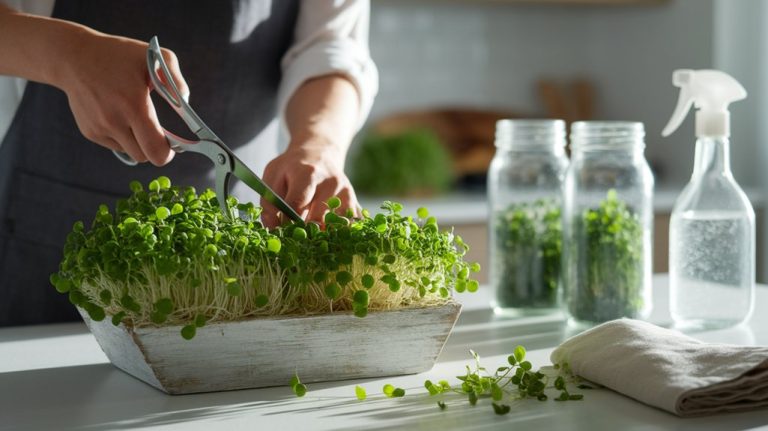
Growing your own microgreens can be a rewarding experience, and I’ve found that starting with just a few simple steps makes the process manageable and enjoyable.
First, choose your seeds; I recommend varieties like radish, basil, or sunflower for their quick growth. Next, gather your supplies, including shallow trays, potting soil, and a spray bottle for watering.
- Use a light source, like a sunny windowsill or grow lights.
- Keep the soil moist but not soggy to prevent mold.
- Harvest when the first true leaves appear, usually within 7-14 days.
- Experiment with different flavors and combinations to find what you love.
Frequently Asked Questions
Can Microgreens Be Consumed Raw or Cooked?
Absolutely, I enjoy microgreens both raw and cooked!
When I eat them raw, their vibrant flavors and crunch really stand out, making them perfect for salads or sandwiches.
However, I’ve also sautéed them lightly, which brings out a different taste and soft texture.
Nutritionally, both methods retain their benefits, so it really comes down to personal preference.
I find that experimenting with both ways keeps my meals exciting and nutritious!
Are There Any Side Effects of Eating Microgreens?
When I think about the side effects of eating microgreens, I consider that most people tolerate them well.
However, some might experience mild digestive issues, especially if they consume large quantities.
It’s important to wash them thoroughly to avoid any pesticide residues.
If you have allergies to specific plants, you should be cautious.
I always recommend starting with small amounts to see how your body reacts before fully incorporating them into your diet.
How Long Do Microgreens Last After Harvesting?
After harvesting, microgreens typically last about 5 to 14 days when stored properly.
I find that keeping them in a sealed container in the fridge helps maintain their freshness.
I also make sure to keep them dry, as excess moisture can lead to spoilage.
If you notice any wilting or discoloration, it’s best to use them quickly or toss them out.
Freshness really makes a difference in flavor and nutritional value!
Can I Grow Microgreens Indoors?
Absolutely, you can grow microgreens indoors! I’ve done it myself and found it quite rewarding.
All you need is a shallow container, some potting soil, and seeds. Place them in a bright spot or under grow lights for optimal growth.
I water them lightly and keep an eye on humidity. In just 7 to 14 days, you’ll have a fresh crop ready to enjoy.
It’s a fun and easy way to garden indoors!
Are There Any Specific Microgreens to Avoid?
When growing microgreens, I’ve learned there are a few specific types you might want to avoid.
For instance, some varieties like arugula and radish can be quite spicy, which isn’t everyone’s preference. Additionally, certain plants, like those in the nightshade family, can be toxic if not prepared properly.
I always recommend sticking to well-known varieties like broccoli and sunflower, which are safe and nutritious. Always research before trying something new!
Conclusion
Incorporating microgreens into my diet has truly enhanced my gut health. Their impressive nutritional profile, rich in prebiotics and fiber, supports digestion and nurtures a balanced gut microbiome. By adding a variety of these tiny greens to my meals, I’ve not only discovered new flavors but also boosted my overall well-being. Whether you choose to grow them at home or buy them fresh, microgreens are a simple, effective way to elevate your health. Give them a try!