Harvest Happiness: Incorporating Microgreens Into Your Lifestyle
Incorporating microgreens into my lifestyle has transformed my meals and boosted my health. These tiny greens pack a nutritional punch, offering up to 40 times more vitamins than mature veggies. I can easily grow them at home with simple steps, and they add vibrant flavors to salads, smoothies, and sandwiches. Plus, nurturing my microgreens connects me with nature and enhances my mental well-being. There’s much more to explore about the joy and benefits of microgreens waiting for you.
Key Takeaways
- Microgreens are nutrient-dense, offering up to 40 times more vitamins and minerals than mature vegetables, enhancing overall health and well-being.
- Growing microgreens at home is simple, requiring minimal space and resources, making it an accessible and sustainable practice for urban gardeners.
- Incorporate microgreens into meals by adding them to salads, smoothies, soups, and sandwiches for boosted flavor and nutrition.
- Participate in workshops to learn about growing and harvesting microgreens, fostering a sense of community and shared healthy eating habits.
- Engaging with microgreens nurtures a connection to nature, promoting mindfulness and joy through the process of cultivation and harvesting.
What Are Microgreens?
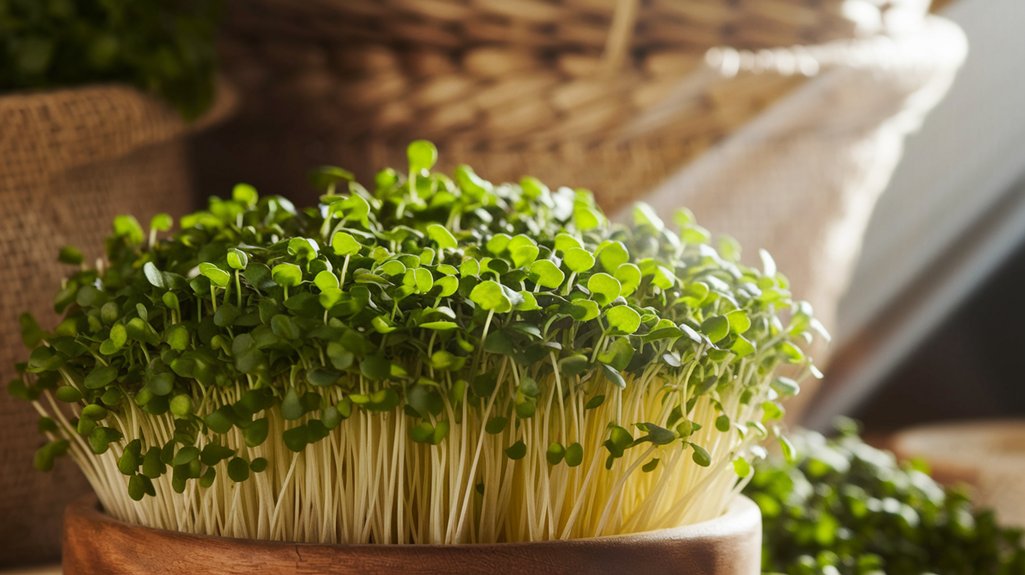
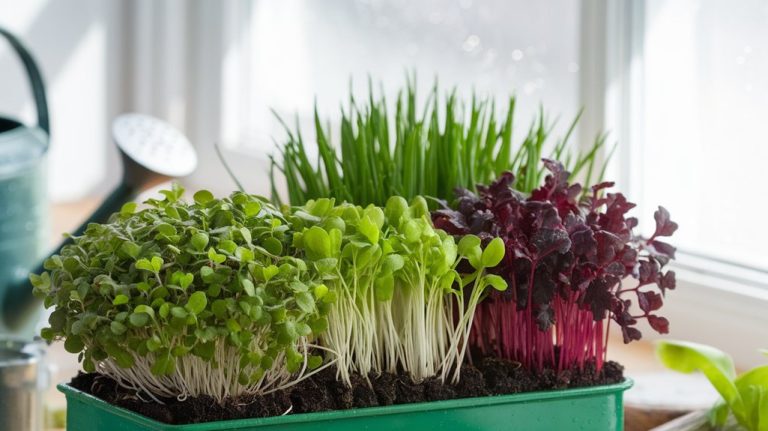
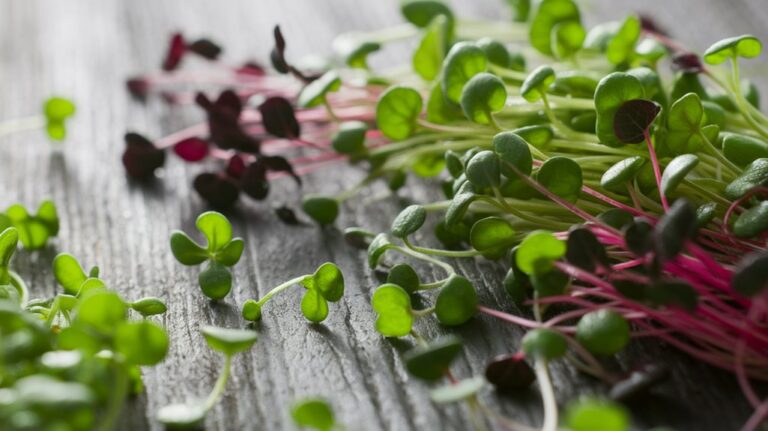
Microgreens are tiny, nutrient-packed plants that pack a flavorful punch and offer a myriad of health benefits. These miniature greens, harvested just after the first true leaves appear, are typically 1-3 inches tall.
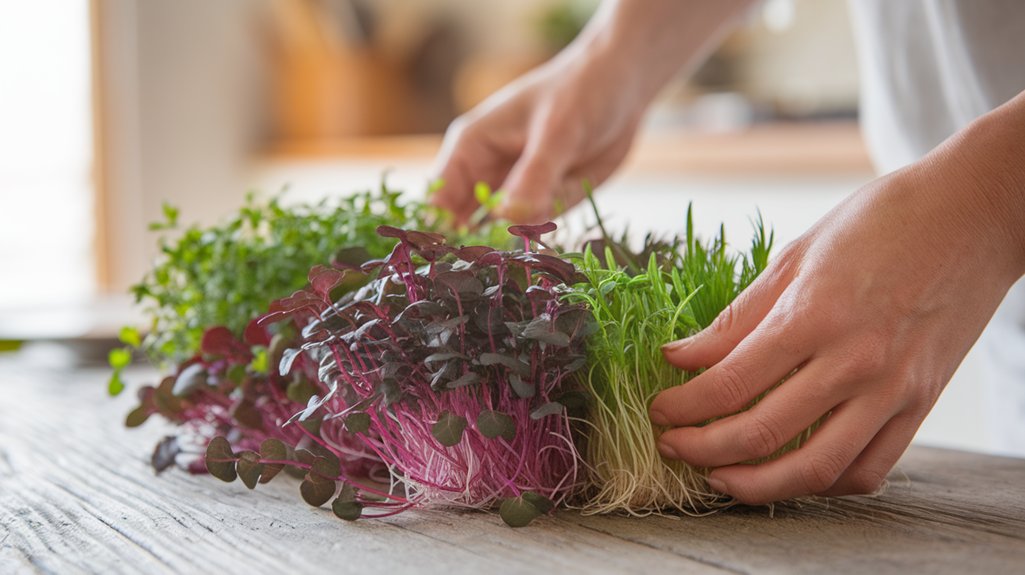
I love how they come in various types, including arugula, radish, and basil, each bringing unique tastes and textures to my meals. They’re not just pretty garnishes; studies show that microgreens can contain up to 40 times more nutrients than their mature counterparts.
Incorporating them into my diet is a breeze. I sprinkle them on salads, blend them into smoothies, or use them as toppings for sandwiches.
Plus, they’re easy to grow at home, making them a practical choice for anyone looking to elevate their culinary experience.
Health Benefits of Microgreens
Microgreens are packed with nutrients, often containing higher levels of vitamins and minerals than their mature counterparts.
Research shows they also boast powerful antioxidant properties, which can help protect our cells from damage.
Nutrient Density Comparison
When it comes to nutrient density, few foods can rival the powerhouse of vitamins and minerals found in microgreens.
These tiny greens pack a surprisingly large punch, often containing higher concentrations of nutrients compared to their mature counterparts. I love incorporating them into my meals for a health boost.
Here are some key benefits that I’ve discovered:
- They can provide up to 40 times more nutrients than mature vegetables.
- Rich in vitamins A, C, E, and K, promoting overall health.
- Boost your immune system with their high nutrient content.
- Support digestion with their fiber-rich profile.
- Offer heart health benefits due to their healthy fats.
Adding microgreens to my plate has truly transformed my approach to nutrition!
Antioxidant Properties Explained
While exploring the health benefits of microgreens, I’ve been particularly impressed by their impressive antioxidant properties.
Research shows that microgreens can contain up to 40 times more antioxidants than mature vegetables. These powerful compounds help combat oxidative stress in our bodies, which is linked to chronic diseases like cancer and heart disease.
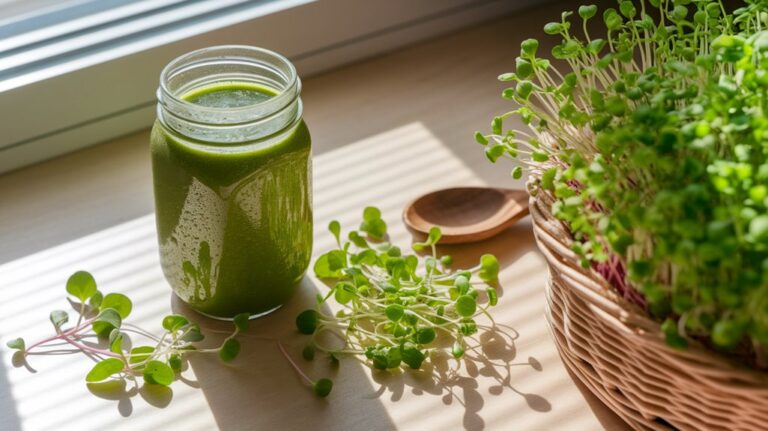
By incorporating microgreens into my meals, I’ve found it’s a simple way to boost my antioxidant intake. Whether I add them to salads, smoothies, or sandwiches, their vibrant flavors enhance my dishes while delivering essential nutrients.
Plus, with so many varieties available, I can easily switch things up. Investing in microgreens not only supports my health but also enriches my culinary experience.
Easy Steps to Grow Microgreens at Home
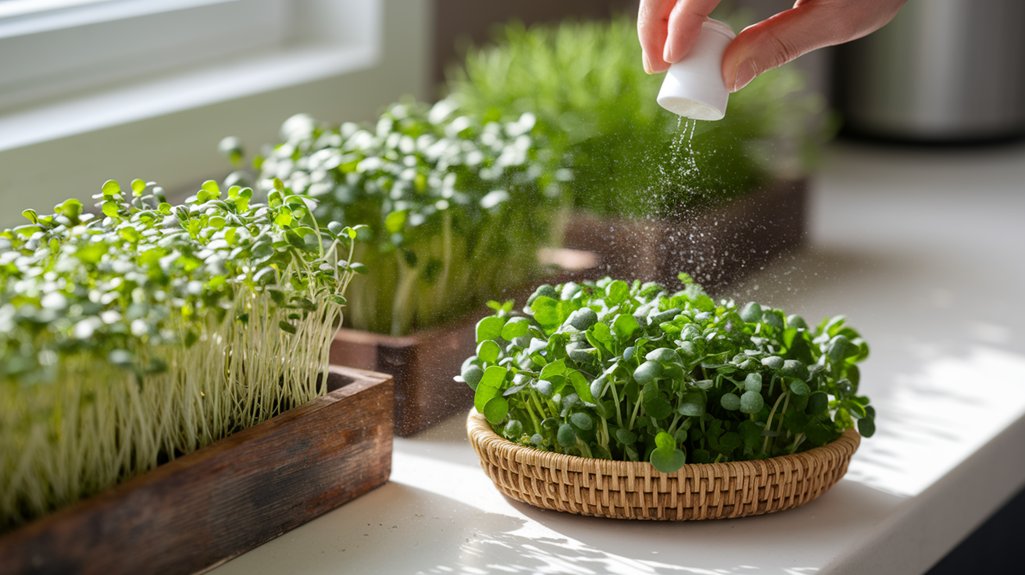
Growing microgreens at home can be a rewarding and straightforward endeavor. With just a few simple steps, you can enjoy fresh greens right from your kitchen. Here’s how I get started:
- Choose a container: Any shallow tray or pot works well.
- Select quality seeds: Look for organic or non-GMO options.
- Use quality soil: A light, well-draining mix is ideal.
- Water gently: Keep the soil moist but not soggy.
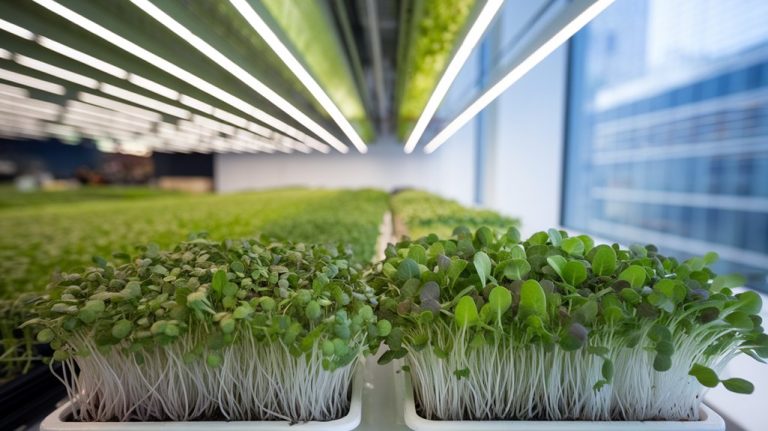
- Provide light: Place your microgreens in a sunny spot or under grow lights.
In just 7 to 14 days, you’ll be amazed to see those tiny greens sprouting.
It’s fulfilling to nurture them from seed to harvest, and you’ll love incorporating those vibrant flavors into your meals!
Choosing the Right Microgreens for Your Palate
Selecting the right microgreens for your palate can transform your meals into a culinary delight. I’ve found that the flavor profiles of microgreens vary significantly, so experimenting is key.
For a peppery kick, try arugula or radish microgreens; they’re great in salads or as a garnish. If you prefer something milder, sunflower or pea shoots offer a sweet, nutty flavor that complements many dishes.
It’s also beneficial to consider nutritional content; for instance, broccoli microgreens are packed with vitamins. I recommend starting with a few varieties to see which ones you enjoy most.
Creative Ways to Incorporate Microgreens Into Meals
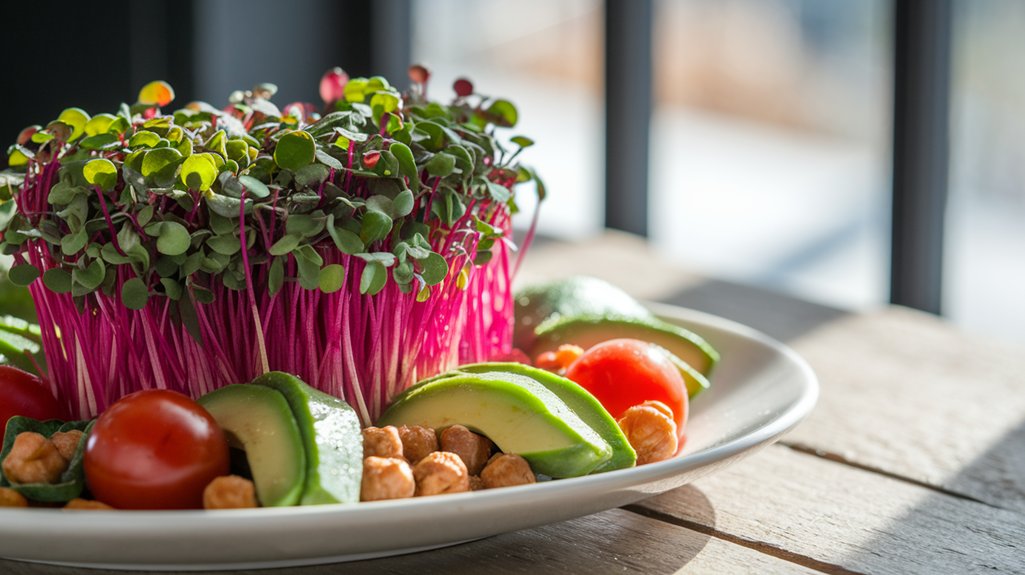
I love finding creative ways to add microgreens to my meals, as they not only enhance flavor but also boost nutrition.
Tossing them into salads, blending them into smoothies, or using them as a garnish for soups and stews can elevate any dish.
Let’s explore how to incorporate these tiny greens into your everyday cooking for maximum taste and health benefits.
Salads With Microgreens Boost
While it might seem simple to toss some greens into a bowl, incorporating microgreens into your salads can elevate both flavor and nutrition.
These tiny powerhouses pack a punch, offering concentrated vitamins and minerals that can transform your meals. Here are some creative ways I love to boost my salads with microgreens:
- They add a delightful crunch and texture.
- Their vibrant colors make the dish visually appealing.
- They introduce bold flavors that surprise my palate.
- They’re easy to grow at home for fresh access.
- They’re a fantastic way to sneak in extra nutrients.
Microgreens in Smoothies
Have you ever thought about how microgreens can transform your smoothies? I’ve found that adding a handful of these tiny powerhouses not only boosts nutrition but enhances flavor too.
Rich in vitamins, antioxidants, and minerals, microgreens like kale, spinach, or arugula blend seamlessly into any smoothie. They add a fresh, earthy taste without overpowering other ingredients.
I typically toss in a mix of fruits, yogurt, and nut milk, then throw in a scoop of microgreens. The result? A vibrant, nutrient-packed drink that fuels my day.
Plus, with their concentrated nutrients, just a small amount can make a big difference. So, next time you whip up a smoothie, don’t forget to include some microgreens for that extra kick!
Garnishing Soups and Stews
When you want to elevate the flavors and nutrition of your soups and stews, consider garnishing them with microgreens.
I’ve found that adding these tiny greens not only enhances the presentation but also boosts the dish’s health benefits.
Here are some creative ways microgreens can transform your meals:
- They add vibrant color that excites the eyes.
- Their fresh, peppery taste can brighten up rich flavors.
- They’re packed with nutrients, making every bite healthier.
- Microgreens provide a lovely crunch that contrasts with smooth textures.
- They can serve as a conversation starter at the dinner table.
Incorporating microgreens is an easy way to make your meals more appealing and nutritious.
Give it a try; you might just fall in love with the results!
Microgreens as a Sustainable Food Source
As I explore the world of microgreens, I’m continually amazed by their potential as a sustainable food source.
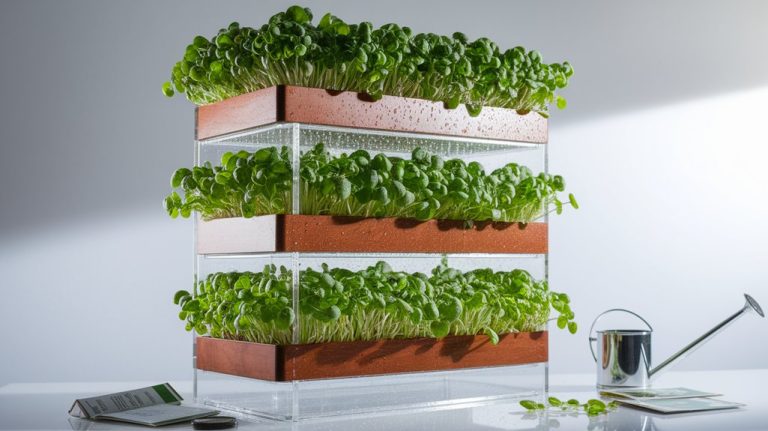
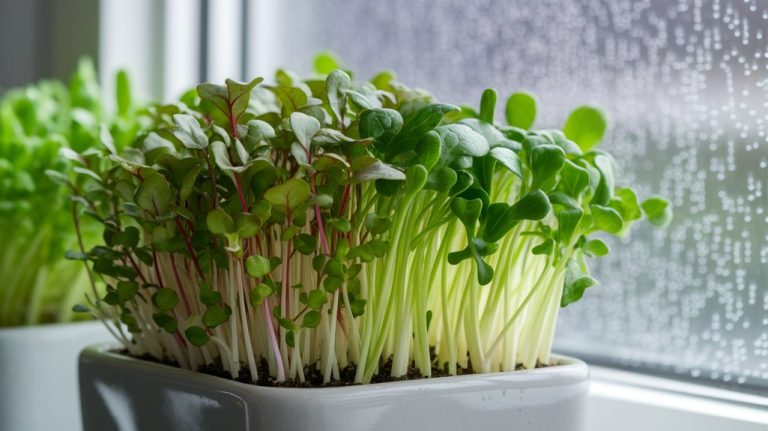
These tiny, nutrient-dense plants require minimal resources, making them an eco-friendly choice for urban gardening. Microgreens can grow in soil, hydroponically, or even in small containers on a windowsill, which means limited space isn’t a barrier.
Research shows they can deliver up to 40 times the nutrients of their mature counterparts, providing a powerful punch in a small package. Additionally, they grow quickly—often within 7 to 21 days—reducing the need for extensive farming practices.
The Joy of Gardening: Connecting With Nature
While tending to my microgreens, I often find myself immersed in a peaceful connection with nature that revitalizes my spirit. This simple act of gardening provides a grounding experience, reminding me of the beauty and complexity of life.
Engaging with the earth can spark joy and enhance my overall well-being. Here are some reasons why I cherish this connection:
- The fresh scent of soil invigorates my senses.
- Watching my microgreens grow fills me with hope and anticipation.
- The vibrant colors brighten my day.
- Each harvest feels like a rewarding accomplishment.
- I appreciate the rhythm of nature’s cycles.
Enhancing Your Mental Well-Being With Microgreens
Incorporating microgreens into my daily routine has significantly boosted my mental well-being. These tiny greens are packed with nutrients that support brain health, reducing stress and enhancing mood. I often add them to my meals, creating a vibrant and nourishing experience.
Here’s a quick overview of some popular microgreens and their mental health benefits:
| Microgreen | Nutrient | Mental Health Benefit |
|---|---|---|
| Broccoli | Sulforaphane | Reduces anxiety |
| Spinach | Folate | Improves mood |
| Radish | Vitamin C | Boosts cognitive function |
Tips for Maintaining a Microgreens Garden
Maintaining a microgreens garden can be incredibly rewarding, especially when you see the vibrant greens thriving in your kitchen.
To ensure success, I’ve learned a few essential tips that keep my garden flourishing:
- Choose the right seeds: Some varieties germinate faster and grow better indoors.
- Provide adequate light: Use natural sunlight or grow lights for at least 12-16 hours a day.
- Monitor moisture: Keep the soil consistently moist, but not waterlogged.
- Maintain air circulation: This helps prevent mold and promotes healthy growth.
- Harvest regularly: Snipping the greens encourages new growth and keeps your garden productive.
With these simple practices, you’ll enjoy the beauty and flavor of microgreens while enhancing your culinary adventures.
Sharing the Microgreen Experience With Others
I love sharing my passion for microgreens with others, and hosting workshops is a great way to do that.
By gathering friends and family, we can explore planting techniques and share delicious recipes that highlight these nutrient-packed greens.
It’s a fun, engaging way to inspire others to incorporate microgreens into their diets while learning together.
Hosting Microgreen Workshops
Hosting microgreen workshops can be an exciting way to share your passion for these nutrient-packed plants with others.
I’ve found that engaging with fellow enthusiasts not only spreads knowledge but also fosters a sense of community.
Here are some reasons why you should consider hosting your own workshop:
- Witnessing the joy of participants as they sow their first seeds
- Sharing tips on nurturing and harvesting microgreens
- Creating a fun, hands-on experience that encourages creativity
- Inspiring others to incorporate healthy eating into their lives
- Building a network of like-minded individuals who share your passion
Sharing Recipes Together
While exploring the culinary possibilities of microgreens, sharing recipes with friends and family can deepen your appreciation for these vibrant plants. I’ve found that cooking together not only enhances our meals but also fosters connection. Here are three easy microgreen recipes you can try with loved ones:
| Recipe | Key Ingredient | Taste Profile |
|---|---|---|
| Microgreen Salad | Arugula | Peppery & Fresh |
| Smoothie Boost | Pea Shoots | Sweet & Nutty |
| Microgreen Pesto | Basil | Herbaceous & Rich |
Frequently Asked Questions
How Long Do Microgreens Take to Grow From Seed to Harvest?
When I grow microgreens, I typically find they take about 7 to 21 days from seed to harvest, depending on the variety.
For instance, radish and arugula sprout quickly, often ready in just a week. In contrast, slower growers like basil might need closer to two weeks.
I always keep the soil moist and provide adequate light to encourage healthy growth.
It’s rewarding to see them thrive in such a short time!
Can Microgreens Be Grown Indoors Year-Round?
Absolutely, I grow microgreens indoors year-round.
With the right conditions—adequate light, temperature, and moisture—they thrive regardless of the season. I use grow lights to supplement natural light, ensuring they get enough energy.
What Equipment Do I Need to Grow Microgreens at Home?
To grow microgreens at home, I found that I need a few essential items.
First, I use shallow trays for planting, ideally with drainage holes.
Next, I get high-quality potting soil to ensure proper growth.
I also invest in good seeds, as they’re crucial for healthy plants.
Finally, I use a spray bottle for watering and a grow light to provide adequate light, especially during darker months.
It’s straightforward and rewarding!
Are There Any Pests That Commonly Affect Microgreens?
Absolutely, pests can affect microgreens, though they’re generally less problematic than larger plants.
I’ve encountered issues with aphids and fungus gnats in my own growing experience. To combat these pests, I recommend keeping your growing area clean and well-ventilated.
Regularly inspecting your plants helps catch infestations early. If you spot pests, using insecticidal soap or neem oil can help control them without harming your microgreens.
Staying proactive makes a big difference!
Can I Use Regular Soil for Growing Microgreens?
I’ve found that while you can use regular soil for growing microgreens, it’s not always the best choice.
Regular soil can be heavy and may harbor pests or diseases. Instead, I prefer using a light, seed-starting mix or coconut coir, which promotes drainage and healthy root development.
It’s essential to ensure your medium is sterile to give your microgreens the best chance for thriving without the risk of contamination.
Conclusion
Incorporating microgreens into your life can truly enhance your well-being, both physically and mentally. By growing them at home, you not only enjoy their health benefits but also connect with nature in a meaningful way. Whether you sprinkle them on salads or blend them into smoothies, these tiny greens pack a powerful punch. I encourage you to start your microgreens journey today—embrace the joy of gardening and the delicious flavors that will elevate your meals and mood!