Sprouted Mung Bean Salad
I love making sprouted mung bean salad because it’s packed with protein, fiber, and essential vitamins. Sprouted mung beans are incredibly nutritious and easy to make at home. Combining them with fresh vegetables like cucumbers and tomatoes enhances the flavor while providing hydration and nutrients. You can dress it with olive oil and lemon juice for brightness. If you’re looking for creative serving ideas to impress, there’s so much more to explore!
Key Takeaways
- Sprouted mung bean salad is nutritious, offering protein, fiber, vitamins, and minerals while being low in calories.
- To make the salad, combine sprouted mung beans with fresh vegetables like cucumbers and tomatoes for added flavor and crunch.
- Enhance the salad with herbs, lime juice, and sesame oil for freshness and richness.
- Serve the salad creatively in avocado halves or mason jars for an appealing presentation.
- Sprouted mung beans are easy to prepare at home, taking only a few days to sprout and be ready for use.
Nutritional Benefits of Sprouted Mung Beans
When I discovered the nutritional benefits of sprouted mung beans, I was amazed at how they can enhance a healthy diet. These tiny powerhouses are packed with protein, containing about 7 grams per 100 grams, making them an excellent plant-based option.
They’re also rich in fiber, which supports digestive health and helps maintain stable blood sugar levels. Additionally, sprouted mung beans are loaded with vitamins and minerals, including vitamin C and folate, both crucial for immune function and cell growth.
Their low-calorie content means you can enjoy them without guilt. Plus, the sprouting process increases the bioavailability of nutrients, making them easier for our bodies to absorb.
How to Sprout Mung Beans at Home
Sprouting mung beans at home is surprisingly simple and rewarding.
First, I take about half a cup of dried mung beans and rinse them thoroughly to remove any impurities. Then, I soak the beans in water for about eight hours.
Once soaked, I drain and rinse them again. I place the beans in a jar or a sprouting tray, covering them with a breathable cloth.
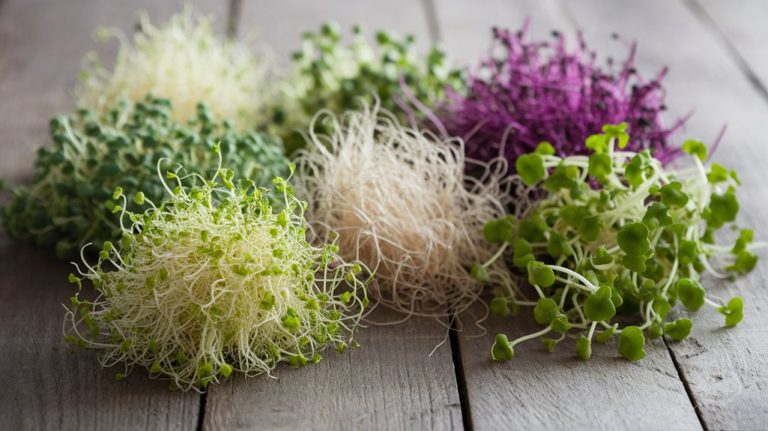
Every day, I rinse and drain the beans twice to keep them moist but not soggy. Within three to five days, I notice small sprouts emerging.
When they reach about an inch in length, they’re ready to use. Sprouted mung beans aren’t only nutritious but also add a delightful crunch to any salad!
Flavorful Ingredients to Enhance Your Salad
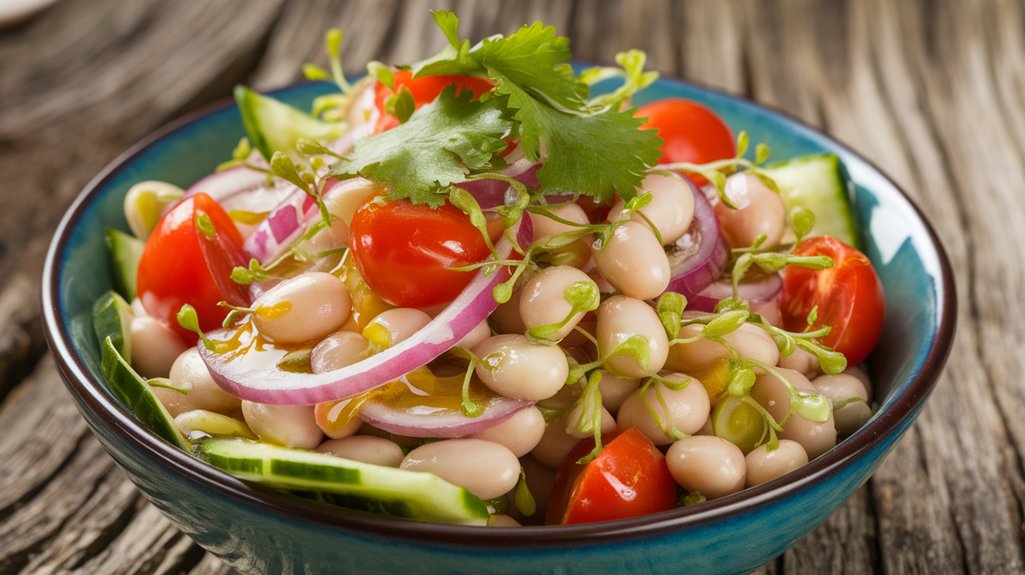
To create a truly delicious sprouted mung bean salad, I like to incorporate a variety of flavorful ingredients that complement the beans’ natural crunch.
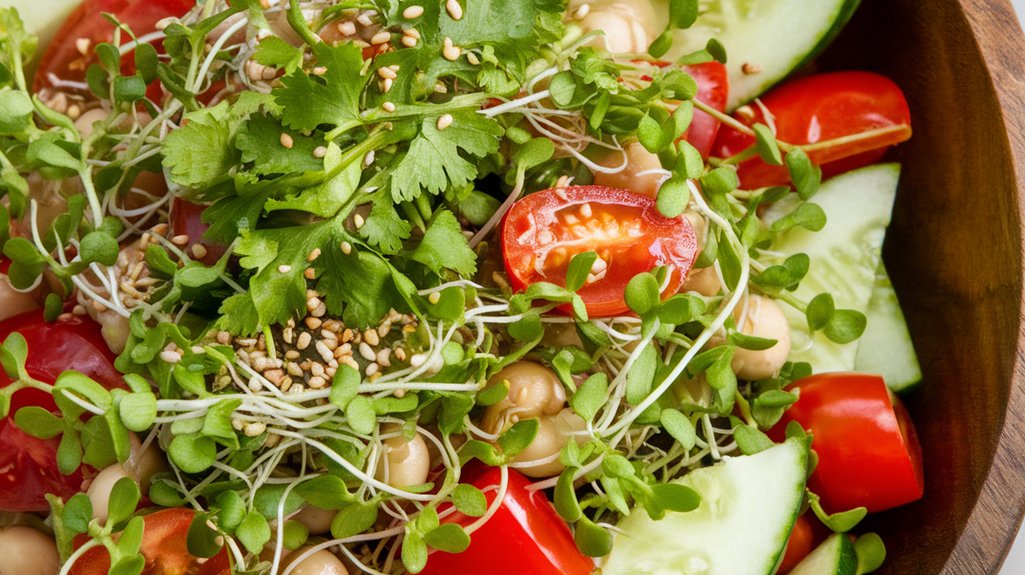
Fresh vegetables like diced cucumbers and bell peppers add a refreshing crispness, while shredded carrots contribute a hint of sweetness. I often include herbs such as cilantro or mint for a burst of freshness and aroma.
A squeeze of lime juice brightens the flavors, and a drizzle of sesame oil gives it a nutty depth. For an extra kick, diced jalapeños or a sprinkle of chili flakes work wonders.
Lastly, a handful of toasted nuts or seeds adds crunch and healthy fats, making the salad not just tasty but also nutritious.
Easy Sprouted Mung Bean Salad Recipe
Creating a sprouted mung bean salad isn’t only simple but also rewarding, especially when you see how quickly the ingredients come together.
Here’s a quick recipe to get you started:
- 1 cup sprouted mung beans: Packed with protein and fiber.
- 1 diced cucumber: Adds crunch and hydration.
- 1 chopped tomato: Provides a burst of flavor and nutrients.
To make it, just combine the sprouted mung beans, cucumber, and tomato in a bowl.
Drizzle with olive oil, lemon juice, salt, and pepper to taste. Toss everything together and enjoy!
This salad isn’t just nutritious; it’s also incredibly versatile. You can easily adapt it by adding other veggies or herbs.
Creative Ways to Serve Sprouted Mung Bean Salad
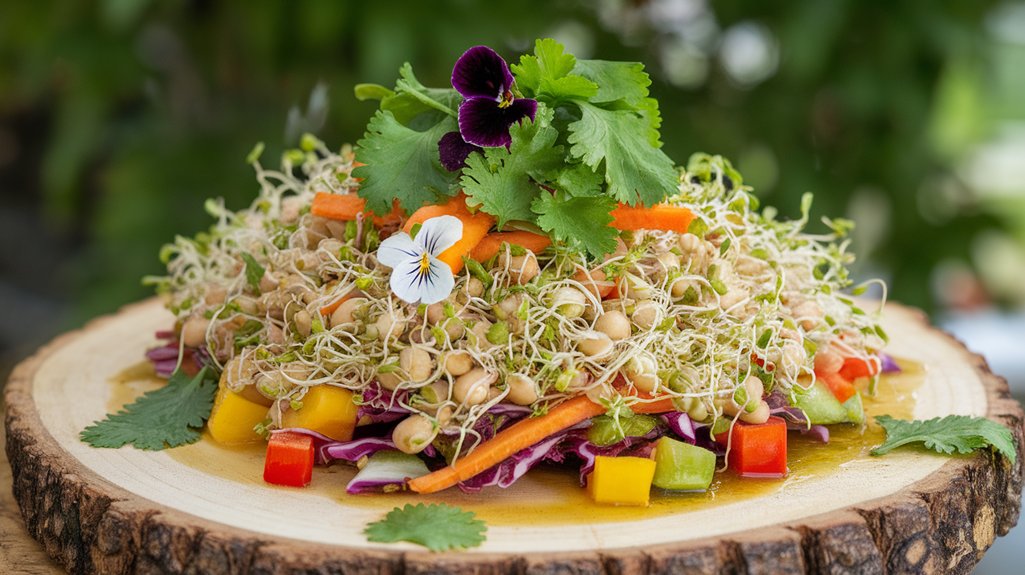
While there are countless ways to enjoy sprouted mung bean salad, presenting it creatively can elevate your dining experience. One of my favorite methods is serving it in avocado halves, which not only adds a creamy texture but also boosts healthy fats.
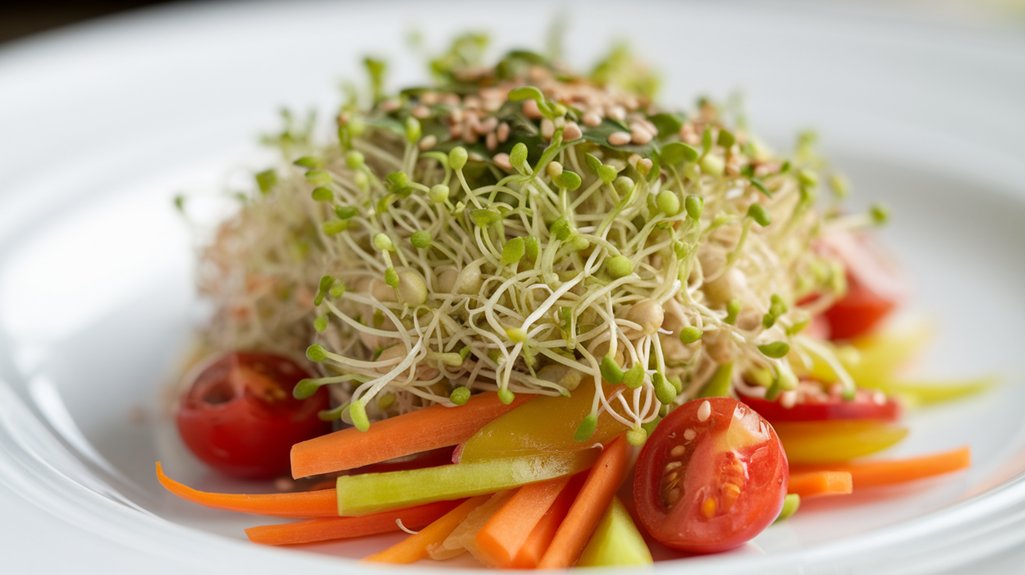
You can also layer the salad in mason jars for a vibrant, portable option perfect for picnics. For a more elegant touch, I like to use a ring mold, creating a beautiful tower of colors on a plate.
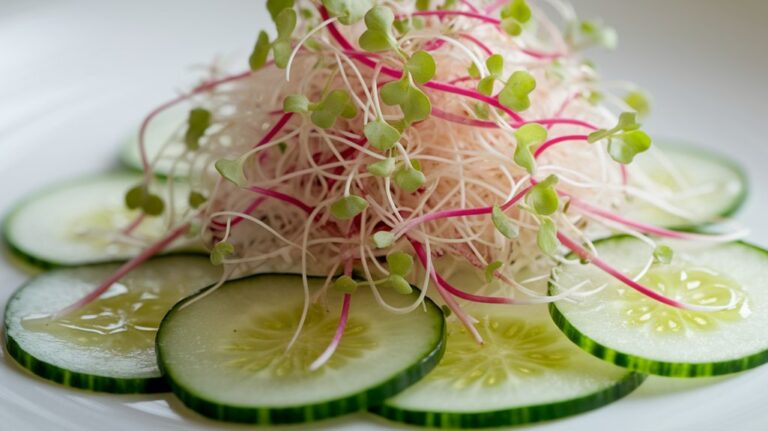
Finally, consider garnishing with edible flowers or microgreens for that extra flair. These simple serving ideas can transform your salad into a visually appealing dish, making it as delightful to look at as it’s to eat.
Frequently Asked Questions
How Long Do Sprouted Mung Beans Last in the Refrigerator?
I’ve found that sprouted mung beans can last in the refrigerator for about 5 to 7 days when stored properly.
I usually keep them in a breathable container to prevent moisture buildup, which helps maintain their freshness.
If I notice any off smells or sliminess, I toss them out immediately.
It’s always best to check them regularly to ensure they’re still good to eat.
Enjoying fresh sprouts is definitely worth the effort!
Can I Use Dried Mung Beans Instead of Sprouted?
Absolutely, you can use dried mung beans instead of sprouted ones.
However, keep in mind that dried beans require cooking and take longer to prepare. I often soak them overnight, then boil them until tender.
While they won’t provide the same crunchy texture as sprouts, they still offer great nutrition and flavor.
If you’re looking for that distinctive crunch, you might want to consider sprouting them first instead.
Are There Any Allergens Associated With Mung Beans?
I’ve found that mung beans are generally safe for most people, but they can cause allergic reactions in some individuals.
Symptoms can include hives, itching, or gastrointestinal issues. If you’ve got a history of legume allergies, it’s best to exercise caution.
I always recommend consulting with a healthcare professional if you suspect an allergy. Staying informed about potential allergens helps me make safer food choices, and I think it’s important for everyone.
What Is the Best Way to Store Sprouted Mung Beans?
When I store sprouted mung beans, I keep them in an airtight container in the fridge.
This way, they stay fresh for about a week. I also make sure to rinse them lightly every couple of days to prevent any spoilage.
If I notice any sliminess, I discard them immediately.
Can I Grow Mung Beans Indoors for Sprouting?
Absolutely, you can grow mung beans indoors for sprouting!
I’ve done it myself, and it’s quite simple. Just soak the seeds overnight, then rinse and drain them.
Place them in a jar or sprouting tray, keeping them in a dark, well-ventilated spot. Rinse them a couple of times a day, and in about 3 to 5 days, you’ll have fresh sprouts ready to enjoy.
It’s a fun and rewarding indoor gardening project!
Conclusion
Incorporating sprouted mung beans into your diet is a delicious way to boost your nutritional intake. Their impressive health benefits, combined with the versatility of flavors you can add, make for a refreshing salad that’s both satisfying and nutritious. Whether you enjoy it as a light meal or a side dish, sprouted mung bean salad can easily fit into various culinary styles. I encourage you to try it and explore the creative possibilities that await you!