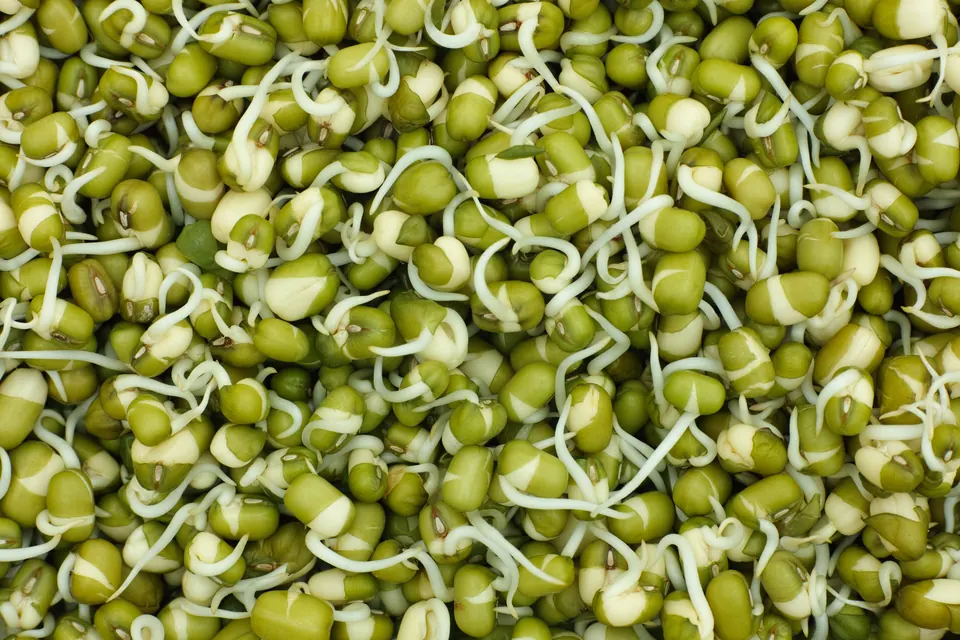
Short answer: soak ½ cup of whole mung beans in cool water for 6 to 8 hours. Drain, then rinse and drain them two or three times a day in a jar kept in the dark. They're ready in 2 to 3 days, when the white tails are about 1 to 2 cm long. For long, thick sprouts like the ones in shops, grow them for 5 to 7 days under a light weight.
What are mung bean sprouts?
Mung bean sprouts come from the mung bean (Vigna radiata), a small green bean grown across Asia. When people say "bean sprouts," this is usually what they mean: the crunchy, juicy white sprouts with a yellow tip that go into pad thai and pho, or a quick stir-fry.
They're one of the easiest sprouts to grow. The beans are big, so they drain well and rarely go moldy. They sprout fast, and you don't need any light. In fact, light is what you want to avoid, because it turns them green and bitter.
There are two ways to grow them:
- Short sprouts (2–3 days): the beans with a short white tail. They're nutty and crunchy, and the easiest to grow in a jar.
- Long bean sprouts (5–7 days): the thick, long, white sprouts sold in shops. They need darkness, frequent rinsing and a little weight on top to grow fat and straight.
If you're not sure how they differ from soybean sprouts, read what are bean sprouts?
What you need
- ½ cup (about 100 g) of whole green mung beans, ideally sold for sprouting
- A 1-quart (1-liter) wide-mouth jar with a mesh sprouting lid
- Cool, clean water
- A dark spot, such as a kitchen cupboard, or a tea towel to cover the jar
Use whole beans, not split ones. Yellow split mung beans (moong dal) have had their skins and halves separated, so they can't grow.
How to grow mung bean sprouts, day by day
- Day0
Rinse and soak for 6–8 hours
Pick out any broken beans or small stones. Rinse the beans, then cover them with about three times their volume of cool water. Soak for 6 to 8 hours, or overnight.
- Day1
Drain and rinse
Drain off the soak water. Rinse with fresh water, swirl and drain well. Set the jar upside down at an angle in a bowl, in a dark cupboard.
- Day1–2
Rinse two or three times a day
Fill the jar with cold water, swirl and drain completely. Small white tails appear within a day. In a warm kitchen, rinse three times a day.
- Day2–3
Harvest short sprouts
When most tails are 1 to 2 cm (½ to ¾ inch) long, give them a final rinse. Most hulls float, so you can skim some off if you like.
- Day3
Dry and refrigerate
Drain for an hour or two, then store them in a covered container lined with a paper towel. Eat within 3 to 5 days.
Keep them in the dark. Mung bean sprouts don't need light at any stage. Light makes them green and adds a bitter edge. Cover the jar with a tea towel, or keep it in a cupboard and only take it out to rinse.
What happens each day
| Day | What you'll see |
|---|---|
| 0 (after soaking) | Beans have about doubled in size. Some skins split |
| 1 | Tiny white tails poke out of most beans |
| 2 | Tails 0.5–1 cm long. A fresh, pea-like smell |
| 3 | Tails 1–2 cm. Ready to eat as short sprouts |
| 5–7 | Long sprouts (only if grown under weight in the dark) |
How to grow long, thick bean sprouts
The long white bean sprouts in shops are grown in the dark, rinsed often, and kept under gentle pressure. The pressure makes them grow thick and straight instead of thin and curly. You can copy this at home with a colander or a container that has drainage holes.
- Soak the beans for 6 to 8 hours as above.
- Spread them in a colander or a container with holes, no more than two beans thick.
- Cover them with a damp cloth, then a plate or a small bag of water as a light weight.
- Put the whole thing in the dark. Rinse well with cold water three to four times a day, letting it drain each time.
- Harvest at 5 to 7 days, when the sprouts are 5 to 8 cm (2 to 3 inches) long.
Long sprouts need more care than a jar of short ones. Warm rooms speed them up but also raise the risk of spoilage, so rinse often and keep everything clean.
Mung bean sprouts vs soybean sprouts
Both are sold as "bean sprouts," but they're different plants.
| Mung bean sprouts | Soybean sprouts | |
|---|---|---|
| Bean | Small green mung bean | Larger yellow soybean |
| Look | Thin white stem, small pale head | Thicker stem, big yellow head |
| Taste | Mild, juicy, crisp | Nuttier, firmer |
| Cooking | Seconds to 2 minutes | Must be cooked, usually 5 minutes or more |
| Typical dishes | Stir-fries, pho, pad thai | Korean soups and side dishes |
Mung bean sprouts are the easier of the two to grow, and the ones most recipes mean. If you want to try soybean sprouts, follow our guide to growing soybean sprouts (kongnamul).
Home-grown vs store-bought
Store bean sprouts are usually grown for 5 to 7 days in commercial sprouting drums. They're long and very white, but they often sit in a bag for days before you buy them, and they turn brown fast once opened.
Home-grown sprouts are different in a few ways:
- Fresher. You eat them the day they're ready.
- Your choice of length. Short 3-day sprouts are nuttier and crunchier than long shop sprouts.
- Cheaper. Half a cup of dry beans makes about 2½ cups of sprouts.
- You control the steps. You choose the seed, keep the jar clean and decide when to harvest.
Home-grown sprouts still carry the same food-safety risk as any raw sprout, so the cooking advice above applies to both.
Temperature and timing
Mung beans like it warm. They sprout fastest between about 70 and 80°F (21 to 27°C). Below about 65°F (18°C), add a day. Above about 85°F (29°C), they grow fast but spoil fast too, so rinse three or four times a day.
Sprouting.com's mung bean page gives 2 to 3 days for sprouts and 6 to 7 days for longer shoots, with a soak of 6 to 8 hours.1
How many sprouts you get
Half a cup of dry mung beans grows about 2½ cups of short sprouts.1 Long sprouts give more volume, often 4 to 5 times the dry weight, because they keep growing.
| Dry beans | Short sprouts (day 3) | Long sprouts (day 6) |
|---|---|---|
| ¼ cup (50 g) | About 1¼ cups | About 2–2½ cups |
| ½ cup (100 g) | About 2½ cups | About 4–5 cups |
A 1-quart jar holds about ½ cup of beans comfortably. More than that and the bottom layer stays wet.
Mung bean sprouts nutrition
Here's what USDA FoodData Central lists for 100 g (about 1 cup) of raw mung bean sprouts.2
| Nutrient | Per 100 g raw |
|---|---|
| Calories | 30 kcal |
| Protein | 3.0 g |
| Carbohydrates | 5.9 g |
| Fiber | 1.8 g |
| Vitamin C | 13.2 mg |
| Vitamin K | 33 µg |
| Folate | 61 µg |
| Potassium | 149 mg |
| Iron | 0.9 mg |
In short, they're a light, watery vegetable that adds crunch and volume for very few calories. Sprouting also lowers phytate in beans, which may make some minerals easier to absorb, though results vary.3 For a wider look, see bean sprouts nutrition and safety.
Are mung bean sprouts safe to eat raw?
The good news is that mung bean sprouts are delicious cooked. A 1 to 2 minute stir-fry or a quick blanch keeps them crunchy. If you choose to eat them raw, these steps lower the risk:
- Use whole beans sold for sprouting.
- Wash the jar and lid in hot, soapy water before every batch.
- Drain completely after every rinse.
- Refrigerate them once they're dry, and eat them within a few days.
- Throw out any batch that smells sour or feels slimy.
Problems and fixes
| What you see | Likely cause | What to do |
|---|---|---|
| Beans won't sprout | Split beans, old beans, or a cold room | Use whole beans. Keep them above 65°F (18°C). Try a fresh bag |
| Some beans stay hard | "Hard seeds" that never absorb water | Normal in small numbers. Pick them out before eating |
| Green, bitter sprouts | Too much light | Keep the jar covered or in a cupboard |
| Sour smell, slimy feel | Water pooling or too many beans | Throw the batch out. Use fewer beans and drain longer |
| Thin, curly long sprouts | No weight on top | Grow long sprouts under a light weight in a colander |
| Brown tips | Harvested late or stored wet | Harvest earlier and dry them before refrigerating |
For more fixes, see the sprouting problems guide.
How to store mung bean sprouts
Drain them for an hour or two after the last rinse, or spin them dry. Then store them in a covered container lined with a paper towel. They keep for about 3 to 5 days. Mung bean sprouts spoil faster than small seed sprouts, so grow smaller batches more often.
To freeze them for cooking, blanch for 30 seconds, plunge into ice water, drain very well and freeze in a bag. Add them to soups and stir-fries straight from frozen. They won't be crunchy enough for salads.
How to cook mung bean sprouts
Mung bean sprouts cook in seconds. Add them last and pull the pan off the heat while they still snap.
- Stir-fry: 1 to 2 minutes in a hot wok with garlic and soy sauce.
- Noodle soups: drop a handful into the bowl and pour the hot broth over them.
- Blanch: 30 to 60 seconds in boiling water, then dress with sesame oil and salt for a Korean-style side dish.
- Fried rice and pad thai: stir them in at the very end.
- Spring rolls and pancakes: mix them into the filling or batter.
Try these recipes:
- 5 mung bean sprout recipes ready in 15 minutes
- Mung bean sprout stir-fry
- Korean bean sprout side dish
- Sprouted mung bean (moong) salad
- Mung bean sprout pancakes with tamarind chutney
Where to buy mung beans for sprouting
Use whole mung beans with intact green skins. Beans sold for sprouting are cleaner and sprout more evenly than old pantry stock. We link to Sprouting.com, a Canadian company that sells mung beans in sizes from 125 g to 5 kg.
If you're in the US, check the product page before you order. Sprouting.com notes that US orders of mung beans carry an import duty on top of the listed price.1
Store dry beans in a cool, dry place in a sealed jar. They should sprout well for at least a year.
What to sprout next
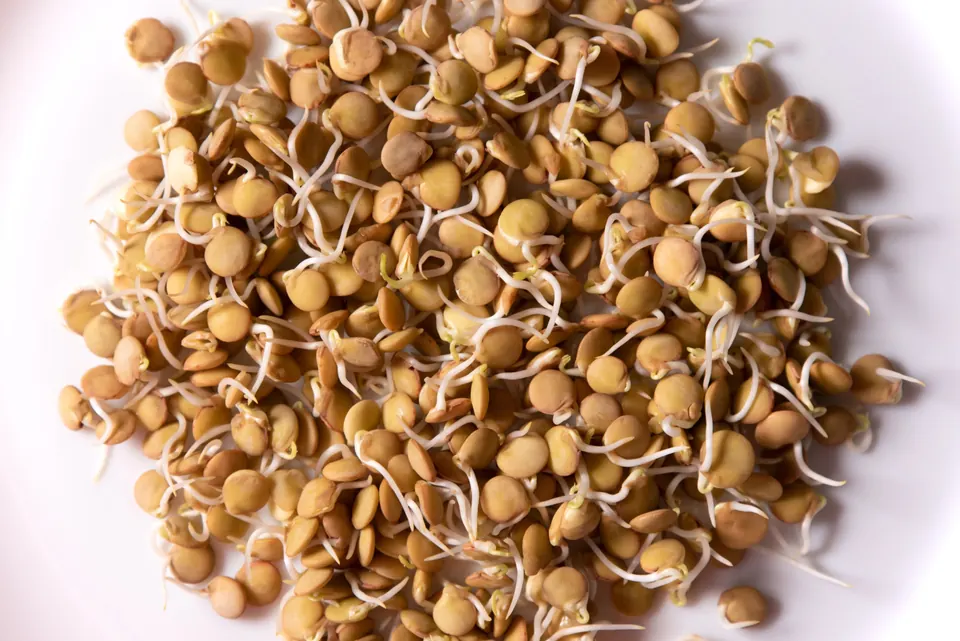
- Lentils: just as easy, ready in 2 to 3 days.
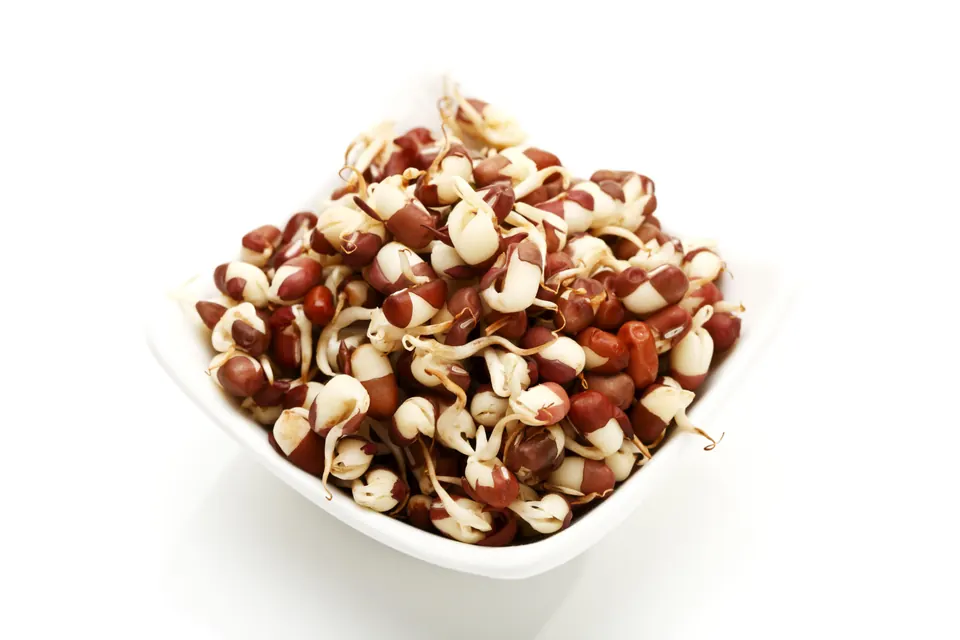
- Adzuki beans: sweeter and nuttier.
- Chickpeas: great for sprouted hummus.
- Soybean sprouts: the other classic bean sprout, used in Korean cooking.
Or browse every seed in the Seed Library.
Recipes with mung beans
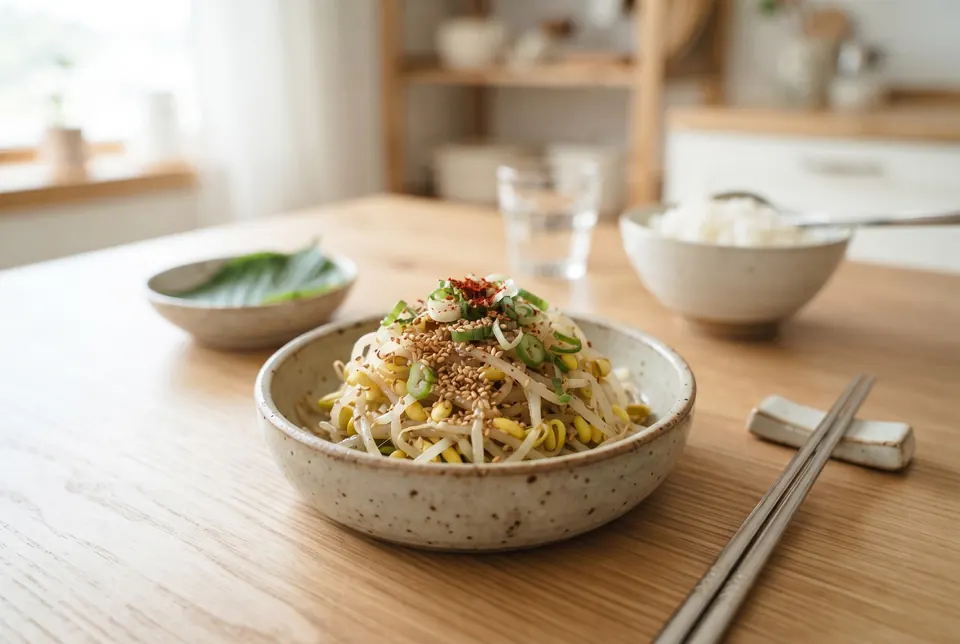 Korean Bean Sprout Side Dish (Sukju Namul and Kongnamul Muchim)
 Garlicky Sautéed Sprouts With Olive Oil
 5 Salad Dressings for Sprouts and Microgreens
Mung beans FAQ
How long do mung bean sprouts take to grow?
Short mung bean sprouts are ready 2 to 3 days after an overnight soak, when the tails are about 1 to 2 cm (½ to ¾ inch) long. For the long, thick sprouts sold in shops, keep them in the dark under a light weight for 5 to 7 days.
Can you eat mung bean sprouts raw?
Many people do, but raw sprouts carry a real food-poisoning risk. The FDA says children, pregnant people, older adults and anyone with a weakened immune system should not eat raw or lightly cooked sprouts. Health Canada advises everyone to cook sprouts. A quick stir-fry or blanch makes them much safer.
Why are my mung bean sprouts turning green?
Light. Mung bean sprouts make chlorophyll as soon as they see light, which turns them green and slightly bitter. Keep the jar in a cupboard or cover it with a tea towel, and only uncover it to rinse.
Can I sprout split mung beans or moong dal?
No. Split or hulled mung beans (yellow moong dal) are broken seeds, so they can't grow a root. Use whole green mung beans, ideally sold for sprouting.
Are mung bean sprouts healthy?
They're a low-calorie vegetable. USDA data gives 100 g of raw mung bean sprouts about 30 calories, 3 g of protein, 13 mg of vitamin C and 61 µg of folate. They add crunch and volume to a meal for very few calories.
How do you store mung bean sprouts?
Drain them well, let them dry for an hour or two, then refrigerate them in a covered container lined with a paper towel. Eat them within about 3 to 5 days. If they turn brown or slimy, or smell sour, throw them out.
Can you freeze mung bean sprouts?
You can, but only for cooking. Blanch them for 30 seconds, chill them in ice water, drain well and freeze in a bag. Thawed sprouts are soft, so add them straight from frozen to soups and stir-fries rather than salads.

Written by Michael
A passionate sprouting professional sharing practical tips for growing sprouts and microgreens at home. More about Michael
Sources
- Sprouting.com (Mumm's Sprouting Seeds). Bean, Mung: days to sprout, soak time, yield and shipping notes. Link
- U.S. Department of Agriculture, Agricultural Research Service. FoodData Central (SR Legacy and Foundation Foods), values per 100 g. Link
- Elliott H, Woods P, Green BD, Nugent AP. Can sprouting reduce phytate and improve the nutritional composition and nutrient bioaccessibility in cereals and legumes? Nutrition Bulletin, 2022. Link
- U.S. Food and Drug Administration. Selecting and Serving Produce Safely. Link
- Health Canada. Food safety tips for sprouts. Link