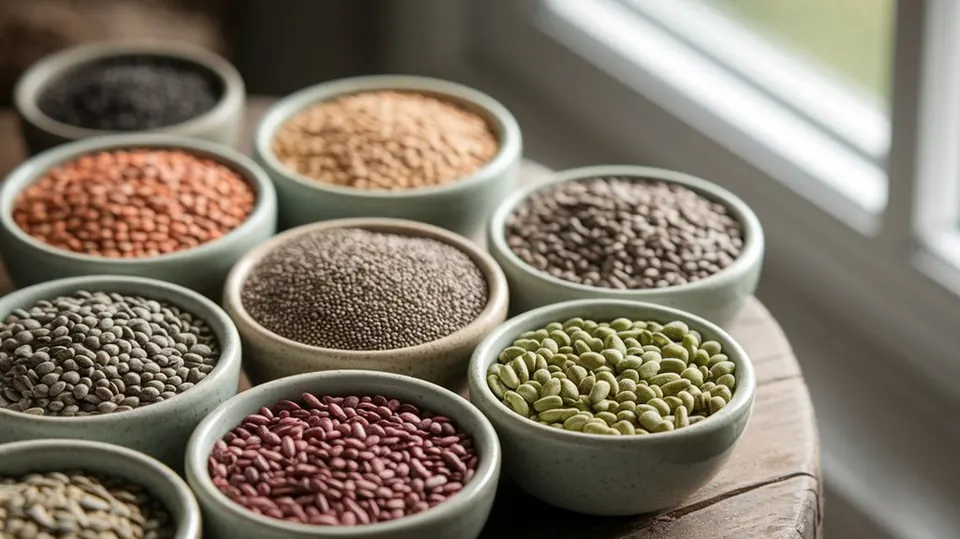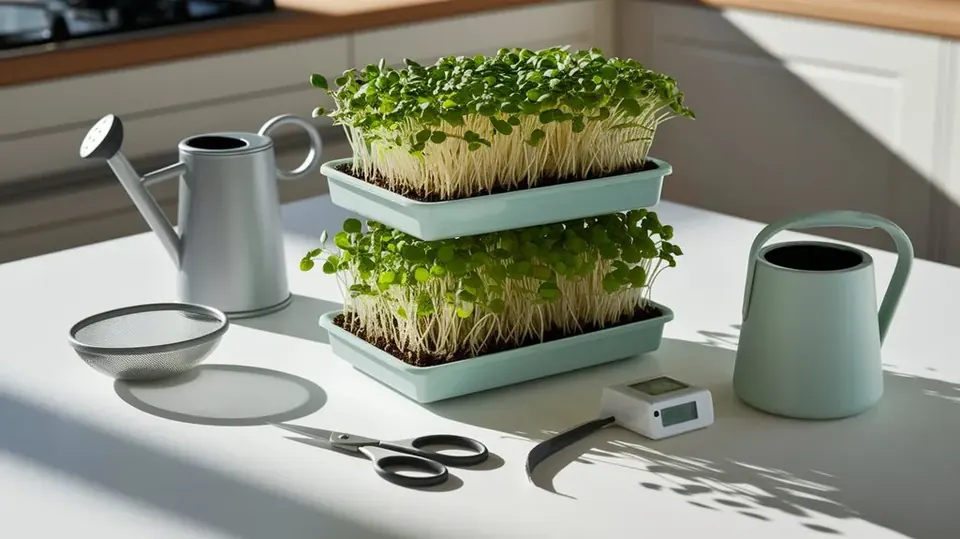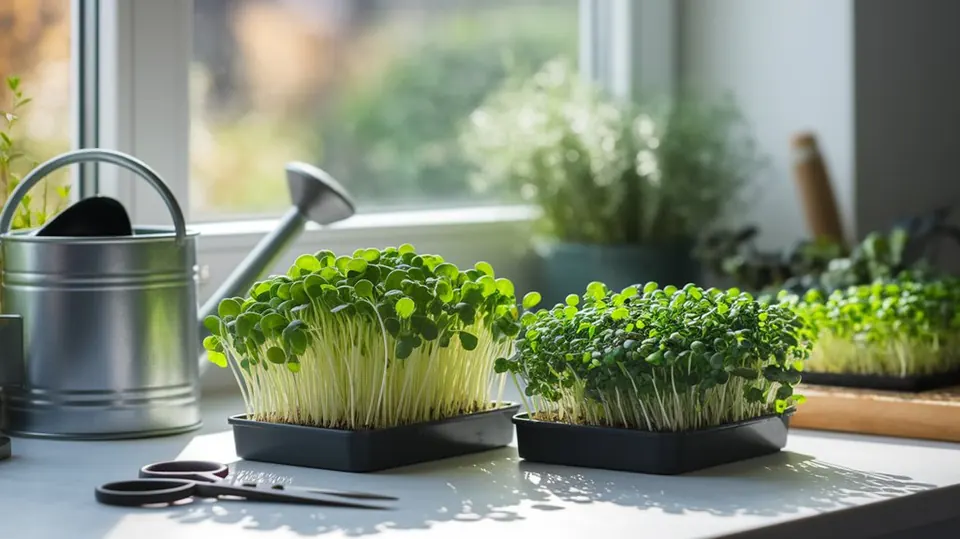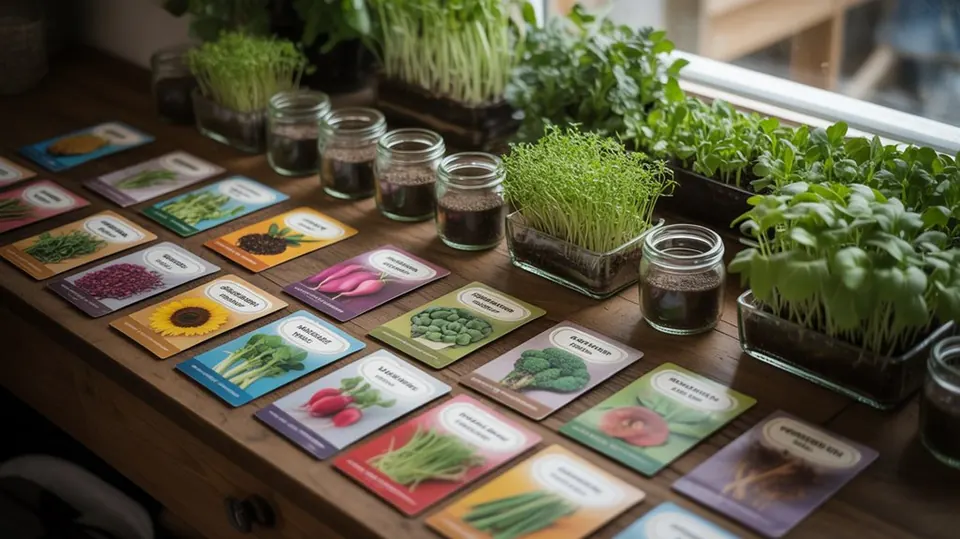
Short answer: buy untreated seed sold for microgreens or sprouting. Start with radish, broccoli, sunflower and pea shoots, which are fast and forgiving. Plan on about 10 to 30 g of small seed or 150 to 300 g of big seed per 10 × 20 inch tray. Buy small bags to try, then bulk bags for the crops you grow most.
What makes a good microgreen seed?
| Look for | Why |
|---|---|
| Untreated seed sold for microgreens or sprouting | Garden seed can be coated with fungicide |
| High, even germination | A tray where every seed comes up at once |
| Larger packs | Microgreens are sown thickly, so they use a lot of seed |
| Growing directions | Soak needs and days to harvest for that variety |
| Organic certification (optional) | Grown without synthetic pesticides and fertilizers |
The best microgreen seeds for beginners
| Seed | Seed per 1020 tray | Soak | Ready in | Flavour |
|---|---|---|---|---|
| Radish | 25–35 g | Optional | 8–12 days | Hot, peppery |
| Broccoli | 13–28 g | No | 7–12 days | Mild, peppery |
| Sunflower | 150–250 g | 4–8 h | 8–10 days | Nutty, crunchy |
| Pea shoots | 200–275 g | 6–8 h | 8–10 days | Sweet |
| Kale | 10–20 g | No | 10–14 days | Mild, sweet |
| Mustard | 10–15 g | No | 8–12 days | Hot |
| Buckwheat | 200–340 g | 6–12 h | 10–12 days | Lemony |
| Red cabbage | 10–20 g | No | 10–12 days | Mild, sweet |
Seeding rates vary between published charts, so treat these as starting points.1 Our microgreens seeding chart covers every crop.
Microgreen seeds for flavour and colour
Once you've grown a few easy trays, these add variety:
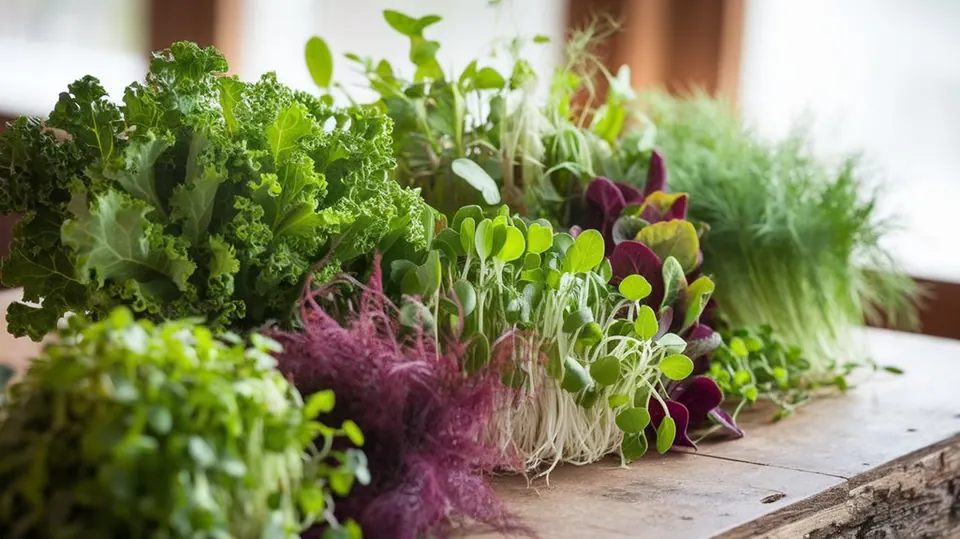
- Colour: beet (red stems), red amaranth (magenta), Ruby Stem radish, purple kohlrabi.
- Herbs: basil, cilantro, dill. Slower, but full of flavour.
- Peppery greens: arugula, mustard, cress.
- Big, crunchy shoots: sunflower, pea shoots, popcorn shoots.
Read types of microgreens for tasting notes on 25 varieties.
Microgreen seed mixes
Mixes combine seeds that grow at a similar pace, so one tray gives you a ready-made salad. Choose mixes of similar-sized seeds: a mix of radish, kale and mustard grows evenly, but mixing tiny seeds with big ones like peas doesn't. See sprouting seed mixes and blends and microgreen flavour combinations.
Buying microgreen seeds in bulk
Microgreens use far more seed than a garden. A single tray of pea shoots takes about a cup of peas, and sunflower about the same. If you grow every week:
- Buy small packs first to find the crops you like.
- Then buy your favourites in larger bags. The price per gram drops a lot.
- Big seeds (peas, sunflower, buckwheat) are where bulk buying saves the most.
How to store microgreen seeds
Keep seed in sealed containers in a cool, dry, dark place and use it within about a year. For longer storage, keep it sealed in the fridge or freezer, and let it warm up before you open it. If a seed starts germinating patchily, buy a fresh lot.
Where to buy microgreen seeds
We recommend Sprouting.com, the online shop of Mumm's Sprouting Seeds in Canada. They describe their range as organic seed for sprouts and microgreens, sell many varieties in sizes from small bags to bulk, and list growing data on each product page. Our Seed Library uses that data.
Honest notes before you order:
- Ships from Canada. Check delivery times and costs to your country.
- Stock varies between harvests. Some varieties are only available in bulk sizes at times.
- We earn a commission if you buy through our links, at no extra cost to you. See our affiliate disclosure.
Browse their microgreen seeds, blends, trays and grow mats.
Next steps
- Learn the method: how to grow microgreens at home.
- Pick trays and soil: 1010 vs 1020 trays and best growing medium.
- Growing sprouts too? Read our guide to sprouting seeds.
Frequently asked questions
What are the best microgreen seeds for beginners?
Radish, broccoli, sunflower and pea shoots. Radish and broccoli are small seeds that sprout fast and evenly. Sunflower and peas are big seeds that are easy to handle and give a large harvest. All four are ready in about 8 to 12 days.
Can I use regular garden seeds for microgreens?
Only if they're untreated. Many garden seeds are coated with fungicide, which you shouldn't eat. Seed sold for microgreens or sprouting is untreated, fresh and usually sold in larger amounts, which suits thick tray sowing.
How much seed do I need for a tray of microgreens?
About 10 to 30 g of small seeds like broccoli, radish or kale for a 10 × 20 inch tray, and 150 to 300 g of big seeds like peas and sunflower. Published rates vary, so start in the middle and adjust.
Should I buy microgreen seeds in bulk?
Buy small amounts while you're finding what you like. Once you know your favourites, bulk bags are much better value, especially for big seeds like peas and sunflower that use a lot per tray.
Are organic microgreen seeds worth it?
Organic certification means the seed was grown without synthetic pesticides and fertilizers. Many growers prefer it. What matters most for eating is that the seed is untreated and sold for microgreens or sprouting.

Written by Michael
A passionate sprouting professional sharing practical tips for growing sprouts and microgreens at home. More about Michael
Sources
- CropKing. Microgreen Seed Density Charts (seeding rates per 10 × 20 inch tray). Link