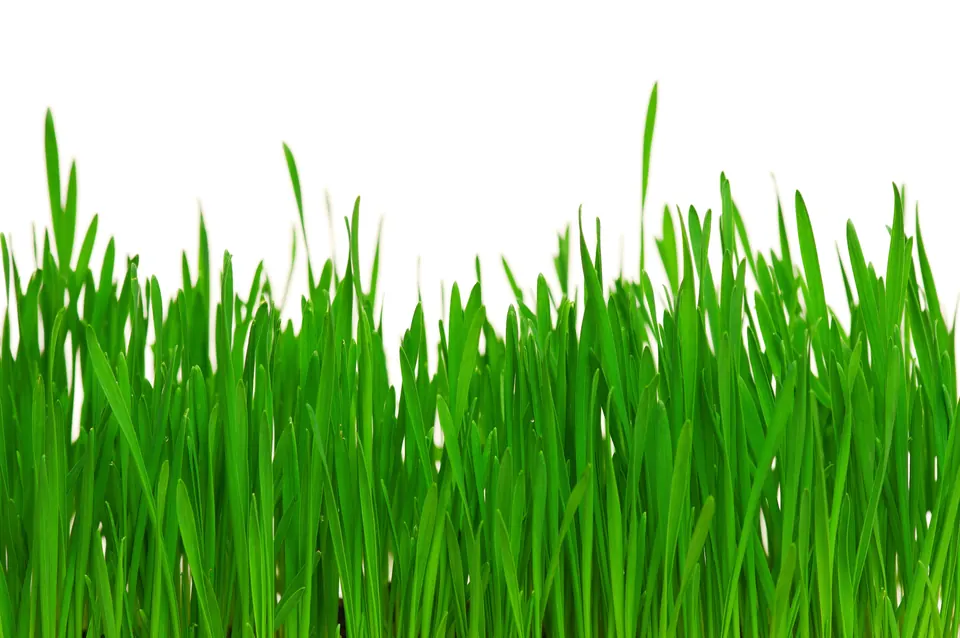
Short answer: soak about 1½ cups of hard red wheat berries for 8 to 12 hours, then let them sprout in a jar for 1 to 2 days until tiny tails appear. Spread them thickly on 1 inch (2.5 cm) of moist soil in a 10 × 20 inch tray, cover for 2 to 3 days, then move them to a bright spot. Water daily and cut the grass just above the soil at 6 to 7 inches, around day 8 to 10.
What is wheatgrass?
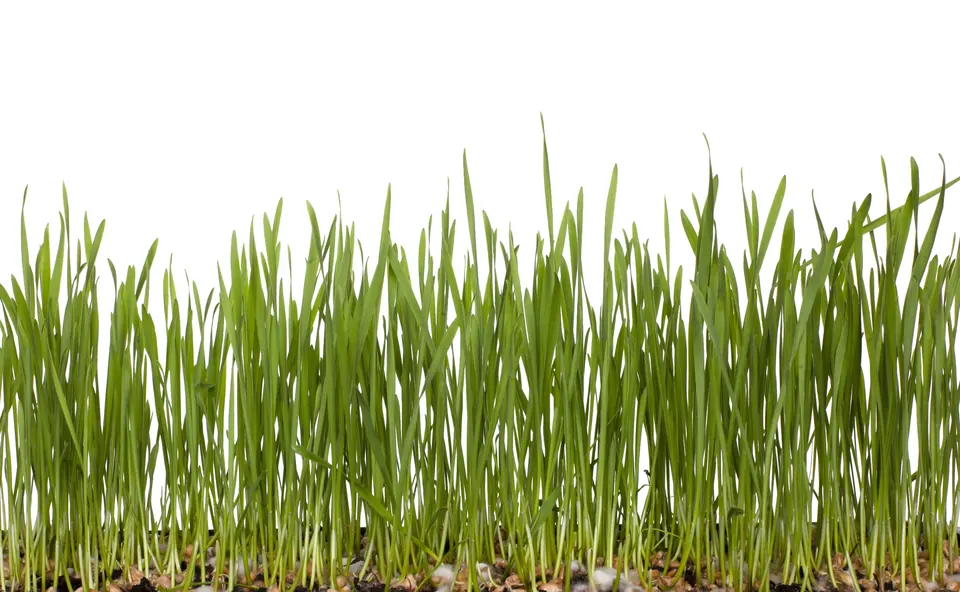
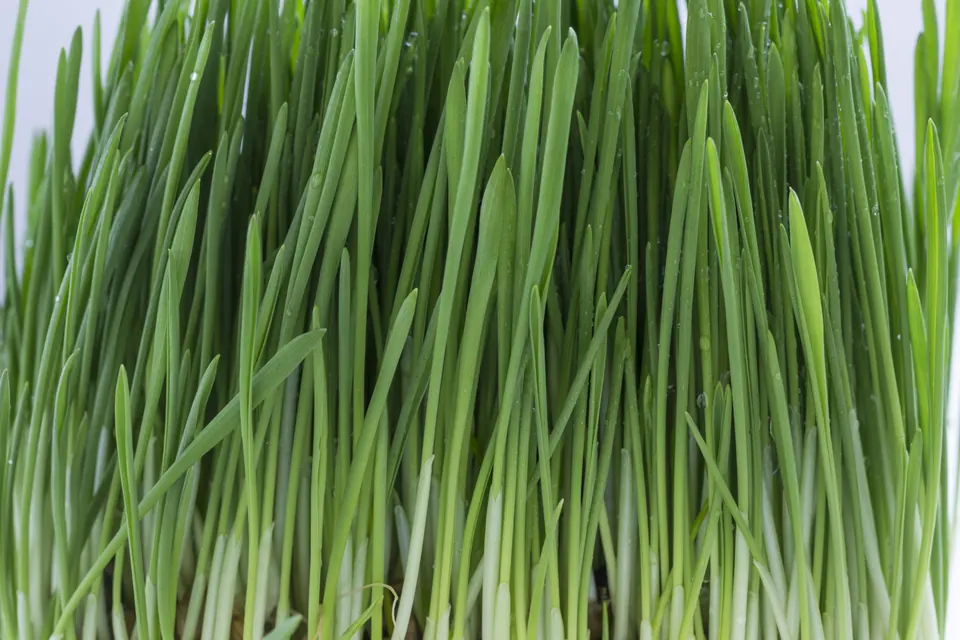
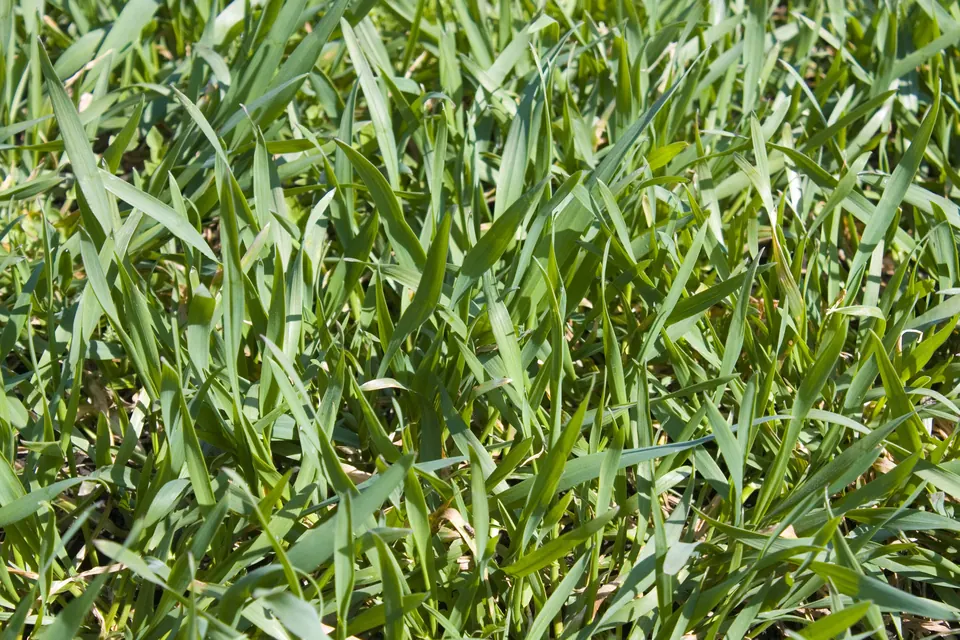
Wheatgrass is the first leaves of the common wheat plant (Triticum aestivum), cut about a week after planting. At this stage it's a soft, bright green grass. The blades are too fibrous to chew well, so most people juice it or blend it into smoothies. It's also the same grass sold as "cat grass" in pet shops.
It's one of the easiest things to grow indoors. The seeds are large, sprout fast and grow quickly in almost any tray. All you need is wheat berries, a tray, some soil or a grow mat, and a bright window.
What you need
- About 1½ cups (250 to 350 g) of hard red winter wheat for a full 10 × 20 inch tray, or about ¾ cup for a 10 × 10 tray
- A 1020 tray with drainage holes, plus a solid tray underneath (see 1010 vs 1020 trays)
- 1 inch (2.5 cm) of potting mix or seed-starting mix, or a grow mat
- A jar with a sprouting lid to pre-sprout the seed
- A spray bottle, and later a sharp knife or scissors
Which wheat to use: whole, raw wheat berries. Hard red winter wheat is the classic choice for thick, sweet grass. Hard red spring wheat also works well. Avoid cracked wheat, bulgur or pearled grains, because they're broken or cooked and can't grow.
How to grow wheatgrass, day by day
- Day0
Rinse and soak for 8–12 hours
Rinse the wheat berries well, then cover them with two to three times their volume of cool water. Soak them for 8 to 12 hours.
- Day1–2
Pre-sprout in a jar
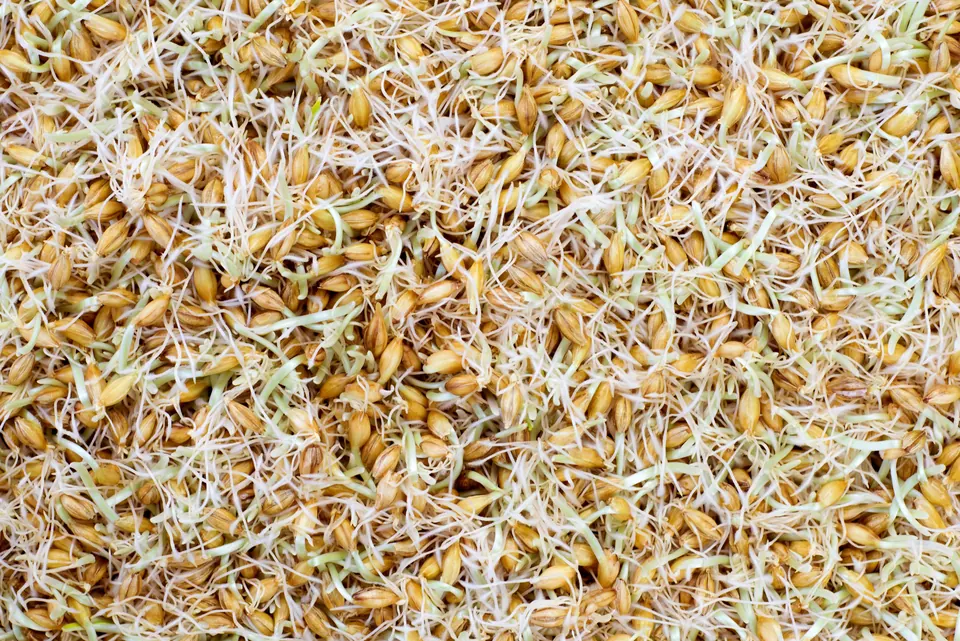
Drain, then rinse and drain twice a day in a jar tilted upside down. Plant when most seeds show a tiny white tail, usually after 1 to 2 days.
- Day2
Plant thickly
Spread the sprouted seed in a single, tightly packed layer over moist soil. Seeds can touch. Press them gently into the surface but don't bury them.
- Day2–5
Keep them covered
Mist the seeds, then cover them with another tray or a damp cloth to keep them dark and moist. Mist once or twice a day. Roots grab the soil within a couple of days.
- Day5–10
Light and water
When the shoots are about 1 inch tall, uncover them and move the tray to a bright window or under a light. Water from below once a day by filling the solid tray.
- Day8–10
Cut and juice
Cut the grass just above the soil when it's 6 to 7 inches (15 to 18 cm) tall and a second blade starts to split from the first. Juice it fresh.
Water from below. Pour water into the solid tray under the planted tray and let the soil soak it up for 10 to 15 minutes, then tip out what's left. Wet blades and still air are the main causes of mold on wheatgrass.
Seeding rate
Wheatgrass is grown much thicker than most microgreens. Published seeding rates for a 10 × 20 inch tray range from about 1 to 1½ cups up to a full pound (450 g) of dry seed.1 For home growing, about 1½ cups (250 to 350 g) gives a dense, even mat. If the grass looks thin, add more seed next time. If the bottom turns yellow or moldy, use less.
Light and temperature
Wheatgrass likes cool to normal room temperatures, about 60 to 75°F (16 to 24°C). Hot rooms make it grow fast but weak, and invite mold. Give it bright, indirect light from a window, or 12 to 16 hours under an LED shop light. Pale yellow grass means it needs more light. For more, read our guide to grow lights.
How much juice you get
Juice yield depends on how tall you let the grass grow and on your juicer. For trays of cereal grass, Sprouting.com estimates about 2 to 6 oz (60 to 180 ml) of juice per tray.2 A common shot is 1 to 2 oz (30 to 60 ml), so one tray gives a few days of shots.
To keep a steady supply, plant a new small tray every 3 to 4 days.
How to juice wheatgrass
Wheatgrass is tough and stringy, so the tool matters.
- Slow (masticating) juicer: the best option. It presses the grass and gives the most juice.
- Blender and strainer: blend a handful of chopped grass with a little cold water, then strain it through a nut-milk bag or fine sieve. It works, but gives a weaker juice.
- Fast (centrifugal) juicer: usually wraps the grass around the blade and gives very little juice. Most can't handle it well.
Drink the juice right away or within a few hours. It browns and loses its fresh taste quickly. You can freeze it in ice cube trays and add the cubes to smoothies. Try our wheatgrass smoothie bowl.
Does wheatgrass have health benefits?
Wheatgrass is fresh and low in calories, and it adds some vitamins and minerals to a smoothie. That's a fair reason to grow it. The big claims are a different story.
Memorial Sloan Kettering's review says there's no scientific evidence that wheatgrass prevents or treats cancer or AIDS. It notes one small study in which wheatgrass juice reduced fever and infection in people having chemotherapy, but some of them also had nausea, and larger studies are needed.3 Claims that chlorophyll "builds blood" or that wheatgrass "detoxes" the body aren't backed by good evidence.
Safety notes
- Mold and bacteria. MSKCC points out that wheatgrass juice can be contaminated with mold or bacteria, because the grass grows for 7 to 10 days in warm, damp conditions before juicing.3 Grow it clean, cut above the soil, rinse the grass and juice it fresh. If you're pregnant or have a weakened immune system, ask your doctor first.
- Gluten. Gluten is in the seed, not the blade. But cut grass can pick up seed bits. If you have celiac disease, talk to your doctor first.
- Nausea. Some people feel queasy from straight wheatgrass juice. Start with 1 oz (30 ml) or mix it into a smoothie.
Wheatgrass for cats
The "cat grass" sold in pet shops is usually wheatgrass. A small tray on a windowsill gives indoor cats something safe to chew instead of houseplants. Grow it exactly as above, but you can stop at 3 to 4 inches (8 to 10 cm). Let your cat nibble a little at a time, and replace the tray when it starts to yellow. Barley and oats make good cat grass too. See our full guide to growing cat grass for pot sizes, safety tips and how much to offer.
Problems and fixes
| What you see | Likely cause | What to do |
|---|---|---|
| White fuzz on the roots | Root hairs (normal) | Mist them. Root hairs flatten when wet; mold doesn't |
| Gray or blue fuzz on seeds, musty smell | Mold from wet seed and still air | Cut away small patches. Use less seed, water from below and add a fan |
| Patchy, uneven grass | Seed not pre-sprouted, or spread unevenly | Pre-sprout until tails appear. Spread in an even single layer |
| Yellow grass | Not enough light | Move it to a brighter window or under a light |
| Floppy, thin grass | Too warm or too little light | Keep it below about 75°F (24°C) and give more light |
| Seeds lifting off the soil | Not covered long enough | Keep it covered, with light weight, for 2 to 3 days |
For more, see microgreen pests and mold: safe, natural fixes.
Storing wheatgrass
Uncut wheatgrass keeps growing on the counter, so cut only what you need. Cut grass keeps for about a week in the fridge in a sealed bag or container. Juice is best fresh. If you must store it, keep it cold in a sealed jar for no more than a day, or freeze it in small portions.
Wheatgrass vs wheat sprouts
They come from the same seed but they're very different foods.
- Wheat sprouts are wheat berries grown for 1 to 3 days until a tiny tail appears. They're chewy and sweet, and are used in salads and sprouted flour.
- Wheatgrass is the green blade grown in a tray for 8 to 10 days. It's juiced, not eaten whole.
Where to buy wheatgrass seed
We link to Sprouting.com, a Canadian company that sells hard red winter and spring wheat for sprouting and growing grass, in sizes from small bags to bulk. A full tray uses a lot of seed, so larger bags are better value if you grow wheatgrass weekly. Store wheat berries in a cool, dry place in a sealed container.
What to grow next
- Barley: barley grass is a popular wheatgrass alternative.
- Oats: hulless oats make soft oat grass, great for cats.
- Rye: another hardy cereal grass.
- Pea shoots: a tray crop you eat, not juice.
Browse every seed in the Seed Library.
Recipes with wheatgrass

Wheatgrass FAQ
How long does wheatgrass take to grow?
About 8 to 10 days from planting, plus a day to soak and a day or two to pre-sprout the seed. Cut it when the grass is 6 to 7 inches (15 to 18 cm) tall and a second blade starts to split from the first.
What seeds do I use for wheatgrass?
Whole, unprocessed wheat berries. Hard red winter wheat is the usual choice because it grows thick, sweet grass. Hard red spring wheat works too. Don't use cracked wheat, bulgur or pearled grain, because they can't sprout.
Do I need soil to grow wheatgrass?
No. Wheatgrass grows on a hemp or jute grow mat, or even on wet paper towels in a tray, because the seed carries its own food. Soil gives the biggest, greenest grass and is the most forgiving, so most home growers start with it.
Can wheatgrass regrow after cutting?
Yes, it usually grows back once, but the second cut is shorter and thinner, and not as sweet. Many growers take one cut and start a new tray. If you want a second cut, keep watering and cut again 5 to 7 days later.
Is wheatgrass gluten-free?
Gluten is in the wheat kernel, not in the green blade. But cut grass can pick up bits of seed, and packaged products vary. If you have celiac disease, talk to your doctor before eating wheatgrass, and cut well above the seeds if you grow your own.
Is wheatgrass safe for cats?
Wheatgrass is the most common cat grass, and most cats nibble it without trouble. Some cats vomit after eating grass, which is usually normal. Give it in moderation and ask your vet if your cat has health problems.
Why is my wheatgrass moldy?
Mold on wheatgrass usually comes from too much water and still air. Rinse the seed well before planting, water from below, and run a small fan nearby. Don't confuse it with root hairs, the fine white fuzz on the roots that disappears when wet.

Written by Michael
A passionate sprouting professional sharing practical tips for growing sprouts and microgreens at home. More about Michael