Short answer: soak hard red wheat berries for 8 to 12 hours, then rinse and drain them twice a day for 1 to 2 days, just until a tiny root shows. Spread them thinly and dry them at about 110 to 150°F (43 to 65°C) until hard, 8 to 24 hours. Let them cool, then grind them in a grain mill or high-power blender. Store the flour cold.
What is sprouted wheat flour?
Sprouted wheat flour is whole wheat flour made from grain that was soaked and allowed to start growing, then dried before milling. Like regular whole wheat flour, it contains the bran, germ and starchy part of the grain.
Sprouting wakes up enzymes inside the grain that begin breaking down starch and proteins. That changes how the flour bakes: doughs rise faster and taste a little sweeter.1 Sprouting can also lower phytate, which may make some minerals easier to absorb.2
What you need
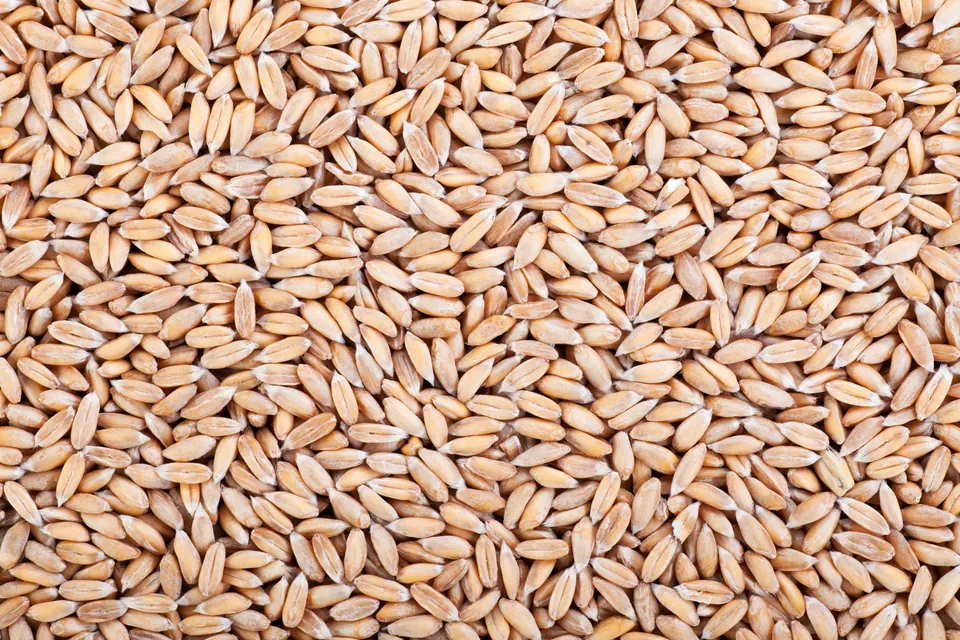
- 2 cups (about 400 g) of whole hard red wheat berries, or spelt or Kamut®
- A large jar with a sprouting lid, or a hemp bag
- A dehydrator, or an oven that can stay at a low temperature
- A grain mill, or a high-power blender
- A fine sieve (optional)
Two cups of dry wheat makes about 2½ to 3 cups of flour.
How to make sprouted wheat flour, step by step
- Day0
Soak for 8–12 hours
Rinse the wheat berries, cover them with plenty of cool water and soak for 8 to 12 hours.
- Day1
Drain and rinse
Drain well. Rinse and drain twice a day, keeping the jar tilted upside down out of direct sun.
- Day1–2
Stop at a tiny root
As soon as most grains show a small white root, no longer than about ⅛ inch (3 mm), stop. This can be 12 to 36 hours after the soak.
- Day2
Dry low and slow
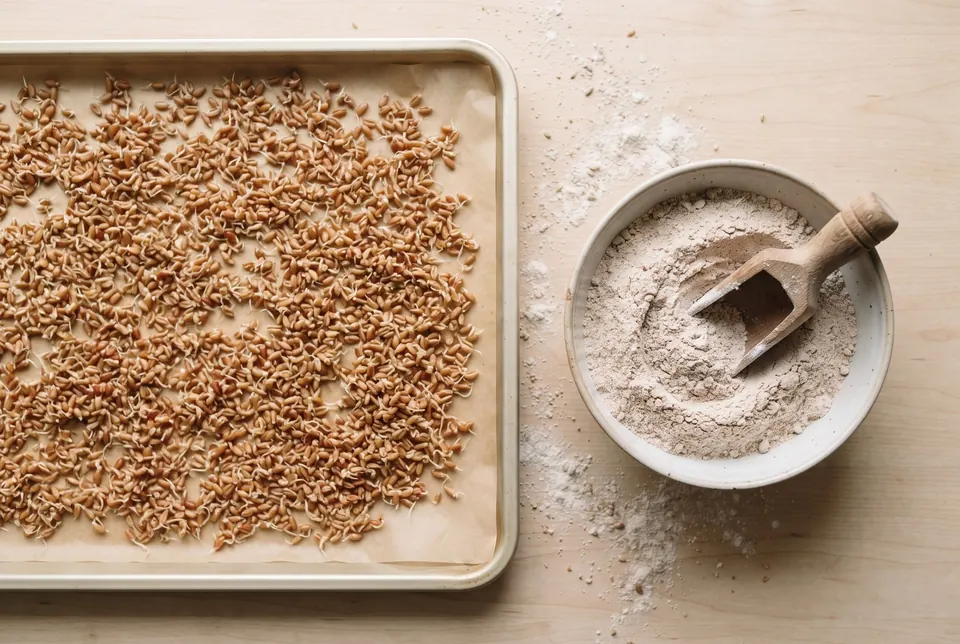
Spread the grain in a thin layer on dehydrator trays or baking sheets. Dry at 110 to 150°F (43 to 65°C) for 8 to 24 hours, until hard and snappy.
- Day2–3
Cool and grind
Let the grain cool completely. Grind it in a grain mill, or in small batches in a high-power blender. Sift if you'd like finer flour.
Short tails make better bread. Grain left to sprout too long builds up enzymes that break down starch during baking, which can make bread gummy and sticky. Stop as soon as you see the root.
Drying: dehydrator or oven
- Dehydrator: the easiest option. Set it to about 115 to 140°F (46 to 60°C) and dry for 12 to 24 hours.
- Oven: use the lowest setting, ideally 150°F (65°C) or below, and prop the door open slightly to let moisture out. Stir every few hours. It usually takes 8 to 12 hours.
The grain is dry when a kernel snaps cleanly between your teeth and doesn't bend. Grain that's still moist will gum up your mill and can go moldy in storage.
How to bake with sprouted flour
- Use it like whole wheat flour in most recipes, but start with slightly less water.
- Watch the rise. Sprouted doughs ferment faster. Check them early.
- Blend it. For lighter bread, mix sprouted flour half and half with regular bread flour.
- Great in quick breads. Pancakes, muffins and cookies work well with 100% sprouted flour.
Try it in our sprouted bread recipe.
How to store sprouted flour
Whole-grain flours contain natural oils that go rancid. Store sprouted flour in an airtight container:
- Fridge: up to 3 months
- Freezer: up to 6 months
Dried, unground sprouted grain keeps longer than flour, so you can dry a big batch and mill small amounts as needed.
Other grains to sprout for flour
| Grain | Flavour | Notes |
|---|---|---|
| Hard red wheat | Classic wheat | Best for yeast bread |
| Spelt | Nutty, sweet | Softer dough |
| Kamut (khorasan) | Buttery | Golden colour |
| Oats (hulless) | Sweet, mild | No gluten structure; best in quick breads |
| Buckwheat | Earthy | Naturally gluten-free; great in pancakes |
Where to buy wheat for sprouting
We link to hard red spring wheat and hard red winter wheat from Sprouting.com, plus spelt and Kamut®. Buy whole, untreated grain. Pearled or cracked grain won't sprout.
Seeds in this article
Frequently asked questions
How long should wheat sprout before making flour?
Only until the root just appears, usually 1 to 2 days after soaking. The tail should be no longer than about ⅛ inch (3 mm). Grain that sprouts longer makes flour that gives gummy, sticky bread.
What temperature do I dry sprouted wheat at?
Low heat, about 110 to 150°F (43 to 65°C), in a dehydrator or an oven on its lowest setting with the door slightly open. It takes 8 to 24 hours. The grain is ready when it's hard and snaps instead of bending.
Can I grind sprouted wheat in a blender?
A high-power blender can make a coarse flour in small batches, but it heats the grain. A grain mill gives a finer, cooler flour. Sift blender flour if you want a smoother texture.
Does sprouted flour bake differently?
Yes. Sprouted flour has more active enzymes, so doughs rise and soften faster, and the bread can be a little denser. Watch the dough rather than the clock, and use slightly less water than with regular whole wheat.
How long does sprouted flour keep?
Like any whole-grain flour, it contains oils that go rancid. Keep it in an airtight container in the fridge for up to 3 months, or the freezer for up to 6. Dried sprouted grain keeps longer, so mill it as you need it.

Written by Michael
A passionate sprouting professional sharing practical tips for growing sprouts and microgreens at home. More about Michael
Sources
- The influence of the use of whole grain flour from sprouted wheat grain on the rheological and microstructural properties of dough and bread. International Journal of Food Science, 2021. Link
- Elliott H, Woods P, Green BD, Nugent AP. Can sprouting reduce phytate and improve the nutritional composition and nutrient bioaccessibility in cereals and legumes? Nutrition Bulletin, 2022. Link