
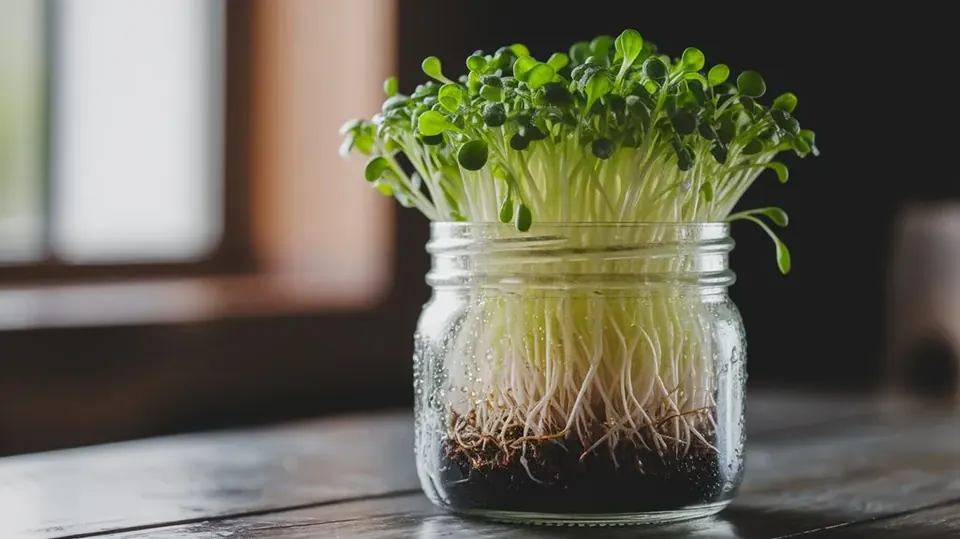
Sprouting definition: sprouting is soaking seeds in water and keeping them damp until they germinate, then eating the young shoots, usually after 2 to 5 days. You eat the whole sprout: seed, root and shoot. Microgreens are grown longer, on soil or a mat with light, and cut above the roots.
Sprouting definition and basics
Sprout. A germinated seed eaten whole, roots and all, usually 2 to 5 days after soaking. See sprouts.
Microgreen. A seedling grown on soil or a mat with light and cut above the roots at the seed-leaf stage, usually 7 to 21 days. See microgreens.
Shoot. A taller seedling of a big seed, like pea or sunflower, grown as a microgreen.
Baby greens. Older seedlings with true leaves, harvested later than microgreens.
Sprouting definitions A to Z
1020 tray. The standard microgreen tray, about 10 × 20 inches. A 1010 tray is half the size. See best microgreen trays.
Blackout. The first days of microgreen growing, when the tray is covered and kept dark so roots establish and stems stretch.
Bottom watering. Pouring water into a solid tray under a holed tray so roots drink from below. It keeps leaves dry and lowers mold risk.
Cotyledon. The first pair of leaves, also called seed leaves. Most microgreens are harvested when these are fully open.
Damping off. A fungal problem that rots seedling stems at the soil line, so they collapse. Caused by cold, wet soil and still air.
Gel-forming seed. A seed that grows a sticky gel coat when wet, like chia, basil, flax and cress. Sow it dry on a damp surface instead of soaking it in a jar.
Germination rate. The percentage of seeds that sprout. Fresh seed sold for sprouting has a higher rate.
Greening. Giving leafy sprouts a few hours of indirect light on the last day so the leaves turn green.
Grow mat. A thin fibre or hemp pad used instead of soil. See how to grow microgreens without soil.
Hull. The outer seed coat. Loose hulls can cling to sprouts and microgreens and are often rinsed or brushed off.
Mesh lid. A screen lid for a sprouting jar that lets water drain out and keeps seeds in.
Rinse and drain. The twice-daily routine for sprouts: fill the jar with cool water, swirl, and drain completely.
Root hairs. Fine, fuzzy white threads on sprout roots, often mistaken for mold. They flatten and disappear when wet. See mold vs root hairs.
Seed sold for sprouting. Seed cleaned, handled and tested for sprouting, and not treated with fungicide.
Seeding density (seeding rate). How much seed to sow per tray, by weight. See the microgreens seeding chart.
Soak. The first step: covering seeds with water for a set time so they absorb water and start to grow. See soak times.
Sulforaphane. A compound formed when glucoraphanin in broccoli sprouts meets the enzyme myrosinase, usually when you chew or blend them. See broccoli sprouts benefits.
Tray sprouter. A stack of slotted trays for growing sprouts, good for small seeds. See best sprouter.
True leaves. The leaves that grow after the seed leaves. Many microgreens get tougher or more bitter once true leaves grow.
Weighted blackout. Covering a tray of big seeds, like sunflower or peas, with a tray and a light weight to help roots grip and hulls fall away.