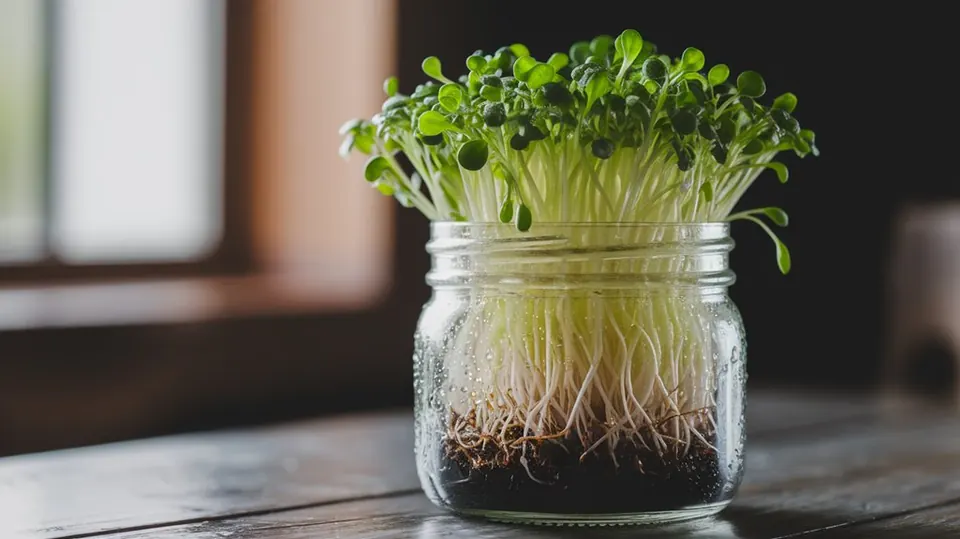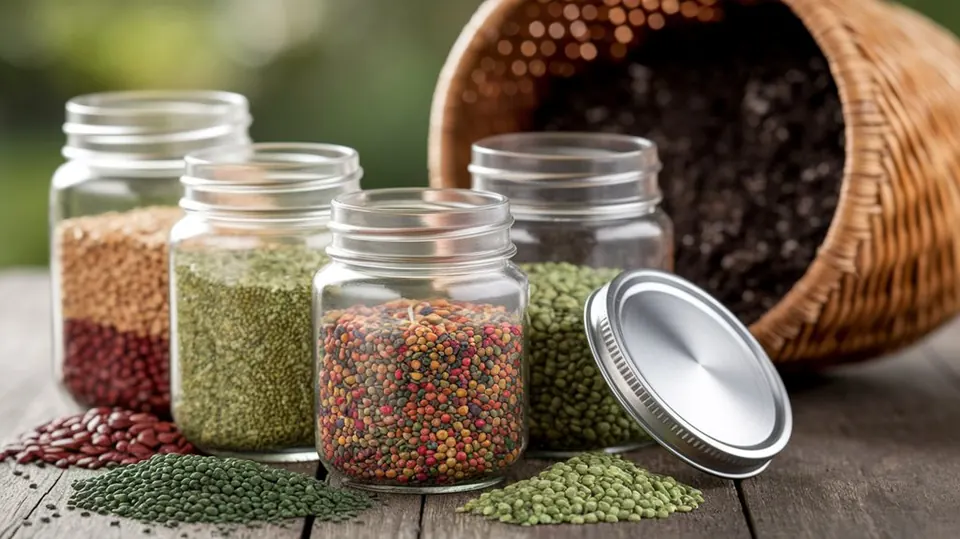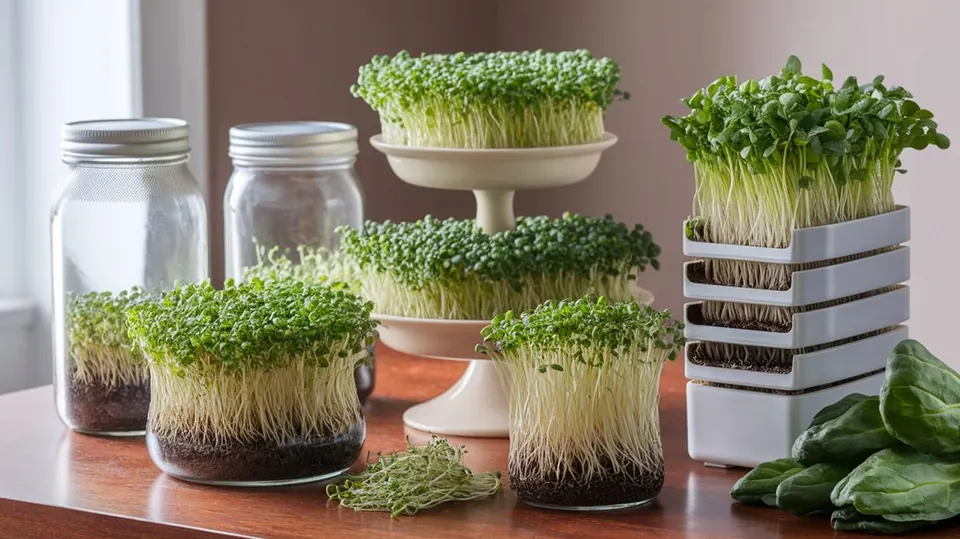
Short answer: start with a glass jar and mesh lid. It works for most seeds. Add a tray sprouter if you grow a lot of small seeds like alfalfa or broccoli, a hemp bag for beans and grains, a clay tower to grow several small batches at once, or a plate for gel-forming seeds like chia and cress.
Sprouter comparison
| Sprouter | Best for | Pros | Cons |
|---|---|---|---|
| Glass jar + mesh lid | Most seeds, especially beans | Cheap, easy to clean, you can see inside | Small seeds can mat and stay wet |
| Tray sprouter | Small seeds | Seed spreads thin, great airflow and drainage | More pieces to wash |
| Clay tower | Several small batches | Clay holds moisture evenly | Takes counter space, costs more |
| Hemp bag | Beans and grains | Drains on its own, unbreakable | You can't see the sprouts |
| Plate or clay dish | Chia, cress, basil, flax | The easiest way to grow gel seeds | Small harvests |
| Automatic sprouter | Frequent sprouters | Rinses on a timer | Costs more, more to clean |
Glass jars
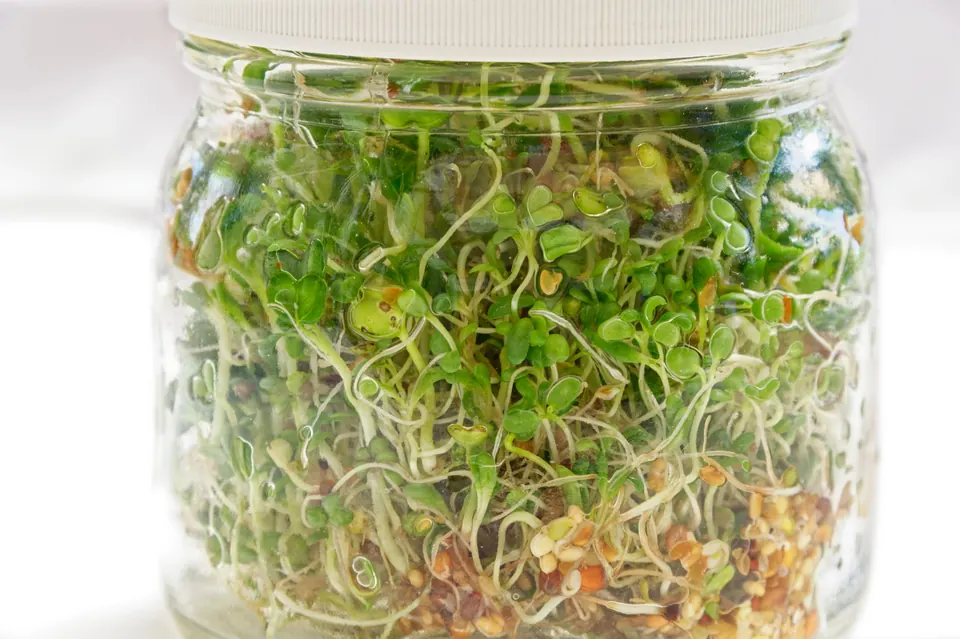
The classic sprouter. A wide-mouth quart jar with a screw-on mesh lid handles almost everything: beans, lentils, grains and small salad seeds. Rinse, drain and rest it upside down at an angle. Read sprouting in a mason jar.
Best tip: for small seeds, use only 1 tablespoon per jar and roll the jar after rinsing so the sprouts don't form a wet clump.
Tray sprouters
A tray sprouter is a stack of shallow, slotted trays. Water poured into the top drains through each tray. Because the seed spreads thin, air reaches every sprout, which suits small seeds like alfalfa, broccoli and clover. You can grow different seeds on each level.
Clay sprouting towers
A terracotta tower has stacked clay dishes. The clay soaks up water and releases it slowly, keeping seeds evenly damp with less rinsing. It's good for small batches of several seeds, and it handles gel-forming seeds better than a jar.
Hemp sprouting bags
A hemp bag works well for mung beans, lentils and grains. Dip the bag in water, let it drain, and hang it or set it on a rack. Beans grow in the dark inside, which keeps mung bean sprouts white. Wash it well between batches and let it dry fully.
Plates and clay dishes
Chia, basil, cress and flax form a gel when wet and clump in a jar. Grow them on a plate lined with a damp paper towel, or on unglazed clay, and mist them twice a day.
Which sprouter should you buy?
- Just starting: a jar and lid.
- You love alfalfa and broccoli sprouts: add a tray sprouter.
- You eat lots of bean sprouts: a hemp bag or a half-gallon jar.
- You want variety at once: a clay tower.
- You want to try chia or cress: any plate works.
Keeping any sprouter clean
Wash your sprouter in hot, soapy water before every batch, rinse well and dry it fully. Clean equipment is one of the simplest ways to keep sprouts fresh and lower the food-safety risk.1
See sprouting kit and supplies for a full list, and the step-by-step sprouting guide for the method.
Seeds in this article
Frequently asked questions
What's the best sprouter for beginners?
A wide-mouth glass jar with a mesh sprouting lid. It's cheap, easy to clean and works for most seeds. Once you sprout often, add a tray sprouter for small seeds.
Are tray sprouters better than jars?
For small seeds, often yes. Trays spread the seed thin, so air reaches every sprout and water drains well. Jars are simpler and better for beans and lentils.
What is a hemp sprouting bag?
A bag made of hemp fabric that you dip in water and hang to drain. It works well for beans and grains. It's lightweight and unbreakable, but you can't see inside.
Do automatic sprouters work?
Yes, they rinse the seeds for you on a timer. They're handy if you sprout a lot, but they cost much more and have more parts to clean. A jar does the same job for very little.

Written by Michael
A passionate sprouting professional sharing practical tips for growing sprouts and microgreens at home. More about Michael
Sources
- Health Canada. Food safety tips for sprouts. Link