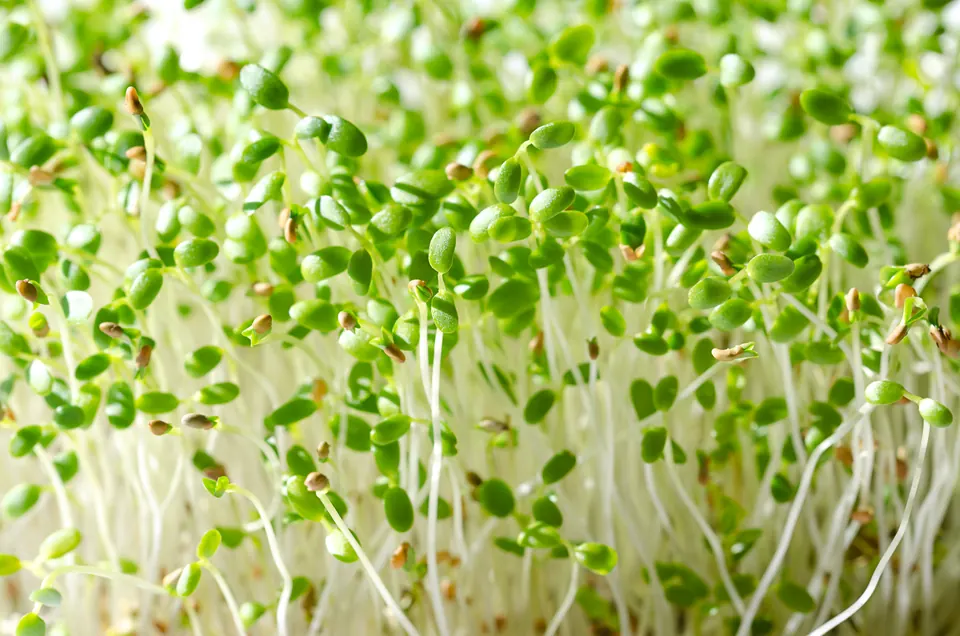
Short answer: soak 1 tablespoon of red or crimson clover seed for 4 to 8 hours in a quart jar. Drain well, then rinse and drain twice a day, keeping the jar tilted upside down and out of direct sun. On day 4 or 5, when the leaves open, give them a few hours of indirect light. Rinse, dry and refrigerate.
What are clover sprouts?
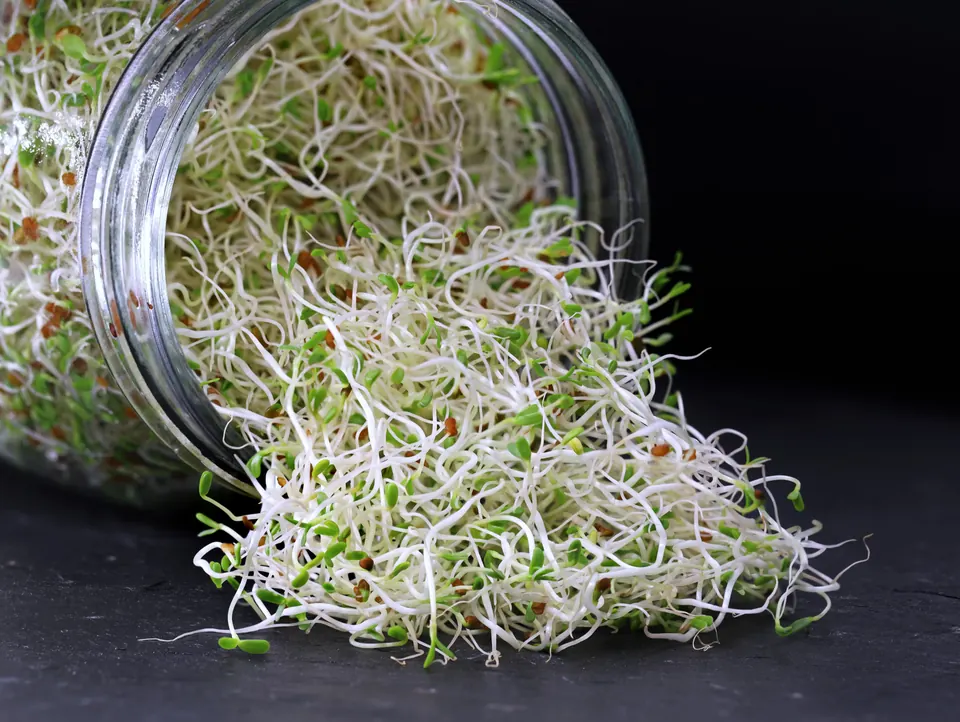
Clover sprouts are young clover plants eaten 4 to 5 days after the seed starts to grow. Most come from red clover (Trifolium pratense) or crimson clover (Trifolium incarnatum). They look almost exactly like alfalfa sprouts: fine white stems, a small root and two tiny green leaves.
The taste is the difference. Clover sprouts are a little sweeter and softer, with a fresh, grassy flavour and no heat. They're easy to grow and very forgiving, which makes them a good first sprout.
Red clover vs crimson clover
| Red clover | Crimson clover | |
|---|---|---|
| Seed | Small, mixed yellow and purple | A little larger, yellow-orange |
| Sprout | Fine and tender | Slightly thicker and crunchier |
| Days to sprout | 4–5 | 4–5 |
| Soak | 4–8 hours | 4–8 hours |
Sprouting.com lists the same timing and yield for both: 4 to 5 days, a 4 to 8 hour soak, and about 1½ to 2 cups of sprouts per tablespoon of seed.1
What you need
- 1 tablespoon of red clover or crimson clover seed sold for sprouting
- A 1-quart (1-liter) wide-mouth jar with a mesh sprouting lid
- A bowl or rack to drain the jar upside down
How to grow clover sprouts, day by day
- Day0
Rinse and soak for 4–8 hours
Rinse the seed, then cover it with about 1 cup of cool water. Soak for 4 to 8 hours.
- Day1
Drain well
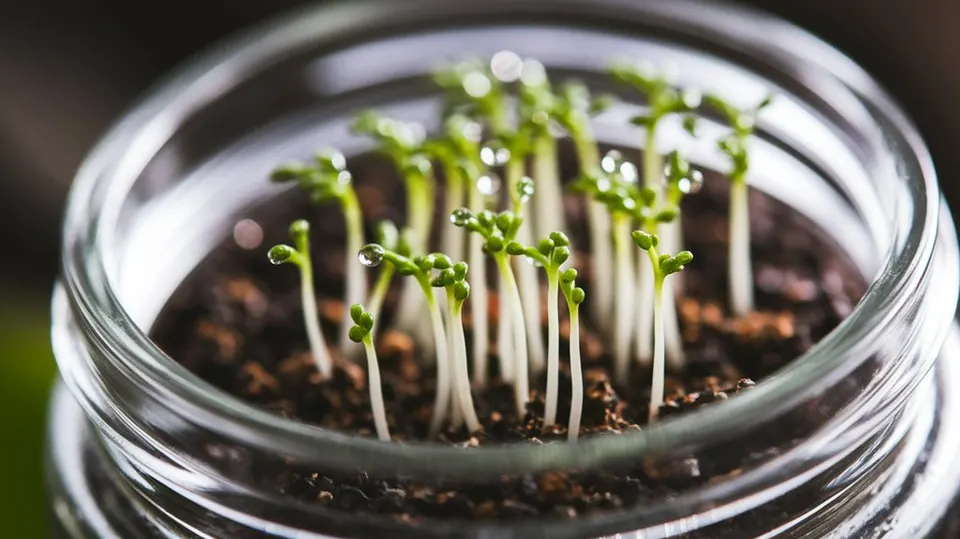
Pour off the water and tap the jar until it stops dripping. Set it upside down at an angle in a bowl, out of direct sun.
- Day1–3
Rinse and drain twice a day
Fill the jar with cool water and swirl it, then drain and tap it dry. Shake the jar gently to loosen the tangle of roots.
- Day4–5
Green them up
When the leaves have opened, set the jar near a bright window, out of direct sun, for a few hours.
- Day5
Rinse, dry and refrigerate
Swish the sprouts in a bowl of water to float off loose hulls if you like. Drain or spin them dry, then refrigerate.
Give them room. Like alfalfa, clover packs into a tight mat by day 3. Use only 1 tablespoon per quart jar and roll the jar after each rinse so the sprouts spread along the glass.
How much you get
One tablespoon of clover seed makes about 1½ to 2 cups of sprouts.1 Clover keeps for about 5 days, so a new jar every 3 or 4 days keeps you in fresh sprouts.
Clover sprouts nutrition
Clover sprouts are a light, leafy sprout, similar to alfalfa in calories and texture. The USDA doesn't list clover sprouts on their own, so we won't quote numbers. Expect a light, low-calorie green that adds crunch to a meal.
Red clover is also sold as a supplement for menopause. Those pills are strong extracts. A handful of sprouts is just food, so don't treat it as a supplement.
Clover as an alfalfa alternative
Alfalfa contains L-canavanine, which has been linked to lupus-like illness. People with lupus are often told to avoid it.2 Clover sprouts look and eat much like alfalfa and are a common swap. If you have an autoimmune condition, check with your doctor before making any sprout a daily habit.
Safety
To lower the risk if you eat them raw, use seed sold for sprouting, wash the jar before each batch, drain well and refrigerate once dry. Clover sprouts are also good wilted into soups or stirred into hot rice at the last minute.
Problems and fixes
| What you see | Likely cause | What to do |
|---|---|---|
| Musty smell | Water trapped in a packed jar | Throw the batch out. Use less seed and drain at a steep angle |
| White fuzz on day 2–3 | Root hairs (normal) | Rinse. If it flattens, it's root hairs |
| Slow sprouting | Cool room or old seed | Keep them at 65 to 75°F (18 to 24°C) |
| Short shelf life | Stored wet | Dry for several hours before refrigerating |
How to store clover sprouts
After the final rinse, drain them for several hours or spin them dry. Refrigerate them in a covered container lined with a paper towel and eat them within about 5 days.
How to eat clover sprouts
- Sandwiches and wraps: a mild, crunchy layer.
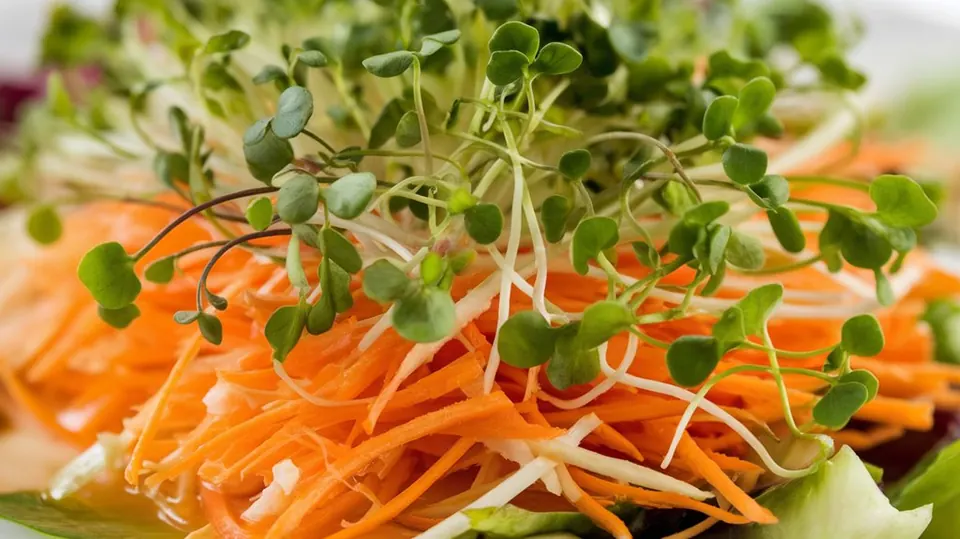
- Salads and slaws: mix them with grated carrot or cabbage.
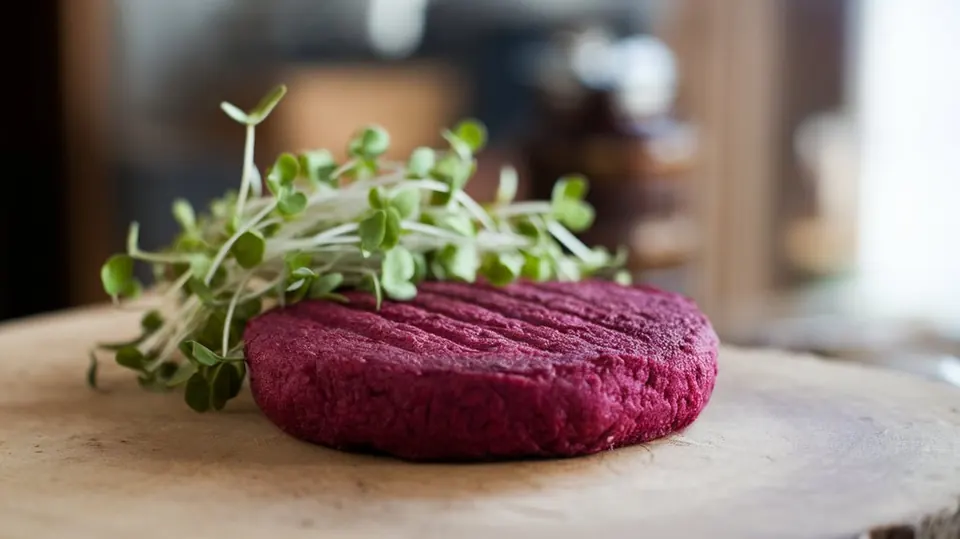
- Burgers: pile them on top, or mix them into veggie patties.
- Soups and rice bowls: stir them in at the end.
Try these recipes:
Where to buy clover seed for sprouting
We link to Sprouting.com, a Canadian company that sells red and crimson clover for sprouting. Buy clover sold for sprouting, not clover seed sold for lawns or cover crops, which may be coated or treated. Clover is also part of several sprouting blends.
Store the seed in a cool, dry, dark place.
What to sprout next
- Alfalfa: the closest match to clover.
- Broccoli: a little sharper.
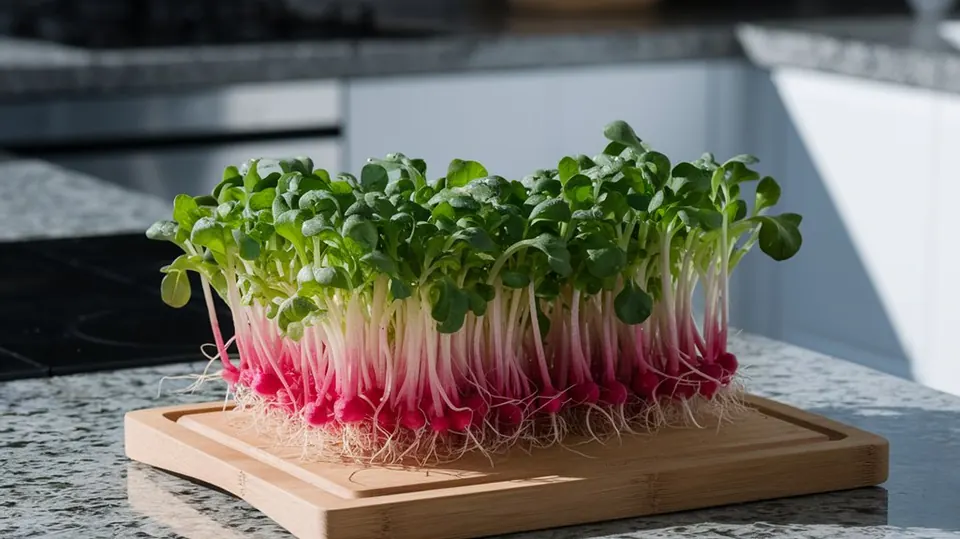
- Radish: add a spoonful for heat.
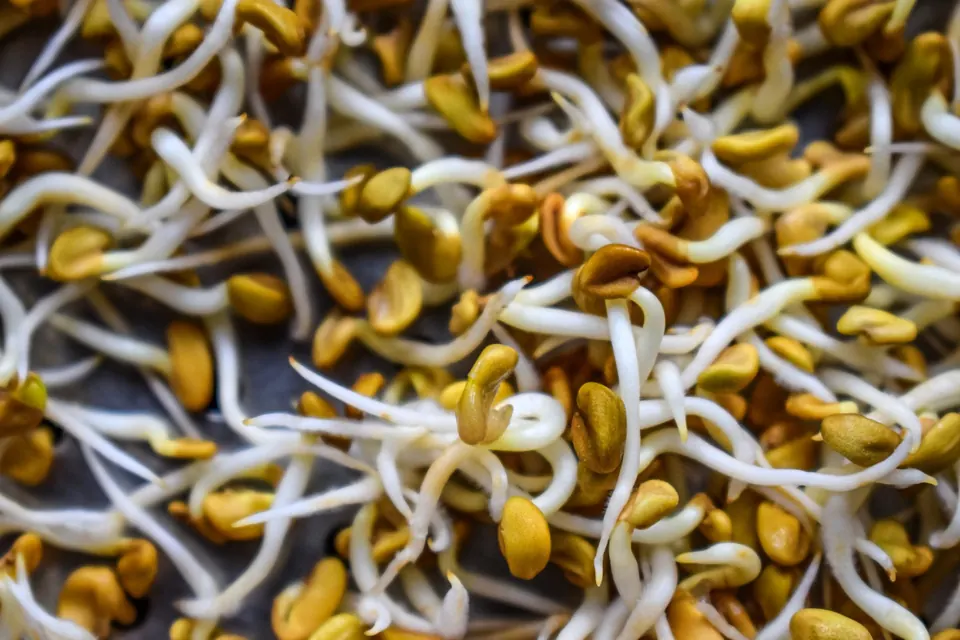
- Fenugreek: bitter-sweet sprouts for curries.
Browse every seed in the Seed Library.
Recipes with clover
Clover FAQ
How long do clover sprouts take to grow?
Four to five days after a 4 to 8 hour soak. Harvest when most of the small leaves have opened. Give them a few hours of indirect light on the last day if you'd like them greener.
What's the difference between red and crimson clover sprouts?
They grow and taste almost the same. Red clover is the classic sprouting clover. Crimson clover seed is a little larger and the sprouts are slightly crunchier. Sprouting.com gives both the same soak, time and yield.
Are clover sprouts the same as alfalfa sprouts?
No, but they're close cousins. Both are small legume sprouts grown the same way. Clover is a little sweeter and more tender. Clover also isn't alfalfa, so people avoiding alfalfa's L-canavanine often switch to clover.
Are clover sprouts safe to eat?
Raw clover sprouts have been linked to food-poisoning outbreaks, like other raw sprouts. The FDA says higher-risk groups should not eat raw sprouts, and Health Canada advises everyone to cook sprouts. Use seed sold for sprouting and keep everything clean.
Can I grow clover sprouts with other seeds?
Yes. Clover grows at the same pace as alfalfa, broccoli and radish, so it mixes well in one jar. A blend of clover and radish gives a mild sprout with some heat.

Written by Michael
A passionate sprouting professional sharing practical tips for growing sprouts and microgreens at home. More about Michael
Sources
- Sprouting.com (Mumm's Sprouting Seeds). Clover, Red and Clover, Crimson: days to sprout, soak time and yield. Link
- Alcocer-Varela J, et al. Effects of L-canavanine on T cells may explain the induction of systemic lupus erythematosus by alfalfa. Arthritis & Rheumatism, 1985. Link
- U.S. Food and Drug Administration. Selecting and Serving Produce Safely. Link
- Health Canada. Food safety tips for sprouts. Link