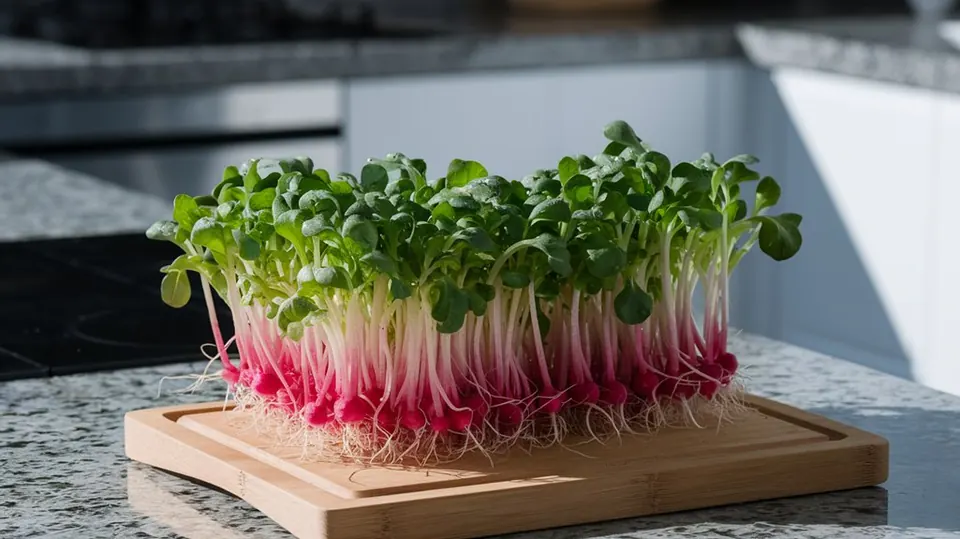
Short answer: soak 1 tablespoon of radish seed for 4 to 8 hours in a quart jar. Drain it well, then rinse and drain twice a day, keeping the jar tilted upside down out of direct sun. On day 4 or 5, when the leaves open, give it a few hours of indirect light to green up. Rinse once more, dry and refrigerate.
What are radish sprouts?
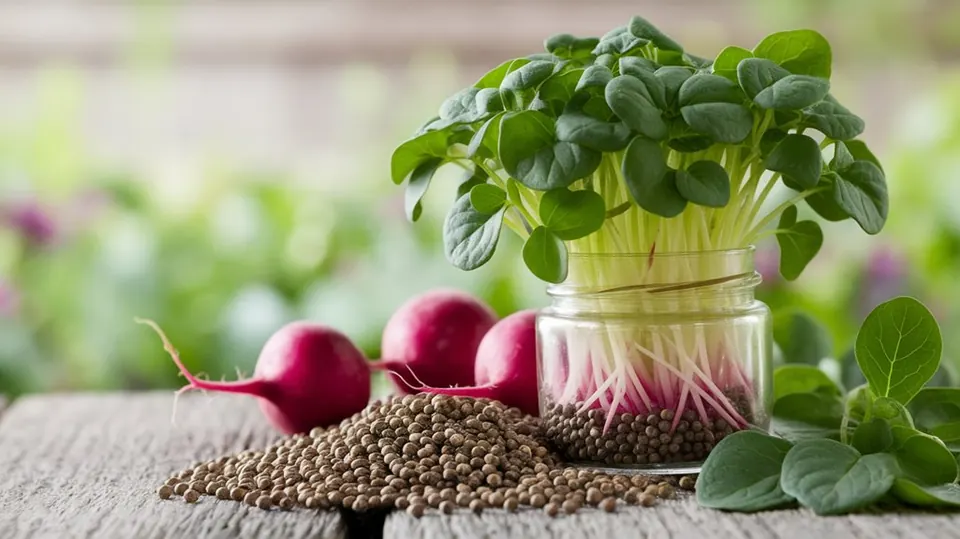
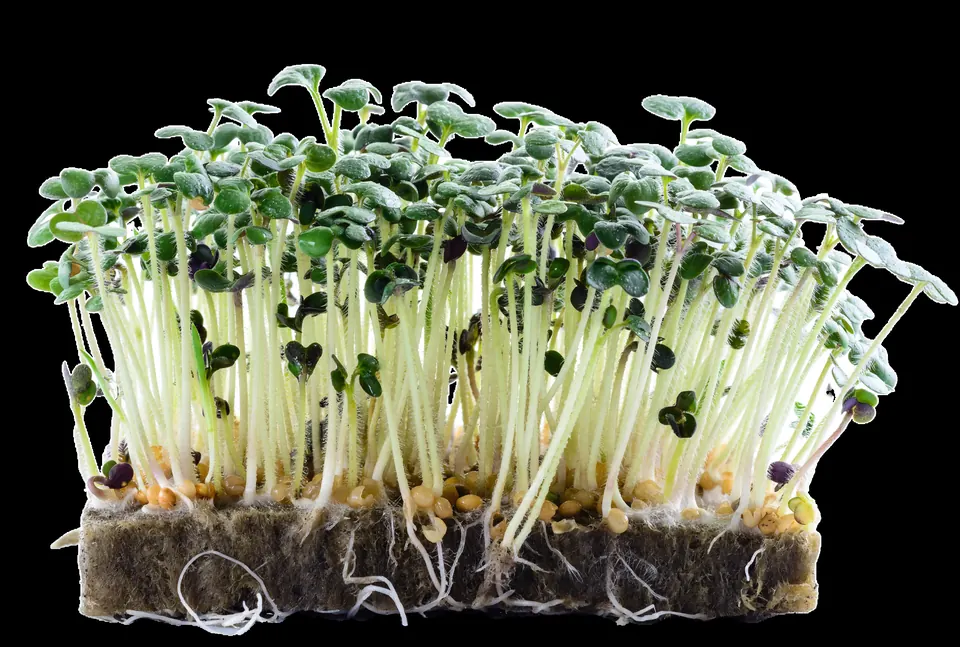
Radish sprouts are 4 to 5-day-old radish seedlings (Raphanus sativus). Each one has a thin white or pink stem, a small root and two heart-shaped leaves. They taste like a fresh radish: crisp and peppery, with a heat that builds as you chew.
They're one of the best sprouts for beginners. The seed is large for a salad sprout, so it drains easily, and it grows fast and evenly. Radish is also one of the most colourful sprouts you can grow.
Radish varieties for sprouting
Sprouting.com sells several radishes for sprouts and microgreens.1 They all grow the same way, but the colour and heat vary.
| Variety | Colour | Flavour | Notes |
|---|---|---|---|
| Red radish | Green leaves, pink-red stems | Hot | The standard radish sprout |
| Rainbow radish | A mix of green, pink and purple | Hot | The prettiest jar |
| Ruby Stem | Bright red stems | Hot | Great colour as microgreens |
| Triton | Purple stems and leaves | Medium | Dark purple microgreens |
| China Rose | Pink stems | Medium | A classic sprouting radish |
| Daikon | Green | Hot, clean | Has its own page |
What you need
- 1 tablespoon (about 12 g) of radish seed for a quart jar
- A 1-quart (1-liter) wide-mouth jar with a mesh sprouting lid
- A bowl or rack to drain the jar upside down
How to grow radish sprouts, day by day
- Day0
Rinse and soak for 4–8 hours
Put the seed in the jar and rinse it. Then cover it with about 1 cup of cool water and soak for 4 to 8 hours.
- Day1
Drain well
Pour off the soak water and tap the jar until no more drips come out. Set it upside down at an angle in a bowl, out of direct sun.
- Day1–3
Rinse and drain twice a day
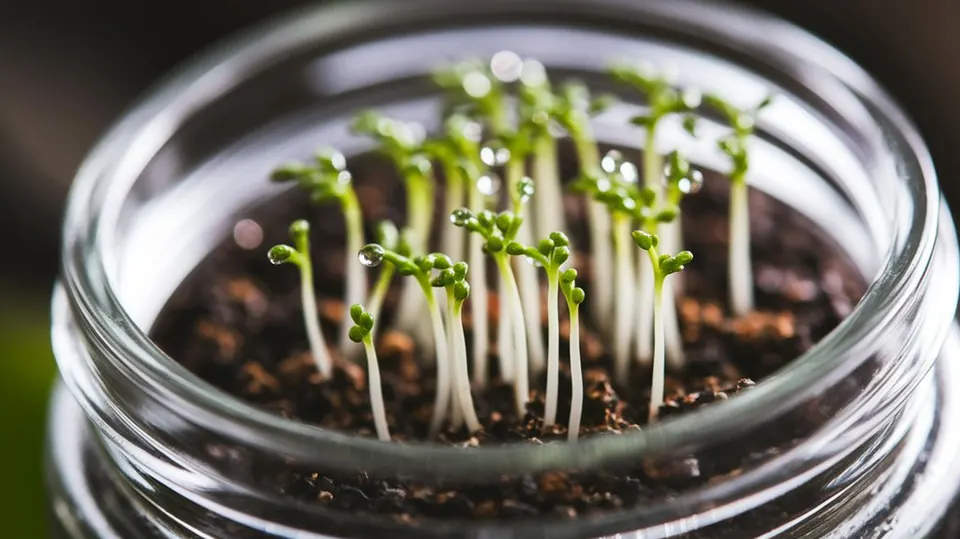
Fill the jar with cool water and swirl it, then drain and tap it dry. Fuzzy root hairs appear on day 2 or 3. That's normal.
- Day4–5
Green them up
When most leaves have opened, set the jar near a bright window, out of direct sun, for a few hours. The leaves turn green and the stems may blush pink.
- Day5
Rinse, dry and refrigerate
Give them a final rinse, then drain for several hours or spin them dry. Store them in a covered container lined with a paper towel.
Root hairs or mold? Radish is famous for fuzzy root hairs that look a lot like mold. Root hairs are fine, white and even, and they sit along the roots. Rinse the jar: if the fuzz flattens and disappears, it's root hairs. Gray, black or colored fuzz in patches, or a musty smell, means mold. See mold vs root hairs.
Sprouting.com gives radish 4 to 5 days as a sprout and 10 to 12 days as a microgreen, with a soak of 4 to 8 hours.1
How much you get
Radish is very productive. Sprouting.com gives a yield of about 3 to 4 cups of sprouts from 1 tablespoon of seed.1 Two tablespoons is the most a quart jar can handle.
| Dry seed | Jar | Sprouts at day 5 |
|---|---|---|
| 1 tbsp | 1 quart / 1 L | 3–4 cups |
| 2 tbsp | Half-gallon / 2 L, or a tray sprouter | 6–8 cups |
Radish microgreens
Radish is one of the fastest and easiest microgreens. Sow about 25 to 35 g of seed on a 10 × 20 inch tray of moist soil, cover it for 2 to 3 days, then give it light. Cut above the soil at 8 to 12 days. Ruby Stem and Triton give the most colourful trays. Our radish microgreens guide covers the whole method.
Radish sprouts nutrition
Here's what USDA FoodData Central lists for 100 g of raw radish sprouts.2
| Nutrient | Per 100 g raw |
|---|---|
| Calories | 43 kcal |
| Protein | 3.8 g |
| Carbohydrates | 3.6 g |
| Fat | 2.5 g |
| Vitamin C | 28.9 mg |
| Folate | 95 µg |
| Calcium | 51 mg |
| Magnesium | 44 mg |
Radish sprouts have more vitamin C and folate per 100 g than alfalfa or mung bean sprouts. Like broccoli, radish is in the cabbage family, so its spicy taste comes from mustard-oil compounds called glucosinolates.
Safety
If you choose to eat them raw, lower the risk: use seed sold for sprouting, wash the jar before every batch, drain well and refrigerate them once dry. Radish sprouts hold up well in hot dishes too, stirred into soups or stir-fries at the end.
Problems and fixes
| What you see | Likely cause | What to do |
|---|---|---|
| White fuzz on day 2–3 | Root hairs (normal) | Rinse. If it flattens, it's root hairs |
| Musty smell, slime | Water pooling or too much seed | Throw the batch out. Use 1 tbsp and drain well |
| Very spicy | Grown longer or in strong light | Harvest a day earlier and skip the greening step |
| Few seeds sprouting | Old seed or a cold room | Keep the room above 65°F (18°C). Replace old seed |
| Hulls everywhere | Normal for radish | Swish in a bowl of water and skim the floating hulls |
How to store radish sprouts
Dry sprouts last longest. After the last rinse, drain them for several hours or spin them dry, then refrigerate them in a covered container lined with a paper towel. They keep about 5 days.
How to eat radish sprouts
Radish sprouts add heat and crunch, so a small handful goes a long way.
- Sandwiches and burgers: use them in place of mustard.
- Salads: mix them with milder greens like lettuce or pea shoots.
- Sushi and rice bowls: daikon sprouts are a classic topping.
- Eggs and avocado toast: a pinch on top.
- Soups: stir them in just before serving.
Try these recipes:
Where to buy radish seeds for sprouting
We link to Sprouting.com, a Canadian company that sells six radishes for sprouts and microgreens. For a single bag that does it all, rainbow radish gives a colourful mix. Radish also appears in several of their sprouting blends.
Store seed in a cool, dry, dark place. It should sprout well for at least a year.
What to sprout next
- Daikon radish: clean, hot sprouts loved in Japanese cooking.
- Broccoli: milder, with a famous sulforaphane story.
- Mustard: even hotter, with wasabi-like heat.
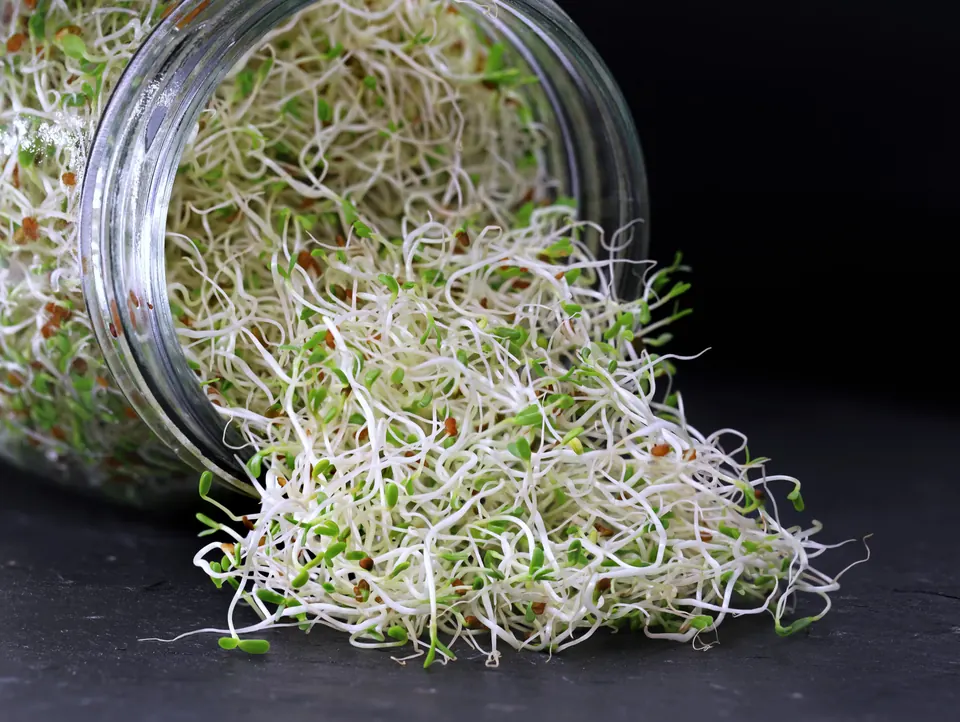
- Alfalfa: mild enough to mix with radish.
Browse every seed in the Seed Library.
Recipes with radish
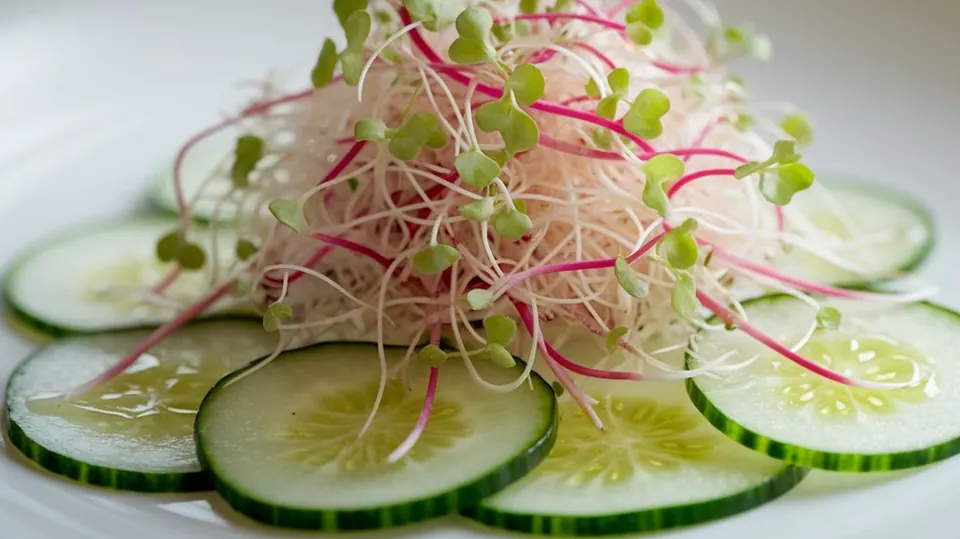 Radish Sprout and Cucumber Salad With Lemon Dressing
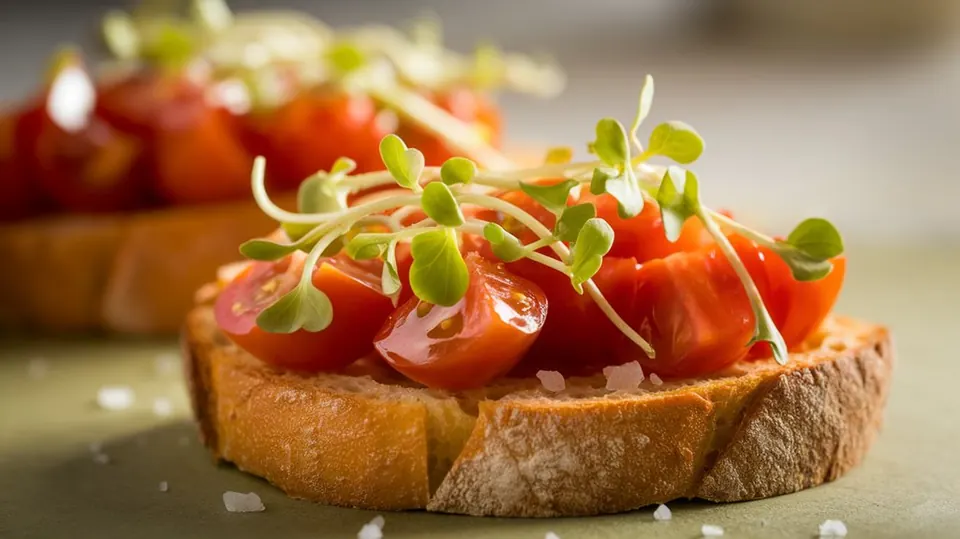 Radish Sprout and Tomato Bruschetta
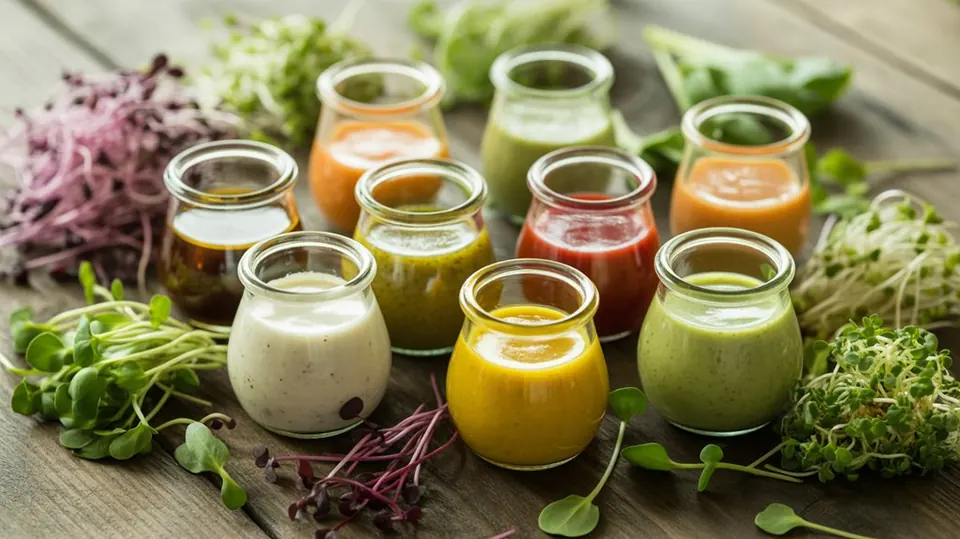 5 Salad Dressings for Sprouts and Microgreens
Radish FAQ
How long do radish sprouts take to grow?
Four to five days after a 4 to 8 hour soak. Radish is one of the fastest sprouts. Harvest when the small leaves have opened. Grown in a tray as microgreens, radish takes about 8 to 12 days.
Why are radish sprouts spicy?
Radish, like mustard and broccoli, is in the cabbage family. Its seeds and young leaves contain mustard-oil compounds that release heat when you chew them. Pink and purple radishes are usually a little milder than plain green ones.
Are radish sprouts good for you?
They're a low-calorie way to add flavour. USDA data lists about 43 calories, 3.8 g of protein, 29 mg of vitamin C and 95 µg of folate per 100 g of raw radish sprouts. That's more vitamin C than alfalfa or mung bean sprouts.
What's the white fuzz on my radish sprouts?
Usually root hairs. Radish grows very obvious fuzzy root hairs on day 2 or 3. They're even, white and attached to the roots, and they flatten when you rinse. Mold is gray or colored, patchy and smells musty.
Can I mix radish with other sprouts?
Yes. Radish grows at the same pace as alfalfa, clover and broccoli, so they share a jar well. Try 1 part radish to 3 parts alfalfa or clover for a milder mix with a little heat.
How do you store radish sprouts?
Dry them for a few hours after the last rinse, then refrigerate them in a covered container lined with a paper towel. They keep about 5 days.

Written by Michael
A passionate sprouting professional sharing practical tips for growing sprouts and microgreens at home. More about Michael
Sources
- Sprouting.com (Mumm's Sprouting Seeds). Radish product pages (red, rainbow, Ruby Stem, Triton, daikon): days to sprout, soak time and yield. Link
- U.S. Department of Agriculture, Agricultural Research Service. FoodData Central (SR Legacy and Foundation Foods), values per 100 g. Link
- U.S. Food and Drug Administration. Selecting and Serving Produce Safely. Link
- Health Canada. Food safety tips for sprouts. Link