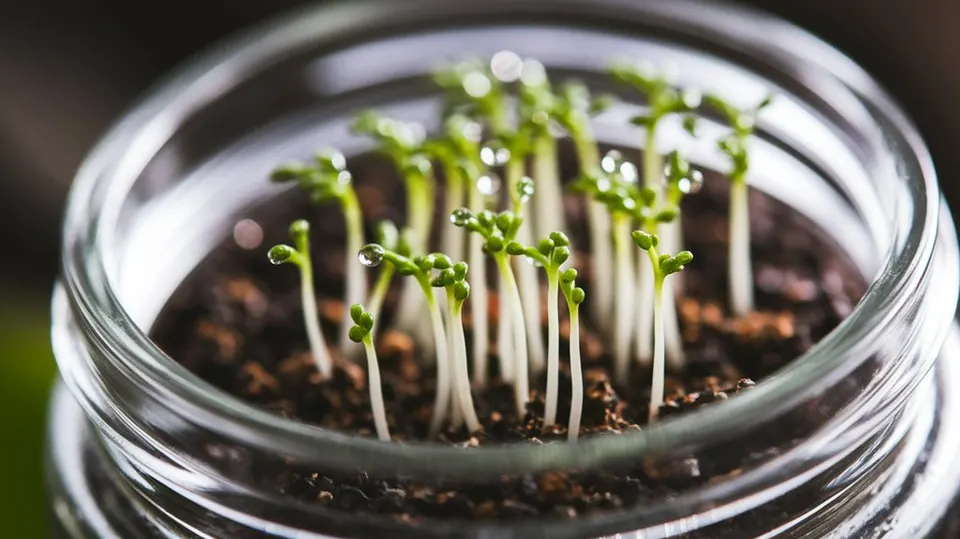
Short answer: put 1 to 2 tablespoons of broccoli seed in a wide-mouth jar with a mesh sprouting lid. Soak for 1 to 2 hours, drain well, then rinse and drain twice a day at room temperature. Your sprouts are ready in 4 to 5 days. The most common mistake is soaking overnight, which can stop broccoli seed from sprouting at all.
What are broccoli sprouts?
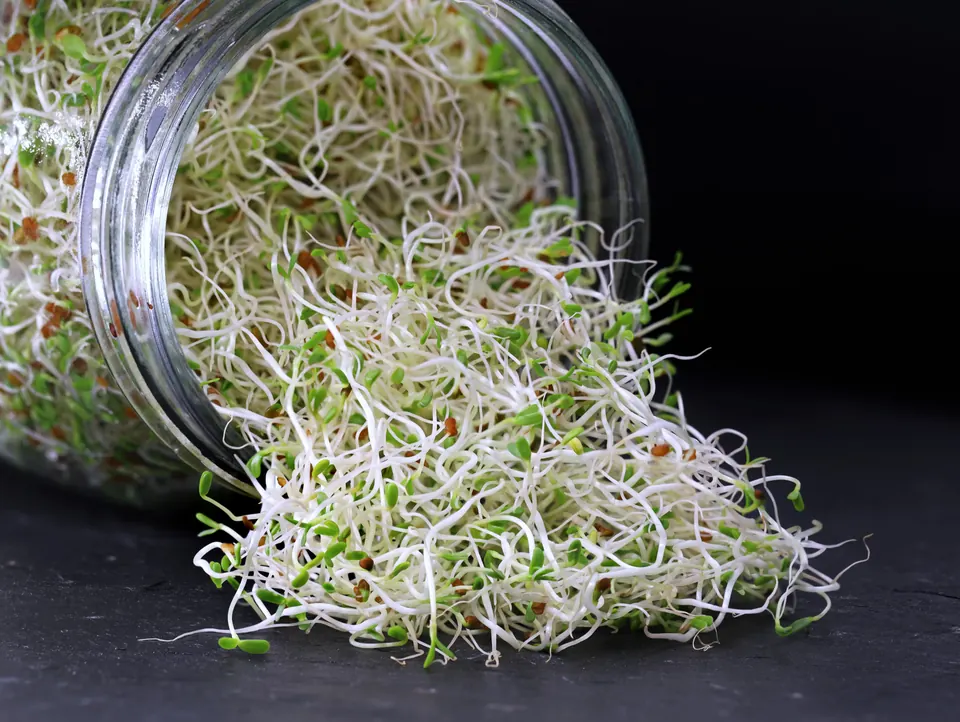
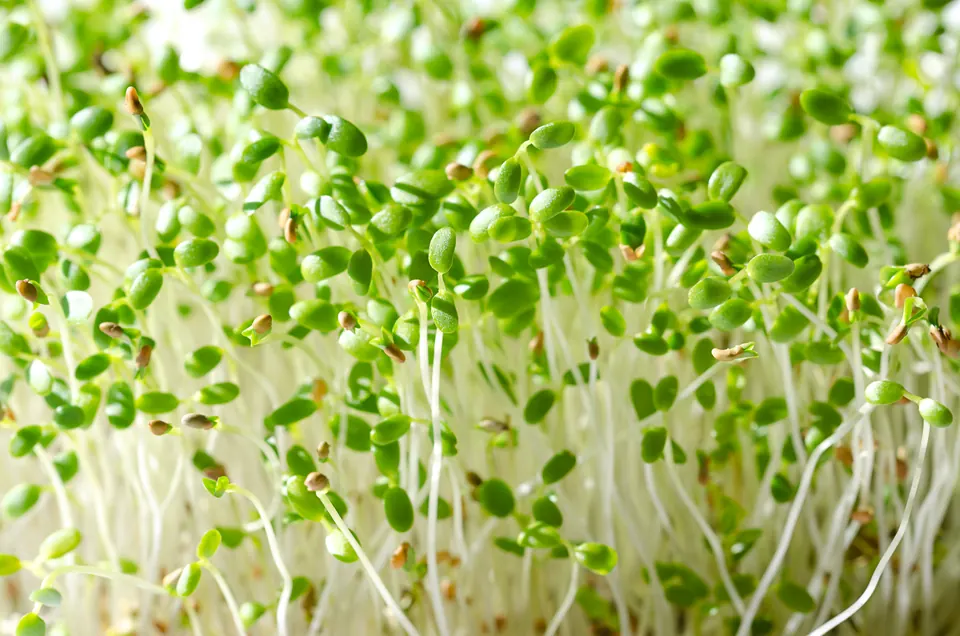
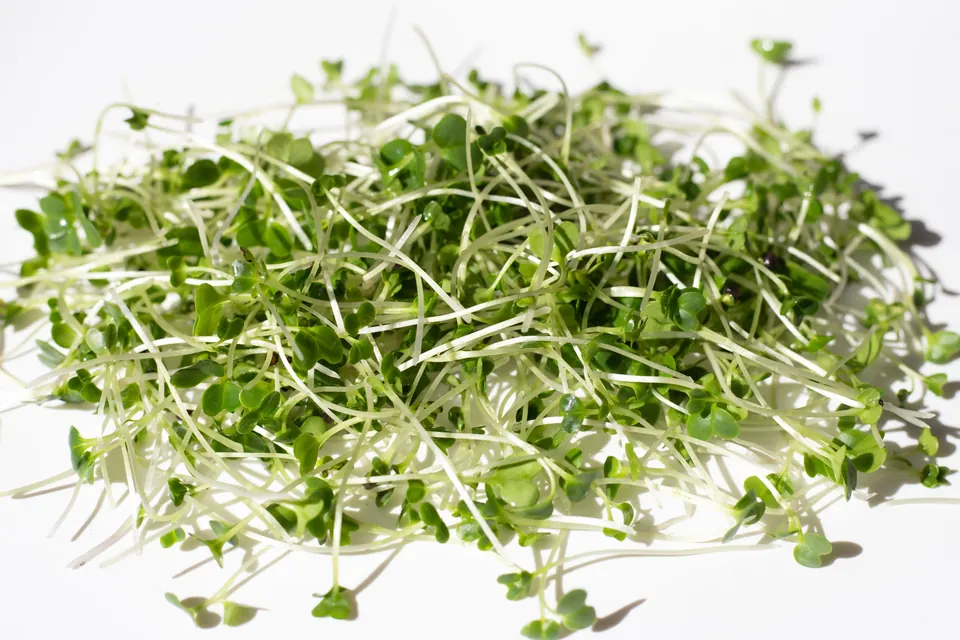
Broccoli sprouts are young broccoli plants (Brassica oleracea var. italica) eaten 4 to 5 days after the seed starts to grow. You eat the whole thing: the seed hull, the white root, the stem and the two first leaves. They look a lot like alfalfa sprouts but taste sharper, closer to a mild radish than to cooked broccoli.
That bite comes from the same sulfur compounds that made them famous. In 1997, researchers at Johns Hopkins found that 3-day-old broccoli sprouts held 10 to 100 times more glucoraphanin than the mature plant.1 Glucoraphanin is the compound your body turns into sulforaphane. The range is wide because it depends on the variety and how it was measured, so be wary of any site that quotes one exact number.
Broccoli sprouts are not the same as these
- Broccoli microgreens: the same seed grown in a tray for 7 to 10 days and cut above the roots. More leaf, milder taste. See broccoli sprouts vs broccoli microgreens.
- Sprouting broccoli: a garden vegetable, such as purple sprouting broccoli, that grows for months and makes lots of small side shoots. "Sprouting" here means the shoots, not seeds in a jar.
- Brussels sprouts: a different cabbage-family vegetable that grows on a tall stalk. They share the word "sprout" and nothing else.
What you need
- A wide-mouth glass jar, about 1 quart or 1 liter
- A mesh sprouting lid (or cheesecloth and a rubber band)
- 1 to 2 tablespoons of broccoli seed sold for sprouting
- Cool, clean water
- A bowl or rack to hold the jar upside down at an angle
Two tablespoons fills a quart jar by day 5. If you're new to this, start with 1 tablespoon. Less seed means more air, and air is what keeps a batch fresh.
How to grow broccoli sprouts, day by day
- Day0
Rinse and soak for 1–2 hours
Put the seed in the jar and give it a quick rinse. Refill with cool water and let it soak for 1 to 2 hours. Don't leave broccoli soaking overnight.
- Day0
Drain very well
Pour off the soak water through the lid. Tap the jar on your hand, turn it, and tap again until no more drips come out. Set it upside down at an angle in a bowl.
- Day1–3
Rinse and drain twice a day
Morning and evening, fill the jar with cold water and swirl. Then drain it and tap it dry. Keep it at room temperature and out of direct sun. In a hot kitchen, add a third rinse.
- Day4–5
Green them up and harvest
When most of the leaves have opened, put the jar near a bright window, out of direct sun, for a few hours. The leaves turn green. Give them a final rinse.
- Day5
Dry, then refrigerate
Let the sprouts drain for several hours, or spin them in a salad spinner. Store them in a covered container lined with a paper towel.
Why such a short soak: Broccoli is a small seed that takes up water fast. Sprouting.com, which sells the seed we link to, warns that soaking it longer than 2 hours can make it lose germination.2 Some other suppliers say 4 to 8 hours, and that can work too. If you're getting patchy batches, a shorter soak is the first thing to try.
The right temperature
Broccoli sprouts grow best between 65 and 75°F (18 to 24°C). A cooler room just slows them down, so add a day or two. A very warm room, above about 80°F (27°C), speeds them up but also helps bacteria and mold. Rinse three times a day in summer.
Do broccoli sprouts need light?
Not to grow. Keep the jar out of direct sun the whole time, because sun through glass heats the jar fast. A few hours of indirect light at the end is optional. It turns the leaves green but doesn't make or break the batch.
How much broccoli sprouts you get
Sprouting.com gives a yield of about 1 cup of sprouts from 1 tablespoon of dry seed.2 Johnny's Seeds lists 1 to 1½ cups. In weight, that's roughly 10 grams of seed turning into 60 to 90 grams of sprouts.
| Dry seed | Jar size | Sprouts at day 5 | Serves |
|---|---|---|---|
| 1 tbsp (about 10 g) | 1 pint / 500 ml | About 1 cup | 1–2 people for a few days |
| 2 tbsp (about 20 g) | 1 quart / 1 L | About 2 cups | 2–4 people for a few days |
They don't keep longer than about a week, so it's better to start a small jar every few days than one huge batch. With two jars on a rotation, you always have a fresh one.
Growing broccoli as microgreens
The same seed grows into microgreens if you sow it on soil or a grow mat and give it light. You cut them above the roots at 7 to 10 days, once the first two leaves are fully open. They're greener, leafier and a little milder than sprouts.
You'll need a shallow tray, a growing medium and a sunny window or a simple light. The full method, with seeding rates per tray, is in our guide to broccoli microgreens. If you can't decide, read broccoli sprouts vs broccoli microgreens first.
Broccoli sprouts and sulforaphane
Here's the short version of the science.
- The seed and sprout don't contain much sulforaphane itself. They contain glucoraphanin. When you chew or blend the sprouts, an enzyme in the plant called myrosinase turns glucoraphanin into sulforaphane.
- Young sprouts hold far more glucoraphanin than mature broccoli. That's the 1997 Johns Hopkins finding of 10 to 100 times more.1
- Whole sprouts work well. In a 2015 study, people who ate fresh broccoli sprouts had about 3 times more sulforaphane in their blood and urine than people who took an extract with the same dose.3
- Gentle heat can raise sulforaphane. In a 2022 lab study, a short dip in water at 61°C (142°F) for about 5 minutes gave 3.3 times more sulforaphane than untreated sprouts.4 Boiling is different. High heat can switch the enzyme off.
What research has not shown is that broccoli sprouts treat or prevent any disease. Memorial Sloan Kettering says they're generally safe to include in your diet. It also notes that supplements are stronger than food and can interact with some medications.5 Grow them because they're quick to grow and good to eat.
For the full story on sulforaphane, see broccoli sprouts benefits: sulforaphane explained.
Getting the most from them: chop or chew your sprouts well, and add them to hot food at the very end instead of cooking them for long. Blending them into a smoothie or pesto also breaks the plant cells open.
Are broccoli sprouts safe to eat raw?
Food safety: raw sprouts can carry bacteria such as Salmonella, Listeria and E. coli. The warm, wet conditions that sprout seeds also suit bacteria, and you eat the seed and root too. The FDA says young children, pregnant people, older adults and anyone with a weakened immune system should not eat raw or lightly cooked sprouts of any kind.6 Health Canada goes further and advises everyone to cook sprouts well before eating them.7
If you choose to eat them raw, these steps lower the risk. They don't remove it:
- Use seed sold for sprouting. This matters most. Garden seed isn't meant to be eaten and may be treated with fungicide.
- Start clean. Wash the jar and lid in hot, soapy water before each batch and rinse well.
- Drain completely every time. Water sitting in the bottom of the jar is the most common cause of a bad batch.
- Refrigerate once they're dry, and eat them within about 5 days.
- When in doubt, throw it out. Rinsing doesn't fix a batch that smells or looks wrong.
Read more in our guide to sprout food safety.
Other ways to grow broccoli sprouts
A jar is the cheapest way to start, but it isn't the only one.
- Tray sprouters: shallow stacked trays, such as the Euro Tray Sprouter, spread the seed thin. More air reaches each sprout, so small seeds like broccoli drain better than in a packed jar.
- Terracotta towers: a clay tower, such as the Geo 4-tier sprouting tower, holds moisture in the clay. You can run four small batches at once.
- Hemp sprouting bags: a hemp bag hangs and drains on its own. It suits beans better than tiny seeds, so most people stick to a jar or tray for broccoli.
The method stays the same in each one: a short soak, then rinse and drain twice a day. Compare them in best sprouter: jars vs trays vs towers.
Is it cheaper to grow your own?
Yes, by a wide margin. Store-bought broccoli sprouts usually come in small 4-ounce (113 g) clamshells that cost several dollars each and don't keep long. One tablespoon of seed grows about a cup of sprouts, and a 100 g bag of seed holds roughly 10 tablespoons. After you buy a jar and lid, each batch costs a small part of the store price.
Home-grown sprouts are also fresher on day one. You pick the harvest day, and nothing sits in a truck or on a shelf first.
Problems and fixes
| What you see | Likely cause | What to do |
|---|---|---|
| Few seeds sprouted after 2 days | Soaked too long, old seed or a cold room | Soak 1–2 hours next time. Keep the jar above 65°F (18°C). If two batches from one bag fail, replace the seed |
| Sour or musty smell | Water pooling in the jar, or too much seed | Throw the batch out. Next time use less seed and drain at a steeper angle |
| Slimy sprouts | Not draining well enough | Throw them out. Tap the jar dry after every rinse |
| White fuzz on the roots around day 2–3 | Root hairs (normal) | Rinse the jar. If the fuzz flattens and disappears, it's root hairs. Gray, black or smelly fuzz is mold |
| Very bitter taste | Grown too long or in strong light | Harvest a day earlier and skip the greening step |
| Yellow leaves | No light at the end | Give them a few hours of indirect light before harvest |
If you can't tell whether it's mold, see mold on sprouts vs root hairs. For other problems, the sprouting problems guide covers every crop.
How to store broccoli sprouts
Dry is the secret. After the last rinse, let the sprouts drain for 6 to 8 hours, or spin them in a salad spinner. Then store them in the fridge in a covered container lined with a paper towel. They keep about 5 days, and up to a week if they went in dry.
Don't freeze them for salads. Freezing turns sprouts limp and watery. Frozen sprouts are only good for cooking or blending into smoothies. Our guide on how to harvest and store sprouts covers more.
How to eat broccoli sprouts
Broccoli sprouts are a finishing ingredient. They don't hold up to long cooking, so add them at the end.
- Sandwiches and wraps: the peppery bite works like mustard.
- Salads and grain bowls: a big handful on top.
- Eggs: fold them in after you take the pan off the heat.
- Smoothies: fruit hides the bitterness.
- Pesto: blend them with basil, nuts and olive oil.
- Soups and stir-fries: stir them in just before serving.
Try these recipes:
- Broccoli sprout pesto pasta
- Broccoli sprout stir-fry with cashews
- Broccoli sprouts recipes: 5 ways to eat more
Where to buy broccoli sprouting seeds
Buy seed labeled for sprouting, not garden seed. We link to Sprouting.com, a Canadian company that sells broccoli seed for sprouts and microgreens with growing directions for each lot. A 100 g bag holds about 10 tablespoons, which is enough for 5 to 10 jars.
If you want more variety in one jar, their Broccoli Brassica Blend mixes broccoli with clover, radish, mustard and arugula.
Store seed in a cool, dry, dark place. It should sprout well for at least a year, and longer in the fridge. Compare other options in our guide to sprouting seeds.
What to sprout next
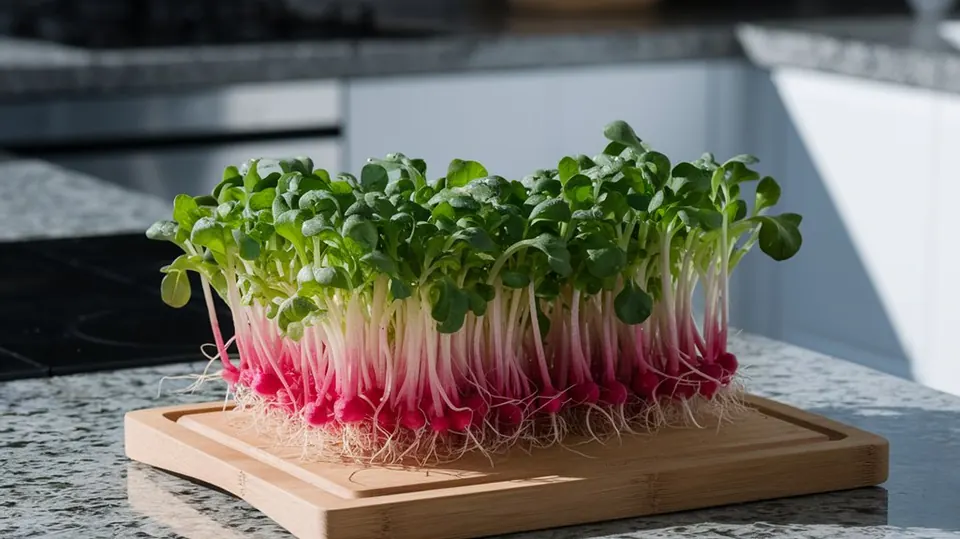
- Radish: faster and spicier, ready in 4 to 5 days.
- Alfalfa: the mildest classic sprout.
- Red clover: sweet and grassy, and very easy.
- Mung beans: crunchy bean sprouts in 2 to 3 days.
Or browse all 67 seeds in the Seed Library.
Recipes with broccoli
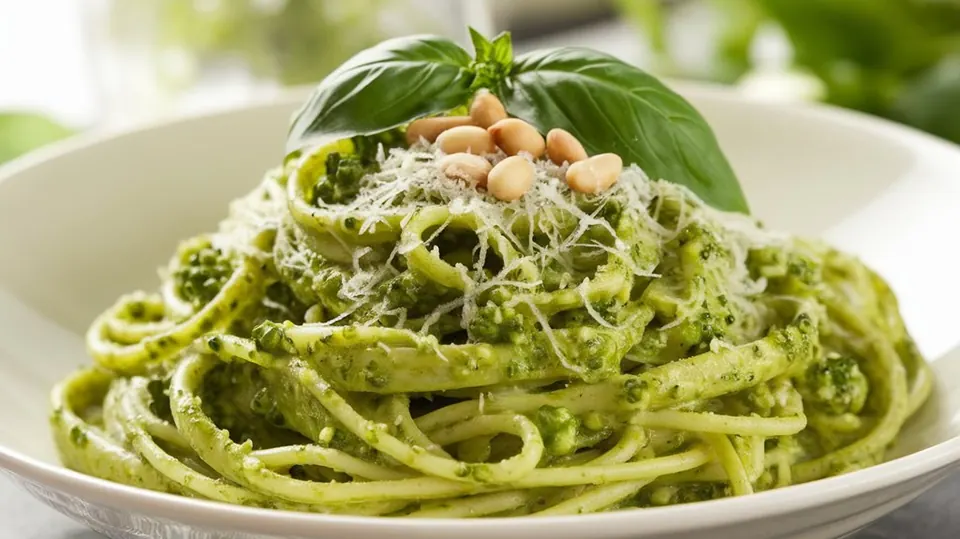 Broccoli Sprout Pesto Pasta
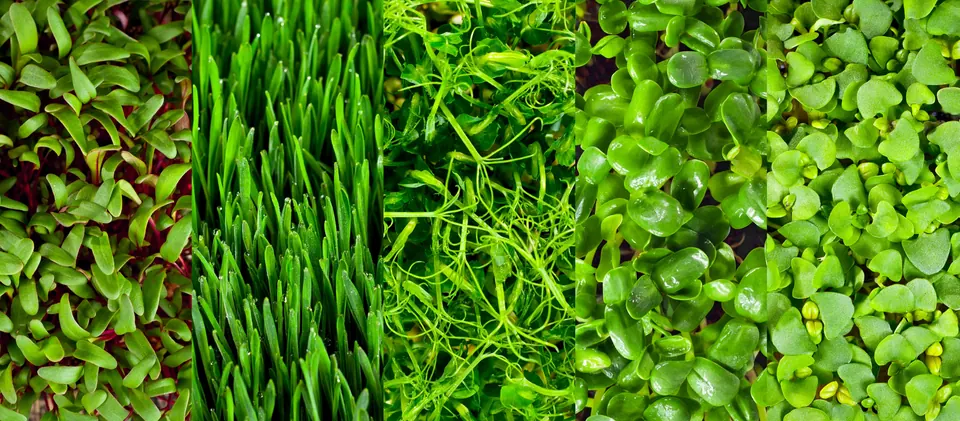 Microgreen Pesto Three Ways: Pea, Sunflower and Broccoli
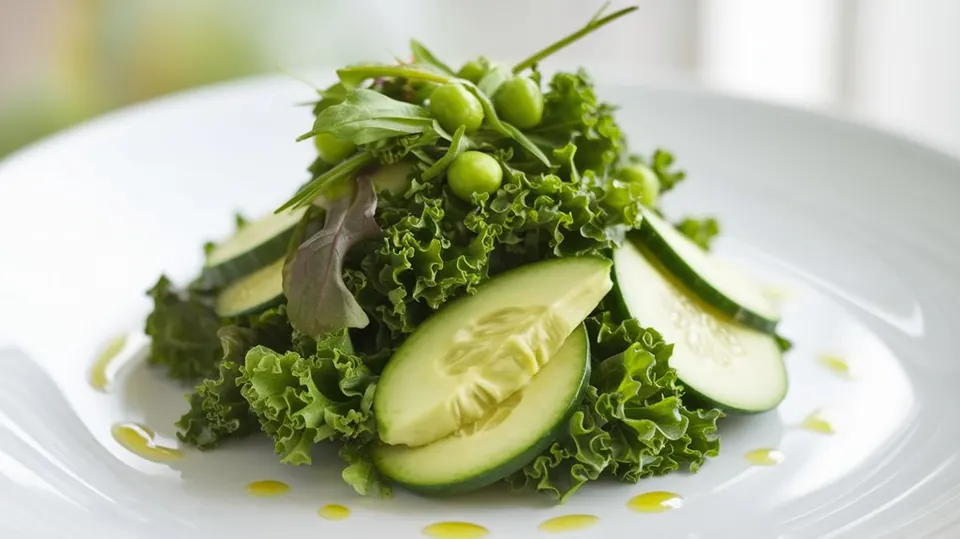 Easy Green Superfood Salad
Free 5-day email course
Grow your first sprouts in 5 days
One short email a day: what to buy, how to rinse, how to eat sprouts safely and how to fix problems. Free.
Broccoli FAQ
How long should I soak broccoli seeds?
Soak broccoli seeds for 1 to 2 hours. Broccoli is a small seed that takes up water fast, and Sprouting.com warns that soaking longer than 2 hours can cut germination. Some other suppliers say 4 to 8 hours. If your seed came with directions, follow them.
How long do broccoli sprouts take to grow?
Broccoli sprouts are ready 4 to 5 days after the soak, when most of the small leaves have opened. In a cool room below about 65°F (18°C), add a day or two. Grown in a tray as microgreens, broccoli takes 7 to 10 days.
Does cooking broccoli sprouts destroy sulforaphane?
High heat can switch off myrosinase, the enzyme that turns glucoraphanin into sulforaphane, so most people eat broccoli sprouts raw or add them at the end. Gentle heat is different: one lab study found a short dip at 61°C (142°F) raised sulforaphane. Health agencies advise cooking sprouts, especially for higher-risk groups.
How much broccoli sprouts should I eat a day?
There's no official serving size. A small handful to about half a cup is a common amount to add to a meal. Treat them as a vegetable, not a supplement. If you take medication or have a health condition, ask your doctor before eating large amounts every day.
Are there any downsides to eating broccoli sprouts?
Properly grown broccoli sprouts aren't known to cause side effects. The main risk is food poisoning from raw sprouts. The FDA says higher-risk groups should not eat them raw, and Health Canada advises everyone to cook sprouts. Concentrated extracts and supplements are a separate question for your doctor.
Can dogs eat broccoli sprouts?
Plain broccoli sprouts in small amounts aren't known to be toxic to dogs, and some owners add a pinch to meals. Too much of any cabbage-family vegetable can upset a dog's stomach. Skip seasoning and garlic, and check with your vet first, especially for small dogs or dogs with health problems.
Can I use regular broccoli garden seed for sprouting?
No. Use seed sold for sprouting. Garden seed isn't meant to be eaten, may be coated with fungicide, and isn't handled with sprouting in mind. Seed sold for sprouting is the single best thing you can do for a safe batch.
How long do broccoli sprouts last in the fridge?
About 5 days, and up to a week if they go into the fridge dry. Wet sprouts spoil in half the time. Drain them for several hours after the last rinse, then store them in a covered container lined with a paper towel.

Written by Michael
A passionate sprouting professional sharing practical tips for growing sprouts and microgreens at home. More about Michael
Sources
- Fahey JW, Zhang Y, Talalay P. Broccoli sprouts: an exceptionally rich source of inducers of enzymes that protect against chemical carcinogens. Proceedings of the National Academy of Sciences, 1997;94(19):10367–10372. Link
- Sprouting.com (Mumm's Sprouting Seeds). Broccoli product page: days to sprout, soak time and yield. Link
- Atwell LL, et al. Absorption and chemopreventive targets of sulforaphane in humans following consumption of broccoli sprouts or a myrosinase-treated broccoli sprout extract. Molecular Nutrition & Food Research, 2015;59(3):424–433. Link
- Mahn A, et al. Maximization of sulforaphane content in broccoli sprouts by blanching. Foods, 2022. Link
- Memorial Sloan Kettering Cancer Center. Broccoli Sprouts (About Herbs). Link
- U.S. Food and Drug Administration. Selecting and Serving Produce Safely. Link
- Health Canada. Food safety tips for sprouts. Link