Short answer: broccoli sprouts are famous because they're packed with glucoraphanin, which turns into sulforaphane when you chew or chop them. Small human studies suggest benefits for digestion and stomach health, but the research is early and nothing is proven to treat disease. To get the most, harvest at 3 to 5 days, chew them well, add them to food at the end rather than cooking them, and pair cooked broccoli with a pinch of mustard powder.
What is sulforaphane?
Sulforaphane is a natural sulfur compound from broccoli and other cabbage-family plants. The plant doesn't store sulforaphane itself. It stores glucoraphanin in one part of the cell and an enzyme called myrosinase in another. When you chew or blend the plant, the two meet. That's when sulforaphane forms.
That's why how you eat broccoli sprouts matters as much as how many you eat.
Why broccoli sprouts have so much of it
In 1997, researchers at Johns Hopkins found that 3-day-old broccoli sprouts contained 10 to 100 times more glucoraphanin than mature broccoli of the same variety.1 Young plants pack their defences into a tiny body. So gram for gram, sprouts hold far more.
The range is wide for a reason: it depends on the seed variety and on how the sprouts are grown. Be cautious of anyone quoting a single precise multiplier.
Broccoli sprouts benefits: what human studies found
Most sulforaphane research uses cells and animals. Human studies are small and few. Here's an honest summary:
- Digestion. In a 4-week study, 48 people with mild constipation ate either 20 g of raw broccoli sprouts or alfalfa sprouts daily. The broccoli sprout group had improved bowel-habit scores; the alfalfa group didn't.2
- Stomach bacteria. A small early report found that eating broccoli sprouts reduced markers of H. pylori, a stomach bacterium linked to ulcers.3 Memorial Sloan Kettering notes that broccoli sprouts helped reduce H. pylori-related gastritis in studies, but didn't clear the infection.4
- Absorption. People absorbed about three times more sulforaphane from fresh broccoli sprouts than from a sprout extract with the same dose.5 Whole food did better than the supplement.
What the research hasn't shown is that broccoli sprouts prevent or treat cancer or any other disease in people. Lab results are promising, and human trials continue. Grow and eat broccoli sprouts because they're a good food, not as a medicine.
How to grow broccoli sprouts for the most sulforaphane
- Use good seed. Glucoraphanin levels vary by variety, so buy fresh broccoli seed sold for sprouting.
- Soak briefly. Broccoli needs only a 1 to 2 hour soak. Longer soaks can stop it sprouting.
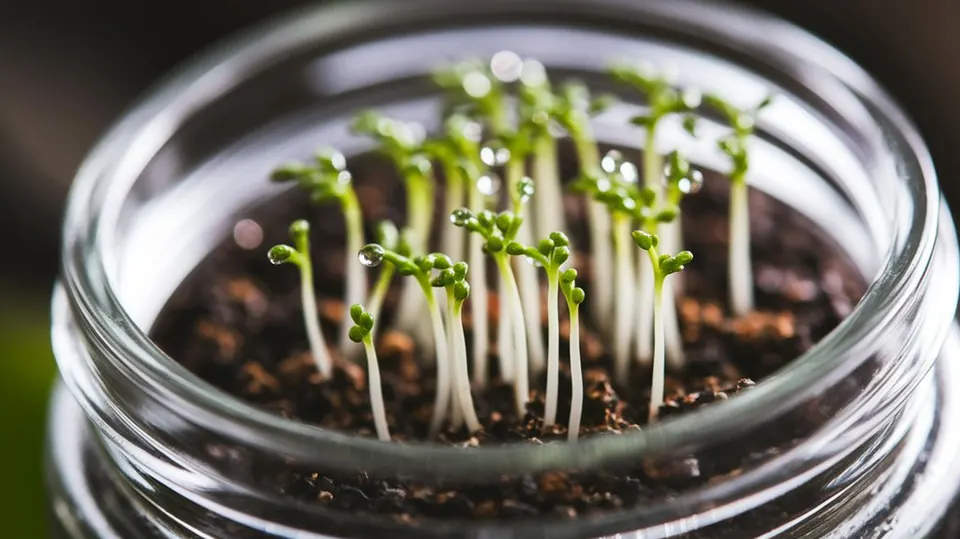
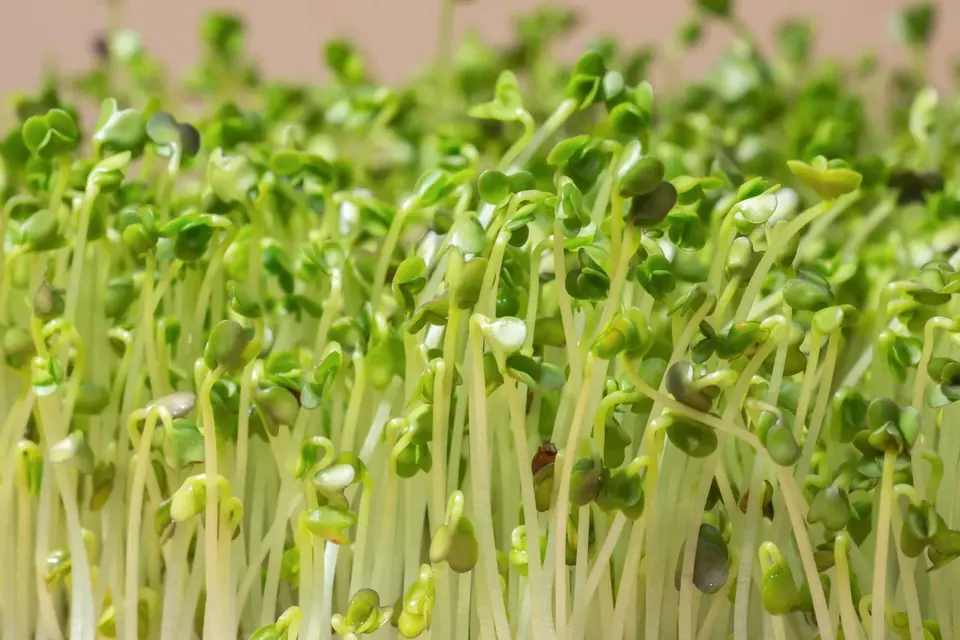
- Harvest young. The famous 1997 measurements were on 3-day-old sprouts. Glucoraphanin becomes more diluted as the sprout grows bigger, so harvesting at 3 to 5 days, when the seed leaves have just opened, is a good target.
- Eat them fresh. Use them within a few days of harvest, stored dry in the fridge.
The full method is in our broccoli sprouts growing guide.
How to get the most broccoli sprouts benefits when you eat them
Chew well or blend
Sulforaphane forms when the plant cells break. Chew sprouts well, or blend them into pesto and smoothies.
Add them at the end
Strong heat switches off myrosinase. Instead of cooking broccoli sprouts for long, stir them into hot dishes just before serving, or pile them on top.
Use mustard with cooked broccoli
If you're cooking broccoli or the sprouts, add a pinch of ground mustard seed. Mustard seed carries its own myrosinase. In a 2018 human study, adding 1 g of powdered brown mustard to cooked broccoli raised the sulforaphane people absorbed about 4.5 times compared with cooked broccoli alone.6
Try gentle heat
In a 2022 lab study, a short dip in water at 61°C (142°F) for about 5 minutes raised sulforaphane in broccoli sprouts 3.3 times.7 Gentle heat seems to block a protein that stops sulforaphane from forming, while the enzyme keeps working. This is lab work. Still, it suggests a light warm-up is fine, while boiling isn't.
The safety side
That's a real trade-off. Raw sprouts give the most sulforaphane, but cooked sprouts are safer. If you're in a higher-risk group, cook them and add a pinch of mustard powder, or try broccoli microgreens, which are cut above the roots and usually considered lower risk.
Supplements and medication. Memorial Sloan Kettering says broccoli sprouts are generally safe as food, but supplements are stronger and can interact with some medications. Talk to your doctor before taking broccoli sprout supplements.4
Easy ways to eat more broccoli sprouts
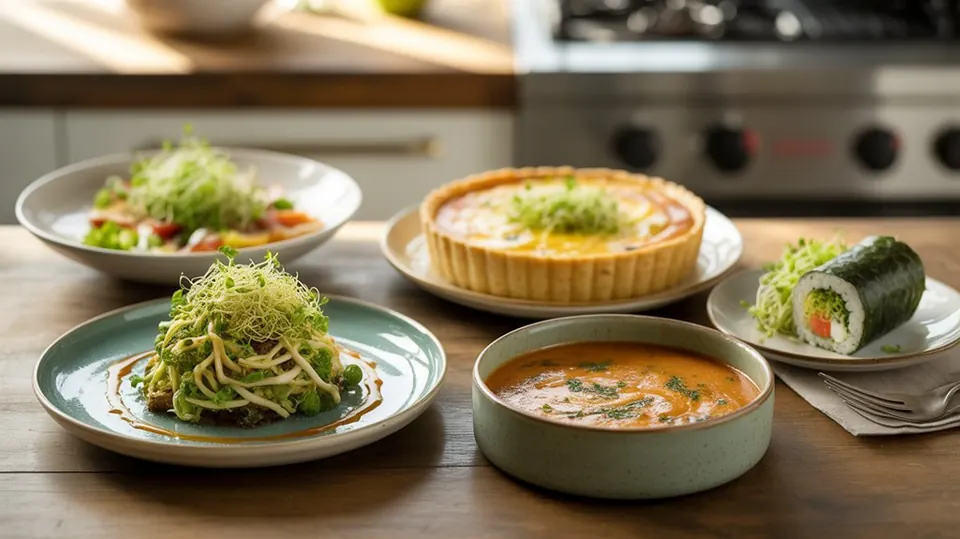
- Blend them into broccoli sprout pesto.
- Pile them onto sandwiches and wraps.
- Stir them into soups and stir-fries at the very end.
- Add a small handful to smoothies.
More ideas: broccoli sprouts recipes: 5 ways to eat more.
Frequently asked questions
What are the main benefits of broccoli sprouts?
Broccoli sprouts are a top source of glucoraphanin, which becomes sulforaphane when you chew them. Small human studies have linked broccoli sprouts to better bowel habits and less H. pylori activity in the stomach. Research is still early, and broccoli sprouts aren't a proven treatment for any disease.
How much sulforaphane is in broccoli sprouts?
It varies a lot by seed variety and growing conditions. The 1997 Johns Hopkins study found 3-day-old broccoli sprouts held 10 to 100 times more glucoraphanin than mature broccoli. The amount in your jar depends on the seed and when you harvest.
Does cooking destroy sulforaphane?
Strong heat switches off myrosinase, the enzyme that makes sulforaphane, so most people eat broccoli sprouts raw or add them at the end. Adding a pinch of ground mustard seed to cooked broccoli has been shown to restore much of the sulforaphane in a human study.
How many broccoli sprouts should I eat a day?
There's no official amount. One human study used 20 g (about a small handful) of raw broccoli sprouts a day. Treat them as a vegetable, not a supplement. If you take medication or have a health condition, talk to your doctor before eating large amounts daily.
Are broccoli sprout supplements as good as fresh sprouts?
Not necessarily. A 2015 study found people absorbed about three times more sulforaphane from fresh broccoli sprouts than from an extract with the same dose. Supplements also vary widely. Memorial Sloan Kettering notes they can interact with some medications.
Are there side effects of broccoli sprouts?
Properly grown broccoli sprouts aren't known to cause side effects in most people. The main risk is food poisoning from raw sprouts. Higher-risk groups, including pregnant people and young children, should eat them cooked, and Health Canada advises everyone to cook sprouts.

Written by Michael
A passionate sprouting professional sharing practical tips for growing sprouts and microgreens at home. More about Michael
Sources
- Fahey JW, Zhang Y, Talalay P. Broccoli sprouts: an exceptionally rich source of inducers of enzymes that protect against chemical carcinogens. PNAS, 1997. Link
- Yanaka A. Daily intake of broccoli sprouts normalizes bowel habits in human healthy subjects. Journal of Clinical Biochemistry and Nutrition, 2018. Link
- Galan MV, Kishan AA, Silverman AL. Oral broccoli sprouts for the treatment of Helicobacter pylori infection: a preliminary report. Digestive Diseases and Sciences, 2004. Link
- Memorial Sloan Kettering Cancer Center. Broccoli Sprouts (About Herbs). Link
- Atwell LL, et al. Absorption and chemopreventive targets of sulforaphane in humans following consumption of broccoli sprouts or a myrosinase-treated broccoli sprout extract. Molecular Nutrition & Food Research, 2015. Link
- Okunade O, Niranjan K, Ghawi SK, Kuhnle G, Methven L. Supplementation of the diet by exogenous myrosinase via mustard seeds to increase the bioavailability of sulforaphane in healthy human subjects after the consumption of cooked broccoli. Molecular Nutrition & Food Research, 2018. Link
- Mahn A, et al. Maximization of sulforaphane content in broccoli sprouts by blanching. Foods, 2022. Link
- U.S. Food and Drug Administration. Selecting and Serving Produce Safely. Link
- Health Canada. Food safety tips for sprouts. Link