Why broccoli sprouts work in pesto
Broccoli sprouts bring two things basil doesn't: a peppery bite and a lot of extra green. Blending them raw keeps that bite. It also breaks the plant cells open, which is what turns their glucoraphanin into sulforaphane. Read more in broccoli sprouts benefits: sulforaphane explained.
A 60 g handful is about 2 packed cups. That's roughly what one tablespoon of seed grows in 4 to 5 days, so one small jar makes a batch of pesto. If you'd like to grow your own, our broccoli sprouts guide shows you how, day by day.
Raw sprouts: this pesto uses raw sprouts. The FDA advises young children, pregnant people, older adults and anyone with a weakened immune system not to eat raw or lightly cooked sprouts, and Health Canada advises everyone to cook sprouts. For those diners, make the pesto with basil only and stir thoroughly cooked sprouts through the pasta.
Tips for the best broccoli sprout pesto
- Use dry sprouts. Wet sprouts water down the pesto. Spin them in a salad spinner or pat them dry first.
- Toast the nuts. Two minutes in a dry pan makes the pesto taste rounder and less raw.
- One small clove is enough. Broccoli sprouts are already sharp. Too much raw garlic takes over.
- Save the pasta water. The starch in it helps the oil and cheese cling to the pasta, so the sauce turns glossy instead of oily.
- Pick a pasta that holds sauce. Spaghetti and linguine are classic. Fusilli and other spirals catch more pesto in their twists.
Ways to change it up
- Make it a meal: add white beans or sprouted chickpeas, or flaked salmon.
- Swap the greens: use pea shoots or sunflower microgreens for a sweeter pesto. Our microgreen pesto three ways has the ratios.
- Not just pasta: spread it in a sandwich, swirl it into soup, or spoon it over roast potatoes.
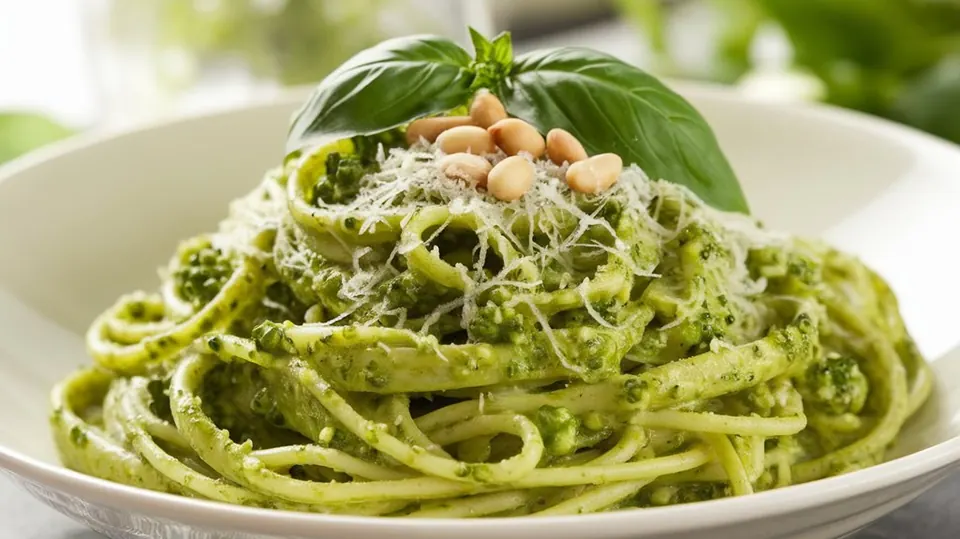
Broccoli Sprout Pesto Pasta
Vegetarian (with vegetarian hard cheese) · Italian-inspired
Ingredients
For the pesto
- 60 g (2 packed cups) broccoli sprouts, plus a handful to serve
- 20 g (1 packed cup) fresh basil leaves
- 45 g (⅓ cup) pine nuts, toasted
- 1 small garlic clove
- 40 g (½ cup) finely grated Parmesan or vegetarian hard cheese
- 1 tbsp lemon juice, plus wedges to serve
- 120 ml (½ cup) extra-virgin olive oil
- ½ tsp salt
For the pasta
- 400 g (14 oz) spaghetti, linguine or fusilli
- Salt for the pasta water
- Chili flakes, to serve (optional)
Method
- Bring a large pot of well-salted water to a boil for the pasta.
- Toast the pine nuts in a dry pan over medium heat for 2 to 3 minutes, shaking often, until golden. Tip them onto a plate to cool.
- Cook the pasta until al dente, following the time on the packet. Before you drain it, scoop out about 250 ml (1 cup) of the cooking water.
- While the pasta cooks, put the sprouts, basil, pine nuts, garlic, cheese, lemon juice and salt in a blender or food processor. Pulse until finely chopped.
- With the motor running, pour in the olive oil and blend until you have a thick, spoonable paste. Taste and add more salt or lemon if it needs it.
- Drain the pasta and return it to the warm pot, off the heat. Add the pesto and 60 ml (¼ cup) of the pasta water. Toss until every strand is coated, adding a little more water if it looks dry.
- Serve right away, topped with a handful of fresh sprouts, extra cheese, a lemon wedge and chili flakes if you like.
Notes
- Off the heat matters. Cooking the pesto in the pan dulls the colour and the fresh, peppery taste of the sprouts. The heat of the pasta is enough.
- Nut-free: use toasted sunflower seeds or pumpkin seeds instead of pine nuts.
- Vegan: skip the cheese and add 1 to 2 tbsp nutritional yeast and a little more salt.
- Vegetarian: traditional Parmesan is made with animal rennet. Look for a hard cheese labelled vegetarian.
Frequently asked questions
Can I use store-bought broccoli sprouts?
Yes. A 4-ounce (113 g) clamshell is about the right amount for the pesto and a handful on top. Use them as soon as you can. Sprouts lose their crunch fast, and the pesto tastes best when they're freshly picked or bought.
Can I make broccoli sprout pesto ahead?
Yes. Press a sheet of plastic wrap onto the surface or cover it with a thin layer of olive oil, and keep it in the fridge for up to 3 days. For longer, freeze it in an ice cube tray, then move the cubes to a bag. Use frozen pesto within 3 months.
Can I use frozen broccoli sprouts?
For pesto, yes. Freezing makes sprouts soft, which ruins them for salads, but it doesn't matter once they're blended. Thaw them and squeeze out the extra water first, or the pesto will be thin.
Does the pesto taste like broccoli?
Not much. Raw broccoli sprouts taste peppery, a bit like radish, rather than like cooked broccoli. With the basil, garlic and cheese, most people taste a sharper, brighter pesto than usual.
Is this recipe safe during pregnancy?
Not as written, because the sprouts are raw. Food safety agencies advise pregnant people and other higher-risk groups not to eat raw or lightly cooked sprouts. Make the pesto with basil only and stir thoroughly cooked sprouts through the pasta instead.

Written by Michael
A passionate sprouting professional sharing practical tips for growing sprouts and microgreens at home. More about Michael