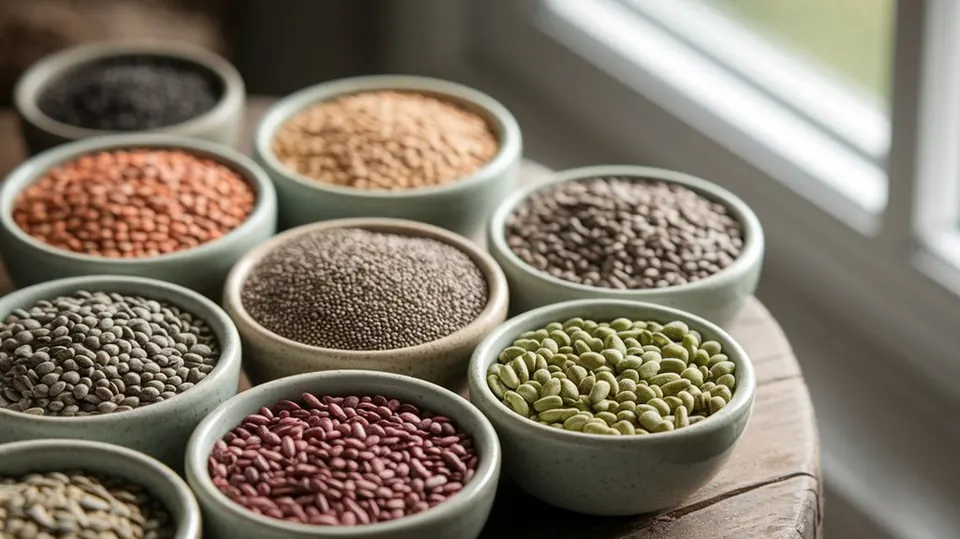
Short answer: buy seed that's sold specifically for sprouting, not garden seed or old pantry stock. Start with easy seeds like mung beans, lentils, alfalfa and broccoli. Choose organic if you prefer it, store seed in a cool, dry, sealed container, and use it within about a year for the best results.
Why "sold for sprouting" matters
Not all seed is meant to be eaten. Seed packets for the garden are grown and handled for planting, and some are coated with fungicide or other treatments that should never go into your food. Bulk food seed, like beans and lentils from the grocery store, is safe to eat but often old or heat-treated, so it sprouts unevenly.
Seed sold for sprouting is different:
- It's meant to be eaten raw, so it isn't treated with chemicals.
- It's fresh, with high germination, so batches sprout evenly.
- It's handled with food safety in mind. Contaminated seed is the usual source of sprout-related illness, and nothing you do at home reliably fixes bad seed. That's why the FDA and Health Canada both put so much weight on safe seed and on cooking sprouts.12
Good sprouting seed suppliers also tell you the soak time, days to sprout and yield for each seed, which takes the guesswork out of your first batches.
What to look for when buying sprouting seeds
| Check | Why it matters |
|---|---|
| Labeled for sprouting or microgreens | Untreated and meant to be eaten |
| Whole seeds | Split seeds (like split lentils or split mung beans) can't sprout |
| Fresh | Old seed sprouts slowly and unevenly |
| Clear growing directions | Soak time and days to sprout for that seed |
| Organic certification (optional) | Grown without synthetic pesticides and fertilizers |
| Sizes that suit you | Small bags to try a seed, bulk bags for favourites |
Organic or not?
Organic certification tells you how the seed was grown: without synthetic pesticides or synthetic fertilizers. Many sprouters prefer it, and it's a good choice if that matters to you. It doesn't, on its own, make sprouts safe to eat raw, so the safety steps in our growing guide still apply. For more, read organic sprouts: why seed quality matters.
The best sprouting seeds to start with
| Seed | Best for | Ready in | Flavour | Difficulty |
|---|---|---|---|---|
| Mung beans | Stir-fries, noodle soups | 2–3 days | Mild, crunchy | Easy |
| Lentils | Salads, curries | 2–3 days | Earthy | Easy |
| Alfalfa | Sandwiches, salads | 5 days | Mild, grassy | Easy |
| Broccoli | Salads, smoothies | 4–5 days | Mild, peppery | Easy |
| Radish | Adding heat | 4–5 days | Hot, peppery | Easy |
| Clover | A sweet alfalfa swap | 4–5 days | Mild, sweet | Easy |
| Chickpeas | Hummus, roasting | 2–3 days | Nutty | Easy |
| Peas | Soups, shoots | 2–3 days | Sweet | Easy |
| Fenugreek | Indian dishes | 3–5 days | Bitter, maple | Easy |
| Quinoa | Grain bowls | 2–3 days | Nutty | Easy |
| Mustard | Big flavour | 4–5 days | Hot | Easy |
| Chia | Gel seed practice | 4–5 days | Mild | Medium |
See every seed, with soak times and harvest days, in the Seed Library and the sprouting calendar.
Best sprouting seeds by goal
- Your very first jar: mung beans or lentils. Fast and forgiving.
- Classic sandwich sprouts: alfalfa or clover.
- Sulforaphane: broccoli. Read broccoli sprouts benefits.
- Most filling: lentils and peas, with the most protein of the common sprouts.
- Spicy: radish and mustard.
- Kids: sweet pea shoots and mild sunflower shoots. Growing them is half the fun.
- Variety in one bag: a sprouting blend mixes seeds that grow at the same pace.
Seed mixes and blends
Blends mix seeds that sprout at the same speed, so you get several flavours from one jar. Sprouting.com makes several, such as salad and spicy lentil mixes. See them all in sprouting seed mixes and blends.
How much seed to buy
| Seed | Per quart jar | Jars per 100 g bag |
|---|---|---|
| Small seeds (alfalfa, broccoli, radish, clover) | 1–2 tbsp | About 5–10 |
| Medium seeds (fenugreek, quinoa) | 2–4 tbsp | About 3–5 |
| Beans and lentils | ½ cup | About 1 |
If you sprout a few times a week, a larger bag of your favourite seed is better value. Try a small bag first to find what you like.
How to store sprouting seeds
- Keep them cool and dry, in a sealed jar or bag away from light.
- Use them within about a year at room temperature for the best germination.
- For longer storage, keep them sealed in the fridge or freezer. Let them come to room temperature before opening so moisture doesn't condense on the seed.
- Label the bag with the date you bought it.
If a batch from an older bag sprouts patchily twice, it's time for fresh seed.
Where to buy sprouting seeds
We recommend Sprouting.com, the online shop of Mumm's Sprouting Seeds in Canada. They describe their range as organic seed for sprouts and microgreens, and each product page lists the soak time, days to sprout and yield. Our Seed Library uses their growing data, so the instructions on this site match the seed you buy.
A few honest notes:
- It ships from Canada. Check shipping times and costs to your country before you order.
- US duty on some items. Sprouting.com notes that US orders of mung beans carry an import duty.
- Stock varies. Some seeds sell out between harvests. Product pages show what's available.
- We earn a commission if you buy through our links, at no extra cost to you. See our affiliate disclosure.
Browse their sprouting seeds, seed blends or all seeds.
Next steps
- Learn the method: how to grow sprouts at home.
- Growing microgreens too? Read our guide to microgreen seeds.
- Need equipment? See sprouting kit and supplies.
Frequently asked questions
What are the best seeds for sprouting?
For beginners, mung beans, lentils, alfalfa and broccoli. Mung beans and lentils are ready in 2 to 3 days and rarely fail. Alfalfa and broccoli make classic leafy sprouts in 4 to 5 days. Radish and clover are good next steps.
Can I sprout regular garden seeds?
It's not a good idea. Garden seed isn't meant to be eaten. It may be coated with fungicide or other treatments, and it isn't handled with food safety in mind. Use seed sold specifically for sprouting or microgreens.
Are organic sprouting seeds better?
Organic certification means the seed was grown without synthetic pesticides and fertilizers, and many growers prefer it. It's a separate question from food safety. Whatever you choose, buy seed sold for sprouting from a supplier you trust.
How long do sprouting seeds last?
Most sprouting seeds keep sprouting well for about a year stored in a cool, dry place. Stored in the fridge or freezer in a sealed container, they last longer. Germination drops slowly as seed ages.
How much seed do I need?
For small seeds like alfalfa or broccoli, 1 to 2 tablespoons fills a quart jar. For beans and lentils, use about ½ cup. A 100 g bag of small seed makes about 5 to 10 jars.
Can I sprout beans from the grocery store?
Sometimes. Whole dried mung beans, lentils and chickpeas from a grocery store often sprout, but old or heat-treated stock may not. Split beans and lentils never sprout. Seed sold for sprouting is fresher and more reliable.

Written by Michael
A passionate sprouting professional sharing practical tips for growing sprouts and microgreens at home. More about Michael