
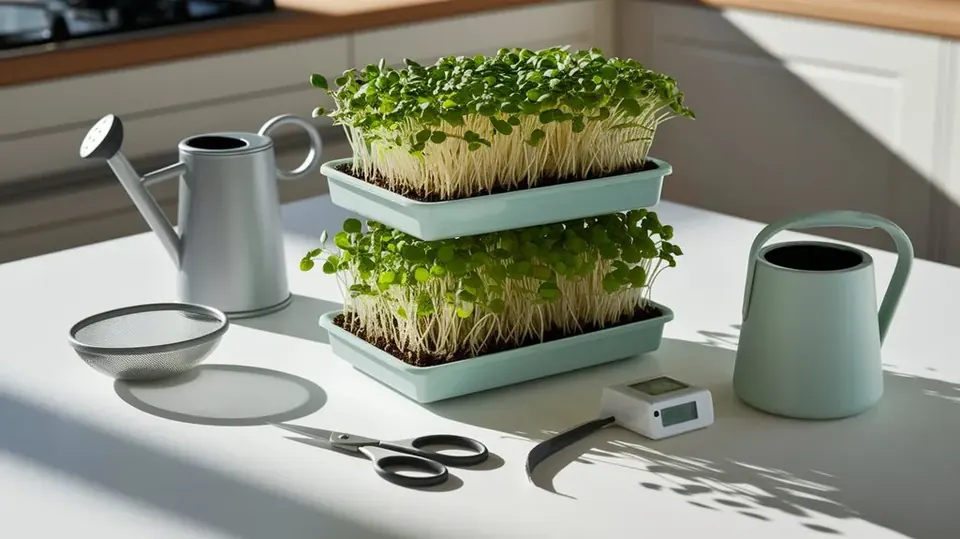
Short answer: small seeds like broccoli, kale and arugula need about 10 to 25 g per 10 × 20 inch tray. Radish needs 25 to 35 g. Big seeds like peas, sunflower and buckwheat need 150 to 340 g. Use about half for a 10 × 10 tray. Find your crop's microgreens seeding rate in the chart below.
How the microgreens seeding rate is measured
Rates are dry seed weight per tray, before soaking. Published charts vary. For example, broccoli ranges from about 13 g (Johnny's trial average) to 28 g (Utah State Extension) per 1020 tray.1 We give a practical range for each crop. Start in the middle and adjust.
| Microgreen | Seed per 10×20 tray | Ounces (10×20) | Seed per 10×10 tray | Soak | Harvest (days) |
|---|---|---|---|---|---|
| Alfalfa | 15–20 g | 0.5–0.7 oz | 8–10 g | 4–12 hours | 8–12 |
| Arugula | 10–12 g | 0.4–0.4 oz | 5–6 g | No soak | 8–12 |
| Barley | 250–300 g | 8.8–10.6 oz | 125–150 g | 6–12 hours | 8–10 (grass) |
| Basil | 8–15 g | 0.3–0.5 oz | 4–8 g | No soak | 12–21 |
| Beet | 20–30 g | 0.7–1.1 oz | 10–15 g | 4–6 hours | 8–12 |
| Bok choy | 15–20 g | 0.5–0.7 oz | 8–10 g | 1–2 hours | 10–14 |
| Borage | 35–45 g | 1.2–1.6 oz | 18–23 g | Not needed | 12–15 |
| Broccoli | 13–28 g | 0.5–1.0 oz | 7–14 g | 1–2 hours | 7–10 |
| Broccoli raab (rapini) | 15–25 g | 0.5–0.9 oz | 8–13 g | 2–4 hours | 10–14 |
| Buckwheat | 200–340 g | 7.1–12.0 oz | 100–170 g | 6–12 hours | 10–12 |
| Caraway | 10–20 g | 0.4–0.7 oz | 5–10 g | Not needed | 14–21 |
| Carrot | 15–25 g | 0.5–0.9 oz | 8–13 g | Not needed | 8–12 |
| Celery | 10–20 g | 0.4–0.7 oz | 5–10 g | Not needed | 18–21 |
| Chervil | 10–15 g | 0.4–0.5 oz | 5–8 g | Not needed | 14–21 |
| Chia | 15–28 g | 0.5–1.0 oz | 8–14 g | No soak | 8–12 |
| Chicory | 10–15 g | 0.4–0.5 oz | 5–8 g | Not needed | 10–14 |
| Clover | 15–20 g | 0.5–0.7 oz | 8–10 g | 4–8 hours | 8–10 |
| Collard | 15–20 g | 0.5–0.7 oz | 8–10 g | 2–3 hours | 8–10 |
| Coriander (cilantro) | 25–35 g | 0.9–1.2 oz | 13–18 g | Optional, 8–12 hours | 16–28 |
| Curly cress | 10–15 g | 0.4–0.5 oz | 5–8 g | No soak | 8–12 |
| Daikon radish | 25–35 g | 0.9–1.2 oz | 13–18 g | 4–6 hours | 8–10 |
| Dill | 10–15 g | 0.4–0.5 oz | 5–8 g | Not needed | 14–21 |
| Dwarf grey sugar peas | 200–275 g | 7.1–9.7 oz | 100–138 g | 6–8 hours | 8–10 (shoots) |
| Endive | 10–15 g | 0.4–0.5 oz | 5–8 g | Not needed | 10–14 |
| Fava beans | 250–350 g | 8.8–12.3 oz | 125–175 g | 6–12 hours | 10–14 (shoots) |
| Fennel | 20–30 g | 0.7–1.1 oz | 10–15 g | Optional, 4–6 hours | 10–14 |
| Fenugreek | 30–40 g | 1.1–1.4 oz | 15–20 g | 6–12 hours | 8–12 |
| Flax | 15–20 g | 0.5–0.7 oz | 8–10 g | No soak | 8–12 |
| Garlic chives | 20–30 g | 0.7–1.1 oz | 10–15 g | 4–6 hours | 14–21 |
| Kale | 10–20 g | 0.4–0.7 oz | 5–10 g | 2–8 hours | 10–14 |
| Kamut® khorasan wheat | 250–300 g | 8.8–10.6 oz | 125–150 g | 6 hours | 10–12 |
| Komatsuna | 15–20 g | 0.5–0.7 oz | 8–10 g | 1–2 hours | 10–14 |
| Leek | 30–40 g | 1.1–1.4 oz | 15–20 g | Not needed | 14–21 |
| Lemon balm | 2–5 g | 0.1–0.2 oz | 1–3 g | Not needed | 14–21 |
| Millet | 150–200 g | 5.3–7.1 oz | 75–100 g | 6–8 hours | 8–10 (greens) |
| Mustard | 10–15 g | 0.4–0.5 oz | 5–8 g | Varies: yellow no soak, wasabi 1–2 hours | 8–12 |
| Nasturtium | 60–100 g | 2.1–3.5 oz | 30–50 g | 8–12 hours | 10–14 |
| Oats | 250–300 g | 8.8–10.6 oz | 125–150 g | 4–8 hours | 10 (grass) |
| Onion | 25–35 g | 0.9–1.2 oz | 13–18 g | 4–6 hours | 14–21 |
| Parsley | 15–20 g | 0.5–0.7 oz | 8–10 g | Optional, 8–12 hours | 14–21 |
| Peas | 200–275 g | 7.1–9.7 oz | 100–138 g | 4–8 hours | 8–10 (shoots) |
| Popcorn shoots | 200–275 g | 7.1–9.7 oz | 100–138 g | 6–12 hours | 10–12 |
| Purple kohlrabi | 15–20 g | 0.5–0.7 oz | 8–10 g | 1–2 hours | 8–10 |
| Radish | 25–35 g | 0.9–1.2 oz | 13–18 g | 4–8 hours | 10–12 |
| Red amaranth | 8–15 g | 0.3–0.5 oz | 4–8 g | No soak | 14–16 |
| Red cabbage | 10–20 g | 0.4–0.7 oz | 5–10 g | 4–6 hours | 10–12 |
| Red shiso (perilla) | 5–10 g | 0.2–0.4 oz | 3–5 g | Not needed | 14–21 |
| Rye | 250–300 g | 8.8–10.6 oz | 125–150 g | 6–12 hours | 8–10 (grass) |
| Speckled peas | 200–275 g | 7.1–9.7 oz | 100–138 g | 6–12 hours | 8–10 (shoots) |
| Spelt | 250–300 g | 8.8–10.6 oz | 125–150 g | 4–8 hours | 10 (grass) |
| Spigarello | 15–25 g | 0.5–0.9 oz | 8–13 g | 3–6 hours | 8–10 |
| Sunflower | 150–250 g | 5.3–8.8 oz | 75–125 g | 4–8 hours | 8–10 |
| Swiss chard | 25–35 g | 0.9–1.2 oz | 13–18 g | 4–12 hours | 8–12 |
| Tatsoi | 10–15 g | 0.4–0.5 oz | 5–8 g | 2–3 hours | 10–12 |
| Thyme | 2–4 g | 0.1–0.1 oz | 1–2 g | Not needed | 14–21 |
| Triticale | 250–300 g | 8.8–10.6 oz | 125–150 g | 6–12 hours | 8–10 (grass) |
| Turnip | 15–25 g | 0.5–0.9 oz | 8–13 g | 2–4 hours | 8–12 |
| Watercress | 5–10 g | 0.2–0.4 oz | 3–5 g | No soak | 10–14 |
| Wheat | 250–450 g | 8.8–15.9 oz | 125–225 g | 8–12 hours | 8–10 (grass) |
| Wheatgrass | 250–450 g | 8.8–15.9 oz | 125–225 g | 8–12 hours | 8–10 |
Adjusting the seeding rate
- Mold at the base? Sow 10 to 20% less next time and add airflow.
- Sparse or leggy? Sow a little more and give brighter light.
- Hulls stuck on leaves? Big seeds benefit from a weighted blackout.
Trays and tools
The rates assume standard trays: a 10 × 20 inch tray set or a 10 × 10 tray set. A kitchen scale makes seeding consistent. See best microgreen trays and microgreens supplies.
For the growing method, follow the step-by-step microgreens guide.
Frequently asked questions
How much seed do I need for a 1020 tray?
It depends on the seed size. Small seeds like broccoli and kale need about 10 to 25 g. Radish needs 25 to 35 g. Peas and sunflower need 150 to 275 g.
How much seed for a 10 × 10 tray?
About half the 1020 amount, since a 10 × 10 tray has half the growing area.
What happens if I sow too much seed?
Crowded seed traps moisture and invites mold, and seed hulls stick to the leaves. Too little seed gives sparse, leggy greens.
Sources
- CropKing. Microgreen Seed Density Charts (seeding rates per 10 × 20 inch tray). Link