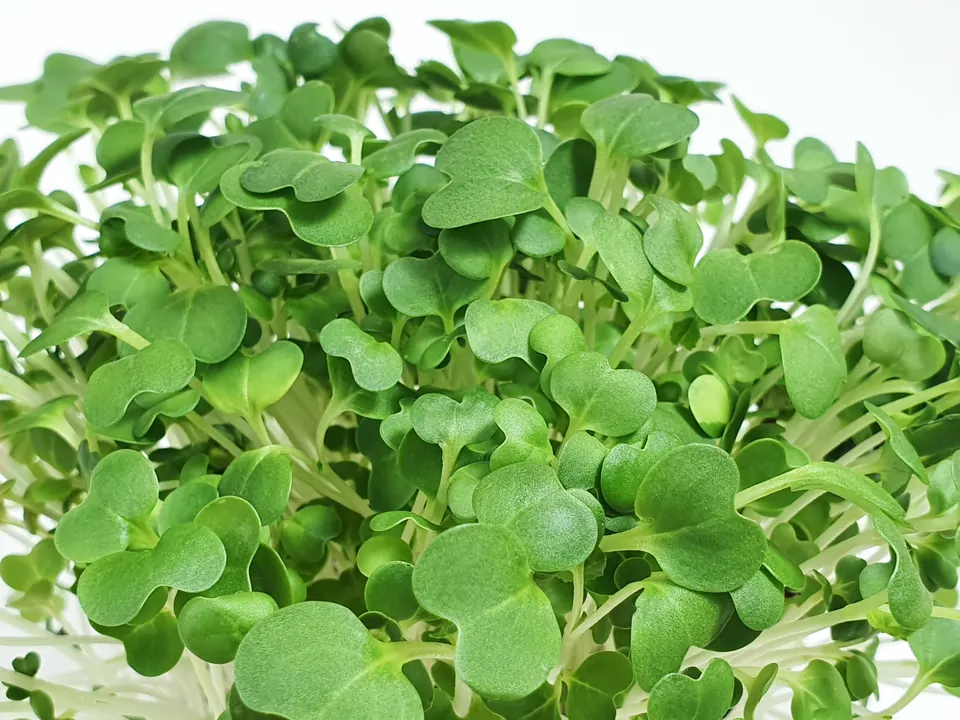
Short answer: soak bok choy seed for 1 to 2 hours. Sow 15 to 20 g evenly on a 10 × 20 inch tray of moist potting mix, cover it, and keep it dark for 2 to 3 days. Uncover, give bright light and water from below. Cut at 10 to 14 days. For sprouts, grow 1 tablespoon in a jar for about 5 days.
What are bok choy microgreens?
Bok choy (Brassica rapa subsp. chinensis), also called pak choi, is a Chinese cabbage.
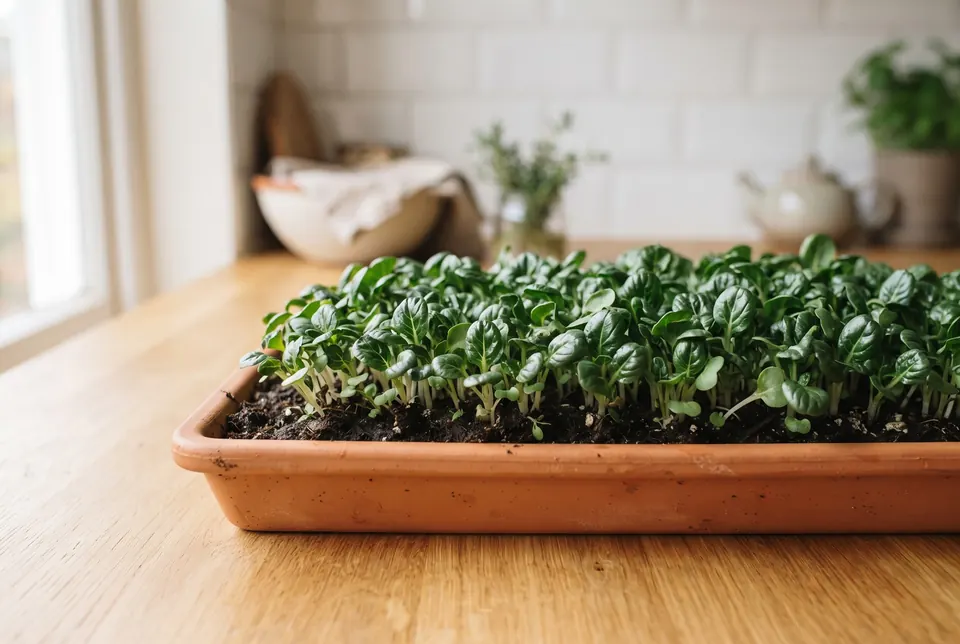
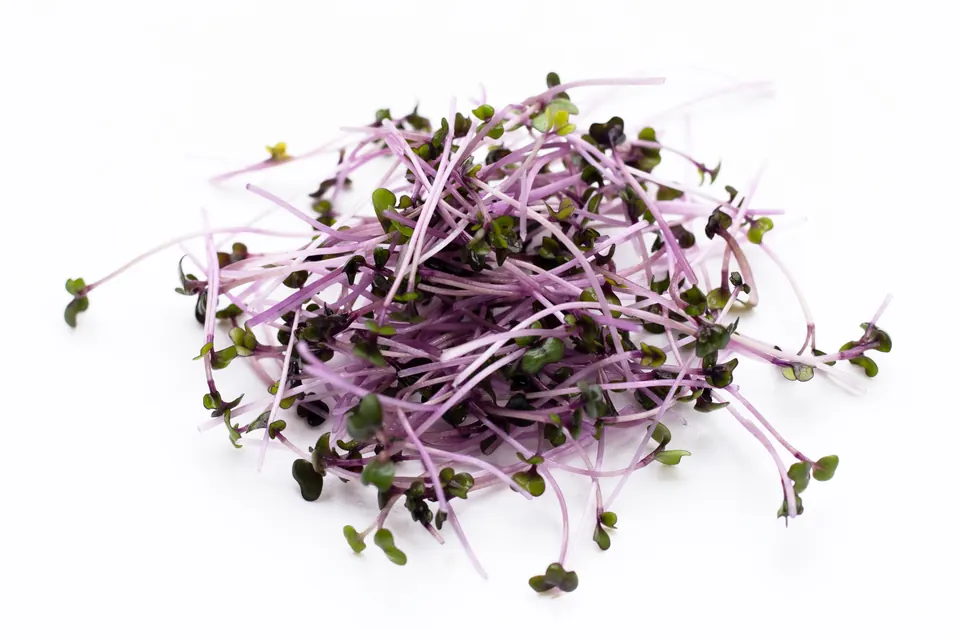
As microgreens, it grows round green leaves on pale stems. Purple bok choy grows purple-tinged leaves under strong light. The flavour is mild, juicy and sweet. Sprouting.com gives it about 5 days as sprouts and 10 to 14 as microgreens, with a short 1 to 2 hour soak.1
How to grow bok choy microgreens
- Day0
Soak
Soak 15 to 20 g of seed for 1 to 2 hours. Small brassica seed doesn't need longer.
- Day0
Sow
Spread the seed evenly over 1 inch of moist potting mix or a grow mat. Mist well.
- Day0–3
Blackout
Cover the tray. Mist once or twice a day.
- Day3
Light
Uncover once seedlings lift the cover. Give 12 to 16 hours of bright light.
- Day3–12
Water from below
Water through the solid bottom tray once a day.
- Day10–14
Harvest
Cut above the soil when the seed leaves are fully open.
Bok choy sprouts
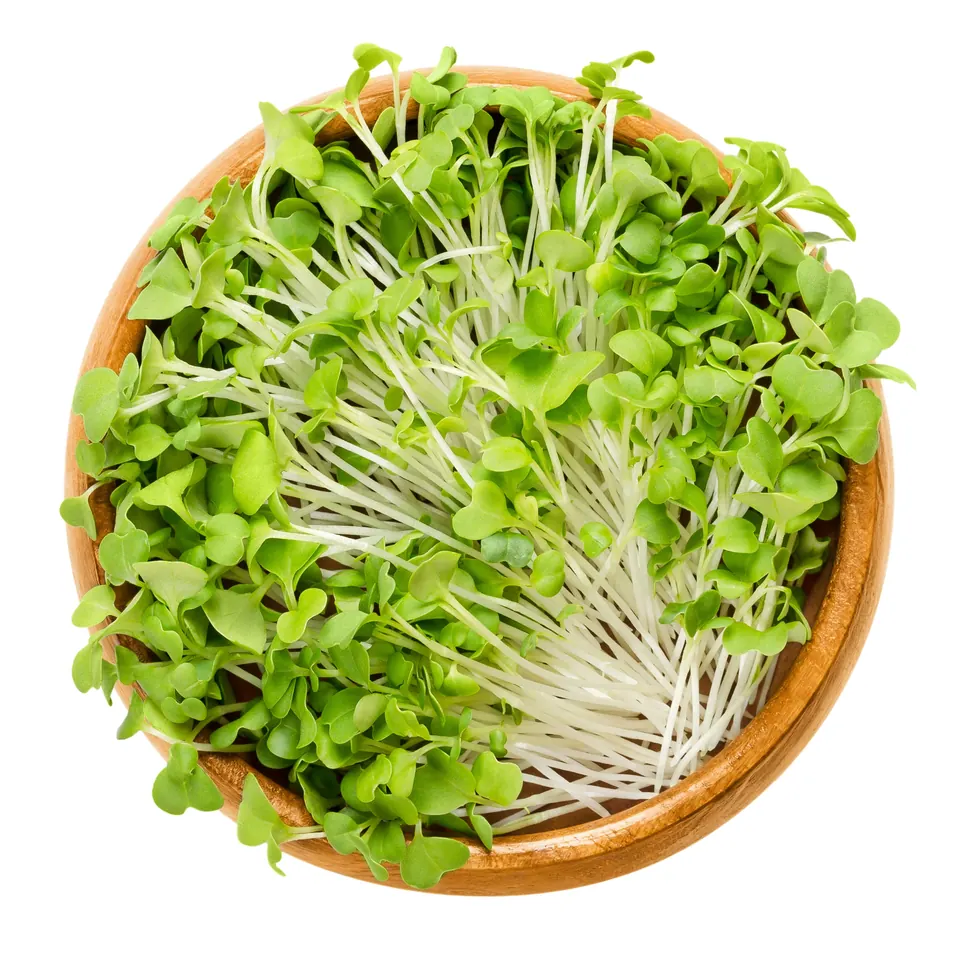
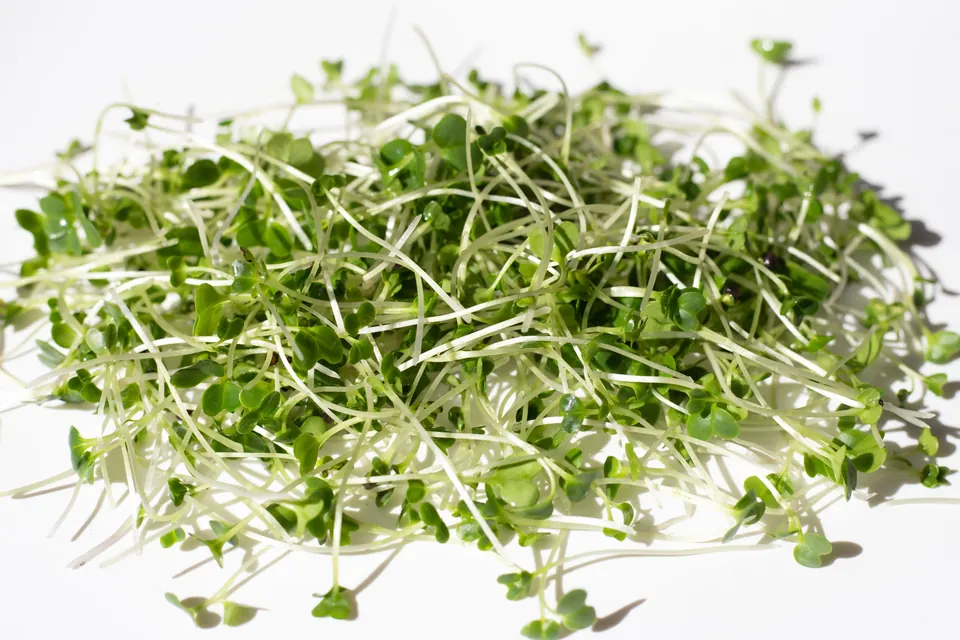
For sprouts, soak 1 tablespoon for 1 to 2 hours, then rinse and drain twice a day in a jar. Harvest at about 5 days, after a few hours of indirect light to green the leaves.
Problems and fixes
| Problem | Likely cause | Fix |
|---|---|---|
| Mold at the base | Too thick or too wet | Sow thinner, water from below, add airflow |
| Leggy, pale | Low light | Brighter window or LED closer |
| Purple type stays green | Low light | Strong light brings out purple |
Tips for growing bok choy microgreens
- Keep the soak short, 1 to 2 hours.
- Sow evenly at 15 to 20 g per tray.
Storing
Store dry bok choy microgreens in a lined container in the fridge for 5 to 7 days.
How to eat bok choy microgreens
- In noodle soups and ramen, added at the end
- On rice bowls and dumplings
- In salads with sesame dressing
- Mixed with tatsoi and mizuna for an Asian greens blend
See microgreen mixes and microgreens in world cuisines.
Safety
Microgreens are a lower-risk raw option. For sprouts, the FDA says higher-risk groups should not eat them raw or lightly cooked, and Health Canada advises everyone to cook sprouts.23
Bok choy FAQ
How long do bok choy microgreens take to grow?
About 10 to 14 days. Soak the seed for 1 to 2 hours, keep it dark for 2 to 3 days, and harvest when the seed leaves are fully open.
What do bok choy microgreens taste like?
Mild, fresh and slightly sweet, like baby bok choy. They're a good choice for people who don't like spicy greens.
Is pak choi the same as bok choy?
Yes. Pak choi and bok choy are two spellings for the same Chinese cabbage, Brassica rapa subsp. chinensis.

Written by Michael
A passionate sprouting professional sharing practical tips for growing sprouts and microgreens at home. More about Michael