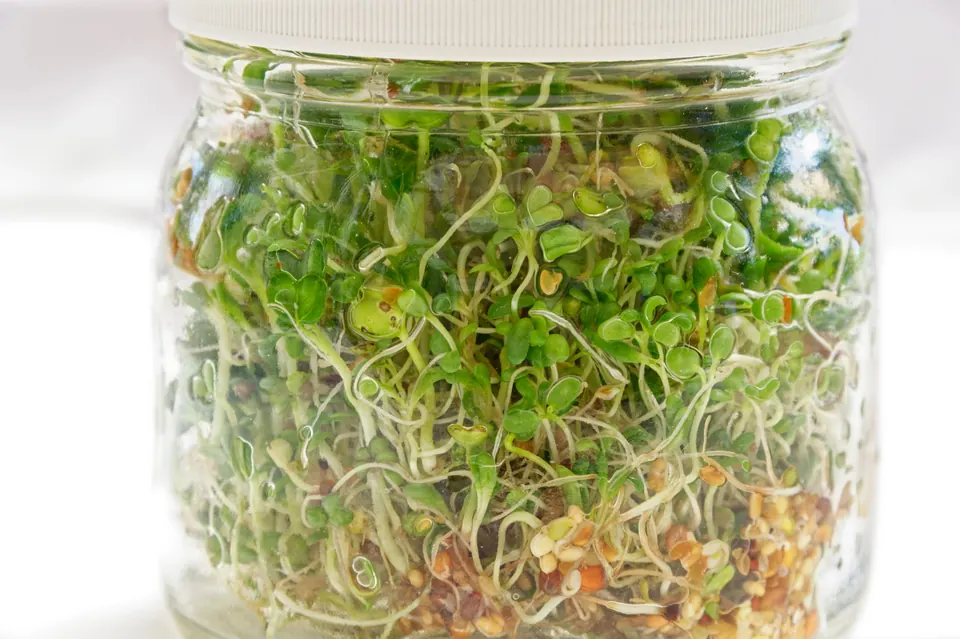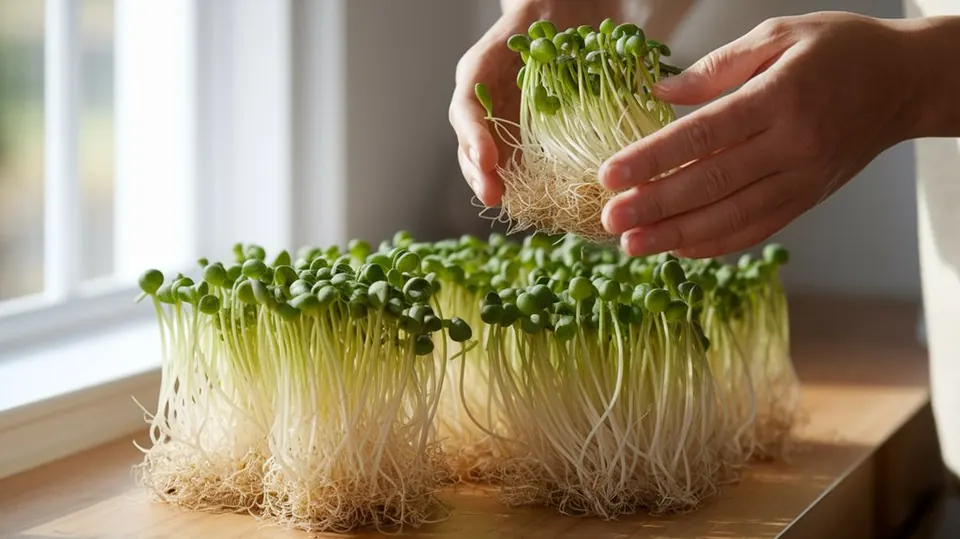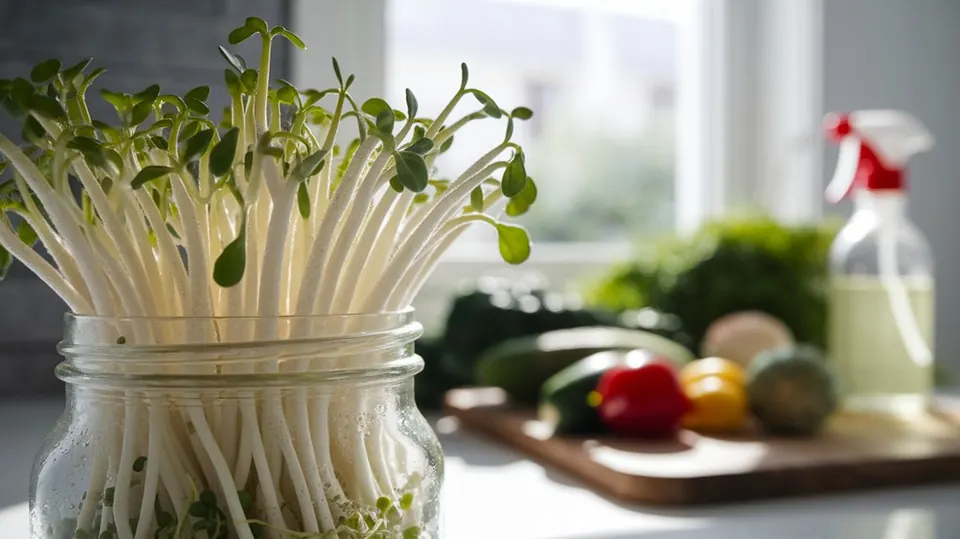
Short answer: rinse the sprouts. Root hairs are fine, white and even along the roots, and they flatten and disappear when wet. They're normal and safe to eat. Mold is patchy, often gray or colored, stays fuzzy when wet, and smells musty or sour. If it's mold, throw out the whole batch and clean your gear.
Root hairs vs moldy sprouts
| Root hairs (normal) | Mold (discard) | |
|---|---|---|
| Colour | Bright white | Gray, green, black, blue or dull white |
| Where | Evenly along every root | Patches, often in clumps or wet spots |
| After rinsing | Flattens and disappears | Stays fuzzy |
| Smell | Fresh | Musty, sour or rotten |
| Texture | Fine and soft | Slimy or cottony clumps |
| When | Around day 2–3 | Any time, often in crowded, wet jars |
The rinse test
- Look closely at the fuzz.
- Rinse the sprouts with cool water.
- Look again. Root hairs flatten and vanish. Mold stays fuzzy.
- Smell the jar. Fresh means fine. Musty or sour means mold or bacteria.
Which sprouts grow root hairs?
Small seeds grow the most visible root hairs, especially broccoli, radish, alfalfa and clover. It's a sign they're looking for water. They often show more when the sprouts are slightly dry.
If you have moldy sprouts
- Throw out the whole batch. Don't eat it or rinse it.
- Wash the jar and lid in hot, soapy water. Scrub the mesh.
- Dry everything fully before the next batch.
- Check your seed. If mold keeps coming back with the same seed, try a fresh bag.
Why sprouts get moldy
- Too much seed. A packed jar traps moisture.
- Poor drainage. Water sitting in the jar.
- Warm room. Mold and bacteria grow faster in heat.
- Skipped rinses. Fresh water keeps sprouts clean.
- Dirty equipment. Leftover residue from the last batch.
How to prevent moldy sprouts
- Use seed sold for sprouting.
- Use the right amount: about 1 to 2 tablespoons of small seed per quart jar.
- Tilt the jar upside down to drain completely.
- Rinse two or three times a day.
- Keep the jar cool and out of direct sun.
For other issues, see sprouting problems. For safety basics, read are sprouts safe to eat?
Frequently asked questions
Is it safe to eat moldy sprouts?
No. If sprouts have real mold, throw out the whole batch. Don't try to rinse it off or pick out the moldy parts.
What do root hairs look like on sprouts?
Fine, white, fuzzy threads all along the root, appearing evenly around day 2 or 3. They look like cotton but disappear when you rinse the sprouts.
What does mold on sprouts look like?
Patchy fuzz that's often gray, green, black or blue. It may be slimy, stays fuzzy after rinsing, and usually smells musty or sour.
How do I stop my sprouts from getting moldy?
Use seed sold for sprouting, use less seed, drain well, rinse at least twice a day, keep the jar cool, and wash everything between batches.

Written by Michael
A passionate sprouting professional sharing practical tips for growing sprouts and microgreens at home. More about Michael