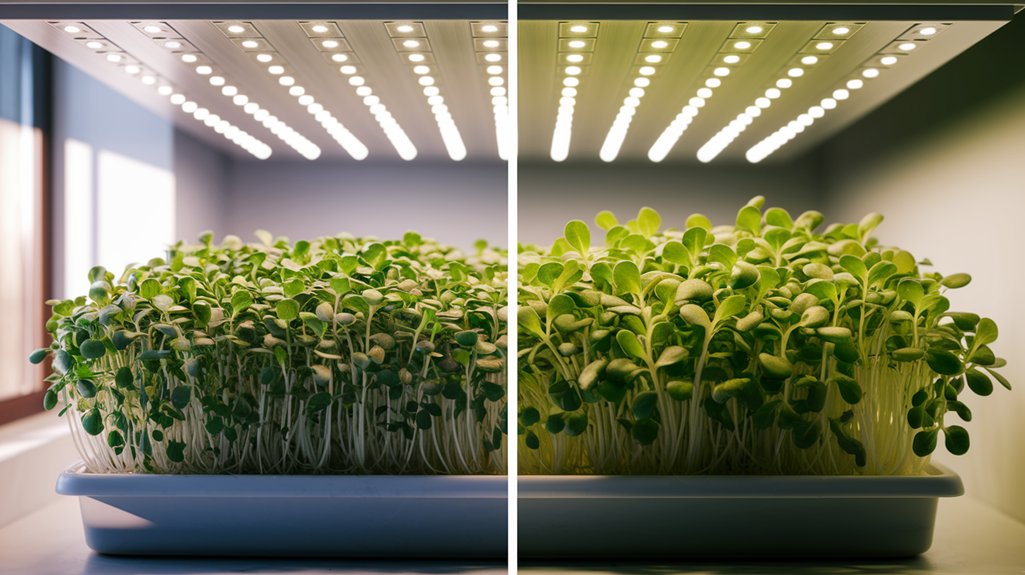
Do Microgreens Need Grow Lights? A Home Grower’s Guide
Do Microgreens Need Grow Lights?
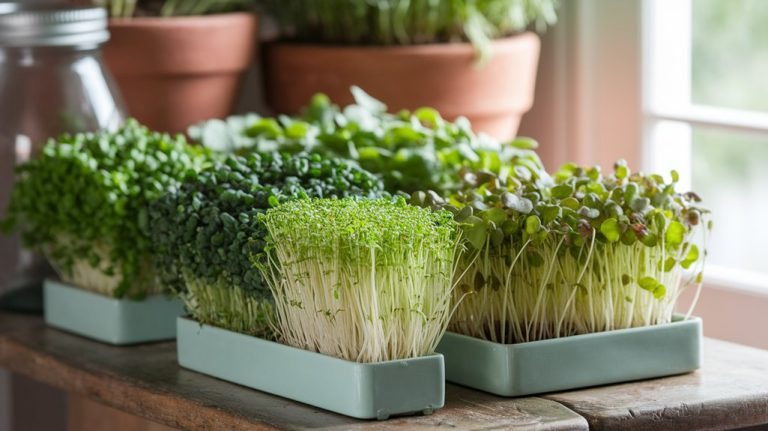
No, not always. Microgreens grow well under a bright, unobstructed south-facing window that gets at least 6 to 8 hours of direct light a day. A grow light earns its place when your space gets less light than that, when winter days get short, or when you want thick, evenly colored trays all year. Either path works. The light just buys you consistency.
Windowsill or Grow Light? How to Tell Which One You Need
Before you buy anything, run a quick check on the space you actually have.
Stand at your growing spot around midday and look at the shadows. A strong, sharp shadow means direct sun is hitting that spot. A soft, fuzzy shadow means you’re getting bright but indirect light, which is weaker than it looks. Count how many hours the direct light lasts. South-facing windows in most of North America get the most hours; north-facing windows rarely get enough on their own.
Season matters too. A windowsill that grows a gorgeous tray of pea shoots in July can leave the same tray pale and leggy in December, simply because the sun sits lower and the days are shorter. If you grow year-round, plan on a light for at least the darker months even if summer works fine without one.
The tell that your current setup is falling short shows up in the seedlings themselves: thin, pale stems that stretch and lean hard toward the window. That’s your microgreens reaching for light that isn’t there. If you see that on tray after tray, it’s time for a light rather than a better window.
How Many Hours of Light Do Microgreens Need a Day?
Most microgreens do well with 12 to 16 hours of light a day, followed by a dark rest period. Going higher, up to 18 hours, can speed up growth a little, but the gain is small and it costs more to run. Twelve to fourteen hours is the sweet spot for most home setups: fast enough growth, low enough power bill.
That light schedule doesn’t start on day one. Most seeds need a dark, weighted blackout period first, while they germinate and push through the growing medium. Depending on the variety, that’s roughly two to five days before the tray ever sees light. Sunflower and pea shoots typically want the longer end of that window; smaller seeds like broccoli or radish are ready for light sooner. Once the shoots are standing up and pushing against a weight or a dome, it’s time to introduce light and start the daily cycle.
A cheap outlet timer is worth the few dollars it costs. It keeps the schedule consistent day to day, which matters more for even growth than hitting an exact number of hours.
What Color of Light Actually Works Best?
Here’s where a lot of grow-light guides overstate their case. Several claim that plain white, full-spectrum LEDs beat red-and-blue grow lights across the board. The actual research doesn’t back that up so cleanly.
A peer-reviewed study on basil microgreens compared a full-spectrum white LED against a red-and-blue blend with added white and far-red light. The full-spectrum light won on vitamin C and flavonoid content. The red-blue blend won on total yield, plant height, and phenol content. Neither spectrum was the clear all-around winner; it depended on what the growers were optimizing for.
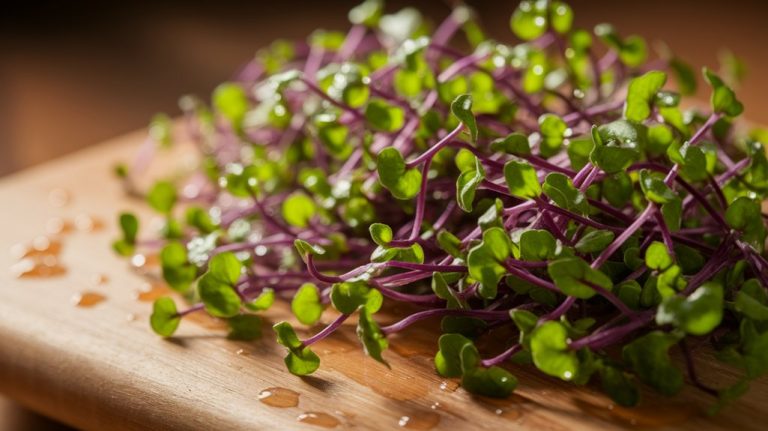
For a home grower, that’s actually good news. It means you don’t need a specialty grow light with a specific red-to-blue ratio to get a solid harvest. A basic full-spectrum “daylight” LED, in the 5000K to 6500K range, gives you a reasonable balance of everything without the higher price tag of a dialed-in horticultural fixture. Save the specialty spectrum lights for if you’re chasing a specific nutrient or color trait, like deeper red in amaranth or cabbage microgreens.
How Far Should the Light Sit Above Your Trays?
Distance depends on how strong the light is. A basic LED shop light or strip sits comfortably 6 to 12 inches above the canopy. A stronger dedicated grow panel needs more room, usually 12 to 18 inches, or it can bleach or scorch the tops of the shoots.
Here’s a quick side-by-side of the common options for home growers:
| Light source | Typical wattage | Distance from trays | Best for |
|---|---|---|---|
| South-facing window | Free | N/A | 1 to 2 trays, spring through fall |
| LED shop light / strip | 20 to 40W | 6 to 12 inches | 1 to 3 trays, tight budgets |
| T5/T8 fixture on a shelf | 24 to 40W per bulb | 8 to 12 inches | Multi-tray shelving units |
| Dedicated LED grow panel | 60 to 100W | 12 to 18 inches | Serious hobbyists, grow tents |
If leaves near the light look bleached, crispy, or curled at the edges, raise it a couple of inches. If the shoots are stretching and leaning, lower it or add more time on the timer.
What a Grow Light Really Costs to Run
This is the part most buying guides skip, and it’s simpler than it sounds. The formula is:
(watts ÷ 1000) × hours per day × your electricity rate = daily cost
The current US average residential rate is about 18.3 cents per kWh, though it swings widely by state, from around 13 cents in the cheapest states to well over 50 cents in the most expensive. Check a recent utility bill for your own number.
Using that 18.3-cent average, a 20-watt shop light run 14 hours a day costs roughly 5 cents a day, or about $1.50 a month if you ran it nonstop. Since a typical microgreen crop only needs the light for 7 to 10 days, the real cost per crop is closer to 40 to 50 cents. A 100-watt grow panel on the same schedule runs about 25 cents a day, or $2 to $2.50 per crop. Either way, lighting is one of the cheapest parts of growing microgreens at home. The seed and the growing medium usually cost more than the electricity.
Signs Your Microgreens Aren’t Getting Enough Light
A few visual cues tell you the light isn’t doing its job, whether that’s a weak window or a light that’s too far away or on too short a schedule.
Pale, yellow, or washed-out color instead of a rich green is the most common sign. Stems that grow tall, thin, and floppy before the leaves fill in are next; that stretching is the plant’s own reaction to weak light, and it rarely fixes itself once the tray is that far along. A whole tray leaning hard in one direction is another giveaway, especially near a window rather than under an overhead light.
None of these ruin the batch outright, but they do mean a smaller, weaker harvest. Catching it early and adjusting the light for the next tray is the fix, not trying to rescue the current one.
A Simple Grow Light Buying Checklist
If the windowsill test above told you it’s time to buy, keep the shopping list short:
- A full-spectrum “daylight” bulb, 5000K to 6500K, rather than a specialty red/blue fixture
- Roughly 20 to 30 watts per standard 10×20 tray as a starting point
- A way to adjust the height, whether that’s a hanging chain, an adjustable stand, or just moving the tray up on a shelf
- A basic outlet timer, so the schedule stays consistent without you remembering every day
- Only as much light as your actual tray count needs. It’s easy to talk yourself into a commercial-grade panel for what is, realistically, a two-tray hobby.
Quick FAQ
Can I just use a regular household LED bulb?
Usually not well. Standard bulbs are made for room lighting, not for sitting close to plants, and most put out far less usable light for photosynthesis than a shop light or grow light of the same wattage. A cheap full-spectrum LED shop light will outperform a lamp from a side table.
Do I really need a timer?
It’s not required, but it removes the guesswork. Microgreens grown on an inconsistent schedule tend to grow unevenly, tray to tray. A basic mechanical outlet timer costs less than a bag of seeds.
Will the light change how my microgreens taste?
Not in a way most home growers notice. Light spectrum affects color and some nutrient levels more than it affects flavor.
The Bottom Line
Start with the windowsill test before you spend anything. If your space genuinely gets 6 to 8 hours of direct light, you may not need a grow light at all. If it doesn’t, a basic full-spectrum LED shop light, run 12 to 14 hours a day and set a few inches above the tray, will grow a solid harvest without the cost or complexity of a commercial setup.