Short answer: microgreens not growing is usually caused by old seed, a cold room (below 60°F), seed drying out under the cover, or low light. Falling over and yellowing point to low light. Mold points to too much seed, too much water or still air. Fix the cause and sow a fresh tray.
Why your microgreens are not growing
| Symptom | Likely mistake | Fix |
|---|---|---|
| Few seeds sprouted | Old seed, cold room, seed dried out | Fresh seed, 65–75°F, mist under the cover |
| Patchy tray | Uneven sowing | Spread seed carefully. Press it flat |
| Tall, pale, falling over | Low light | Brighter window or LED 2–4 in. above |
| Yellow leaves | Low light, late uncovering | Uncover on time, give more light |
| Gray fuzz at the base | Too thick, too wet, still air | Sow thinner, water from below, add a fan |
| Stems rot at soil | Damping off | Less water, better airflow, clean trays |
| Bitter or tough | Harvested late | Cut when seed leaves open |
1. Using old or the wrong seed
Old seed sprouts slowly and unevenly. Garden seed may be treated with fungicide. Use fresh seed sold for microgreens.
2. Sowing too thick
Crowded seed traps moisture and invites mold. Use the seed rate for your crop from the microgreens seeding chart.
3. Sowing too thin
Too little seed gives sparse, leggy greens that flop. Seeds should almost touch.
4. Spreading seed unevenly
Piles in one spot and bare patches in another lead to uneven growth. Sprinkle from a shaker or your fingertips, and press the seed down gently.
5. Letting seed dry during blackout
Under the cover, seed still needs moisture. Mist once or twice a day until the seedlings stand up.
6. Uncovering too late
If the cover stays on too long, stems grow tall, pale and weak. Uncover once the seedlings lift the cover, usually on day 2 to 4.
7. Too little light
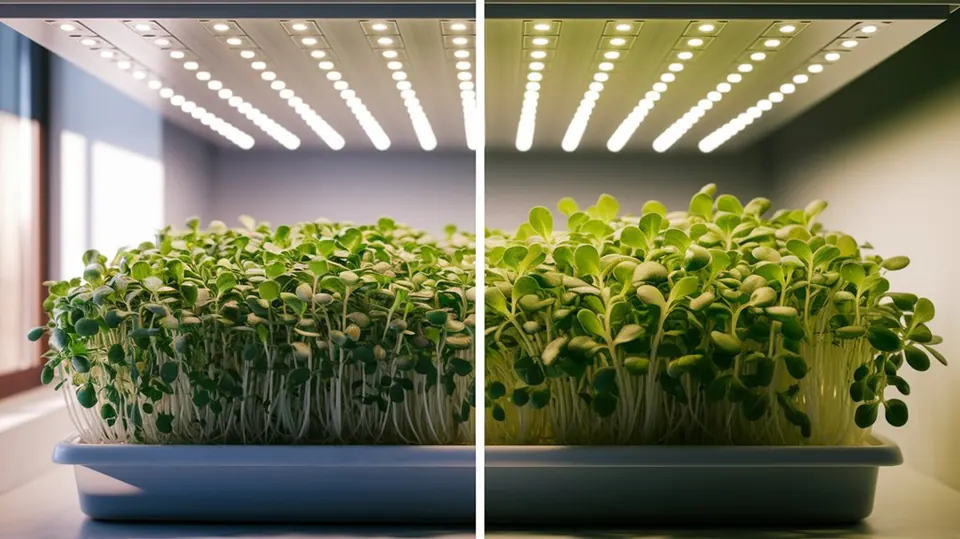
This is the most common reason microgreens fall over and look yellow. Give 12 to 16 hours of bright light. See do microgreens need grow lights?
8. Watering from the top
Pouring water over the leaves keeps them wet and causes mold. After uncovering, water from below by pouring water into the solid bottom tray.
9. Overwatering
Soggy soil causes damping off and slow growth. Let the roots drink for 10 to 15 minutes, then tip out the extra.
10. Still, stuffy air
Microgreens need airflow. A small fan on low nearby helps a lot, especially in humid rooms.
11. A cold room
Below about 60°F (16°C), microgreens grow very slowly. Keep them at 65 to 75°F (18 to 24°C).
12. Harvesting too late
Microgreens get tough and bitter once true leaves grow. Cut when the seed leaves are fully open. Check the microgreens timeline for each crop.
Root hairs vs mold
Fine, fuzzy white root hairs often appear on day 2 or 3, especially on radish and broccoli. They're normal. Mist them: if they collapse, they're root hairs. Mold is gray or colored, spreads in patches and smells musty. Read microgreen pests and mold.
Microgreens still not growing? Start with an easy crop
Try radish or broccoli next. They're fast and forgiving. Then follow the step-by-step microgreens guide.
Frequently asked questions
Why are my microgreens not growing?
The most common causes are old or poor seed, a cold room, seed that dried out during blackout, or too little light. Check each one, and try a fast, reliable crop like radish for your next tray.
Why are my microgreens falling over?
Usually low light, which makes them stretch tall and weak. It can also be damping off, a fungal problem that rots stems at the soil line. Give more light and water from below.
Why are my microgreens yellow?
Yellow microgreens usually haven't had enough light. Stems are yellow right after blackout but should turn green within a day in good light.
Is the white fuzz on my microgreens mold?
Often it's root hairs, which are fine and normal. Mist them: root hairs collapse, mold doesn't. Mold is usually gray or colored, patchy and smells musty.

Written by Michael
A passionate sprouting professional sharing practical tips for growing sprouts and microgreens at home. More about Michael