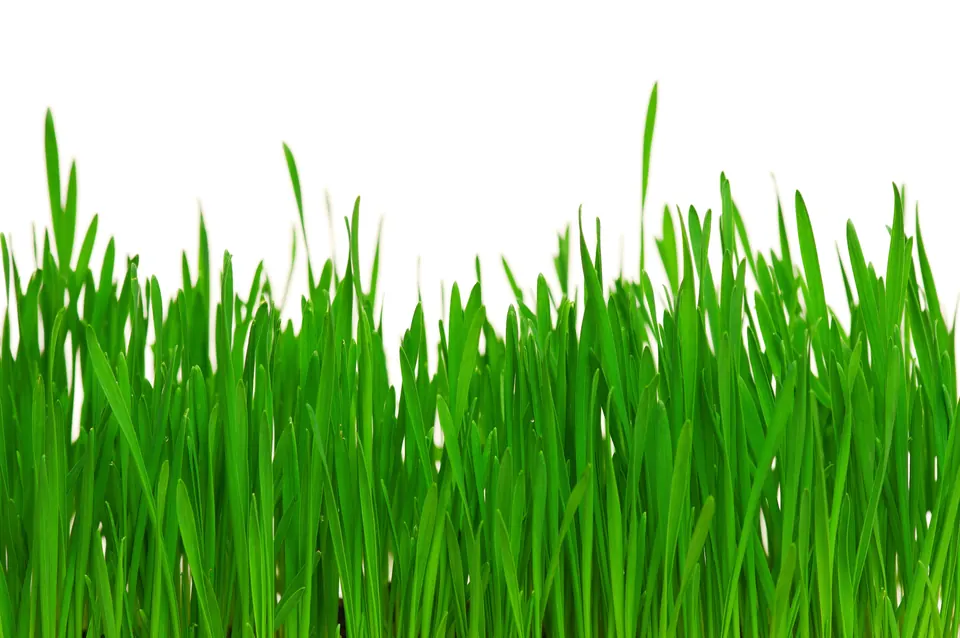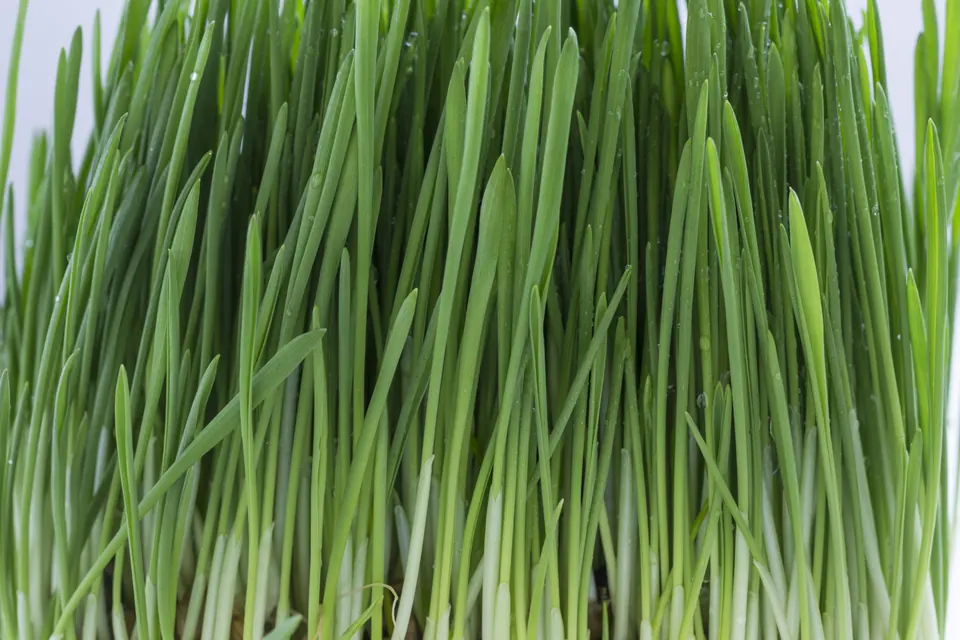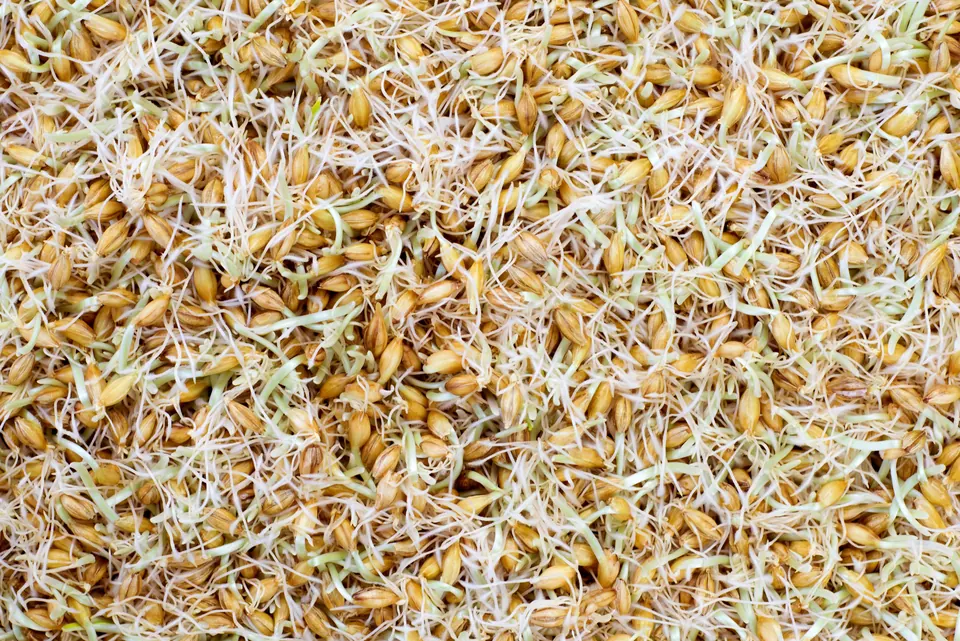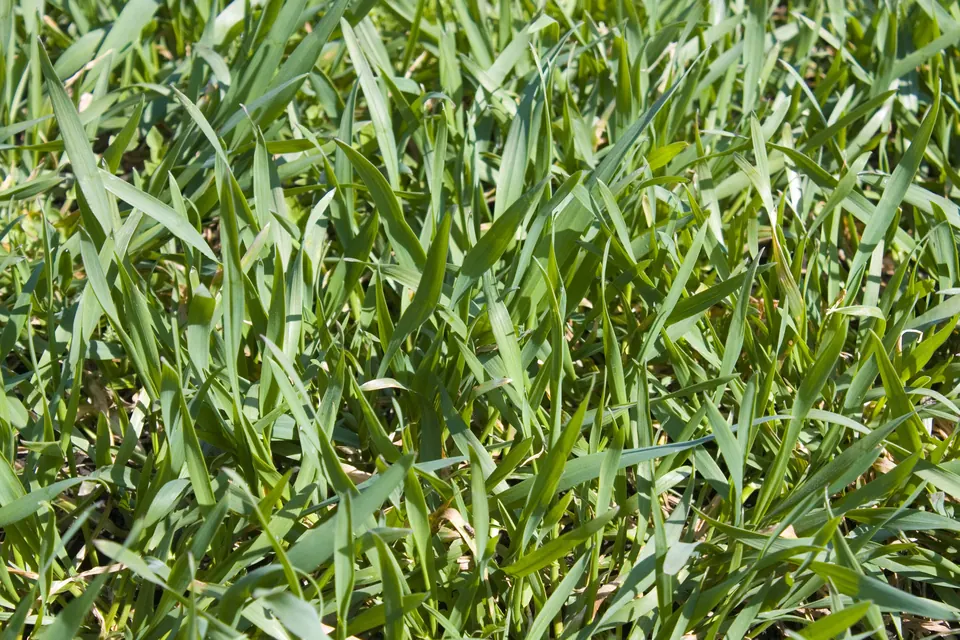
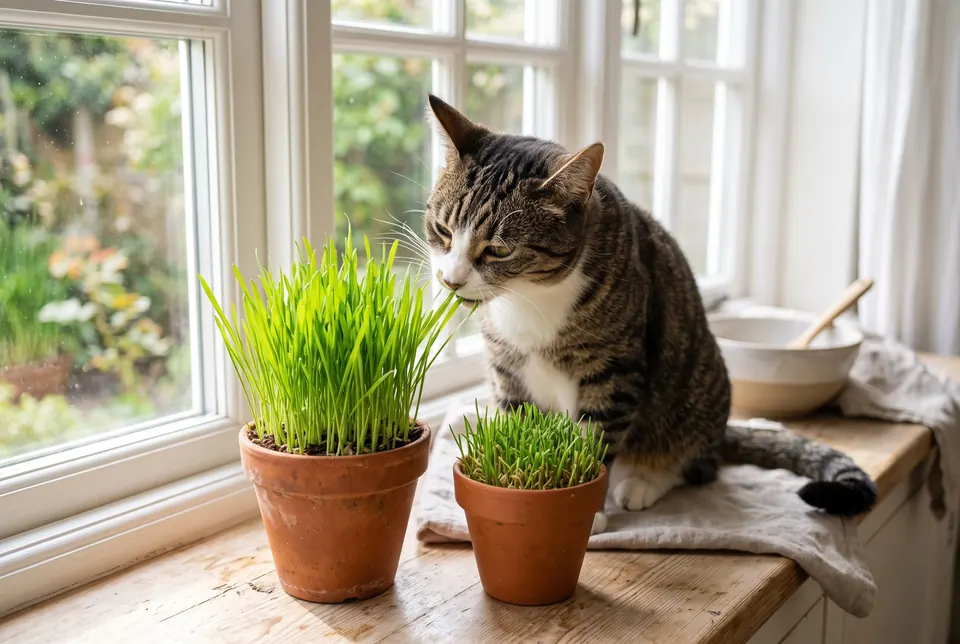
Short answer: soak 2 to 3 tablespoons of wheat, oat, barley or rye seed for 6 to 12 hours. Sow it thickly on moist potting mix in a 4-inch (10 cm) pot and cover it for 2 days. Then move it to a bright window and keep the soil damp. Offer it to your cat when the grass is 3 to 4 inches (8 to 10 cm) tall, usually at 7 to 10 days.
What is cat grass?
Cat grass is the name for young cereal grass grown in a pot or tray for cats to chew. It usually comes from one of four grains:
| Grain | Soak | Ready in | Notes |
|---|---|---|---|
| Wheat (wheatgrass) | 8–12 hours | 8–10 days | The most common cat grass. Fast, sturdy and cheap. |
| Oats | 4–8 hours | About 10 days | Soft, wide blades. Use hulless oats; rolled or steel-cut oats won't grow. |
| Barley | 6–12 hours | 8–10 days | Use hulls-on barley for grass. Pale green, soft blades. |
| Rye | 6–12 hours | 8–10 days | Thin, fine blades. Handles a cool room well. |
The pet-shop kits are mostly wheat, or a mix of wheat, oats and barley. Buying the seed loose costs far less per pot than buying kits, and it's the same seed.
Cat grass is not lawn grass, and it's not catnip. Lawn grass may carry weed killer or fertiliser. Catnip is a mint-family herb that makes many cats roll and play, while cat grass is something they chew and eat.
Why do cats eat grass?
Nobody knows for sure, but there's good evidence that it's normal behaviour, not a sign of illness. A University of California, Davis survey of 1,021 cat owners found that 71% of cats had been seen eating plants at least 6 times. 91% of owners said their cat almost always looked normal beforehand.1
About 27% of owners said their cat often vomited after eating plants. Young cats ate plants more often and vomited less than older cats.1
The researchers think the habit comes from wild ancestors. Wild cats and other carnivores eat grass regularly, and the fibre may help push intestinal worms out of the gut. Pet cats seem to have kept the instinct, even if they don't have the worms.
You'll often read that cat grass prevents hairballs or adds vitamins. Neither has good proof. The honest reasons to grow it are simpler: most cats enjoy it, and it gives an indoor cat something to chew besides your houseplants.
Is cat grass safe for cats?
For most cats, yes. Plain grain grass grown from clean seed is gentle and safe to nibble. A few things make it safer still:
- Grow it from untreated seed. Use seed sold for sprouting or for cat grass, not farm seed that may be coated with fungicide.
- Skip the lawn. Grass from outside may have weed killer, fertiliser or pesticide on it.
- Throw out moldy pots. Grey or black fuzz on the seeds or soil means it's time to start again.
- Expect some vomiting. Bringing up grass now and then is common. Frequent vomiting, vomiting with no grass in it, or a cat that seems unwell is a reason to call your vet.
- Check your other plants. Some common houseplants are toxic to cats, so put those out of reach and leave the cat grass low where your cat can get it.
Keep lilies away from cats completely. True lilies and daylilies (Easter, tiger, stargazer, Asiatic and others) can cause fatal kidney failure in cats. Every part is toxic, even the pollen and the water in the vase. If your cat chews a lily, call your vet or a pet poison line right away.2
How to grow cat grass
What you need
- Seed: wheat, hulless oats, hulls-on barley or rye. A mix works too.
- A pot or tray: a 4-inch (10 cm) pot for one cat, or a 6-inch (15 cm) pot or small tray for two. Heavy pots like terracotta are harder to knock over.
- Potting mix: any fresh, plain potting mix. A coco coir or hemp grow mat works if you'd rather not have soil in the house.
- Something to cover it: a plate, an upside-down saucer or another pot.
How much seed
Sow the seed thickly, so it touches but doesn't pile up. As a guide:
- 4-inch (10 cm) pot: 2 to 3 tablespoons, about 20 to 30 g.
- 6-inch (15 cm) pot: about ⅓ cup, 40 to 60 g.
- 10 × 20 inch tray: 250 to 450 g of wheat, or 250 to 300 g of oats, barley or rye.
Step by step
- Day0
Soak
Rinse the seed and soak it in cool water. Give wheat 8 to 12 hours, barley and rye 6 to 12 hours, and oats 4 to 8 hours.
- Day1
Sow
Drain the seed. Fill the pot with moist potting mix to about 1 inch (2.5 cm) below the rim and press it flat. Spread the seed in one thick layer and press it gently into the surface.
- Day1–3
Cover
Cover the pot to keep it dark and damp. Mist the seed once or twice a day. Roots will grab the soil and small shoots will appear.
- Day3
Uncover
When the shoots are about 1 inch (2.5 cm) tall, take the cover off. Move the pot to a bright window out of harsh midday sun.
- Day3–10
Water
Keep the soil damp but not soggy. Water from below if the pot has a saucer, or pour gently at the edge. A small fan nearby helps stop mold.
- Day7–10
Serve
When the grass is 3 to 4 inches (8 to 10 cm) tall, set the pot where your cat can reach it. Trim any blades that flop over.
Want a steady supply? Sow a new pot every 7 to 14 days. By the time one pot is tired, the next is ready.
How much cat grass can a cat eat?
There's no set amount. Most cats nibble a few blades at a time and walk away. Put the pot somewhere easy to reach, and let your cat decide.
A few tips from growing it:
- One pot per cat if you have more than one. It stops them guarding it and gives each a fair share.
- Short spells for gobblers. If your cat eats a big mouthful and brings it straight back up, put the pot out for 10 minutes a day instead of all day.
- Keep it fresh. Cats tend to ignore old, yellow grass. A fresh pot every week or two keeps them interested.
- Use it as a decoy. A pot of cat grass near a plant your cat keeps chewing often moves the chewing to the grass.
Cat grass problems and fixes
| Problem | Likely cause | Fix |
|---|---|---|
| Grey or black fuzz on seed or soil | Too wet, still air | Throw it out. Next time, use less water and give more air. |
| White fuzz on roots only | Root hairs, which are normal | Leave it. Root hairs vanish when misted; mold doesn't. |
| Patchy growth | Seed too old, or sown too thin | Use fresh seed and sow more thickly. |
| Pale, floppy grass | Not enough light | Move it to a brighter window. |
| Yellow tips after 2 weeks | The pot is getting old | Sow a new one. |
| Cat digs in the pot | Bare soil looks like a litter box | Sow edge to edge, or grow on a mat instead of soil. |
Where to buy cat grass seeds
Any untreated wheat, hulless oat, barley or rye seed sold for sprouting makes good cat grass. It's the same seed as in pet-shop kits, at a much lower cost per pot. Sprouting.com sells all four:
- Wheat, Hard Red Winter: the classic cat grass and wheatgrass seed.
- Oats, Hulless: soft blades that many cats prefer.
- Barley, hulls on: the right barley for growing grass.
- Rye: fine blades and quick to grow.
- 1020 trays and grow mats if you'd rather grow a full tray and cut it into pieces.
The same seed also grows wheatgrass for juicing and fresh greens for chickens. For more grain grasses, see the microgreens guides.
Seeds in this article
Frequently asked questions
Is cat grass safe for cats?
Plain wheat, oat, barley or rye grass grown from untreated seed is safe for most cats. Some cats vomit after eating grass, which is usually normal. Call your vet if it happens often, or if your cat seems unwell, stops eating or vomits blood.
Do vets recommend cat grass?
Many vets see it as a safe, simple treat for indoor cats and a way to keep them off houseplants. Cats don't need it if they eat a complete cat food, though. Ask your vet first if your cat has a health condition or a sensitive stomach.
Is cat grass the same as catnip?
No. Cat grass is young cereal grass that cats chew and eat. Catnip (Nepeta cataria) is a mint-family herb that makes many cats roll, rub and play. You can grow both, but they do different jobs.
How often should my cat eat cat grass?
There's no set amount. Most owners leave a pot out and let the cat graze a few blades at a time. If your cat eats a lot at once and then vomits, put the pot out for short spells instead of all day.
How long does cat grass last?
A pot looks good for about 2 to 3 weeks. After that the blades yellow and flop over. Sow a new pot every week or two so a fresh one is always ready, and compost the old one.
Can I give my cat grass from the lawn?
It's better not to. Lawn grass may have weed killer, fertiliser or pesticide on it, and dogs and wild animals use lawns too. A pot of cat grass grown from clean seed indoors is the safer choice.

Written by Michael
A passionate sprouting professional sharing practical tips for growing sprouts and microgreens at home. More about Michael