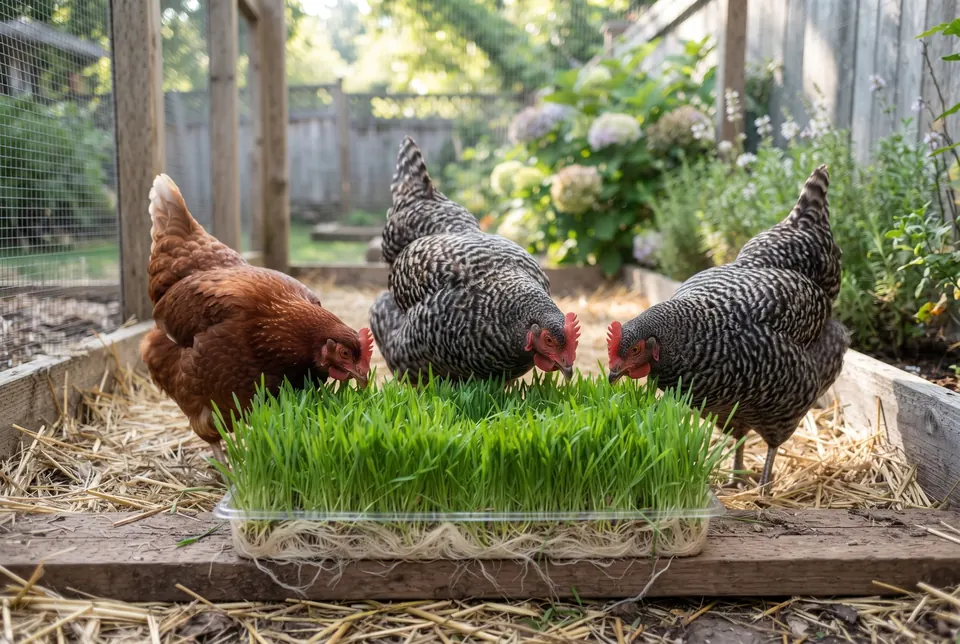
Short answer: soak 1 to 2 cups of whole barley, wheat or oats for 8 to 12 hours. Spread it in a shallow tray with drainage holes and rinse it twice a day. In 5 to 8 days it forms a green mat of roots and shoots. Give it to your chickens as a treat, alongside their complete feed. Throw out anything moldy.
What is fodder for chickens?
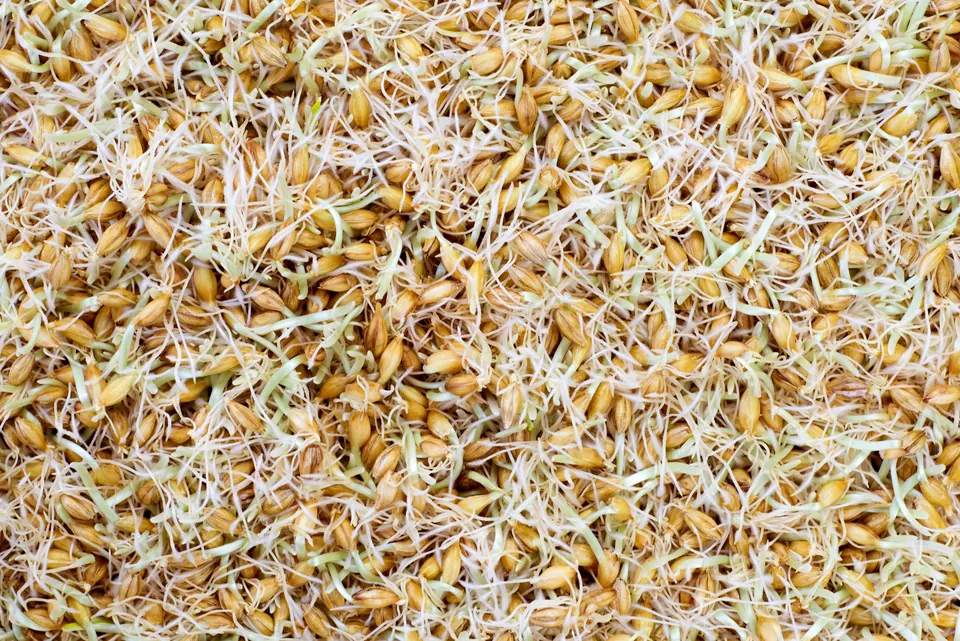
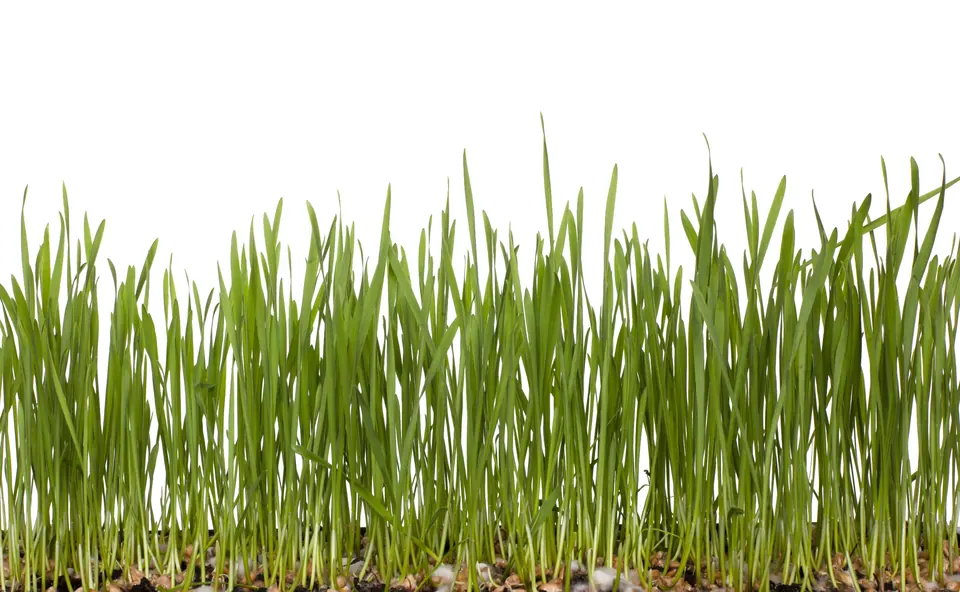
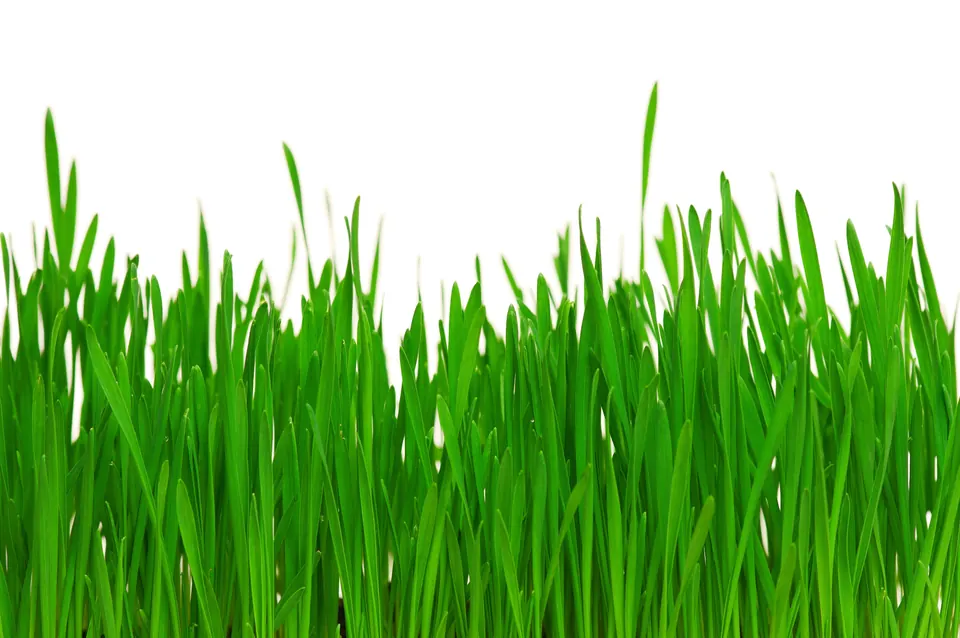
Fodder is grain that's been sprouted and grown for a few days into a mat of roots and short green shoots. Chickens eat all of it: the seed, the roots and the greens. It's a fresh, green treat when there's no grass, and pecking at a fodder mat gives bored winter birds something to do.
Fodder is a supplement, not a complete diet. Laying hens need a balanced layer feed for protein, calcium and other nutrients. University of Maine Extension guidance stresses the role of a complete commercial feed for backyard flocks, with treats and scratch kept to a small part of the diet.1
The best seeds to sprout for chickens
| Seed | Why use it | Notes |
|---|---|---|
| Barley (hulls on) | The classic fodder grain, fast and thick | Grows a dense mat in 6 to 8 days |
| Wheat | Easy and widely available | Can be fed as short sprouts or grass |
| Oats | Soft greens chickens like | Hulled or hulless both work for fodder |
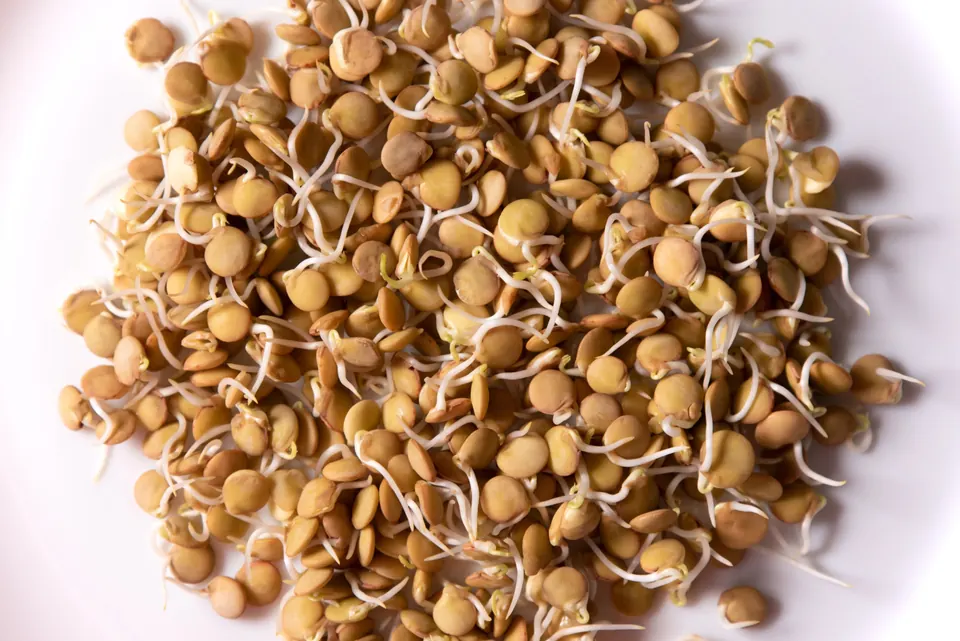
| Lentils | Adds protein | Feed as short sprouts, 2 to 3 days |
| Peas | Protein, big shoots | Good mixed with grain |
| Sunflower | Chickens love it | Black oil seed, grown as shoots |
Avoid: seed sold for planting (it may be treated with fungicide), and raw kidney beans or other beans of that family, which contain a natural lectin that causes poisoning unless thoroughly cooked.2
How to grow fodder, day by day
- Day0
Rinse and soak for 8–12 hours
Rinse 1 to 2 cups of clean, untreated grain. Soak it in cool water for 8 to 12 hours.
- Day1
Spread in a tray
Drain the grain and spread it about ½ inch (1 cm) thick in a shallow tray with drainage holes. A 10 × 20 inch tray works well.
- Day1–5
Rinse twice a day
Rinse with cool water morning and evening, letting it drain completely. Keep the tray in a bright spot with good airflow.
- Day5–8
Feed it
When the mat is 3 to 5 inches (8 to 12 cm) tall, lift it out and give a piece to your flock. Start a new tray every day or two for a steady supply.
A simple rotation. Set up four to six trays and start one each day. By the time you've started the last, the first is ready to feed.
How much fodder for chickens to feed
Treat fodder as part of the treat allowance, not the main meal. Start with a small handful, or a slice of mat about the size of your palm, per bird each day. Watch that they still eat their layer feed. If egg production or shell quality drops, cut back on treats.
Keeping fodder safe and mold-free
Moldy feed can make chickens sick. Throw out any fodder that has gray, black, blue or fuzzy mold, or smells musty or sour.
- Rinse well before soaking and at every rinse.
- Don't sow too thick. About ½ inch of seed is plenty.
- Drain completely. Trays should never sit in water.
- Keep air moving. A small fan helps a lot in a damp room.
- Keep it cool. Fodder grows best around 60 to 70°F (16 to 21°C). Warm, still rooms grow mold.
- Clean trays between batches with hot, soapy water.
Short sprouts vs full fodder
You don't have to grow a full mat. Short sprouts, soaked grain or lentils sprouted for just 2 to 3 days in a jar or bucket, are quicker and easy to scatter for the flock. Full fodder takes longer but gives more greens.
Where to buy seed for chicken fodder
For small flocks, we link to hulls-on barley, wheat and lentils from Sprouting.com, which sells untreated seed for sprouting. For larger flocks, local feed stores often sell whole feed grains in bulk. Make sure any grain you buy is untreated and meant for feed or food, not for planting.
For more on growing cereal grass, see how to grow wheatgrass.
Frequently asked questions
Can chickens eat sprouted seeds?
Yes. Chickens happily eat sprouted grains like barley, wheat and oats, and sprouted lentils. Feed them as a treat or supplement. Laying hens still need a complete layer feed for the right balance of protein, calcium and other nutrients.
What's the best seed to sprout for chickens?
Barley is the most popular for fodder because it grows a thick, green mat quickly. Wheat and oats work well too. Lentils and peas add protein. Use clean, untreated seed, never seed coated with fungicide for planting.
How much fodder should I feed my chickens?
Treat fodder as part of the treat allowance. A common rule of thumb is that treats should be a small share of the daily diet, with complete feed making up the rest. Start with a small handful per bird and watch that they still eat their regular feed.
How do I stop chicken fodder from going moldy?
Rinse the seed well, don't sow it too thick, make sure trays drain completely, and keep air moving with a small fan. Moldy fodder can make birds sick, so throw out any tray with gray, black or fuzzy mold or a musty smell.
Can I use grocery store lentils for chickens?
Whole, raw lentils from the store usually sprout. Split lentils won't. Don't feed sprouted raw kidney beans or similar beans, which contain a natural toxin unless they're thoroughly cooked.

Written by Michael
A passionate sprouting professional sharing practical tips for growing sprouts and microgreens at home. More about Michael