Short answer: use fine potting or seed-starting mix (about 1 inch) for the most reliable results and the biggest yields. Choose coco coir for a cleaner option that still suits big seeds. Use grow mats or hemp mats for small seeds like broccoli, radish and cress when you want no mess. Avoid garden soil.
Microgreens growing medium compared
| Medium | Best for | Pros | Cons |
|---|---|---|---|
| Potting / seed-starting mix | Every crop | Holds water, biggest yields | Messier, heavier |
| Coco coir | Most crops, incl. sunflower and peas | Clean, holds moisture, compostable | Some brands need rinsing |
| Hemp mat | Small seeds | Tidy, compostable | Dries out faster |
| Fibre grow mat | Broccoli, kale, radish, cress | Very clean, easy | Single use, small seeds only |
| Garden soil | Not recommended | Free | Weeds, pests, packs down |
Potting mix
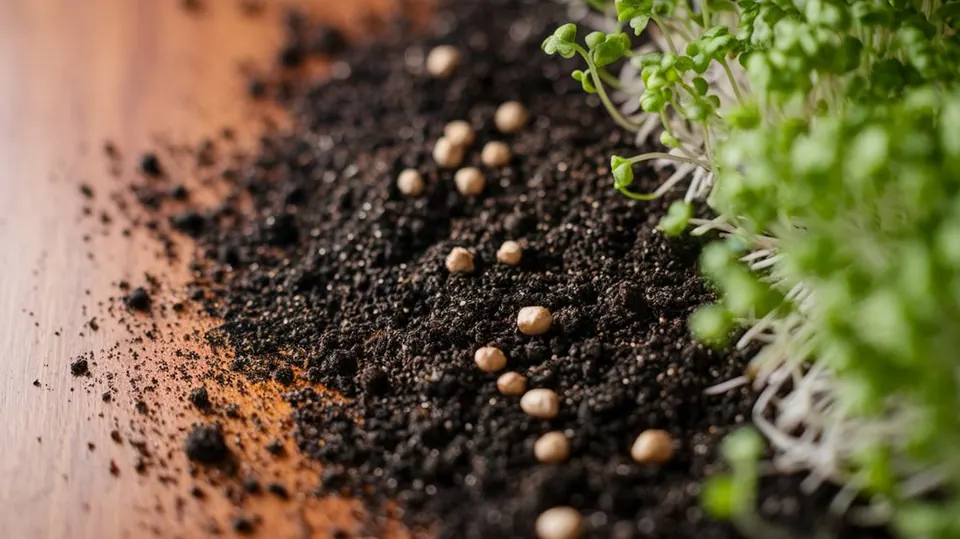
A fine, light potting mix or seed-starting mix is the standard microgreens growing medium. It holds water evenly, supports heavy roots and gives the biggest yields. Pick one without large bark chunks. Some growers sift it for a smoother surface.
Best for: everything, especially sunflower, pea shoots and buckwheat.
Coco coir
Coco coir is made from coconut husk. It's cleaner than soil, holds water well and is easy to compost. It suits almost all crops. Some coir is high in salts, so rinse it if the bag suggests it.
Best for: growers who want soil-like results with less mess.
Hemp and fibre grow mats
Mats are thin pads you lay in the tray. They're the cleanest choice and perfect for kitchens. They dry out faster than soil, so check them often. Read how to grow microgreens without soil.
Best for: broccoli, radish, kale, cabbage, cress and gel seeds.
What about the seeds?
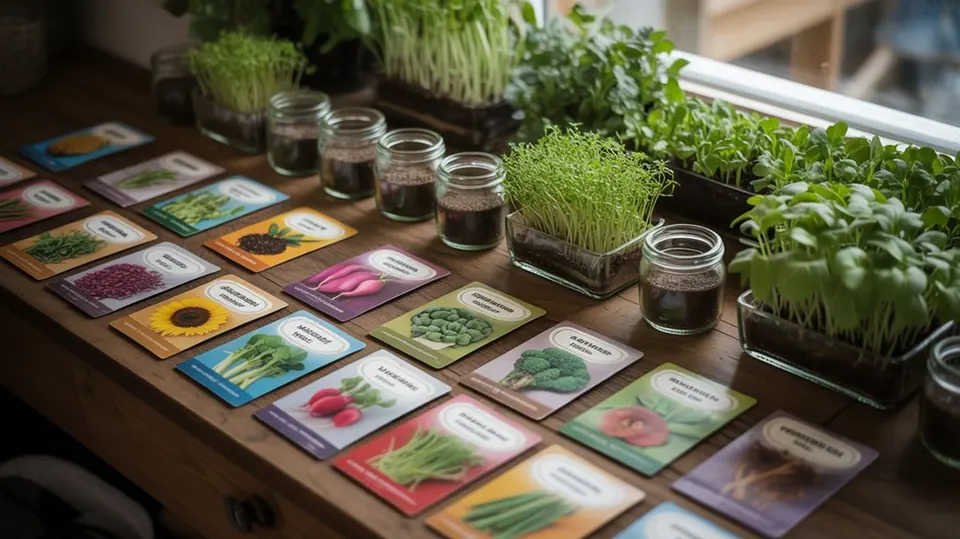
The microgreens growing medium only matters if the seed is good. Use fresh, untreated seed sold for sprouting or microgreens, not treated garden seed. Browse microgreen seeds for varieties, and check the microgreens seeding chart for how much to sow.
Tips for any microgreens growing medium
- Fill the tray with about 1 inch and press it flat.
- Pre-moisten before sowing so it's evenly damp.
- Water from below once seedlings are uncovered.
- Don't reuse old soil or mats straight away. Compost them.
- Use clean trays each time. We link to 10 × 20 trays from Sprouting.com.
Not sure where to start? Use a fine potting mix for your first trays. Once you've had success, try coco coir or mats to see what fits your space.
Frequently asked questions
What is the best soil for microgreens?
A fine, light potting mix or seed-starting mix without large chunks of bark. Avoid garden soil, which can carry weed seeds and pests and packs down too hard.
Is coco coir good for microgreens?
Yes. Coco coir holds water well, is clean to handle and works for most crops, including sunflower and peas. Rinse it if the label says it's high in salts.
Can you reuse soil from microgreens?
It's best not to reuse it straight away. Old roots and possible mold spores can cause problems. Compost it and use fresh mix for each tray.
How much soil do microgreens need?
About 1 inch (2.5 cm) is enough for most microgreens. Big-seed crops like sunflower and peas can use 1 to 1.5 inches.

Written by Michael
A passionate sprouting professional sharing practical tips for growing sprouts and microgreens at home. More about Michael