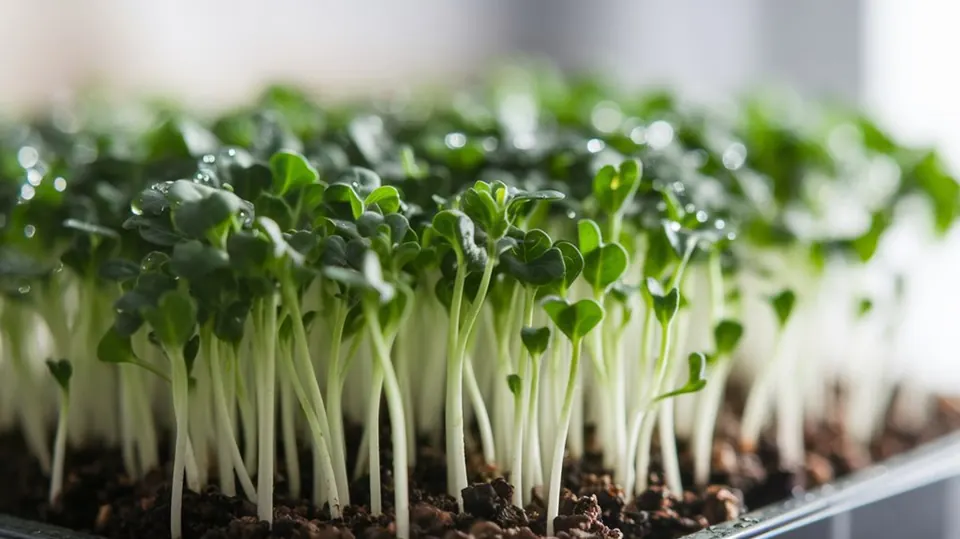
Short answer: soak 200 to 340 g of unhulled buckwheat for 6 to 12 hours. Spread it in one layer on a 10 × 20 inch tray of moist potting mix. Cover it with a tray and a light weight for 2 to 3 days. Uncover, give bright light and water from below. Cut at 10 to 12 days, before true leaves form.
Why grow buckwheat microgreens?
- Tender, lemony leaves with a soft crunch.
- Pretty pink stems.
- A big, leafy yield from one tray.
- Mild flavour that suits any salad.
Which seed to buy
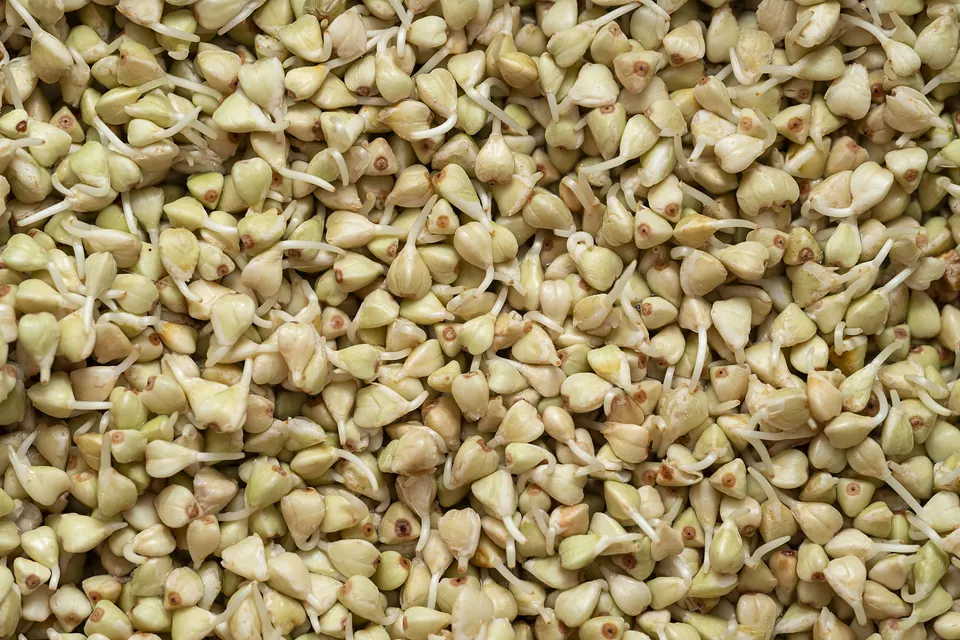
Use unhulled buckwheat, with the dark outer shell on. Hulled groats are great for buckwheat sprouts in a jar, but they won't grow into full microgreens. We link to unhulled buckwheat from Sprouting.com.
How to grow buckwheat microgreens, day by day
- Day0
Soak
Rinse, then soak the seed in plenty of cool water for 6 to 12 hours. Drain and rinse.
- Day0
Sow
Spread the seed in one even layer over 1 inch of moist potting mix. Press it down gently and mist.
- Day0–3
Weighted blackout
Cover with a tray and a light weight. Mist daily.
- Day3
Uncover
When the shoots lift the cover, take it off. Mist the tops to loosen hulls and give bright light.
- Day3–10
Water from below
Water through the solid tray once or twice a day. Brush the tops gently to knock off hulls.
- Day10–12
Harvest
Cut just above the soil when the seed leaves are open, before true leaves appear.
A note on fagopyrin
Buckwheat greens contain fagopyrin, a natural compound that can make skin more sensitive to sunlight if eaten in large amounts. Researchers have measured it in buckwheat sprouts and greens.1 A normal salad portion is fine for most people. Avoid eating very large amounts every day, especially before long hours in the sun. If you take medicine that raises sun sensitivity, ask your doctor first.
Buckwheat microgreens problems and fixes
| Problem | Likely cause | Fix |
|---|---|---|
| Hulls stuck on leaves | No weight, dry tops | Weighted blackout, mist before uncovering |
| Mold in the seed layer | Seed piled up, poor airflow | One layer only, add a fan |
| Leaning or floppy | Low light or harvested late | Brighter light, cut on time |
| Uneven growth | Uneven soak or sowing | Soak in plenty of water, spread evenly |
How to eat buckwheat microgreens
- Salads: a soft, lemony base, mixed with other greens.
- Sandwiches and wraps.
- Stir-fries: toss in at the end.
- With eggs or on toast.
Store them dry in a lined container in the fridge for up to a week.
For a similar big-seed crop with the same weighted method, try sunflower microgreens or pea shoots.
Seeds in this article
Frequently asked questions
What seed do you use for buckwheat microgreens?
Unhulled buckwheat, with the dark outer shell on. Hulled groats sprout well in a jar but won't grow into proper microgreens.
How long do buckwheat microgreens take to grow?
About 10 to 12 days. Harvest when the seed leaves are open and before the first true leaves appear.
Are buckwheat microgreens safe to eat?
In normal amounts, yes. Buckwheat greens contain fagopyrin, which can make skin more sensitive to sunlight in large amounts. Enjoy them in a mixed salad rather than in very large daily servings.
How much buckwheat seed per tray?
About 200 to 340 g of unhulled seed for a 10 × 20 inch tray, measured dry. Spread it in a single layer after soaking.

Written by Michael
A passionate sprouting professional sharing practical tips for growing sprouts and microgreens at home. More about Michael
Sources
- Kreft S, et al. The content of fagopyrin and polyphenols in common and tartary buckwheat sprouts. Food Chemistry, 2013. Link