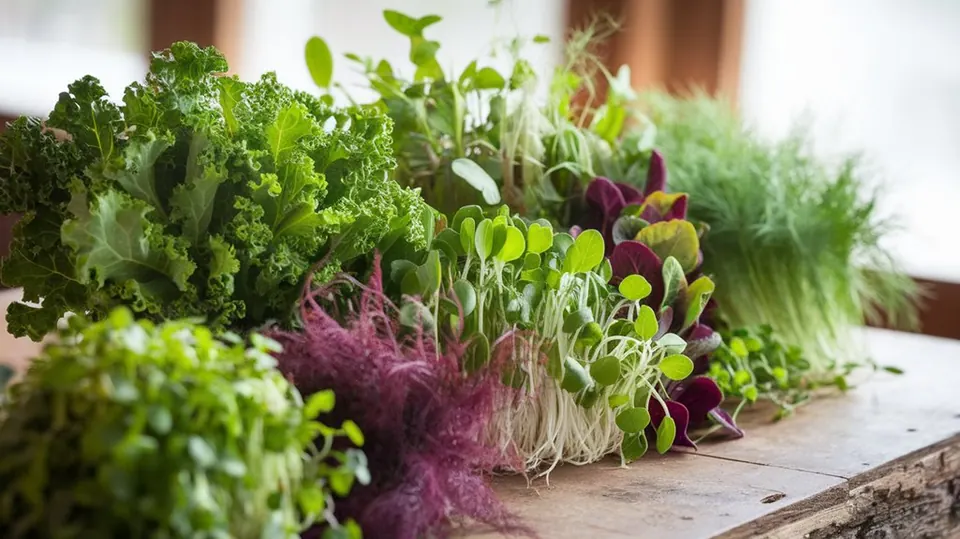
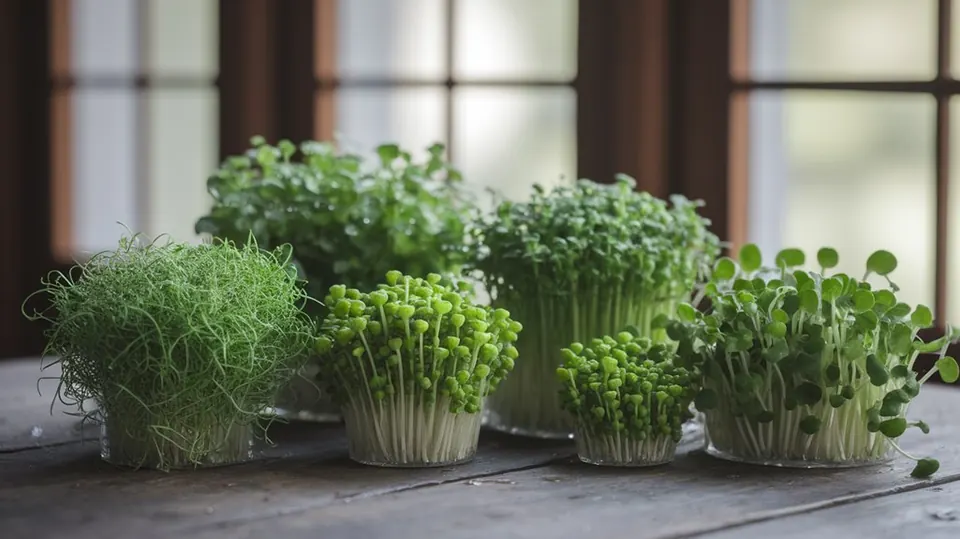
Short answer: the main types of microgreens are brassicas (broccoli, radish, kale, mustard, cabbage, arugula: fast and easy), big-seed shoots (sunflower, peas, buckwheat: crunchy), roots and chard (beet, chard, amaranth: colourful, slower) and herbs (basil, cilantro, dill, parsley: slow, intense). Start with radish, broccoli, sunflower and pea shoots.
Types of microgreens chart
| Microgreen | Flavour | Days to harvest | Difficulty |
|---|---|---|---|
| Broccoli | Mild, fresh | 7–12 | Easy |
| Radish | Hot, peppery | 10–12 | Easy |
| Kale | Mild, sweet | 10–14 | Easy |
| Mustard | Hot to wasabi-like | 8–12 | Easy |
| Arugula | Peppery, nutty | 8–12 | Easy |
| Red cabbage | Mild, sweet | 10–12 | Easy |
| Turnip | Mild, peppery | 8–12 | Easy |
| Bok choy | Mild, juicy | 10–14 | Easy |
| Kohlrabi | Mild, cabbage-like | 8–10 | Easy |
| Tatsoi | Mild mustard | 10–12 | Easy |
| Cress | Sharp, peppery | 8–12 | Easy |
| Sunflower | Nutty, crunchy | 8–10 | Medium |
| Pea shoots | Sweet, fresh pea | 8–10 | Easy |
| Buckwheat | Mild, lemony | 10–12 | Medium |
| Wheatgrass | Sweet, grassy (juice) | 8–10 | Easy |
| Beet | Earthy, sweet | 8–12 | Medium |
| Swiss chard | Mild, earthy | 8–12 | Medium |
| Red amaranth | Mild, earthy | 14–16 | Medium |
| Basil | Sweet basil, clove | 12–21 | Medium |
| Cilantro | Citrusy herb | 16–28 | Hard |
| Dill | Fresh dill | 14–21 | Medium |
| Parsley | Fresh parsley | 14–21 | Hard |
| Fennel | Licorice | 10–14 | Medium |
| Onion, leek | Mild onion | 14–21 | Medium |
| Nasturtium | Peppery, floral | 10–14 | Medium |
Seed rates for every crop are in the microgreens seeding chart.
Brassica microgreens
Brassicas are the cabbage family. They're the fastest, easiest types of microgreens, with small seeds that sprout in a day or two. Flavours run from mild (broccoli, kale, cabbage, kohlrabi) to hot (radish, mustard, cress). If you're new, start here.
Big-seed shoot microgreens
Sunflower, peas and buckwheat grow from large seeds. They need a soak and often a weighted blackout, but they give big, crunchy yields. Pea shoots and sunflower shoots are filling enough to be a salad on their own.
Colourful microgreens
Beet, chard and amaranth grow bright red or pink stems. They're slower and a bit fussier, but they make any plate look special. Beet and chard "seeds" are clusters, so soak them and expect uneven sprouting.
Herb microgreens
Basil, cilantro, dill and parsley taste just like the grown herbs, often stronger. They're the slowest types of microgreens, taking 2 to 4 weeks. Keep them warm and patient.
Microgreens to avoid
Don't grow nightshades as microgreens: tomato, pepper, eggplant and potato seedlings contain compounds you shouldn't eat. Only grow seed sold for sprouting or microgreens, not treated garden seed.
Which types of microgreens to start with
- Radish: fast, reliable and flavourful.
- Broccoli: mild and popular.
- Pea shoots: sweet, filling and easy.
- Sunflower: crunchy and kid-friendly.
- A blend: a microgreen salad mix grows several crops in one tray.
See the easiest microgreens for beginners for more detail, or shop microgreen seeds.
Frequently asked questions
What are the most popular types of microgreens?
Sunflower, pea shoots, radish, broccoli and arugula are the most popular. They're easy to grow, taste good and work in lots of dishes.
Which microgreens grow the fastest?
Radish, mustard, cress and broccoli are among the fastest, often ready in 7 to 12 days. Herbs like basil, cilantro and parsley are the slowest, at 2 to 4 weeks.
Which type of microgreens is the healthiest?
No single type wins. In a USDA study of 25 microgreens, red cabbage, cilantro, garnet amaranth and green daikon radish were among the highest in several vitamins and carotenoids. Eating a mix is the best approach.
Can you grow any vegetable as a microgreen?
No. Plants in the nightshade family, like tomato, pepper, eggplant and potato, should not be eaten as microgreens. Stick to seed sold for microgreens.

Written by Michael
A passionate sprouting professional sharing practical tips for growing sprouts and microgreens at home. More about Michael