Two classic Korean bean sprout side dishes
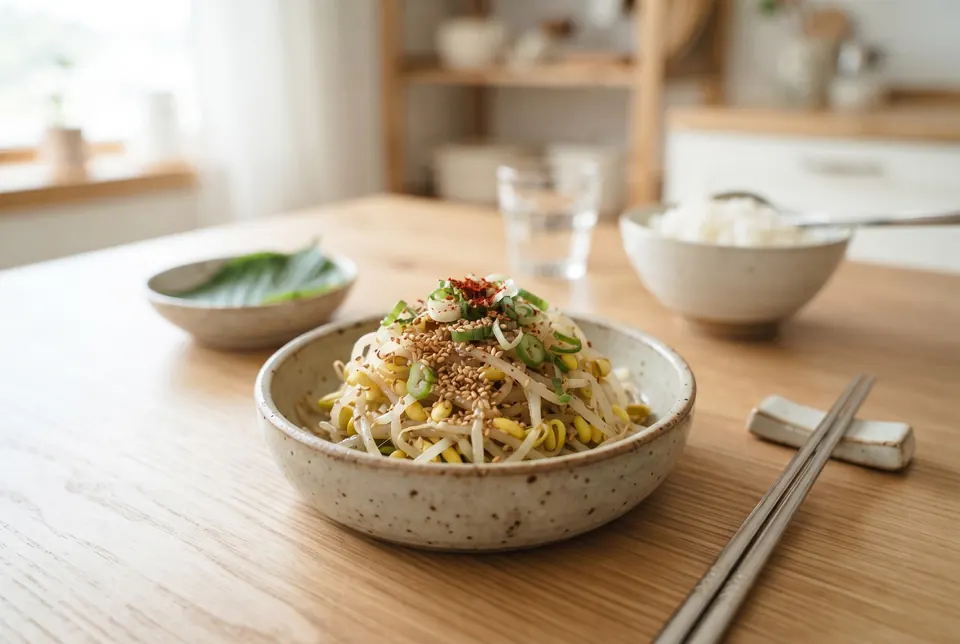
In Korean cooking, small side dishes called banchan come with almost every meal, and seasoned bean sprouts are one of the most common. There are two classic versions:
- Sukju namul (숙주나물): made with mung bean sprouts. Soft, juicy and delicate. It's quick, cooking in about a minute.
- Kongnamul muchim (콩나물무침): made with soybean sprouts. Nuttier and crunchier. It needs 5 to 7 minutes of cooking.
The seasoning is the same for both: garlic, green onion, toasted sesame oil, sesame seeds and salt, with optional chili flakes. It's a recipe you'll make again and again.
Tips for the best Korean bean sprout side dish
- Squeeze gently. After rinsing in cold water, press out the extra water. Wet sprouts make a watery, bland side dish.
- Use toasted sesame oil. Plain sesame oil doesn't have the same flavour.
- Crush the sesame seeds. Rubbing them between your fingers as you add them releases their aroma.
- Season at the end. Add salt a pinch at a time and taste.
Grow your own sprouts for this recipe
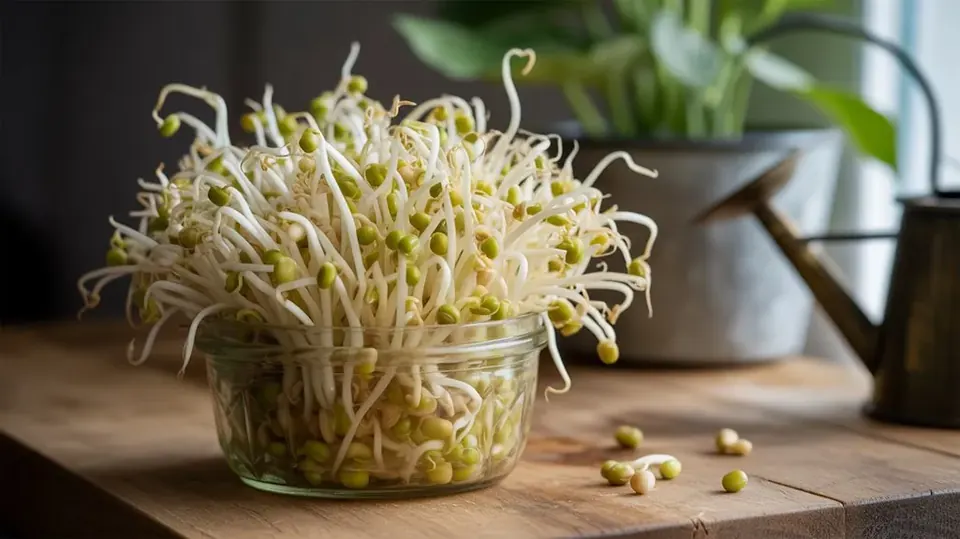
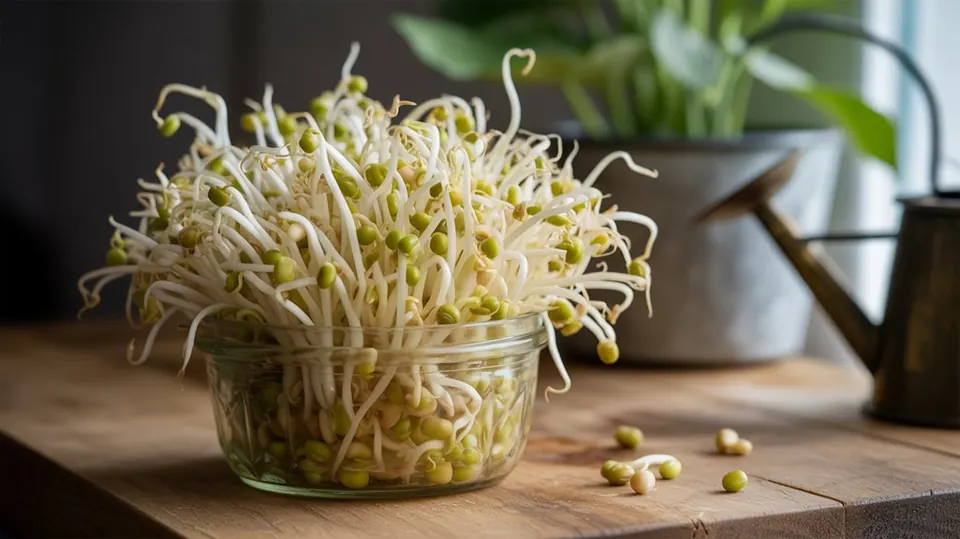
Mung bean sprouts are easy to grow at home in 2 to 3 days. Soak whole mung beans overnight, then rinse and drain them twice a day in a dark place. Our mung bean sprouts guide has the full method. For soybean sprouts, follow how to grow soybean sprouts.
More Korean-style sprout recipes
Korean Bean Sprout Side Dish (Sukju Namul and Kongnamul Muchim)
Vegan · Korean
Ingredients
Sprouts
- 300 g (about 5 cups) mung bean sprouts, or 300 g soybean sprouts
- 1 tsp salt, for the cooking water
Seasoning
- 1 small garlic clove, finely grated
- 1 green onion, thinly sliced
- 1 tbsp toasted sesame oil
- 1 tsp toasted sesame seeds, lightly crushed
- ½ tsp fine salt, or to taste
- ½ tsp Korean chili flakes (gochugaru), optional
Method
- Rinse the sprouts and pick out any loose hulls or brown ends.
- Bring a pot of water to a boil and add 1 tsp of salt.
- Mung bean sprouts: cook for 1 to 2 minutes, until just tender but still crunchy. Soybean sprouts: cook for 5 to 7 minutes with the lid on the whole time.
- Drain the sprouts and rinse them under cold water to stop the cooking. Drain well, then gently squeeze out the extra water.
- In a bowl, toss the sprouts with the garlic, green onion, sesame oil, sesame seeds and salt. Add chili flakes if you'd like some heat.
- Taste and adjust the salt. Serve right away or chill for 30 minutes.
Notes
- Don't overcook mung bean sprouts. They go limp fast. Pull them out while they still snap.
- Soybean sprouts must be fully cooked. Keep the lid on (or off) the whole time and cook them through.
- Keeps: up to 2 days in the fridge in a sealed container.
- Spicy version: add 1 tsp gochugaru and ½ tsp soy sauce.
Seeds in this article
Frequently asked questions
What's the difference between sukju namul and kongnamul muchim?
Sukju namul is made with mung bean sprouts. It's softer and more delicate, and cooks in about a minute. Kongnamul muchim is made with soybean sprouts, which are nuttier and crunchier and need 5 to 7 minutes of cooking.
How long does Korean bean sprout side dish keep?
About 2 days in a sealed container in the fridge. The sprouts release water over time, so it's best eaten fresh or the next day.
Can I make this with raw sprouts?
This dish is traditionally cooked, and that's the safer choice. Soybean sprouts should always be cooked, and health agencies advise cooking sprouts in general to lower the risk of food poisoning.
What do I serve it with?
It's a banchan, a small side dish served with rice and other sides. It's also great in bibimbap, on top of noodles, or next to grilled tofu, fish or meat.

Written by Michael
A passionate sprouting professional sharing practical tips for growing sprouts and microgreens at home. More about Michael