Soybean Sprout Kimchi: A Vegan Korean Classic
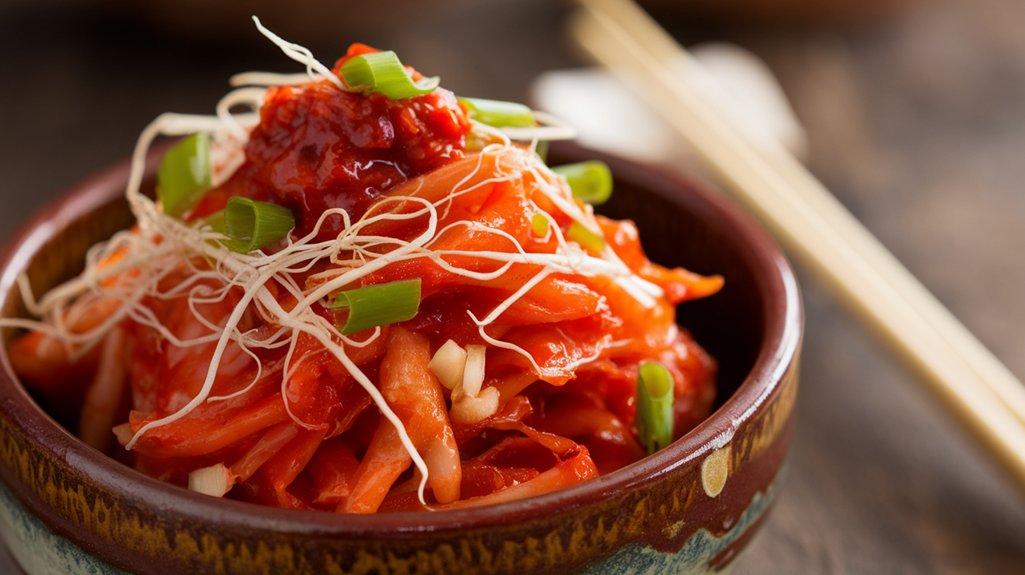
Soybean sprout kimchi is truly a vibrant vegan delight! These crunchy sprouts bring a delightful texture, while the spicy gochugaru, garlic, and ginger pack a flavorful punch. I love how nutrient-rich and probiotic-packed this dish is, making it great for gut health. It’s perfect as a side or topping for rice and even tacos! If you’re curious about how to make it or explore variations, there’s so much more to discover.
Key Takeaways
- Soybean sprout kimchi is a nutrient-rich vegan dish, packed with probiotics and essential vitamins A, C, and K.
- The preparation involves combining fresh soybean sprouts with a flavorful spice mixture of garlic, ginger, and gochugaru.
- It serves as a versatile side dish, perfect with rice, salads, tacos, or as a flavorful wrap filling.
- The fermentation process enhances its tangy flavor, with the crunch of sprouts softening over time.
- Store in an airtight container in the fridge for up to three weeks to maintain freshness and flavor.
What Are Soybean Sprouts?
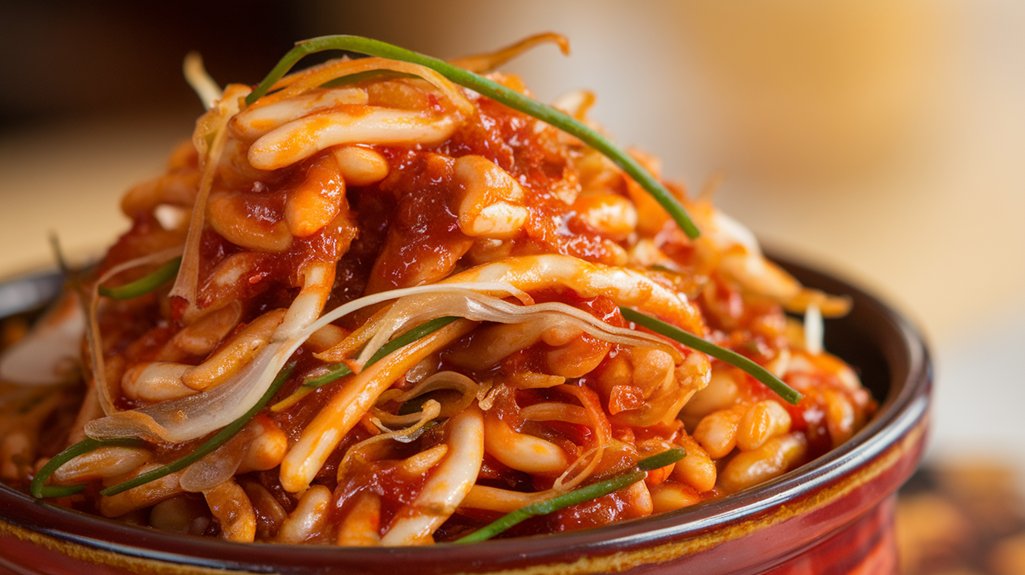
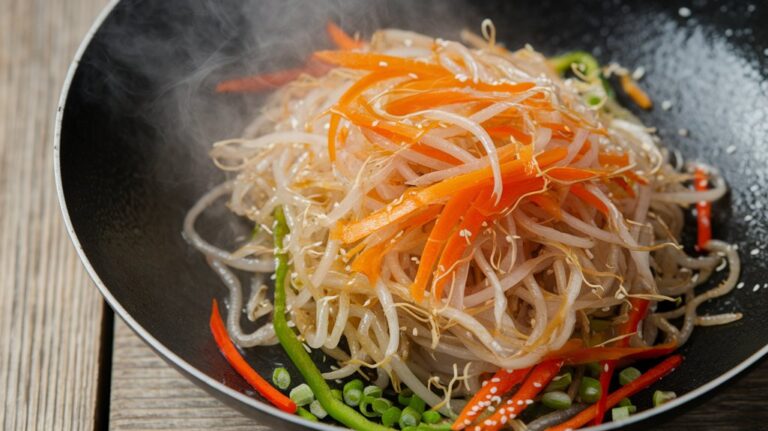
Soybean sprouts, those vibrant green shoots that add a delightful crunch to dishes, are a staple in many Asian cuisines.
I love their versatility; whether tossed in stir-fries, added to salads, or used as a garnish, they bring a fresh and nutty flavor.
These sprouts come from soaking and germinating soybeans, which transforms them into nutrient-packed morsels. They’re typically crisp and have a mild taste that pairs well with a variety of ingredients.
I enjoy using them in my cooking for both texture and nutrition. Plus, they’re incredibly easy to find at grocery stores or local markets.
Once you try incorporating soybean sprouts into your meals, you’ll understand why they’re cherished in so many culinary traditions!
Health Benefits of Soybean Sprout Kimchi
When I think about the health benefits of soybean sprout kimchi, I’m amazed by its nutrient-rich ingredients that pack a powerful punch.
Not only does it provide essential vitamins and minerals, but it’s also loaded with probiotics that promote gut health.
Incorporating this delicious dish into my meals feels like a tasty way to support my overall well-being.
Nutrient-Rich Ingredients
Kimchi isn’t just a flavorful addition to meals; it’s packed with nutrient-rich ingredients that offer a wealth of health benefits, especially when it comes to soybean sprout kimchi.
These sprouted beans are a fantastic source of plant-based protein, making them a great choice for vegans and vegetarians like me. They’re also rich in vitamins A, C, and K, which support our immune system and promote healthy skin.
Plus, they’re loaded with antioxidants that help fight inflammation. The addition of garlic and ginger not only adds a zesty kick but also provides anti-inflammatory properties.
With every bite, I’m fueling my body with essential nutrients, making soybean sprout kimchi not just delicious, but a true powerhouse of health benefits.
Probiotic Benefits
The health benefits of soybean sprout kimchi extend beyond just its rich nutrient profile; it’s also a fantastic source of probiotics. These beneficial bacteria play a crucial role in enhancing gut health, boosting immunity, and even improving mood. I’ve noticed that including this zesty kimchi in my meals not only adds flavor but also supports my digestive system.
Here’s a quick overview of the probiotic benefits:
| Benefit | Description | Source |
|---|---|---|
| Gut Health | Promotes a balanced microbiome | Probiotics |
| Immune Support | Enhances immune function | Fermented foods |
| Nutrient Absorption | Improves absorption of nutrients | Live cultures |
| Mood Enhancement | Supports mental well-being | Gut-brain connection |
| Anti-inflammatory | Reduces inflammation in the body | Probiotic strains |
Incorporating soybean sprout kimchi into my diet has truly been transformative!
Essential Ingredients for Soybean Sprout Kimchi
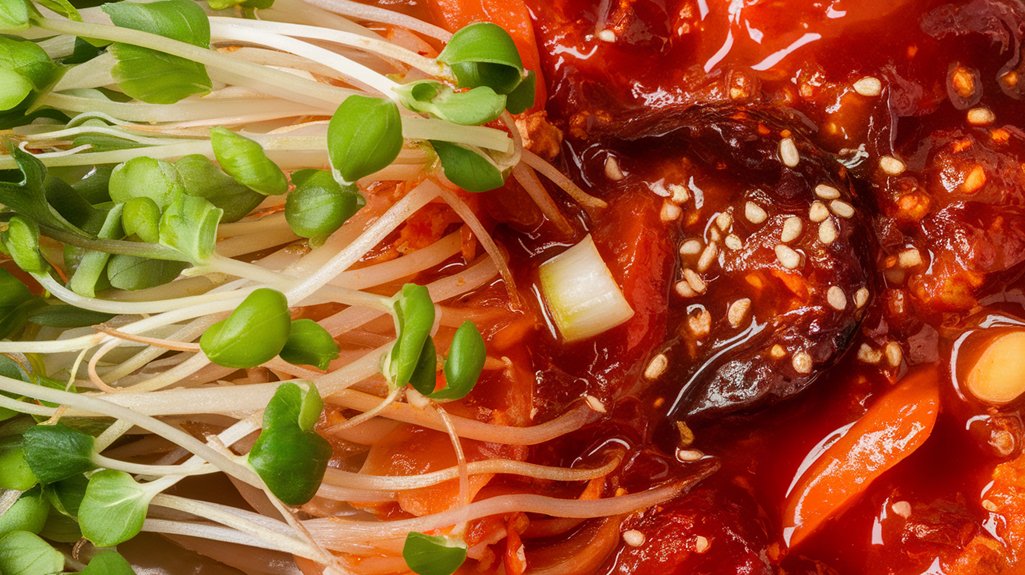
Creating the perfect soybean sprout kimchi starts with selecting the right ingredients, each playing a crucial role in developing that signature flavor.
First, I always use fresh soybean sprouts, as their crisp texture adds a delightful crunch. Next, I grab some Korean red pepper flakes (gochugaru) for that essential heat and vibrant color. A touch of garlic and ginger brings depth, while a splash of soy sauce enhances the umami.
Don’t forget the green onions; they add a fresh burst. Lastly, I include a bit of sugar to balance the flavors beautifully.
With these ingredients in hand, I know I’m on my way to creating a delicious, tangy, and satisfying kimchi that’s perfect for any meal!
Step-by-Step Instructions to Make Soybean Sprout Kimchi
Now that we’ve gathered all the essential ingredients for our soybean sprout kimchi, it’s time to get hands-on with the process.
I’ll walk you through each step, from mixing the ingredients to understanding the fermentation process, ensuring your kimchi turns out delicious every time.
Plus, I’ll share some serving suggestions and fun variations to keep things exciting!
Ingredients Needed for Kimchi
Gathering the right ingredients for soybean sprout kimchi is essential to crafting this vibrant, tangy dish. I love the burst of flavors that each component brings, and here’s what you’ll need:
| Ingredient | Amount |
|---|---|
| Soybean sprouts | 2 cups |
| Garlic | 4 cloves, minced |
| Ginger | 1-inch piece, grated |
| Korean red pepper flakes | 2 tablespoons |
| Salt | 1 tablespoon |
These ingredients come together to create that unique taste that defines kimchi. The garlic and ginger add a fragrant kick, while the red pepper flakes provide the heat. Make sure to gather everything before diving into the preparation—trust me, it makes the process smoother and more enjoyable!
Fermentation Process Explained
Once you have your ingredients ready, the fermentation process for soybean sprout kimchi begins, and it’s truly a fascinating journey.
First, I combine the soybean sprouts with salt in a bowl, allowing them to sit for about 30 minutes. This draws out excess water and helps them soften.
Next, I prepare the spice mixture by blending garlic, ginger, and gochugaru, then mixing it with a little water to form a paste.
After rinsing the sprouts, I toss them with the spice paste and any additional vegetables.
Finally, I pack everything tightly into a clean jar, leaving some space at the top for fermentation gases. I let it sit at room temperature for 1-3 days, checking daily for that tangy flavor to develop.
Serving Suggestions and Variations
Have you ever wondered how to elevate your soybean sprout kimchi experience?
I’ve discovered a few serving suggestions and variations that really enhance its flavor and versatility. Here are three ideas to try:
- Rice Bowl Delight: Serve your kimchi over a steaming bowl of rice, topped with avocado and sesame seeds for an irresistible meal.
- Wrap It Up: Use lettuce leaves to create fresh wraps filled with kimchi, cucumber, and a drizzle of sriracha for a spicy snack.
- Savory Pancakes: Incorporate chopped kimchi into your favorite pancake batter, frying them up for a tangy twist on a classic dish.
These variations not only add excitement but also make your soybean sprout kimchi a delightful staple in your kitchen!
Tips for Perfecting Your Kimchi
Although perfecting kimchi may seem daunting, I’ve found that a few simple tips can make all the difference in achieving that coveted balance of flavors and textures.
First, always use fresh, high-quality ingredients; they truly elevate your dish. Next, don’t skimp on the seasoning! Adjust the salt and spice according to your taste, but remember that fermentation will mellow flavors over time.
I also recommend letting your kimchi ferment in a cool, dark place for at least a few days to develop complexity. Taste it daily!
Lastly, seal it tightly to prevent air exposure, which can spoil the batch. With these tips, you’ll be well on your way to crafting deliciously vibrant soybean sprout kimchi that everyone will love.
Serving Suggestions for Soybean Sprout Kimchi
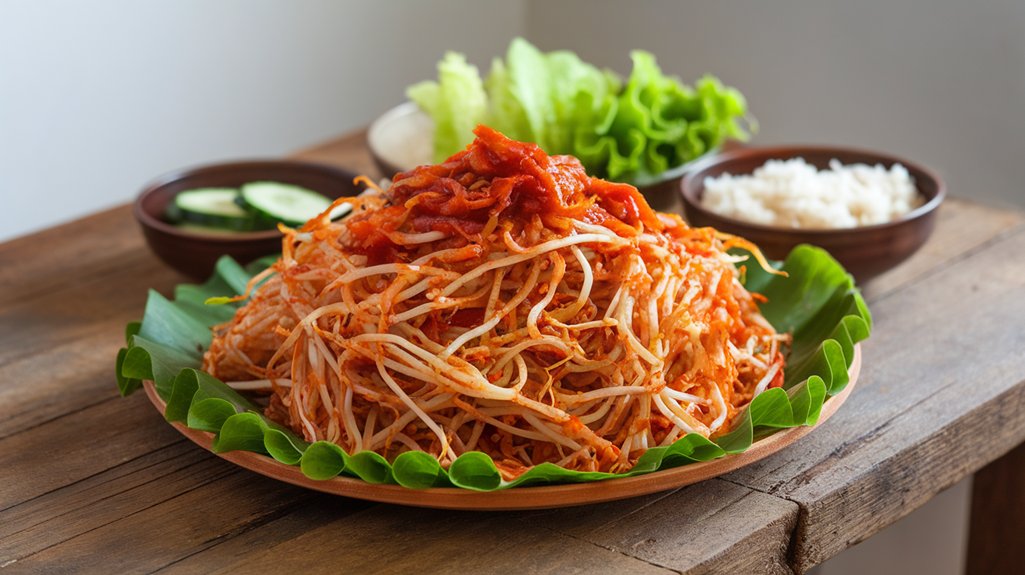
When you’re ready to serve your soybean sprout kimchi, consider pairing it with a variety of dishes to enhance its delightful crunch and tangy flavor.
Here are some of my favorite serving suggestions:
- Steamed Rice: The kimchi’s acidity cuts through the richness of warm, fluffy rice, making each bite a burst of flavor.
- Noodle Bowls: Toss the kimchi in with soba or rice noodles for a refreshing, zesty twist that elevates your meal.
- Grilled Veggies: Serve it alongside grilled vegetables to add a crunchy, tangy contrast that complements the smoky flavors.
No matter how you choose to enjoy it, soybean sprout kimchi brings a vibrant touch to any meal!
Storage and Shelf Life of Kimchi
Properly storing kimchi is essential to preserving its unique flavors and crunch. I always use an airtight container, which keeps out unwanted air and moisture, preventing spoilage.
Once I’ve made my soybean sprout kimchi, I let it cool completely before sealing it tight. In the fridge, it can last for about two to three weeks, but I find it’s best enjoyed within the first week for maximum freshness.
As it ferments, the flavors deepen, and I love how the crunch of the sprouts gradually softens. Just remember to use clean utensils when serving to avoid contamination.
If you notice any off smells or unusual textures, it’s best to err on the side of caution and discard it. Enjoy every bite!
Variations and Creative Twists on Traditional Kimchi
After enjoying the fresh crunch of my soybean sprout kimchi, I often find myself experimenting with variations that put a twist on the traditional recipe.
Each time, I discover new flavors that excite my palate. Here are three fun ideas I love to try:
- Mango Kimchi: Adding ripe mango chunks brings a sweet, tropical flair that balances the spiciness beautifully.
- Smoky Chipotle Kimchi: A touch of chipotle powder adds a smoky depth, elevating the kick of the traditional kimchi.
- Citrus Zest Kimchi: Incorporating lemon or lime zest brightens the flavors and adds a refreshing zing.
These variations keep my kimchi game fresh, and I can’t wait for you to try them!
Frequently Asked Questions
Can I Use Frozen Soybean Sprouts for Kimchi?
Absolutely, you can use frozen soybean sprouts for kimchi! I’ve done it myself and had great results.
Just make sure to thaw them first and drain any excess water. The texture might be slightly different than fresh, but the flavors still shine through.
I love experimenting with frozen ingredients; they’re convenient and often just as nutritious.
How Long Does It Take to Ferment Soybean Sprout Kimchi?
Fermenting soybean sprout kimchi usually takes about 1 to 3 days at room temperature, depending on the climate and your taste preference.
I often check it daily, tasting to see how the flavors develop. If I want a tangier taste, I let it ferment longer.
Once it reaches the right acidity, I transfer it to the fridge to slow down the fermentation.
It’s always exciting to see how each batch turns out!
What Dishes Pair Well With Soybean Sprout Kimchi?
When I think about what dishes pair well with soybean sprout kimchi, my mind races to a steaming bowl of rice. The flavors complement each other perfectly!
I also love serving it alongside grilled vegetables or spicy tofu stir-fries for a delightful contrast. If I’m feeling adventurous, I toss it into a noodle salad. Each bite brings a crunch that elevates the entire meal, making it a must-try combo!
Is Soybean Sprout Kimchi Gluten-Free?
Absolutely, soybean sprout kimchi is gluten-free!
When I make it, I focus on fresh ingredients like soybean sprouts, garlic, and spices without any gluten-containing components.
I love the crunch and tangy flavor it brings to my meals.
Just be cautious about any sauces or seasonings you might add, as some can contain gluten.
Can I Adjust the Spice Level in the Recipe?
Absolutely, you can adjust the spice level in the recipe!
I often tweak the amount of chili flakes to suit my taste. If you prefer it milder, I recommend starting with half the suggested amount and gradually increasing it.
On the flip side, if you like it spicier, feel free to add more.
Cooking should be fun and personal, so make it your own and enjoy the process!
Conclusion
Incorporating soybean sprout kimchi into your meals not only adds a burst of flavor but also packs a nutritional punch. I’ve found that it complements everything from rice bowls to tacos beautifully. With a few simple ingredients and steps, you can create a tangy, crunchy delight that’s perfect for any occasion. So, why not give it a try? You’ll be amazed at how this vegan Korean classic can elevate your culinary repertoire and tantalize your taste buds!