Short answer: soak ½ cup of small whole soybeans for 8 to 12 hours. Put them in a colander or a pot with drainage holes, cover them so they're completely dark, and pour cool water over them four or five times a day, letting it drain through. Harvest at 5 to 7 days, when the sprouts are 3 to 4 inches long. Cook them for at least 5 minutes before eating.
What are soybean sprouts?
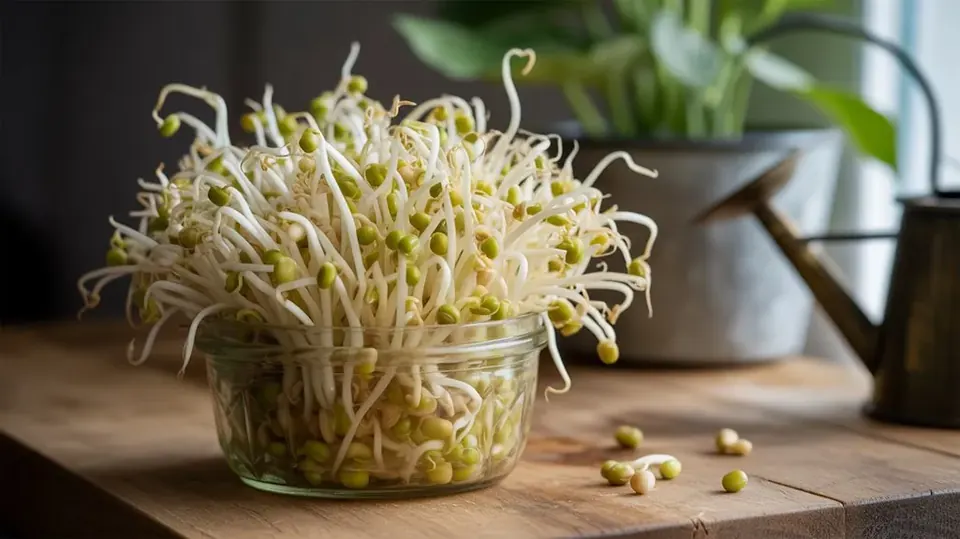
Soybean sprouts are young sprouts from yellow soybeans (Glycine max). In Korea they're called kongnamul, and they're one of the most common side-dish vegetables. They have a long white stem, a big yellow head and a nutty, firm bite, quite different from the softer mung bean sprout.
They're more filling than mung bean sprouts. USDA data gives raw soybean sprouts about 13 g of protein and 122 calories per 100 g, compared with about 3 g and 30 calories for mung bean sprouts.1
Why soybean sprouts are trickier to grow
- Big beans make heat. Soybeans warm up as they sprout, so they need frequent cool rinses.
- They need total darkness. Light turns them green and bitter.
- They grow long. Classic kongnamul takes about a week, which gives bacteria more time to grow if rinsing slips.
The traditional Korean method uses a clay pot with holes, covered with a cloth, and water poured over the beans many times a day. You can copy it with a colander and a pot lid.
What you need
- ½ cup (about 90 g) of small whole soybeans, ideally sold for sprouting (in Korean shops, look for kongnamul beans)
- A colander, or a pot or bucket with drainage holes
- A bowl underneath to catch the water
- A lid or thick cloth to keep it completely dark
How to grow soybean sprouts, day by day
- Day0
Soak for 8–12 hours
Rinse the soybeans and pick out any broken ones. Cover them with plenty of cool water and soak for 8 to 12 hours, until they've doubled in size.
- Day1
Spread them out in the dark
Drain the beans and spread them in a colander or holed pot, no more than two or three beans thick. Cover with a lid or thick cloth so no light gets in.
- Day1–6
Water often
Pour cool water over them four or five times a day and let it drain through completely. Don't let them sit in water. Keep them dark between waterings.
- Day3–4
Short sprouts
The tails are now 1 to 2 inches long. You can harvest short sprouts now if you like.
- Day5–7
Harvest kongnamul
When the sprouts are 3 to 4 inches (8 to 10 cm) long, rinse them well, pull off loose hulls and refrigerate them.
Cool water, many times. The secret to good soybean sprouts is frequent cool rinses. Each rinse washes away heat and keeps the beans fresh. In warm weather, rinse every few hours during the day.
Cooking soybean sprouts
Always cook soybean sprouts. Raw soybeans contain trypsin inhibitors, which make protein harder to digest, and cooking breaks them down. Raw sprouts also carry a food-safety risk, which the FDA and Health Canada both warn about.23
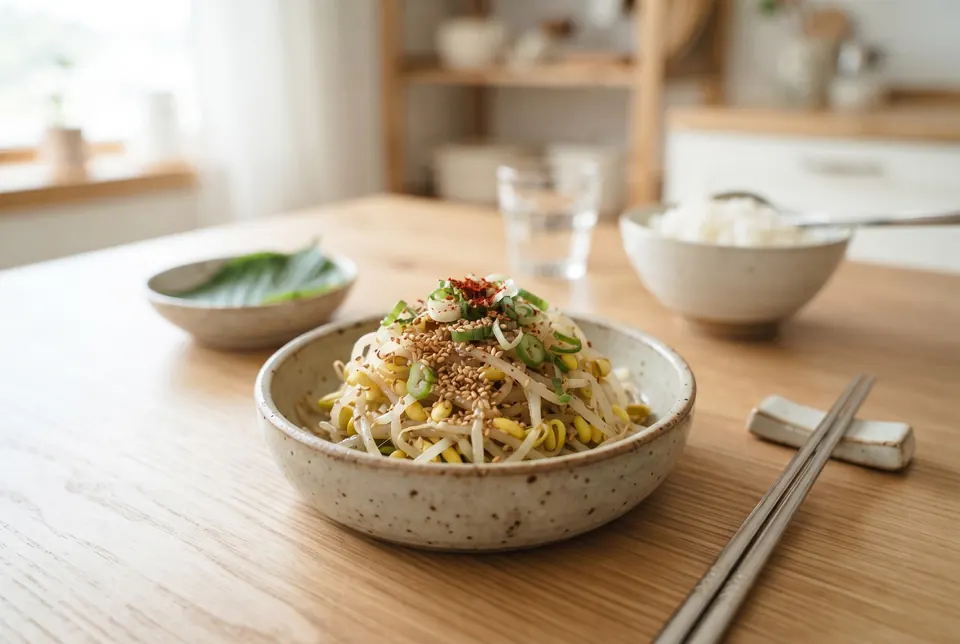
Korean cooks boil or steam soybean sprouts for about 5 to 7 minutes. One old kitchen rule says to keep the lid either on or off the whole time while they cook, to avoid a raw, beany smell. Then they're seasoned or added to soup.
Try them in:
- Korean bean sprout side dish (kongnamul muchim)
- Soybean sprout kimchi
- Bean sprout fried rice
- Kongnamul guk, a simple, clear soybean sprout soup
Problems and fixes
| Problem | Likely cause | Fix |
|---|---|---|
| Green, bitter sprouts | Light getting in | Cover completely. Only uncover to water |
| Sour or rotten smell | Too warm, too few rinses | Throw them out. Rinse with cool water four or five times a day |
| Many beans won't sprout | Old or large beans | Use small, fresh soybeans sold for sprouting |
| Thin, curly sprouts | Spread too thin, no pressure | Pile beans two or three thick, or add a light cloth on top |
| Brown roots | Water sitting at the bottom | Make sure water drains away completely each time |
Storing soybean sprouts
Refrigerate them in a covered container, drained and dry, and use them within 3 to 4 days. Blanched and cooled soybean sprouts freeze well for soups.
Where to buy soybeans for sprouting
Sprouting.com, the seed company we link to across this site, doesn't currently sell soybeans for sprouting. Look for small whole soybeans labeled for sprouting, or kongnamul beans in Korean and Asian grocery stores. If you'd rather start with an easier bean sprout, try mung beans, which are ready in 2 to 3 days and grow well in a jar.
Read what are bean sprouts? for how mung and soybean sprouts compare.
Seeds in this article
Frequently asked questions
How long do soybean sprouts take to grow?
About 5 to 7 days after an overnight soak. Short soybean sprouts can be eaten after 3 to 4 days, but the classic kongnamul is 3 to 4 inches (8 to 10 cm) long, which takes about a week.
Can you eat soybean sprouts raw?
No. Soybean sprouts should always be cooked. Raw soybeans contain trypsin inhibitors that make protein harder to digest, and cooking breaks these down. Raw sprouts also carry a food-poisoning risk. Korean recipes boil or steam them for at least 5 minutes.
What soybeans do I use for sprouting?
Use small, whole, raw soybeans, ideally sold for sprouting. In Korean grocery stores they're sold as kongnamul beans. Large edamame or roasted soybeans won't work.
Why are my soybean sprouts turning green?
Light. Soybean sprouts turn green and bitter in light. Keep them completely dark, for example in a pot with a lid or under a thick cloth, and only uncover them to water.
Why do my soybean sprouts smell?
Soybeans are big and warm up as they grow. Without frequent rinsing they spoil. Rinse them with cool water at least four or five times a day, and make sure water drains away completely.

Written by Michael
A passionate sprouting professional sharing practical tips for growing sprouts and microgreens at home. More about Michael