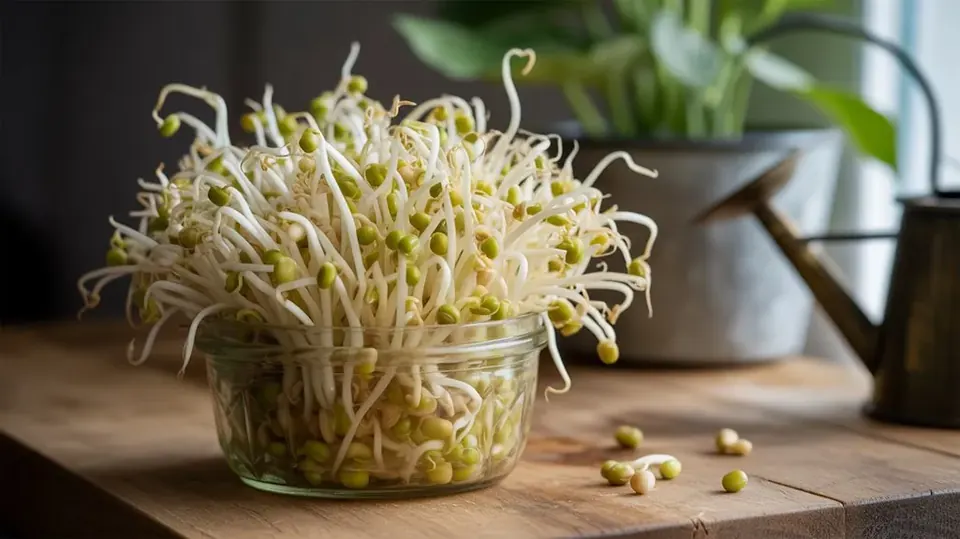
Short answer: bean sprouts are young sprouts grown from beans, usually mung beans. They're crisp and mild, with a white stem and a small yellow-green head. They're low in calories, best eaten cooked, keep 3 to 5 days in the fridge, and are easy to grow at home in 2 to 3 days.
What are bean sprouts?
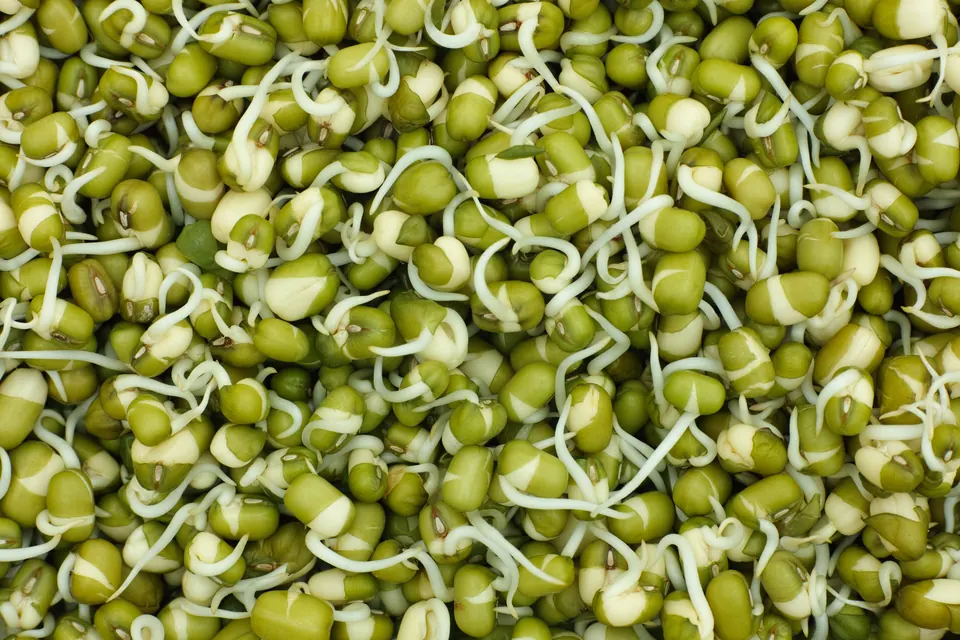
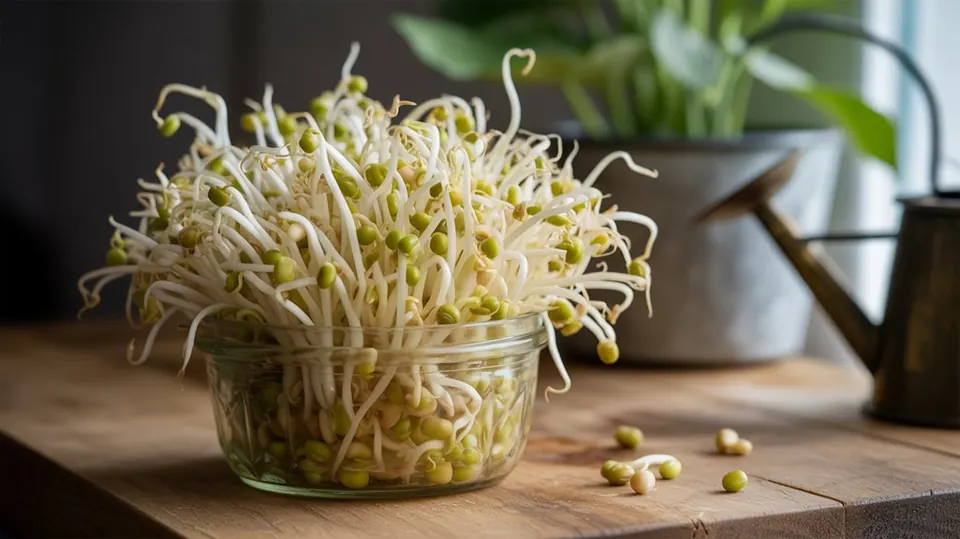
Bean sprouts are beans that have been soaked and kept damp until they start to grow. After a few days, each bean pushes out a thick white stem. The shop kind are grown for about a week in the dark, which keeps them long, white and sweet.
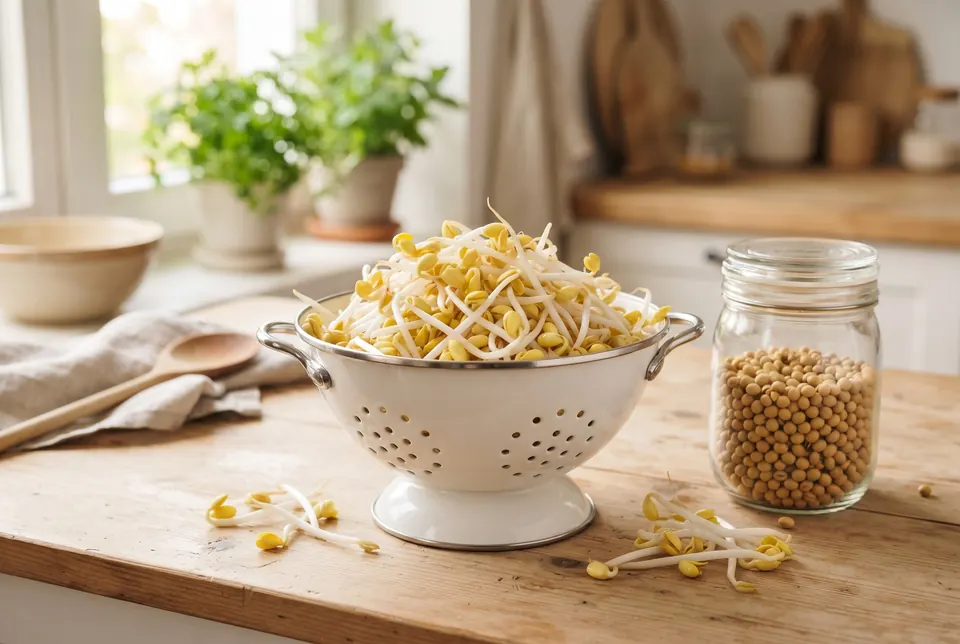
In most of the world, "bean sprouts" means mung bean sprouts: the thin, crunchy sprouts in pad thai and stir-fries. In Korean cooking, soybean sprouts are just as common. Other beans, like lentils, chickpeas and adzuki beans, also make sprouts, but they're usually called by name.
Mung bean sprouts vs soybean sprouts
| Mung bean sprouts | Soybean sprouts | |
|---|---|---|
| Bean | Small green mung bean | Large yellow soybean |
| Look | Thin white stem, small pale head | Thicker stem, big yellow head |
| Taste | Mild, juicy, crisp | Nuttier, firmer |
| Cooking | 30 seconds to 2 minutes | At least 5 minutes, always cooked |
| Typical dishes | Stir-fries, pho, pad thai | Korean soups and side dishes |
| Grow at home | Easy, 2–3 days | Harder, 5–7 days |
Learn to grow each one: mung bean sprouts and soybean sprouts.
Bean sprouts nutrition
Here's what USDA FoodData Central lists for 100 g (about 1 cup) of each, raw.1
| Per 100 g raw | Mung bean sprouts | Soybean sprouts |
|---|---|---|
| Calories | 30 kcal | 122 kcal |
| Protein | 3.0 g | 13.1 g |
| Carbohydrates | 5.9 g | 9.6 g |
| Fat | 0.2 g | 6.7 g |
| Vitamin C | 13.2 mg | 15.3 mg |
| Folate | 61 µg | 172 µg |
| Iron | 0.9 mg | 2.1 mg |
| Potassium | 149 mg | 484 mg |
Mung bean sprouts are mostly water, which makes them a light, crunchy vegetable. Soybean sprouts are far more filling, with about four times the protein. Both shrink when cooked, so a cup of raw sprouts becomes a smaller cooked portion.
Are bean sprouts good for you?
Yes, as a vegetable. They add crunch and some vitamin C and folate for very few calories. Sprouting can also lower phytate, a compound in beans that holds onto minerals like iron and zinc, so some minerals may be easier to absorb.2 They aren't a superfood, but they're an easy way to add more vegetables to noodle dishes and stir-fries.
Are bean sprouts safe to eat raw?
The warm, damp conditions used to grow sprouts also suit bacteria such as Salmonella and E. coli, and the beans themselves can carry them. Cooking is the most reliable way to lower the risk. A quick stir-fry or blanch keeps bean sprouts crisp. Soybean sprouts are always cooked in Korean cooking, usually for 5 minutes or more.
How to buy and store bean sprouts
Buying: look for crisp, white stems with no brown tips, no slime and a fresh smell. Buy them from a refrigerated shelf, and use them soon.
Storing:
- Keep them in the coldest part of the fridge.
- Store them dry, in a container lined with a paper towel, or in their original bag with the air pressed out.
- Use them within 3 to 5 days.
- Throw them out if they turn brown or slimy, or smell sour.
You can freeze bean sprouts for cooking: blanch them for 30 seconds, cool them in ice water, drain well and freeze. They'll be soft when thawed, so add them to soups and stir-fries straight from frozen.
How to cook bean sprouts
- Stir-fry: 1 to 2 minutes in a hot wok with garlic and soy sauce.
- Noodle soups: add a handful to the bowl and pour the hot broth over them.
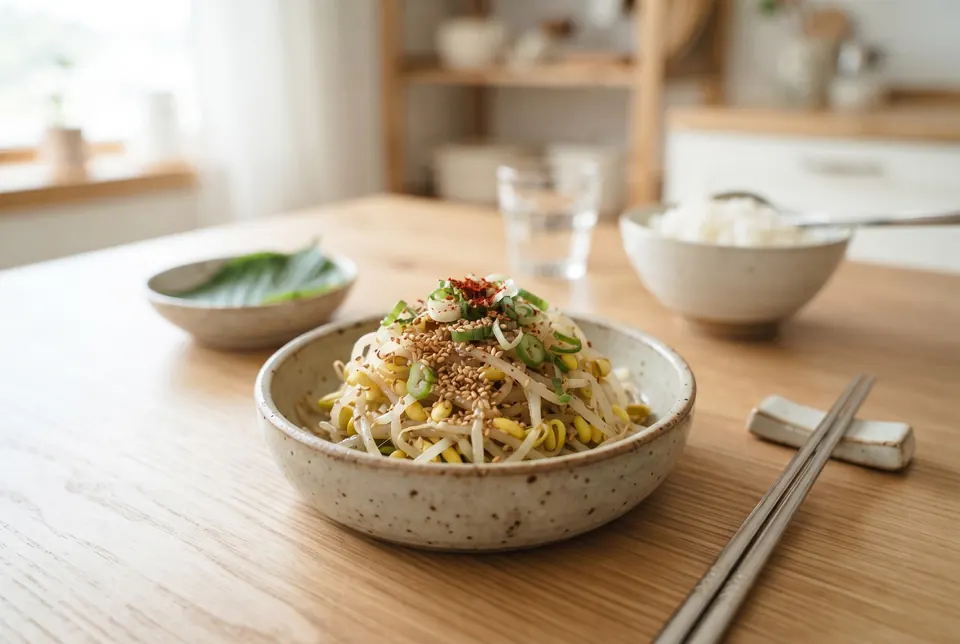
- Blanch: 1 minute in boiling water, then dress them with sesame oil for a Korean bean sprout side dish.
- Fried rice and pad thai: stir them in at the very end.
More ideas: 5 mung bean sprout recipes ready in 15 minutes and bean sprout fried rice.
How to grow bean sprouts at home
Home-grown bean sprouts take 2 to 3 days and very little equipment:
- Soak ½ cup of whole mung beans in cool water for 6 to 8 hours.
- Drain, then rinse and drain two or three times a day in a jar with a mesh lid.
- Keep the jar in the dark so they stay white.
- Harvest when the tails are ½ to ¾ inch (1 to 2 cm) long.
For long, thick shop-style sprouts, grow them under a light weight in a colander for 5 to 7 days. The full method is in our mung bean sprouts guide.
Other beans you can sprout
- Lentils: small, filling sprouts in 2 to 3 days.
- Chickpeas: great for hummus.
- Adzuki beans: sweet and nutty.
- Peas: sweet sprouts or shoots.
Avoid sprouting kidney beans and other large beans of the same family to eat raw. They contain a natural lectin that causes food poisoning unless the beans are cooked thoroughly.5
Seeds in this article
Frequently asked questions
What are bean sprouts made from?
Most bean sprouts are made from mung beans, a small green bean. Soybean sprouts, made from yellow soybeans, are the other common kind, especially in Korean cooking. Lentils, chickpeas and adzuki beans also make sprouts, but they're usually sold by name.
Are bean sprouts healthy?
They're a low-calorie vegetable. USDA data gives raw mung bean sprouts about 30 calories per 100 g, with 3 g of protein, 13 mg of vitamin C and 61 µg of folate. They add crunch and volume to a meal for very few calories.
Can you eat bean sprouts raw?
Many people do, but raw bean sprouts carry a real food-poisoning risk. The FDA says children, pregnant people, older adults and anyone with a weakened immune system should not eat raw or lightly cooked sprouts. Health Canada advises everyone to cook them.
How long do bean sprouts last in the fridge?
About 3 to 5 days. Bean sprouts spoil faster than most vegetables. Keep them cold and dry, and throw them out if they turn brown or slimy, or smell sour.
Are bean sprouts the same as alfalfa sprouts?
No. Bean sprouts come from beans and are thick and juicy. Alfalfa sprouts come from tiny alfalfa seeds and are thin and leafy. They're used differently: bean sprouts in cooked dishes, alfalfa mostly on sandwiches.
Can you grow bean sprouts at home?
Yes, easily. Soak whole mung beans for 6 to 8 hours, then rinse and drain them twice a day in a jar kept in the dark. They're ready in 2 to 3 days.

Written by Michael
A passionate sprouting professional sharing practical tips for growing sprouts and microgreens at home. More about Michael
Sources
- U.S. Department of Agriculture, Agricultural Research Service. FoodData Central (SR Legacy and Foundation Foods), values per 100 g. Link
- Elliott H, Woods P, Green BD, Nugent AP. Can sprouting reduce phytate and improve the nutritional composition and nutrient bioaccessibility in cereals and legumes? Nutrition Bulletin, 2022. Link
- U.S. Food and Drug Administration. Selecting and Serving Produce Safely. Link
- Health Canada. Food safety tips for sprouts. Link
- Rodhouse JC, et al. Red kidney bean poisoning in the UK: an analysis of 50 suspected incidents between 1976 and 1989. Epidemiology and Infection, 1990. Link