Sprouts Secrets: How to Grow Perfect Alfalfa Sprouts Every Time
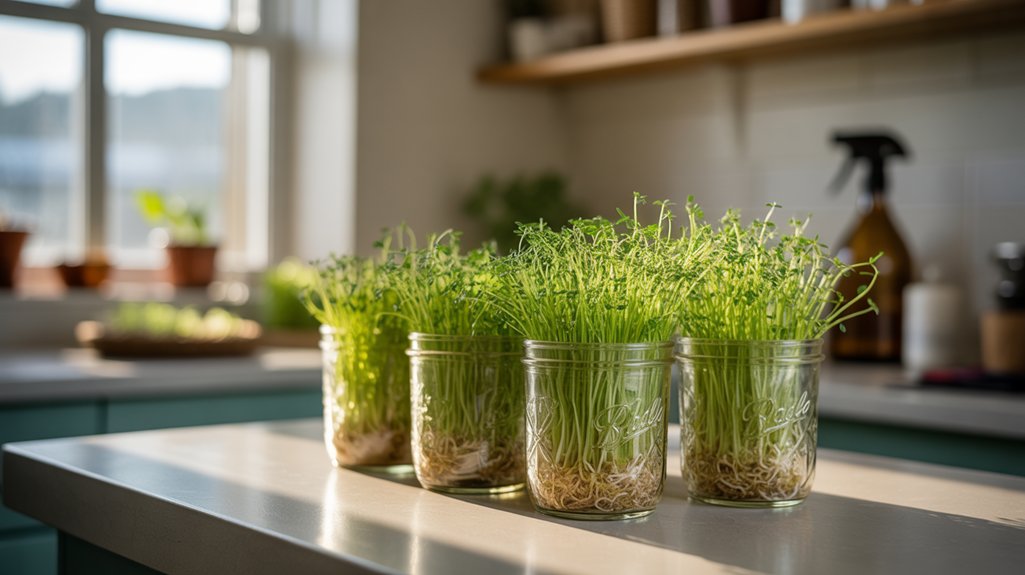
To grow perfect alfalfa sprouts every time, I start by choosing high-quality, organic, non-GMO seeds. After sanitizing my equipment, I rinse and soak the seeds for 4-6 hours. I then drain and keep them in a warm, dark spot, rinsing them twice daily to maintain moisture. I’ve learned that maintaining the right light, temperature, and humidity is crucial. With consistency in care, my sprouts flourish. If you’re curious about optimizing each stage, there’s more to uncover!
Key Takeaways
- Choose high-quality organic, non-GMO alfalfa seeds specifically labeled for sprouting to ensure good germination rates.
- Sanitize all equipment before use and rinse seeds thoroughly to prevent bacterial contamination.
- Soak seeds in fresh water for 4-6 hours, then drain and spread evenly in a sprouting container.
- Maintain ideal conditions by keeping seeds in a dark, warm spot with consistent humidity and temperature.
- Water sprouts twice daily with a gentle spray and ensure proper drainage to avoid mold growth.
Choosing the Right Alfalfa Seeds
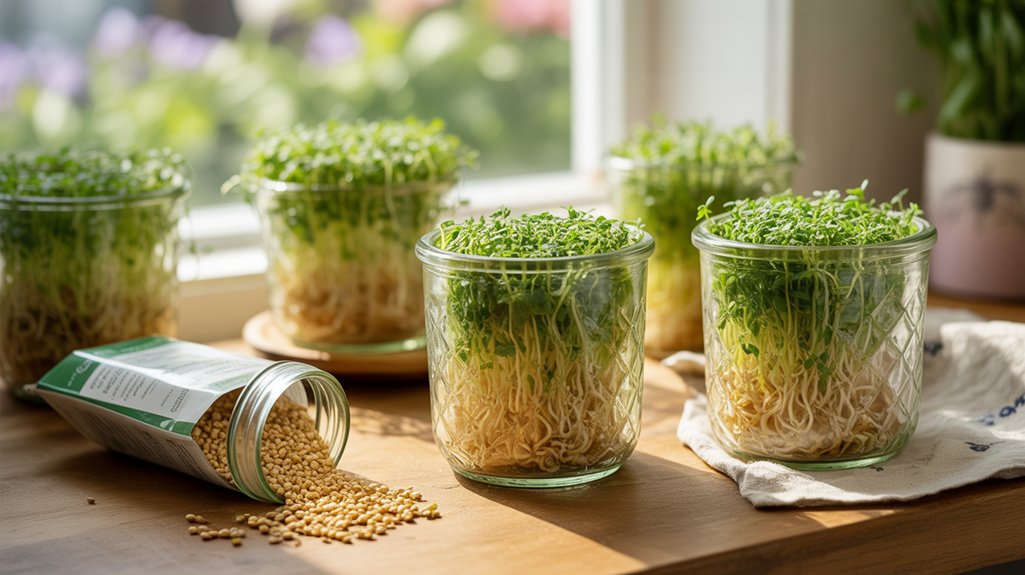
When I set out to grow alfalfa sprouts, I quickly realized that choosing the right seeds is crucial for success.
I recommend looking for organic, non-GMO seeds specifically labeled for sprouting. These seeds ensure you’re starting with high-quality genetics free from harmful chemicals.
I also pay attention to the seed’s freshness; older seeds tend to have lower germination rates. It’s wise to check for certifications, like the Seed Savers Exchange, which guarantees quality.
I prefer seeds that are small and uniform, as they tend to sprout more consistently. Lastly, avoid seeds from the grocery store, as they may be treated with preservatives.
Preparing for Sprouting
After selecting the right alfalfa seeds, the next step is preparing for sprouting. I always start by sanitizing my sprouting jar and lid to prevent any unwanted bacteria. Rinse the seeds thoroughly under cool water, then soak them in fresh water for about 4-6 hours. This initial soak kickstarts the germination process.
Here’s a quick reference table for preparation:
| Step | Description |
|---|---|
| Sanitize Equipment | Clean jar and lid thoroughly |
| Rinse Seeds | Use cool water to wash seeds |
| Soak Seeds | Immerse in water for 4-6 hours |
Once you’ve completed these steps, you’re ready to move on to the sprouting process. Trust me, proper preparation sets the stage for successful sprouts!
The Sprouting Process
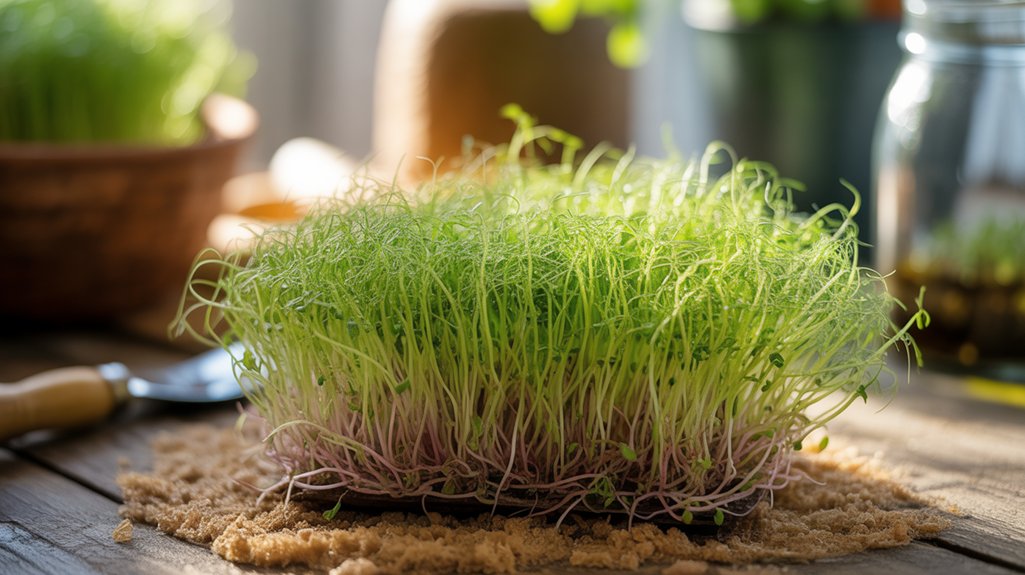
As I begin the sprouting process, I find it crucial to create the right environment for my alfalfa seeds to thrive. First, I rinse the seeds thoroughly to remove any residues, ensuring they’re clean before soaking.
I then soak them in water for about 4 to 6 hours, allowing them to absorb moisture and initiate germination. After soaking, I drain and transfer the seeds to my sprouting container, spreading them evenly.
I keep them in a dark, warm spot, which encourages sprouting. Twice a day, I rinse and drain the seeds to maintain moisture while preventing mold.
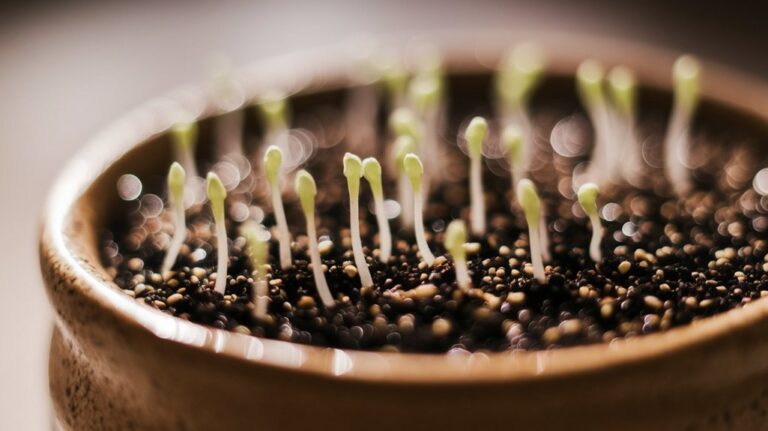
Within just a few days, I start seeing little sprouts emerge, signaling that I’m on the right path to growing delicious, nutritious alfalfa sprouts.
Ideal Growing Conditions
Creating the ideal growing conditions for alfalfa sprouts is essential for maximizing their health and flavor. I’ve found that the right balance of light, temperature, and humidity can make all the difference.
Here’s a quick comparison of factors that influence growth:
| Factor | Ideal Condition | Impact on Growth |
|---|---|---|
| Light | Indirect sunlight | Enhances photosynthesis |
| Temperature | 65-75°F (18-24°C) | Promotes sprouting |
| Humidity | 70-80% | Prevents drying out |
Maintaining Your Sprouts
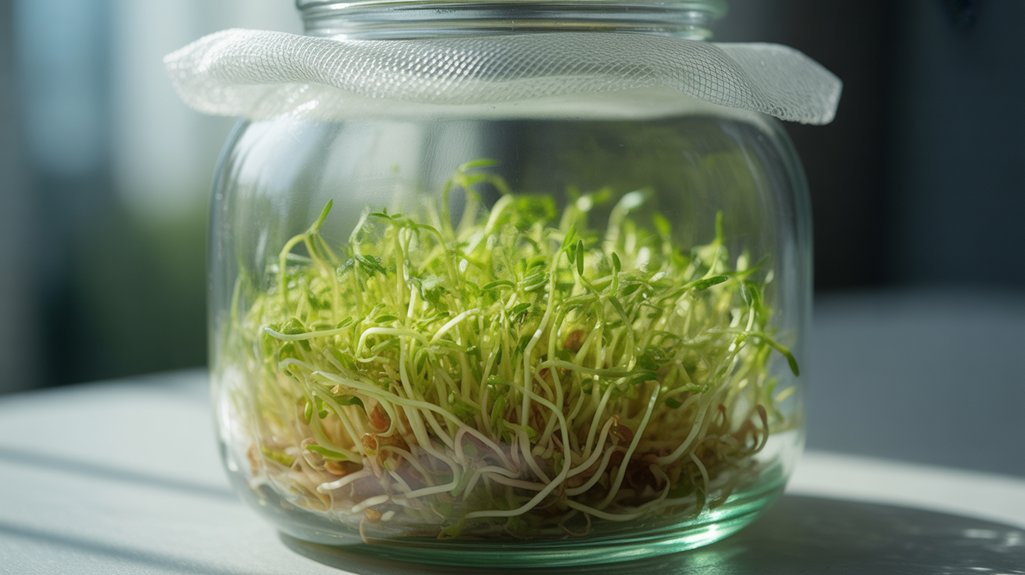
To keep my alfalfa sprouts thriving, I’ve learned that a consistent watering schedule is crucial; it prevents both over and underwatering.
I also pay close attention to light and temperature, ensuring my sprouts get the right amount of warmth and brightness without scorching them.
Watering Schedule Importance
While I understand that many gardeners might overlook the significance of a consistent watering schedule, it’s crucial for the healthy growth of alfalfa sprouts. I’ve found that watering them twice a day, once in the morning and once in the evening, helps maintain the right moisture level.
Overwatering can lead to mold, while underwatering stunts growth. When I water, I use a gentle spray to avoid disturbing the seeds. Additionally, I ensure the water drains well to prevent standing water.
Monitoring the sprouts daily allows me to adjust the schedule based on their appearance; if they look wilted, I increase watering slightly. Consistency in this routine truly makes a difference in achieving vibrant, healthy sprouts.
Light and Temperature Control
After establishing a consistent watering schedule, I’ve learned that controlling light and temperature is equally important for the health of my alfalfa sprouts.
I keep my sprouts in a warm environment, ideally between 65°F and 75°F, as cooler temperatures can stunt their growth. For light, I avoid direct sunlight, which can overheat them. Instead, I place them in a well-lit area with indirect light to promote photosynthesis without causing stress.
I also rotate the container daily to ensure even light distribution. If I notice the sprouts leaning, I adjust their position.
Harvesting and Storing Alfalfa Sprouts
Harvesting and storing alfalfa sprouts requires careful attention to detail to ensure their freshness and quality.
When my sprouts reach about 3-4 inches tall, I rinse them thoroughly under cold water to remove any remaining seed hulls. I then use kitchen scissors to cut them just above the root, taking care not to damage the delicate sprouts.
After harvesting, I gently pat them dry with a clean towel to remove excess moisture.
For storage, I place the sprouts in a breathable container, like a glass jar or a paper bag, and keep them in the refrigerator. This way, they stay crisp for up to a week.
Always check for any signs of spoilage before using them in your meals.
Frequently Asked Questions
Can I Grow Alfalfa Sprouts Without a Sprouting Jar?
Yes, you can grow alfalfa sprouts without a sprouting jar!
I often use a simple bowl or a shallow container. Just soak the seeds overnight, then drain and rinse them well.
Spread the seeds in the container, cover them with a damp cloth, and keep them in a warm, dark place.
Rinse them twice a day, and in about 5 to 7 days, you’ll have fresh, crunchy alfalfa sprouts ready to enjoy!
How Long Do Alfalfa Sprouts Last in the Refrigerator?
Alfalfa sprouts typically last about 5 to 7 days in the refrigerator if stored properly.
I always make sure to keep them in a breathable container, like a paper towel-lined bowl, to prevent moisture buildup.
It’s crucial to check for any signs of spoilage, like sliminess or an off smell.
If they look good, I enjoy adding them to salads or sandwiches, making the most of their short fridge life.
Are Alfalfa Sprouts Safe for Pets to Eat?
Yes, alfalfa sprouts are generally safe for pets to eat in moderation.
I’ve found that they can be a healthy treat for dogs and cats, packed with nutrients.
However, I always recommend introducing any new food slowly to see how your pet reacts.
Avoid overfeeding them, as too much can lead to digestive issues.
Always wash the sprouts thoroughly to remove any potential contaminants before sharing them with your furry friend!
Can I Flavor My Alfalfa Sprouts While Growing?
Yes, you can flavor your alfalfa sprouts while growing!
I like to experiment by adding herbs or spices to the water during the soaking phase. For example, I’ve tried garlic powder and a pinch of salt, which really enhances the taste.
Just remember to rinse them well to avoid any residue.
After a few days, you’ll notice the sprouts absorbing those flavors, making them a delicious addition to salads and sandwiches!
What Are the Nutritional Benefits of Alfalfa Sprouts?
Alfalfa sprouts are packed with nutrients! I find they’re a great source of vitamins A, C, and K, along with essential minerals like calcium and potassium.
They’re low in calories yet rich in antioxidants, which help combat oxidative stress. Plus, their high fiber content aids digestion.
I love adding them to salads or sandwiches, not just for the crunch but for the impressive nutrient boost they provide. You won’t regret incorporating them into your diet!
Conclusion
In conclusion, growing perfect alfalfa sprouts is both an art and a science. By carefully selecting quality seeds and following the outlined steps—from preparation to harvesting—you can ensure a bountiful crop. Remember to maintain the right conditions and monitor your sprouts closely for optimal growth. With a little patience and attention, you’ll enjoy fresh, nutritious alfalfa sprouts that elevate your meals. Now, it’s time to put these secrets into practice and watch your sprouts thrive!