Sprout Safety: Tips for Avoiding Common Growing Mistakes
To ensure sprout safety, I always choose seeds labeled for sprouting and opt for organic options to avoid pesticides. Maintaining proper sanitation is crucial, so I wash all equipment with hot soapy water. I keep sprouts in a warm environment with indirect light and monitor water usage closely, as overwatering can lead to mold. After harvesting, I rinse and store them in airtight containers in the fridge. Stick around, and you’ll discover more tips to perfect your sprouting process!
Key Takeaways
- Always select seeds specifically labeled for sprouting to minimize pathogen risks and ensure quality.
- Maintain cleanliness by thoroughly washing all equipment and using filtered water for soaking and rinsing seeds.
- Ensure a warm environment of 70 to 75°F (21 to 24°C) and provide indirect light to promote healthy sprout growth.
- Monitor moisture levels carefully, rinsing sprouts twice daily while ensuring proper drainage to prevent mold and rot.
- Store harvested sprouts in airtight containers in the refrigerator, checking daily for any signs of spoilage or mold.
Choosing the Right Seeds for Sprouting
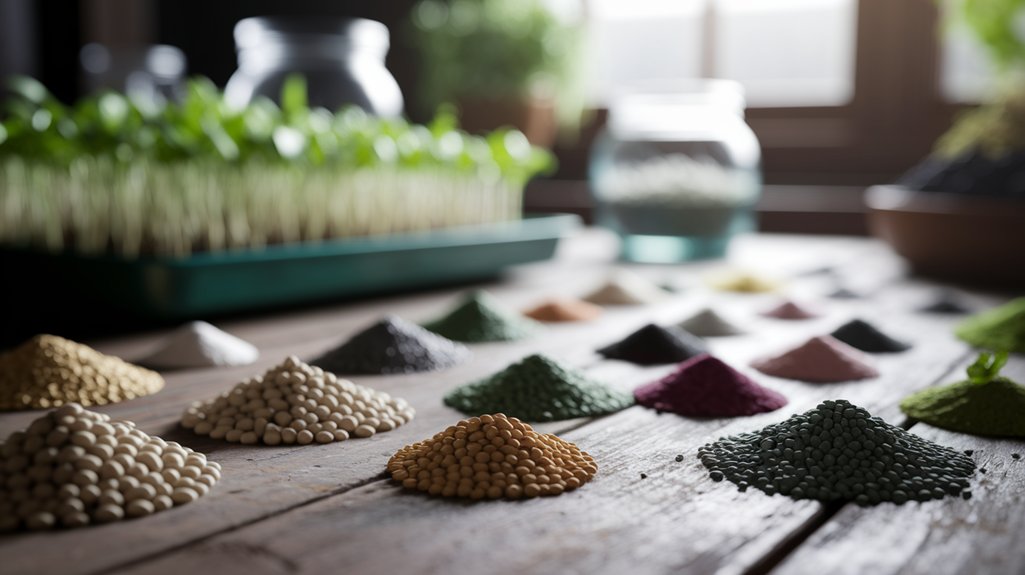
When I choose seeds for sprouting, I always consider their safety and quality, as not all seeds are created equal.
I prefer seeds labeled specifically for sprouting, as these are treated to reduce the risk of pathogens. Organic seeds are another great option since they typically avoid harmful pesticides.
I also check for the seed company’s reputation; trusted brands often provide quality assurance. Always look for seeds that have been stored properly, ideally in a cool, dry place, to maintain viability.
Before purchasing, I ensure they’re fresh, as older seeds may not sprout effectively. Lastly, I read reviews or seek recommendations to guarantee I’m making an informed choice, helping me grow healthy and safe sprouts for my meals.
Ensuring Proper Sanitation and Hygiene
To ensure safe and healthy sprouts, I prioritize proper sanitation and hygiene throughout the entire sprouting process. It’s crucial to minimize the risk of contamination, and here’s how I do it:
- Clean Equipment: I always wash my sprouting jars, lids, and utensils with hot, soapy water before each use. A thorough rinse ensures no soap residue remains.
- Use Filtered Water: I opt for filtered water to soak and rinse my seeds, reducing exposure to chlorine and other contaminants found in tap water.
- Maintain a Clean Workspace: I keep my sprouting area tidy, wiping down surfaces with a disinfectant before getting started.
Optimal Conditions for Growing Sprouts
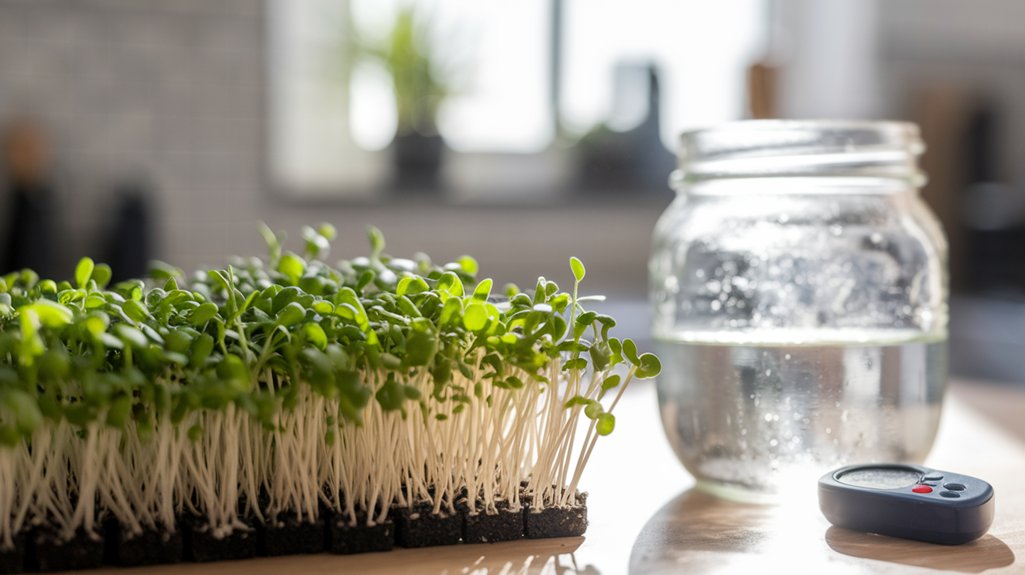
After ensuring proper sanitation and hygiene, I focus on creating optimal conditions for growing sprouts. First, I keep the sprouts in a warm environment, ideally around 70 to 75°F (21 to 24°C). This temperature promotes quick germination and growth. I also provide them with indirect light, which helps them develop chlorophyll without overheating.
Next, I use a well-ventilated container to prevent mold growth. I make sure the container allows for air circulation while keeping the sprouts moist but not waterlogged. Regular rinsing, about twice a day, helps maintain moisture and reduces bacterial risks.
Lastly, I choose high-quality seeds, as healthy seeds will produce better sprouts. By following these steps, I create the best conditions for my sprouts to thrive.
Monitoring Water Usage and Drainage
Although sprouts thrive on moisture, it’s crucial to monitor water usage and ensure proper drainage to prevent issues like rot or mold. I’ve learned that maintaining the right balance can make all the difference in sprout health.
Here are a few tips I use to keep my sprouts thriving:
- Use well-draining containers: Choose containers with drainage holes to allow excess water to escape.
- Water sparingly: I check the moisture level daily; too much water can suffocate the roots.
- Rotate containers: I avoid water pooling by rotating them to ensure even drainage.
Avoiding Contamination Risks
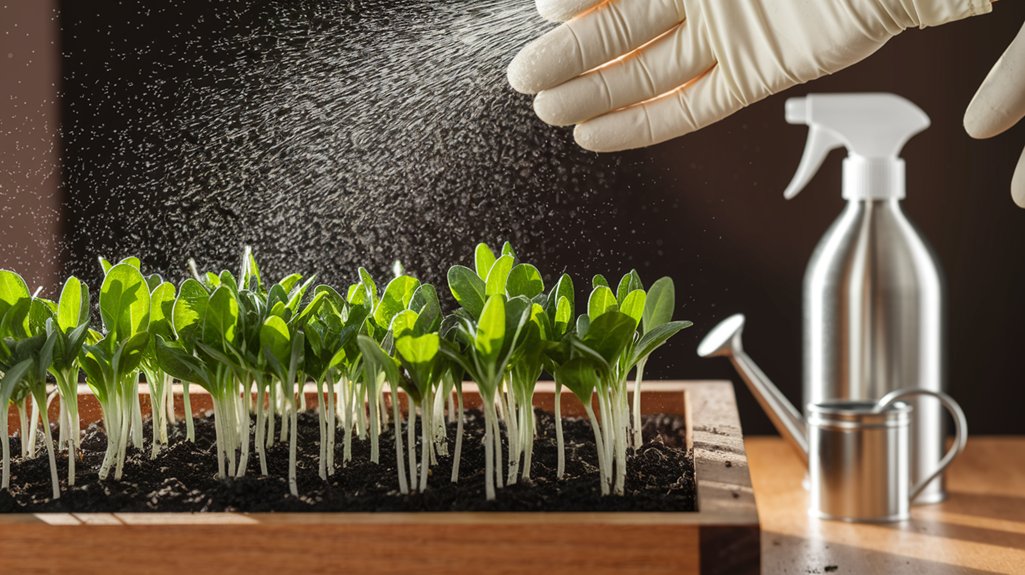
Ensuring your sprouts stay healthy involves more than just water and light; preventing contamination is equally crucial.
I always make sure to start with clean equipment. That means sanitizing my jars, lids, and utensils before each use. I also use high-quality seeds from reputable sources, as contaminated seeds can introduce harmful bacteria.
When rinsing my sprouts, I prefer filtered water to reduce the risk of unwanted pathogens. I keep my growing area clean and dry, as moisture encourages mold growth.
Lastly, I avoid overcrowding my sprouts; good air circulation is essential for preventing contamination. By following these steps, I can enjoy healthy sprouts without worrying about contamination risks.
Trust me, a little caution goes a long way!
Timing Your Sprout Growth
When it comes to timing your sprout growth, understanding optimal germination conditions is key.
I’ve found that seasonal planting can greatly influence the success of your sprouts, as certain temperatures and humidity levels promote faster growth.
Additionally, being aware of the growth cycle helps me plan my harvests effectively, ensuring I get the freshest sprouts possible.
Optimal Germination Conditions
To achieve optimal germination conditions for your sprouts, I recommend paying close attention to the temperature, moisture, and light exposure.
These factors can drastically influence your success. Here’s what I focus on:
- Temperature: Aim for a consistent range of 65-75°F (18-24°C) to promote quick germination.
- Moisture: Keep your seeds moist but not soggy; I use a spray bottle to mist them lightly.
- Light Exposure: Once they sprout, provide indirect sunlight for about 12-16 hours a day to encourage healthy growth.
Seasonal Planting Considerations
While I love experimenting with different sprouts year-round, timing your growth according to the seasons can significantly enhance your results.
For instance, in spring, I find that sprouts like clover and broccoli thrive due to the milder temperatures and increased daylight.
Summer is perfect for fast-growing varieties such as alfalfa and radish, which flourish in warmer conditions.
As fall arrives, I shift my focus to heartier sprouts like lentils and peas, which can handle cooler weather.
Winter may seem challenging, but I’ve had success with mung beans indoors, where I can control the environment.
Growth Cycle Awareness
Understanding the growth cycles of different sprouts can greatly impact your success in cultivating them. Each variety has unique needs, and timing is crucial.
Here’s what I’ve learned about sprout growth:
- Germination Time: Some sprouts, like alfalfa, can germinate in just 3-5 days, while others, like lentils, may take up to a week.
- Optimal Conditions: Each type thrives under specific conditions; for example, peas prefer cooler temperatures, while radish sprouts love warmth.
- Harvesting Window: Knowing when to harvest can make a big difference; I’ve found that timing it right can enhance flavor and nutritional value.
Storing Sprouts Safely After Harvesting
After harvesting your sprouts, it’s crucial to store them properly to maintain their freshness and nutritional value.
I always rinse my sprouts gently under cool water to remove any debris, then let them drain thoroughly.
Next, I place them in a clean, dry container lined with a paper towel to absorb moisture. Airtight containers work best, as they keep out air and moisture that can cause spoilage.
I store them in the refrigerator, where they can last up to a week. Just remember to check them daily for any signs of mold or spoilage, and discard any affected sprouts right away.
Following these steps ensures I enjoy crisp, healthy sprouts whenever I need them!
Frequently Asked Questions
Can I Use Regular Soil for Sprouting Seeds?
I’ve found that using regular soil for sprouting seeds isn’t the best choice. It can be too dense, leading to poor drainage and risking mold growth.
Instead, I prefer using a seed-starting mix that’s lighter and designed for good aeration. This way, my seeds get the oxygen they need to germinate.
If you do use regular soil, consider mixing in perlite or vermiculite to improve drainage and create a more suitable environment.
How Long Do Sprouts Typically Last in the Refrigerator?
I’ve found that sprouts typically last about 5 to 7 days in the refrigerator when stored properly.
I always rinse them in cool water and keep them in a breathable container, like a cloth bag or a vented jar. This helps maintain their freshness.
If they start to smell off or develop a slimy texture, I toss them out. Keeping an eye on them ensures I enjoy their crispness for as long as possible!
What Are the Best Containers for Growing Sprouts?
When I grow sprouts, I prefer using wide-mouth glass jars. They provide good air circulation and allow easy rinsing.
You can also use mesh lids for drainage, which is crucial to prevent mold. Alternatively, plastic sprouting trays work well, too, as they often have built-in drainage systems.
Just remember to choose a container that provides adequate airflow and drainage, ensuring your sprouts thrive and remain healthy throughout their growth.
Can I Sprout Seeds in Direct Sunlight?
I wouldn’t recommend sprouting seeds in direct sunlight.
While seeds need warmth to germinate, too much sunlight can create excess heat and lead to drying out or cooking the seeds.
Instead, I’ve found that a bright, indirect light works best. This way, the seeds stay warm without getting scorched, and they’ll sprout evenly.
Keep them in a well-ventilated area, and they’ll thrive beautifully!
Are There Any Common Pests That Affect Sprouts?
Absolutely, I’ve encountered a few common pests that can affect sprouts.
Aphids are notorious for sucking sap from young plants, while fungus gnats can thrive in overly moist conditions, damaging roots.
You might also find spider mites, which create tiny webs and cause leaf discoloration.
To combat these pests, I recommend regularly inspecting your sprouts and maintaining good airflow.
Keeping your growing area clean really helps prevent infestations too!
Conclusion
By following these tips on sprout safety, I’ve been able to grow healthy, delicious sprouts while avoiding common pitfalls. Choosing the right seeds, maintaining cleanliness, and monitoring conditions are crucial for success. I’ve learned that proper water management and timing can make all the difference. Plus, storing sprouts safely post-harvest ensures they stay fresh longer. With a little attention to detail, you too can enjoy the benefits of homegrown sprouts without the worry!