Sprout Your Own Superfoods: Easy Tips to Grow Lentil Sprouts Indoors
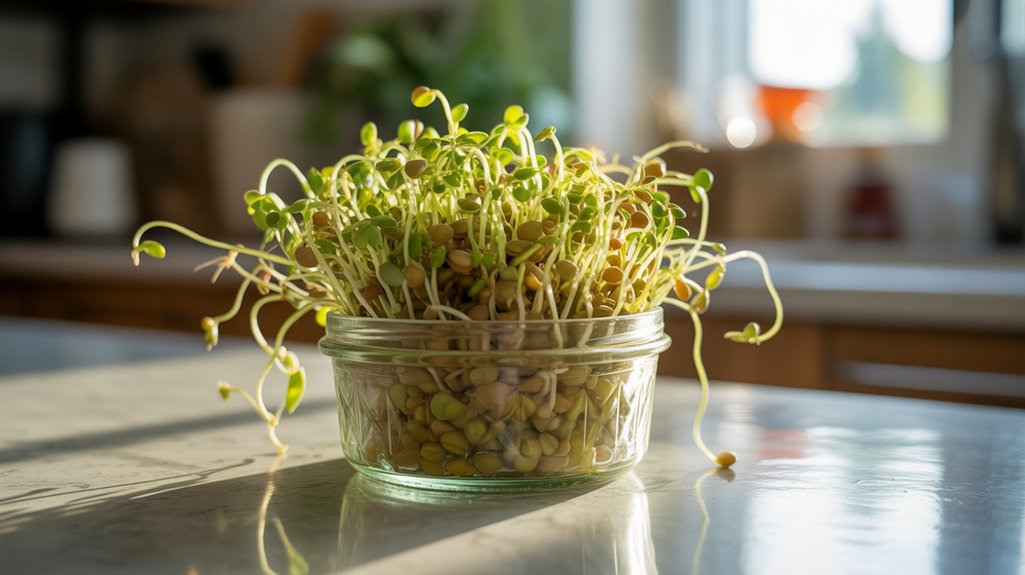
If you want to sprout your own superfoods, lentil sprouts are a fantastic option! I rinse half a cup of organic lentils and soak them overnight. After draining, I keep them moist and rinse them twice daily for about 3-5 days until they sprout. Ensure they’re in a warm spot, and give them some indirect sunlight. They’re great in salads or smoothies. Stick around, and I’ll share more creative ideas for using these nutritious sprouts in your meals!
Key Takeaways
- Use high-quality, preferably organic lentil seeds for optimal sprouting results indoors.
- Soak lentils overnight in filtered water, covering them with 2-3 times the water amount.
- Rinse and drain lentils twice daily, ensuring they remain moist but not oversaturated.
- Keep the sprouting jar in a dark, warm spot around 70°F for ideal germination conditions.
- Rinse sprouts regularly and provide indirect sunlight to promote healthy growth and prevent spoilage.
What You Need to Get Started
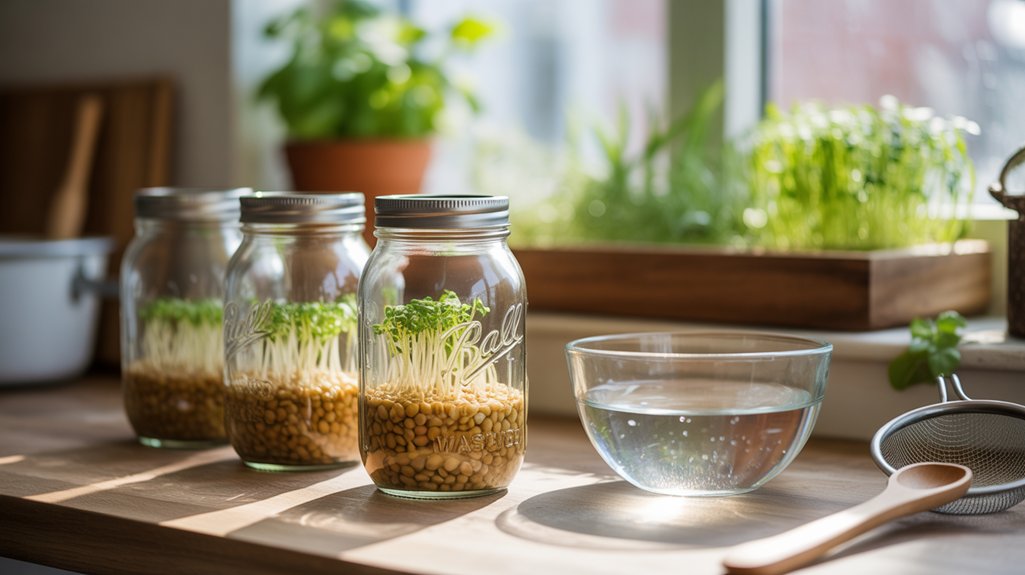
To successfully grow lentil sprouts indoors, you’ll need a few essential items that make the process straightforward and enjoyable. First, grab some high-quality lentil seeds; organic ones are often best for sprouting.
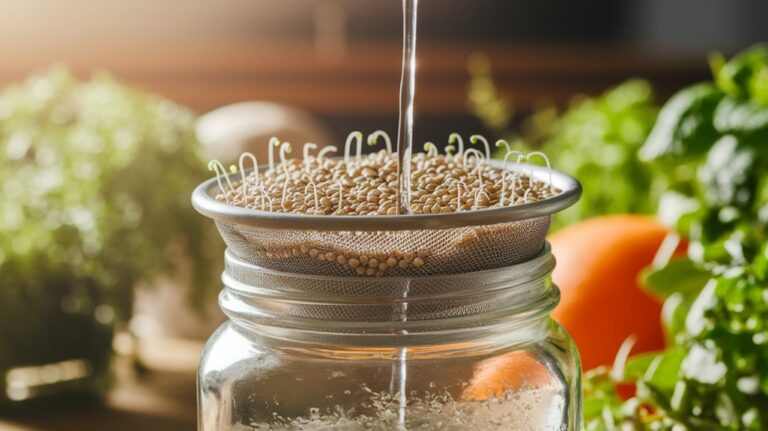
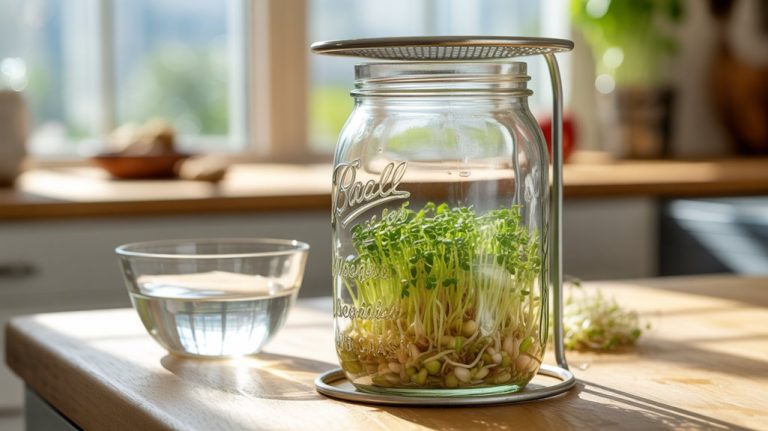
You’ll also need a sprouting jar or a fine mesh strainer to allow for proper drainage and air circulation. A bowl to catch excess water is handy too.
Next, have some clean water ready—filtered or distilled works well. It’s important to have a dark, warm spot in your home, ideally around 70°F, for the seeds to germinate.
Lastly, consider a paper towel or cheesecloth to cover the jar during the initial soaking phase. With these tools, you’re all set to start your sprouting journey!
Step-by-Step Guide to Sprouting Lentils
Now that you have everything you need, let’s get started with the step-by-step process of sprouting lentils.
First, rinse about half a cup of lentils under cold water to remove any debris. Next, place them in a jar and cover with two to three times the amount of water. Let them soak overnight.
After 8-12 hours, drain the water and rinse the lentils again. Position the jar at an angle in a dark, well-ventilated area to encourage drainage.
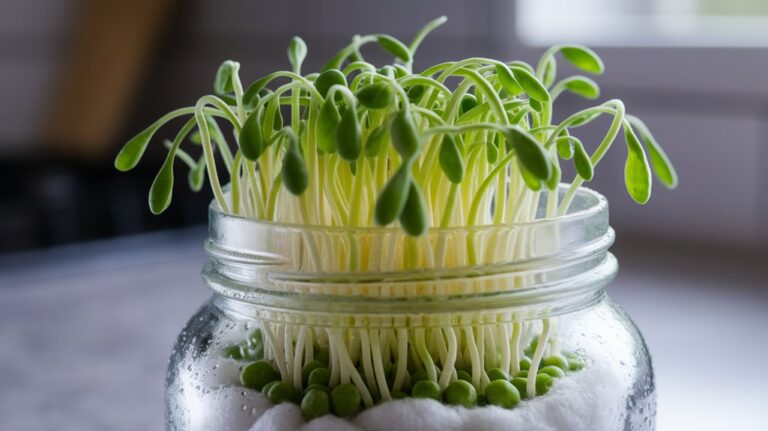
Rinse and drain the lentils twice a day, keeping them moist but not soaked. In about 3-5 days, you’ll see tiny sprouts emerging.
Once they’re about an inch long, they’re ready to enjoy in salads or sandwiches!
Caring for Your Lentil Sprouts
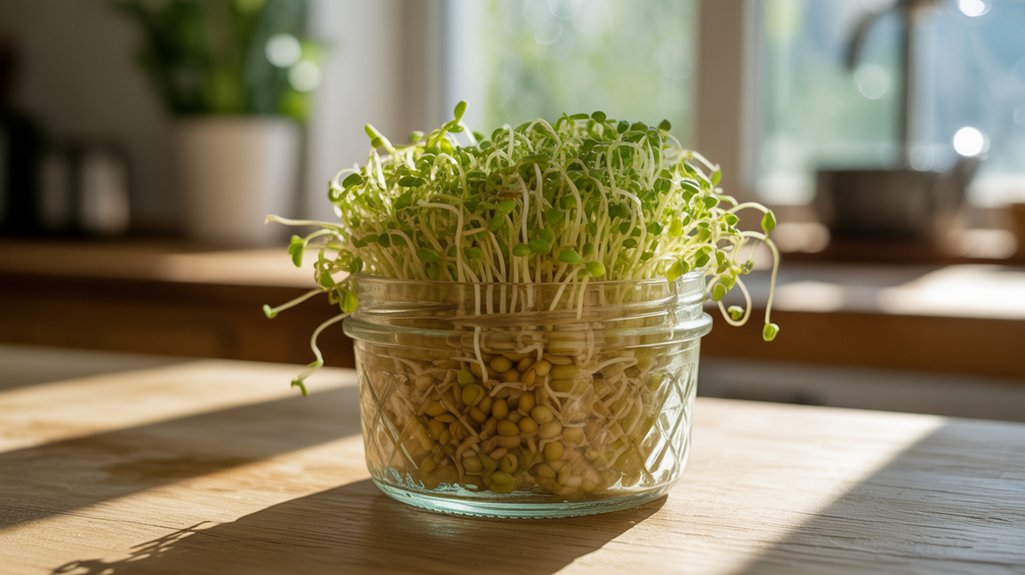
Caring for your lentil sprouts is essential for ensuring they thrive and provide maximum nutritional benefits. I always rinse my sprouts twice a day, keeping them moist but not soggy. This prevents mold growth and keeps them healthy.
I also make sure they get plenty of indirect sunlight; a windowsill works perfectly. If the sprouts start to grow too tall, I gently rotate the jar to promote even light exposure.
Temperature is key too; I keep them in a cozy spot, ideally around 65-75°F. Lastly, I pay attention to the smell—any off-putting odors can indicate spoilage.
Creative Ways to Use Lentil Sprouts in Your Meals
While many people think of lentil sprouts as a simple garnish, I’ve discovered they can elevate a wide variety of dishes.
I love tossing them into salads for a crunchy texture, or adding them to stir-fries for a nutritious boost. They also make a perfect filling for wraps, bringing a fresh, earthy flavor that complements hummus or avocado.
When I’m feeling adventurous, I blend them into smoothies for an extra protein kick. Lentil sprouts also work wonders in soups; just stir them in at the end for a vibrant touch.
Their mild taste pairs well with spices and herbs, making them a versatile ingredient in my kitchen.
Troubleshooting Common Sprouting Issues
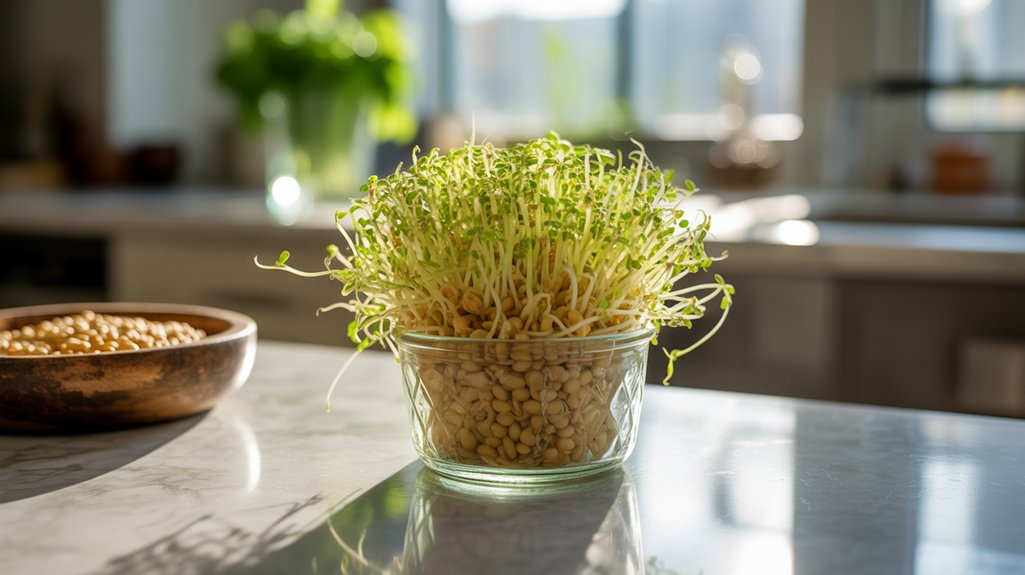
When I first started sprouting lentils, I quickly realized that not every batch would be perfect, and troubleshooting common issues became essential.
One of the biggest problems I faced was mold growth. To combat this, I ensured I rinsed my lentils thoroughly and kept them in a well-ventilated area.
If my sprouts weren’t growing, I checked that the temperature was warm enough—ideally around 70°F. Sometimes, they wouldn’t sprout at all, which could be due to old seeds; I learned to buy fresh, organic lentils.
Lastly, if they’d a bitter taste, I discovered that over-sprouting was the culprit. I now know to harvest them promptly, ensuring they stay crisp and flavorful.
Happy sprouting!
Frequently Asked Questions
How Long Do Lentil Sprouts Last After Harvesting?
Lentil sprouts typically last about 5 to 7 days after harvesting if stored properly in the fridge.
I always keep them in a breathable container, like a mesh bag or a glass jar with a lid slightly ajar, to avoid moisture buildup.
It’s essential to check them daily for freshness and to rinse them every couple of days.
Doing this helps maintain their crispness and nutritional value, making them a great addition to my meals!
Can I Grow Lentil Sprouts Without Soil?
Absolutely, you can grow lentil sprouts without soil!
I use a simple jar method. First, I rinse the lentils and soak them overnight.
Then, I place them in a jar with a breathable lid, rinsing and draining them a couple of times a day.
In about 4 to 6 days, I’ve got fresh, crunchy sprouts ready to eat.
It’s a fun, hassle-free way to enjoy superfoods without any dirt!
Are Lentil Sprouts Safe for Everyone to Eat?
Yes, lentil sprouts are generally safe for everyone to eat, but there are a few considerations.
I always recommend washing them thoroughly to reduce any risk of bacteria. Pregnant women and those with compromised immune systems should consult a healthcare provider before consuming raw sprouts.
I’ve enjoyed them in salads and sandwiches, finding their nutty flavor delicious. Just remember, moderation is key, as with any food!
What Is the Nutritional Value of Lentil Sprouts?
Lentil sprouts are packed with nutrition! They’re high in protein, offering about 9 grams per 100 grams, and contain essential vitamins like B vitamins, vitamin K, and minerals such as iron and magnesium.
I love that they’re low in calories while being rich in fiber, which supports digestion. Plus, their antioxidants help fight inflammation.
Including lentil sprouts in my diet is an easy way to boost my overall health!
Can I Grow Other Types of Sprouts Alongside Lentils?
Absolutely, you can grow other types of sprouts alongside lentils!
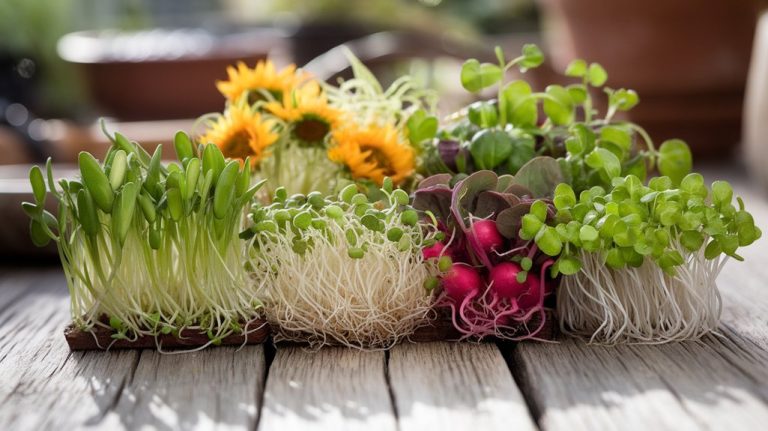
I’ve successfully sprouted alfalfa, mung beans, and radish seeds in the same container. Just make sure they’ve similar soaking and sprouting times.
I found that keeping them in a well-ventilated area helps prevent mold.
It’s a fun experiment, and I love the variety of flavors and textures they bring to my meals.
Try different combinations and see what you enjoy!
Conclusion
In conclusion, growing lentil sprouts indoors is a simple and rewarding process that can enhance your meals with nutritious superfoods. By following the steps outlined and addressing any common issues, you can enjoy fresh sprouts right from your kitchen. Remember, these little greens are not only packed with vitamins and minerals but also versatile in various dishes. So, go ahead and give it a try—your health and taste buds will thank you!