The Art of Mixing Microgreens: Flavor Combinations That Work Wonders
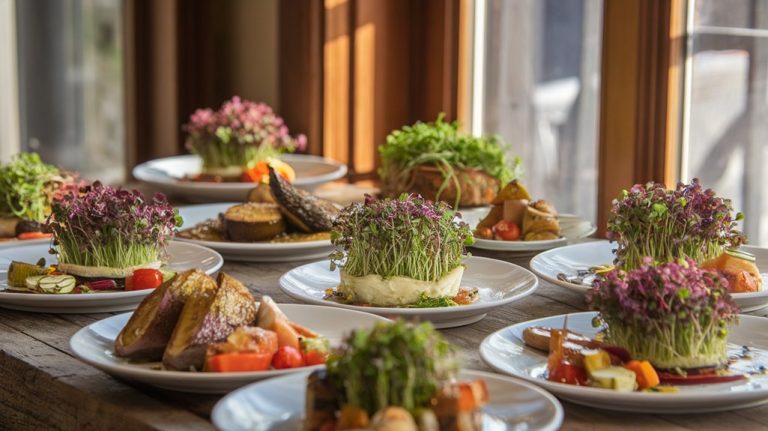
Mixing microgreens is like painting with flavors; every variety offers something unique. I love pairing sweet pea shoots with zesty radish microgreens for a delightful crunch. Mustard greens add a bold kick, perfect for vibrant salads. For a nutty touch, sunflower microgreens perfectly complement earthy beet greens. It’s all about understanding how these flavors work together. If you’re curious about more exciting combinations, there’s so much more to explore!
Key Takeaways
- Explore unique flavor profiles of microgreens to enhance culinary creativity and elevate dishes with bold tastes.
- Combine sweet and peppery microgreens, like pea shoots with basil, for delicious salads and garnishes.
- Experiment with zesty blends, such as radish with mustard greens, to create exciting flavor contrasts in meals.
- Pair microgreens with complementary textures, like creamy elements and crunchy nuts, for a satisfying dining experience.
- Use seasonal microgreen combinations, like beet greens with roasted squash, to highlight fresh flavors throughout the year.
Understanding the Unique Flavors of Microgreens
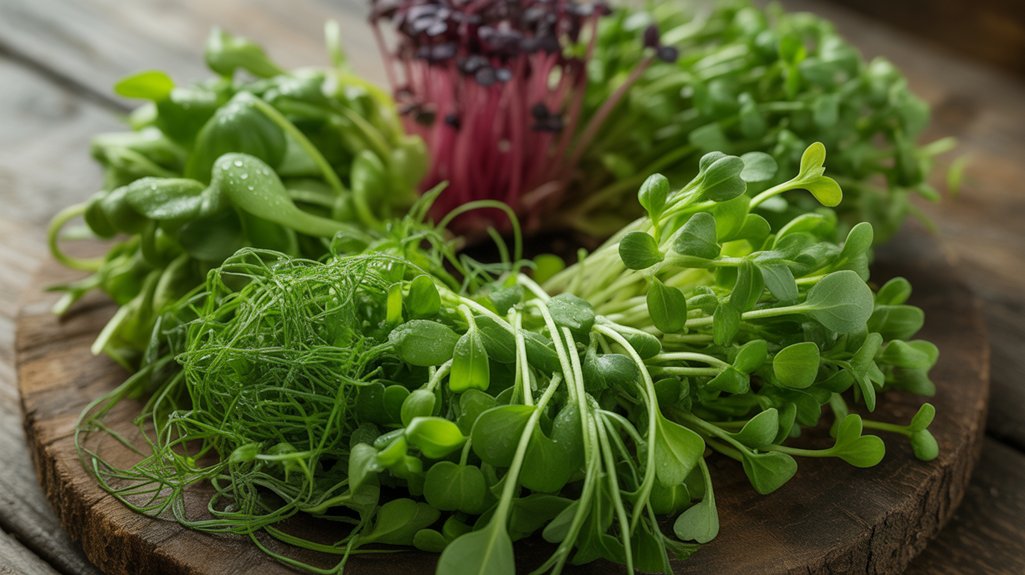
When I first discovered microgreens, I was amazed by how their tiny leaves burst with bold, distinct flavors that can elevate any dish. Each variety offers a unique taste profile; for instance, radish microgreens bring a spicy kick while basil microgreens offer a sweet, aromatic essence.
I found that incorporating these little greens not only enhances flavor but also adds a vibrant visual element to my meals. Their freshness is unparalleled, and they can transform a simple salad or sandwich into something truly gourmet.
I’ve enjoyed experimenting with these flavors, discovering how they can complement or contrast with other ingredients. Understanding their unique flavors has opened up a new world of culinary creativity for me that I can’t wait to explore further.
Popular Microgreen Varieties to Mix
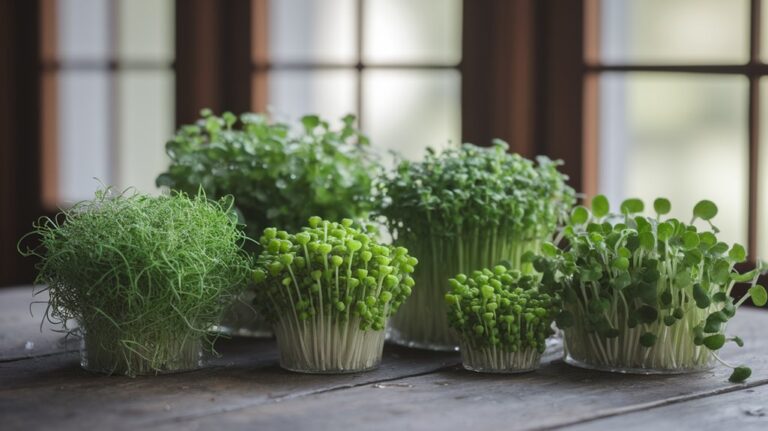
When I think about mixing microgreens, a few standout combinations always come to mind.
Pea shoots and basil create a delightful balance of sweetness and earthiness, while radish and mustard greens pack a spicy punch that’s hard to resist.
Sunflower and beet greens add a vibrant touch, offering both a splash of color and a nutty flavor that elevates any dish.
Pea Shoots and Basil
Although I often find myself experimenting with various microgreens, pea shoots and basil consistently stand out as a delightful combination. The sweetness of the pea shoots complements the aromatic, slightly peppery notes of basil beautifully.
When I toss them together in a salad, the textures create a refreshing crunch that elevates any dish. This pairing works wonders in pesto too, offering a unique twist on the traditional recipe.
I love scattering them atop soups or grain bowls, where they add both visual appeal and flavor complexity. Plus, they’re packed with nutrients, making them not just delicious but also a healthy choice.
Whether you’re a seasoned chef or a home cook, this mix is sure to impress.
Radish and Mustard Greens
While exploring the world of microgreens, I’ve found that radish and mustard greens create a lively and zesty combination that never fails to excite my palate. Their peppery flavors and crisp textures complement each other beautifully, making them a perfect addition to salads, sandwiches, or even as a garnish.
Here are some reasons why I love mixing these two greens:
- Bold Flavor: The sharpness of radish greens balances the mustard’s spice.
- Nutrient-Rich: Both varieties pack a nutritious punch, boosting any dish.
- Visual Appeal: Their vibrant colors add a stunning touch to meals.
- Versatility: They work well in various cuisines, from Asian to Mediterranean.
- Easy to Grow: Perfect for home gardening, even in small spaces.
Give this mix a try; you won’t regret it!
Sunflower and Beet Greens
Sunflower and beet greens create a delightful medley that’s hard to resist. The sunflowers bring a nutty, buttery flavor that complements the earthy richness of beet greens perfectly.
When I mix these two, I love how their textures contrast; the sunflower microgreens are tender and crisp, while beet greens have a slightly thicker, velvety feel. Together, they offer an exciting bite in salads or as a garnish for various dishes.
Nutritionally, they’re a powerhouse, packed with vitamins and minerals. I often toss them into smoothies for an extra boost.
Whether you’re looking to elevate a simple dish or create a vibrant salad, this combination is sure to impress both your taste buds and your guests!
The Science Behind Flavor Pairing
When I think about flavor pairing in microgreens, I can’t help but get excited about how different profiles can complement each other.
The interactions of aromatic compounds play a crucial role in creating that perfect balance, turning an ordinary dish into something truly memorable.
Understanding which microgreens harmonize can elevate your culinary creations in ways you mightn’t expect.
Flavor Profile Compatibility
As I explore the delightful world of microgreens, I often find myself captivated by how their flavor profiles can harmonize or clash in dishes.
Understanding flavor profile compatibility is essential for creating memorable meals. Some microgreens bring subtle sweetness, while others pack a peppery punch or a hint of citrus.
Here are some combinations I love:
- Radish Microgreens with Cilantro – A zesty, bright pairing.
- Pea Shoots with Basil – Sweet and herbaceous, perfect for salads.
- Mustard Greens with Dill – A bold contrast that excites the palate.
- Sunflower Microgreens with Chives – Nutty and oniony, a delightful duo.
- Arugula with Fennel – A complex interplay of peppery and sweet.
Experimenting with these pairings can elevate your dishes to new heights!
Aromatic Compound Interactions
Understanding the interactions of aromatic compounds in microgreens opens up a fascinating realm of flavor pairing that can enhance your culinary creations. These compounds interact in surprising ways, often elevating dishes to new heights. For instance, pairing microgreens with complementary aromatic profiles can create a symphony of flavors.
Here’s a table showcasing some aromatic compound interactions:
| Microgreen | Complementary Flavor Pairing |
|---|---|
| Basil | Lemon, Tomato |
| Arugula | Parmesan, Balsamic |
| Radish Greens | Cucumber, Dill |
| Cilantro | Lime, Avocado |
Experimenting with these combinations can lead to delightful discoveries, transforming ordinary meals into extraordinary experiences. So, don’t hesitate to mix and match; your taste buds will thank you!
Combining Sweet and Savory Microgreens
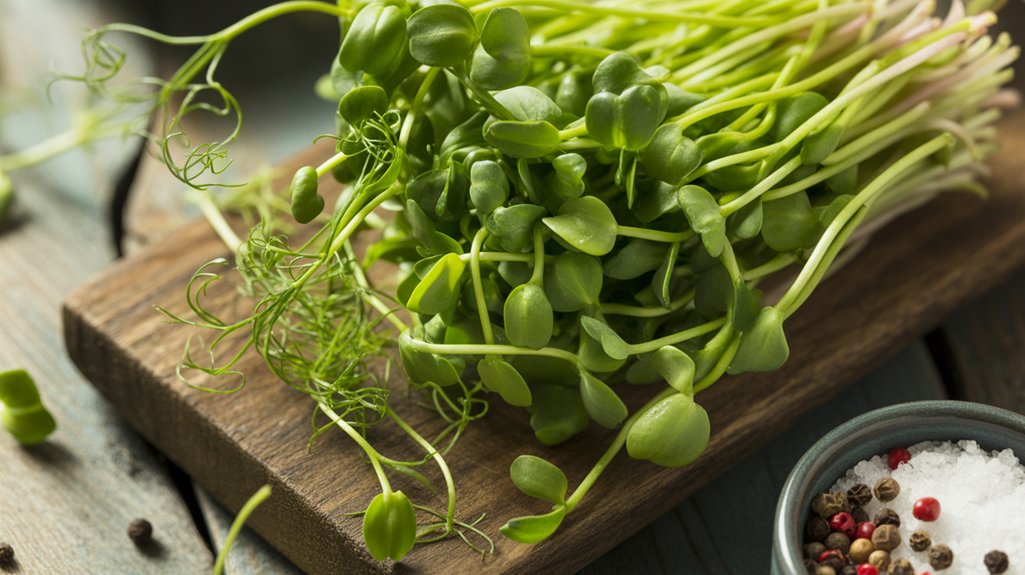
While experimenting with flavors in the kitchen, I’ve found that combining sweet and savory microgreens can elevate a dish to new heights.
The interplay of these contrasting flavors creates a delightful taste experience that captures the palate. Here are some combinations I’ve enjoyed:
- Sweet Pea Shoots paired with Radish Microgreens for a crunchy, refreshing bite.
- Sunflower Microgreens mixed with Basil Microgreens to bring a fragrant touch.
- Beet Microgreens alongside Arugula for a vibrant, peppery flavor.
- Sweet Mustard Greens combined with Cilantro for a zesty twist.
- Carrot Microgreens with Chive Microgreens for a subtle sweetness and oniony kick.
These combinations not only add flavor but also enhance the visual appeal of your dishes.
Enjoy the adventure!
Bold and Spicy Microgreen Blends
When you want to add a punch of flavor to your dishes, bold and spicy microgreen blends are the perfect solution. I love mixing varieties like arugula, radish, and mustard greens for a fierce flavor explosion.
The peppery bite of arugula pairs beautifully with the zesty kick of radish, while mustard greens add depth and earthiness.
These microgreens not only enhance taste but also bring vibrant colors and textures to your plate. Toss them into salads, or use them as a garnish for soups and grilled meats.
Don’t shy away from experimenting; each blend can transform a dish into something extraordinary. Trust me, once you try these bold combinations, you’ll never look back!
Fresh and Citrusy Combinations
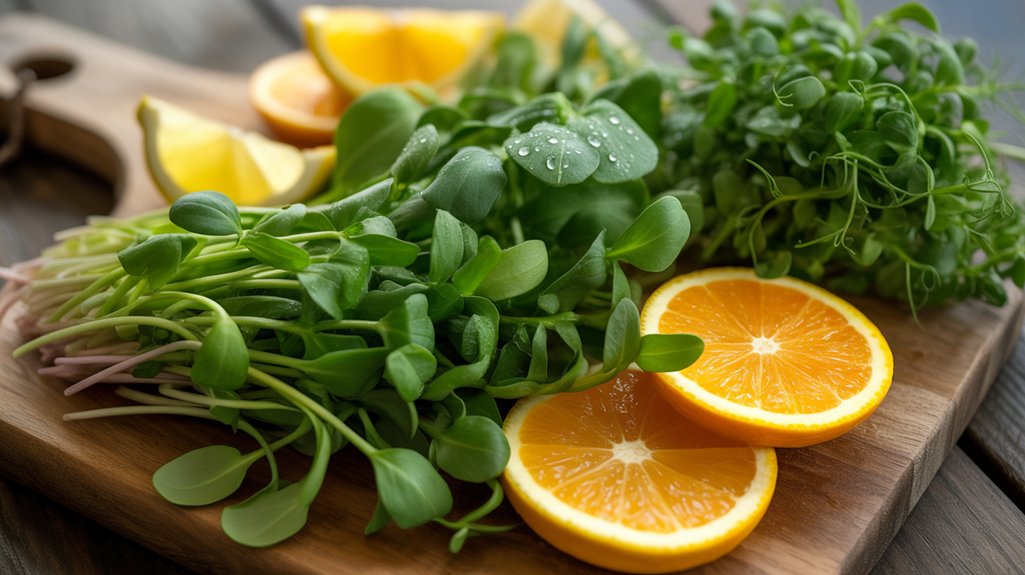
If you’re looking to brighten up your dishes with a burst of freshness, fresh and citrusy microgreen combinations are the way to go.
These delightful greens not only add vibrant color but also a zesty flavor that can elevate any meal. I love experimenting with various combinations to find the perfect balance.
Here are some of my favorites:
- Lemon Balm with Radish Microgreens: A refreshing kick.
- Cilantro and Sweet Pea Shoots: Perfect for salsas.
- Basil and Lemon Verbena: Great for salads.
- Chervil with Citrus Basil: Adds a unique twist to seafood.
- Mint with Arugula: A refreshing combo for summer dishes.
These combinations are sure to add a lively touch to your culinary creations!
Earthy Microgreens and Their Perfect Partners
When I think of earthy microgreens, I can’t help but appreciate their rich flavor profiles and how they stand out in any dish.
Pairing them with complementary textures not only enhances their taste but also creates a delightful eating experience.
Let’s explore some seasonal suggestions that will truly elevate these robust greens!
Flavor Profiles Explained
Although many might overlook the subtle nuances of earthy microgreens, I find their rich, robust flavors can elevate any dish when paired thoughtfully.
These microgreens, like arugula and beet greens, bring a depth that complements various ingredients. Here are some perfect partners that enhance their taste:
- Citrus Fruits: Brighten earthy notes with zesty accents.
- Nuts: Add crunch and richness, balancing the flavors.
- Cheese: Creamy varieties like goat cheese complement their earthiness.
- Balsamic Vinegar: Sweet acidity cuts through and highlights the depth.
- Herbs: Fresh herbs, such as basil or dill, add aromatic layers.
Complementary Textures Combined
Combining earthy microgreens with complementary textures creates a delightful culinary experience that excites the palate.
I love pairing the robust flavors of arugula or beet greens with something crunchy, like toasted nuts or seeds. The contrast not only enhances the taste but also adds a satisfying crunch that elevates the dish.
For instance, mixing in radish microgreens brings a peppery bite that perfectly balances creamy textures, such as avocado or goat cheese.
I often toss these combinations into salads or grain bowls, where each texture plays a role in the overall experience.
Seasonal Pairing Suggestions
As the seasons change, I find myself inspired to experiment with earthy microgreens and their ideal partners, creating vibrant dishes that celebrate the flavors of each time of year.
Here are some seasonal pairing suggestions that I love:
- Spring: Pea shoots and mint, refreshing with a hint of sweetness.
- Summer: Basil microgreens with heirloom tomatoes, bursting with juicy flavor.
- Autumn: Beet greens paired with roasted squash, rich and hearty.
- Winter: Arugula mingling with citrus fruits, zesty and bright.
- Year-round: Radish microgreens with avocado, creamy and peppery.
These combinations not only enhance the dishes but also highlight the unique flavors of each microgreen.
I encourage you to mix and match, letting the seasons guide your culinary creativity!
Creating Colorful and Textured Microgreen Salads
Have you ever wondered how to elevate a simple salad into a vibrant masterpiece? I love starting with a base of crunchy radish and sunflower microgreens, their textures providing a delightful contrast.
Adding a handful of purple basil microgreens not only introduces a pop of color but also a hint of sweetness. To create depth, I mix in spicy arugula microgreens, which lend a peppery kick.
For a touch of whimsy, I sprinkle in some bright red beet microgreens, their earthiness balancing the flavors beautifully. Finally, I drizzle a light vinaigrette for an added zing.
The result? A colorful and textured microgreen salad that’s as pleasing to the eye as it’s to the palate. Enjoy experimenting!
Enhancing Dishes With Microgreen Garnishes
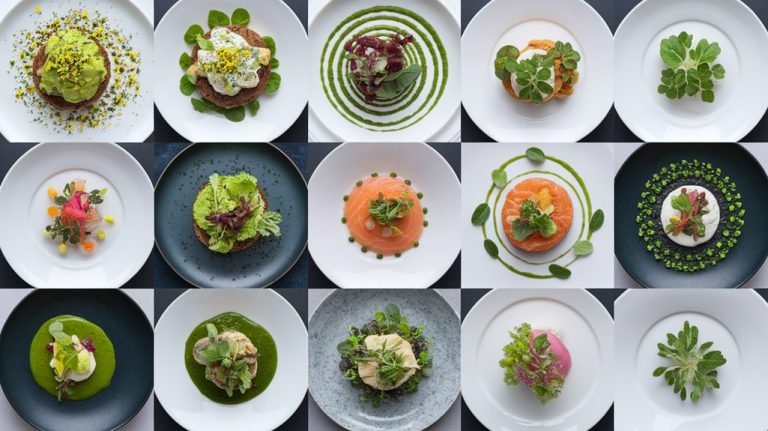
How can a simple garnish transform a dish from ordinary to extraordinary? Microgreens are my secret weapon for elevating meals, adding vibrant color, texture, and a burst of flavor.
Whether sprinkled atop a creamy soup or nestled beside grilled fish, these tiny greens captivate the eye and palate alike.
Here are some microgreen garnishes I love to use:
- Radish Greens: Their peppery bite adds excitement to salads.
- Basil Microgreens: Perfect for Italian dishes, they infuse freshness.
- Pea Shoots: Sweet and crisp, great for a crunchy complement.
- Sunflower Microgreens: Nutty flavor that pairs beautifully with grains.
- Arugula Microgreens: Adds a zesty punch to sandwiches and wraps.
Incorporating microgreens into my culinary creations is an easy way to impress!
Tips for Growing Your Own Microgreen Mixes
Why settle for store-bought when you can easily grow your own microgreen mixes at home?
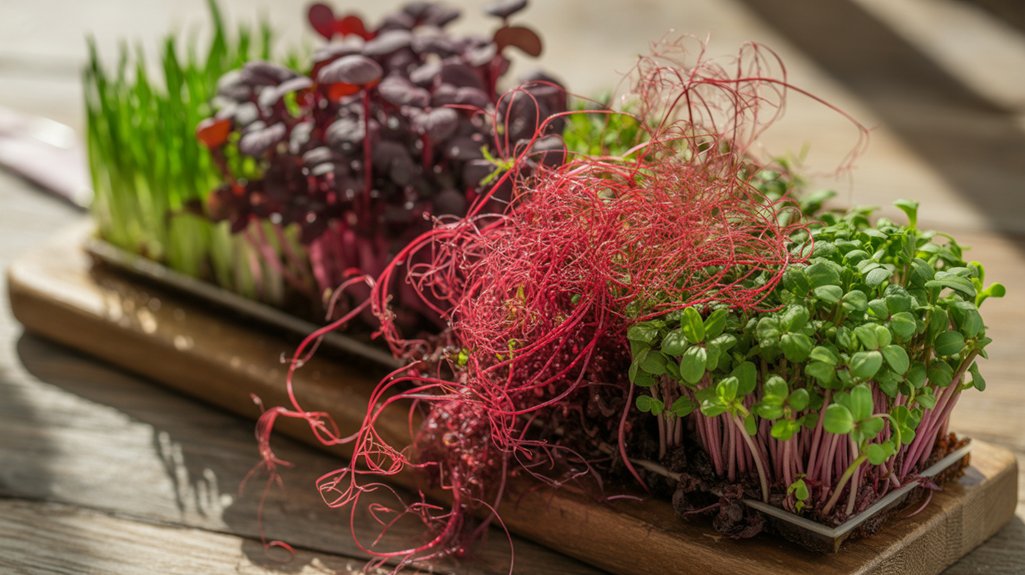
I’ve found that starting with quality seeds is crucial. Choose a mix that includes peppery arugula, sweet basil, and nutty kale for a balanced flavor profile.
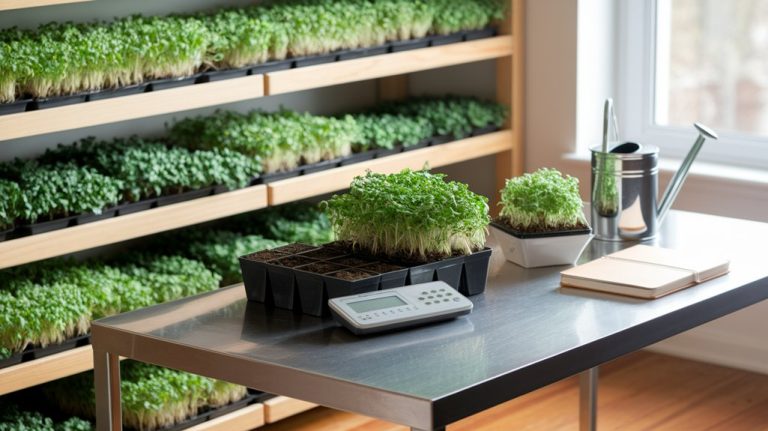
Use shallow trays filled with nutrient-rich soil, and make sure to water them gently but thoroughly. Place your trays in a sunny spot or under grow lights, and keep an eye on moisture levels.
In just 7-14 days, you’ll see those vibrant greens sprouting! Don’t forget to snip them just above the soil line for the freshest harvest.
Growing your own microgreens isn’t only rewarding but also a fantastic way to enhance your culinary creations.
Frequently Asked Questions
How Do I Store Mixed Microgreens for Freshness?
To keep my mixed microgreens fresh, I first wash them gently and spin them dry.
Then, I store them in a breathable container lined with a damp paper towel. I make sure to close it loosely to allow some air circulation.
If I want them to last even longer, I keep the container in the fridge’s crisper drawer.
This method helps maintain their crispness and vibrant flavors for several days!
Can I Grow Microgreens Indoors Year-Round?
Absolutely, you can grow microgreens indoors year-round!
I’ve been doing it for a while now, and it’s been such a rewarding experience. All you need is a sunny windowsill or a grow light to provide adequate light.
I use shallow trays with potting soil, and keep the moisture levels just right.
It’s amazing to watch them sprout and thrive, bringing fresh flavors to my meals no matter the season.
What Nutrients Are Found in Microgreens?
Microgreens are packed with nutrients!
I’ve found they often contain vitamins A, C, E, and K, along with essential minerals like calcium, magnesium, and potassium. They’re also rich in antioxidants, which help combat free radicals in our bodies.
When I add them to my meals, I not only boost flavor but also enhance my nutrition. It’s amazing how such tiny greens can pack such a punch in terms of health benefits!
How Do I Wash and Prepare Microgreens for Eating?
To wash and prepare microgreens, I first fill a bowl with cold water. I gently submerge the microgreens, swishing them around to remove any dirt.
After a minute, I lift them out and let them drain in a colander. Then, I pat them dry with a clean kitchen towel.
I love adding them to salads or sandwiches, as their vibrant flavors and textures really elevate any dish! Enjoy experimenting with them!
Are There Any Allergies Associated With Microgreens?
Yes, some people can be allergic to microgreens.
While they’re generally safe and nutritious, I’ve learned that certain individuals may react to specific varieties, like mustard or radish microgreens.
Symptoms can range from mild itching to more serious reactions.
It’s always wise to try a small amount first if you’re unsure.
If allergies are a concern for you, I recommend consulting with a healthcare professional before adding them to your diet.
Conclusion
As I’ve discovered, mixing microgreens isn’t just about flavor; it’s a delightful journey of color and texture that can elevate any dish. By experimenting with bold, sweet, and earthy varieties, you can create unique combinations that tantalize the taste buds. Whether you’re enhancing a salad or garnishing a gourmet meal, these tiny greens pack a punch. So, roll up your sleeves, get creative in the kitchen, and let your palate explore the wonderful world of microgreen pairings!