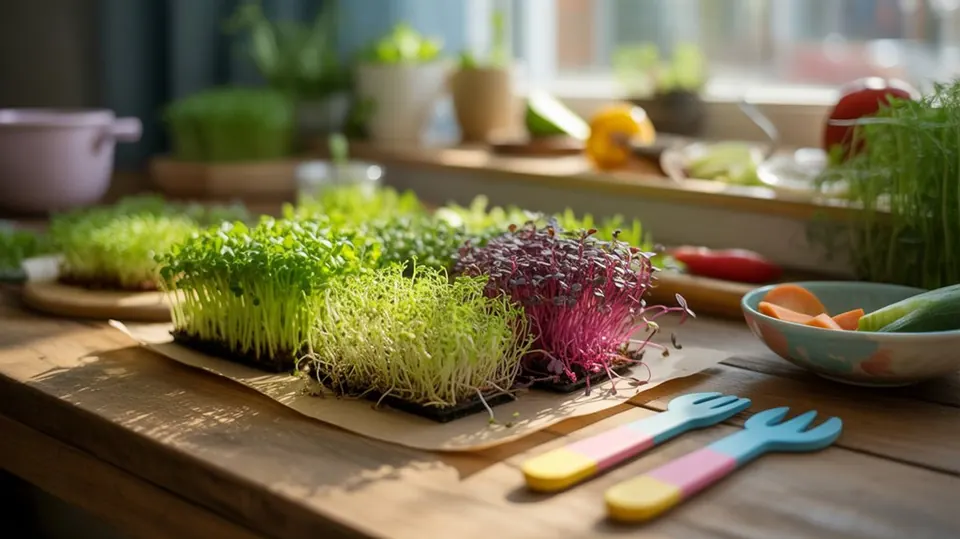
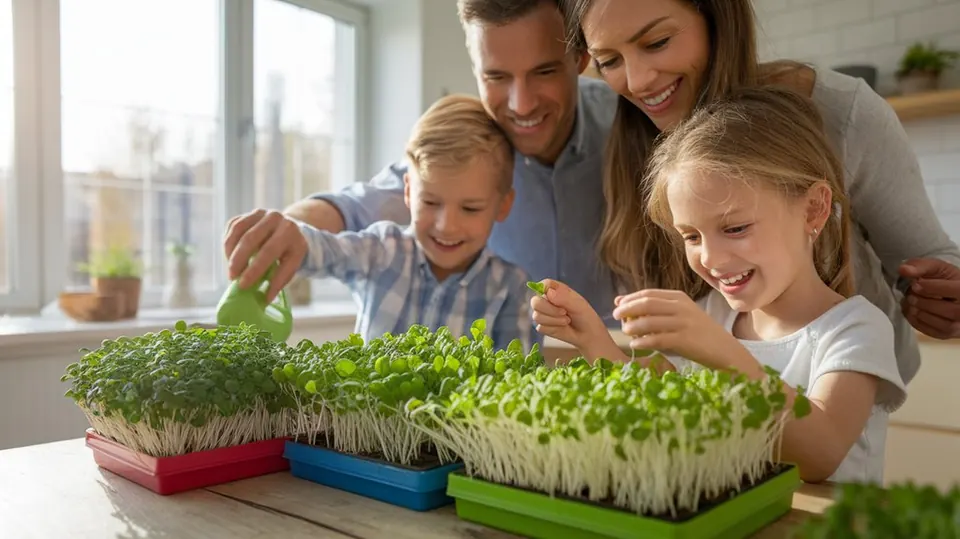
Short answer: for growing microgreens with kids, pick pea shoots or sunflower. Day 1, soak the seeds. Day 2, sow them in a tray and cover. Days 3 to 4, peek and mist. Day 4 or 5, uncover and move them into light. Then water daily, measure growth, and harvest together on day 9 or 10.
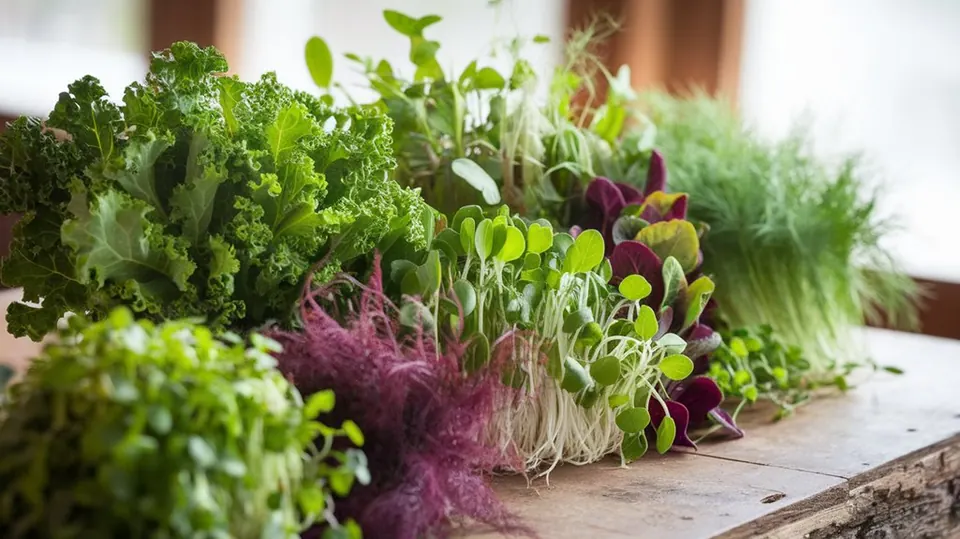
Best crops for kids
| Crop | Why kids like it | Ready in |
|---|---|---|
| Pea shoots | Big seeds, sweet taste, curly tendrils | 8–10 days |
| Sunflower | Big seeds, nutty crunch | 8–10 days |
| Radish | Very fast, colourful stems | 10–12 days |
| Cress | Grows on a plate, very little fuss | 8–12 days |
10-day plan for growing microgreens with kids
- Day1
Soak the seeds
Kids measure the seed and pour water over it in a bowl. Ask them to guess how big the seeds will get overnight.
- Day2
Sow
Kids spread soil in a tray, sprinkle the soaked seed, and press it down with flat hands. Mist with a spray bottle and cover.
- Day3–4
Peek and mist
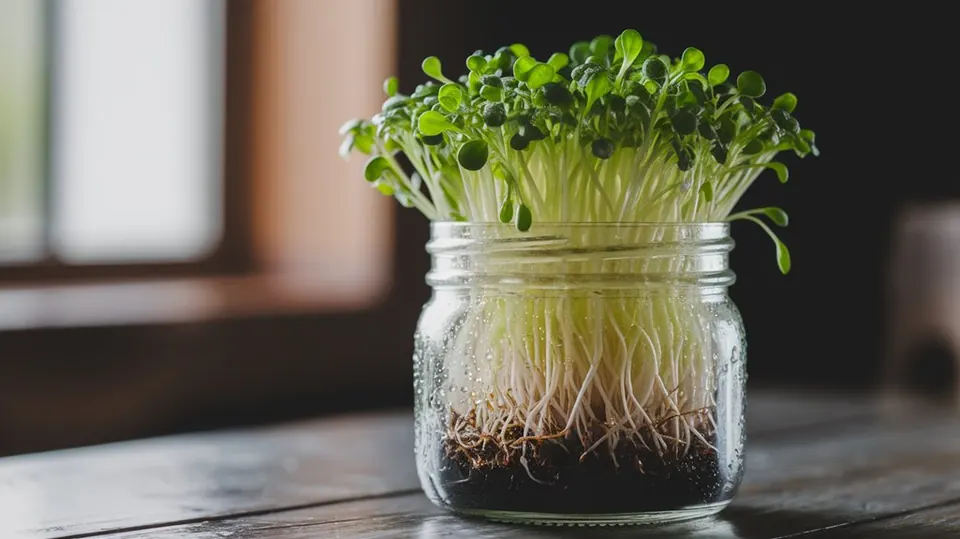
Lift the cover once a day to look for roots. Mist the seeds. Root hairs look like fuzz, which is a fun science moment.
- Day4–5
Into the light
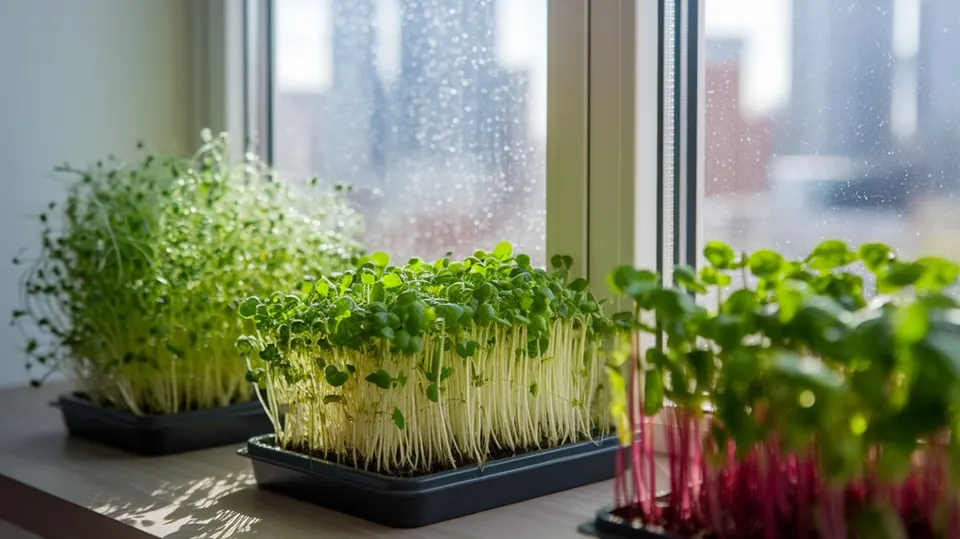
When shoots lift the cover, remove it. Kids can watch yellow shoots turn green within a day.
- Day5–9
Water and measure
Pour water into the bottom tray each day. Measure the tallest shoot with a ruler and mark it on a chart.
- Day9–10
Harvest and eat
An adult helps cut the greens with scissors. Kids add them to sandwiches, pizza or a simple salad.
Jobs by age
- Ages 3 to 5: pour water, mist, press seeds down, peek under the cover.
- Ages 6 to 9: measure seed, sow, measure and chart growth.
- Ages 10 and up: plan the next tray, try a new crop, help harvest with supervision.
Make it a science project
- Grow chart: measure height every day.
- Light test: grow one small tray in the dark and one in light, and compare.
- Seed test: soak one batch and not another to see which sprouts faster.
- Taste test: try pea shoots vs radish and vote for a favourite.
Safety for families
- Use seed sold for sprouting or microgreens.
- Adults handle scissors at harvest.
- Wash hands before and after.
- Raw sprouts: the FDA says young children and other higher-risk groups should not eat raw or lightly cooked sprouts. Health Canada advises everyone to cook them.12 Microgreens are a lower-risk choice for kids.
Kits for kids
Sprouting.com has The Sprout Kid kit, made for children, and a small microgreen garden set. Or build your own with a 10 × 10 tray and a bag of pea seed.
Once they've grown a tray, try sprouts and microgreens recipes for kids.
Seeds in this article
Frequently asked questions
What are the best microgreens to grow with kids?
Pea shoots and sunflower are the best. The seeds are big and easy for small hands, they grow fast, and the shoots taste sweet and nutty. Radish is great for older kids who like a little spice.
How long does it take to grow microgreens with kids?
About 8 to 12 days for pea shoots, sunflower and radish. Kids can see roots within a day or two, which keeps them interested.
Is growing microgreens safe for kids?
Yes, with adult help for scissors and clean hands. Microgreens are generally a lower-risk choice than raw sprouts for young children.
Can kids grow sprouts too?
Kids can grow sprouts and watch them change daily. Because raw sprouts carry a higher food-safety risk, the FDA advises that young children not eat them raw. Cook them first, for example in a stir-fry.

Written by Michael
A passionate sprouting professional sharing practical tips for growing sprouts and microgreens at home. More about Michael