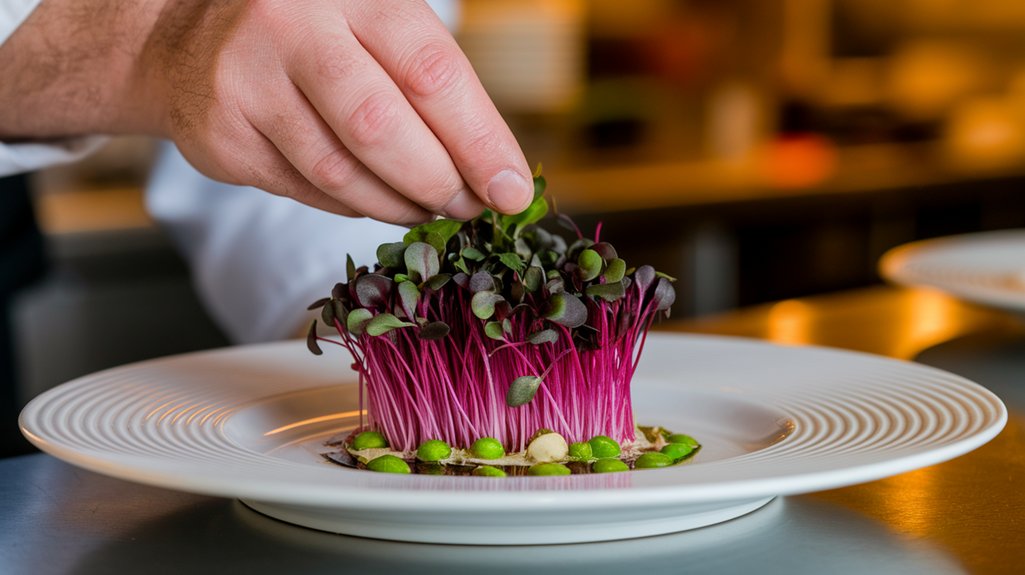
Farm‑to‑Fork: Microgreens for Restaurants and Chefs
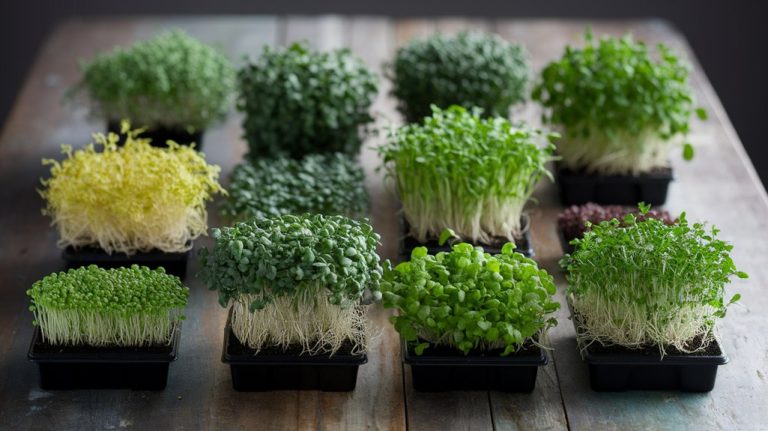
I’ve seen microgreens revolutionize restaurant dishes, making flavors pop and enhancing nutrition effortlessly. These tiny, vibrant plants provide intense flavors and crucial vitamins, perfect for the farm-to-table movement. Sourcing fresh microgreens from local, sustainable growers ensures quality and boosts your meals by adding a unique touch. From peppery radish tops to subtle sunflower greens, there’s so much creativity to explore. Keep reading to unlock even more ways to elevate your culinary creations with these nutrient-packed wonders.
Key Takeaways
- Microgreens offer intense flavors and vibrant colors, enhancing farm-to-table dishes while appealing to health-conscious diners.
- Sourcing fresh microgreens from local farms supports sustainability and ensures optimal quality for restaurant menus.
- Nutrient density of microgreens boosts the health benefits of dishes without compromising their essence or flavor.
- Creative use of microgreens can elevate presentations and add unique tastes to a variety of culinary creations.
- Many successful restaurants showcase microgreens as key ingredients, demonstrating their versatility and importance in modern dining.
The Rise of Microgreens in Culinary Trends
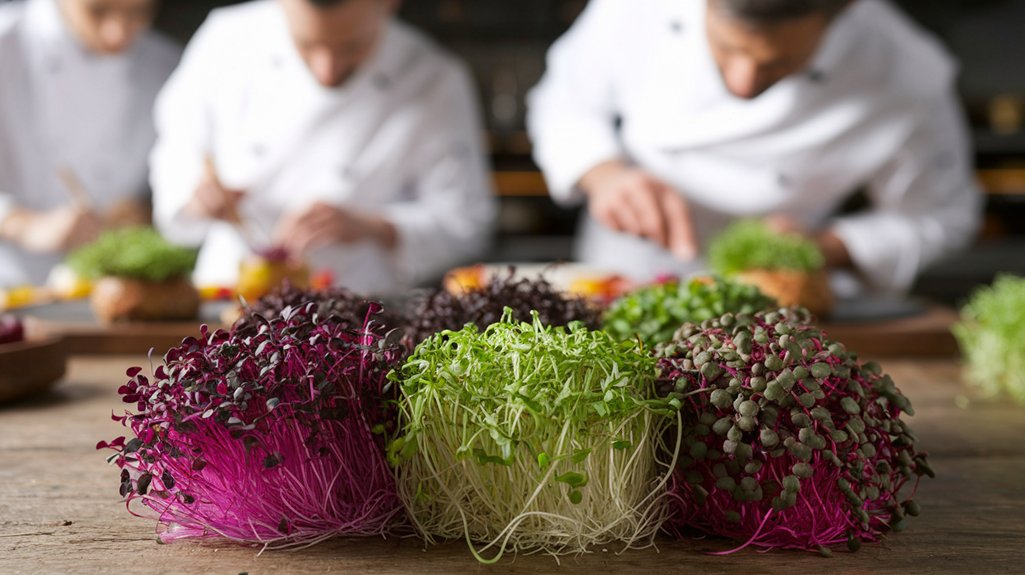
As I’ve observed in recent years, the culinary landscape has dramatically evolved, with microgreens emerging as a vibrant staple in kitchens across the globe.
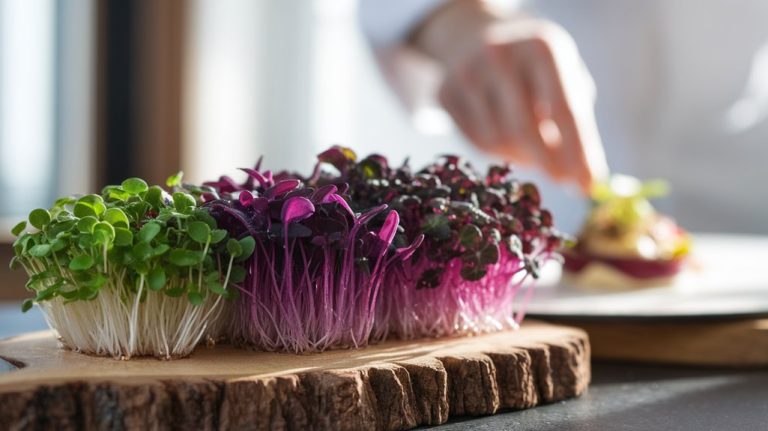
Chefs are increasingly incorporating these tiny, nutrient-packed plants to enhance not only flavors but also the visual appeal of their dishes. Their intense flavors and diverse textures allow for creativity in both plating and taste, elevating simple recipes into extraordinary culinary experiences.
The rise of farm-to-table dining has further propelled the demand for microgreens, as chefs seek fresh, local ingredients to provide unique flavor profiles.
With their quick growth cycle and adaptability, microgreens have become a practical choice for many chefs, making them a trend that’s here to stay in the ever-evolving world of gastronomy.
Nutritional Benefits of Microgreens
Many people mightn’t realize just how nutrient-dense microgreens can be. These tiny greens pack a powerful punch, often containing higher concentrations of vitamins, minerals, and antioxidants compared to their mature counterparts.
For instance, varieties like broccoli microgreens are rich in sulforaphane, known for its cancer-fighting properties, while radish microgreens provide a spicy kick along with high levels of vitamins A, C, and E.
Incorporating these vibrant greens into dishes not only enhances flavor and presentation but also significantly boosts nutritional value. As a chef, I find that microgreens offer an efficient way to elevate health benefits without altering the essence of a dish.
They’re a small addition with a big impact, making them a must-have in any kitchen.
Sourcing Fresh Microgreens: Best Practices
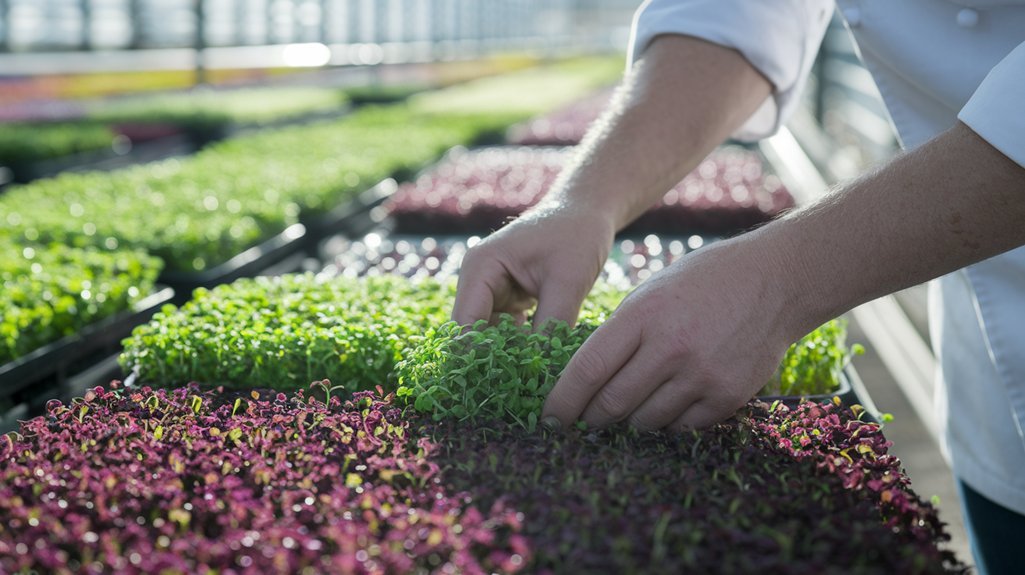
How can chefs ensure they’re using the freshest microgreens available? It starts with sourcing from reliable suppliers who prioritize quality and sustainability. I recommend visiting local farms or farmers’ markets to establish direct relationships. This not only guarantees freshness but also supports local agriculture.
Here’s a simple table to guide your sourcing decisions:
| Criteria | Description |
|---|---|
| Harvest Date | Choose microgreens harvested within 24 hours. |
| Grower Practices | Look for organic and sustainable farming methods. |
| Packaging | Opt for breathable containers to maintain freshness. |
| Storage Conditions | Ensure they’re stored in temperature-controlled environments. |
| Delivery Frequency | Select suppliers who offer regular deliveries. |
Creative Ways to Incorporate Microgreens in Dishes
While microgreens might seem like a simple garnish, their vibrant flavors and textures can elevate a dish to new heights.
I love experimenting with them in various recipes. Here are some creative ways to incorporate microgreens into your culinary creations:
- Salads: Mix different microgreens for a colorful, nutrient-packed salad base.
- Sandwiches: Replace traditional lettuce with microgreens for added crunch and flavor.
- Soups: Use microgreens as a finishing touch to add freshness and visual appeal to creamy soups.
- Garnishes: Top entrees with microgreens to enhance presentation and impart unique flavors.
Success Stories: Restaurants Thriving With Microgreens
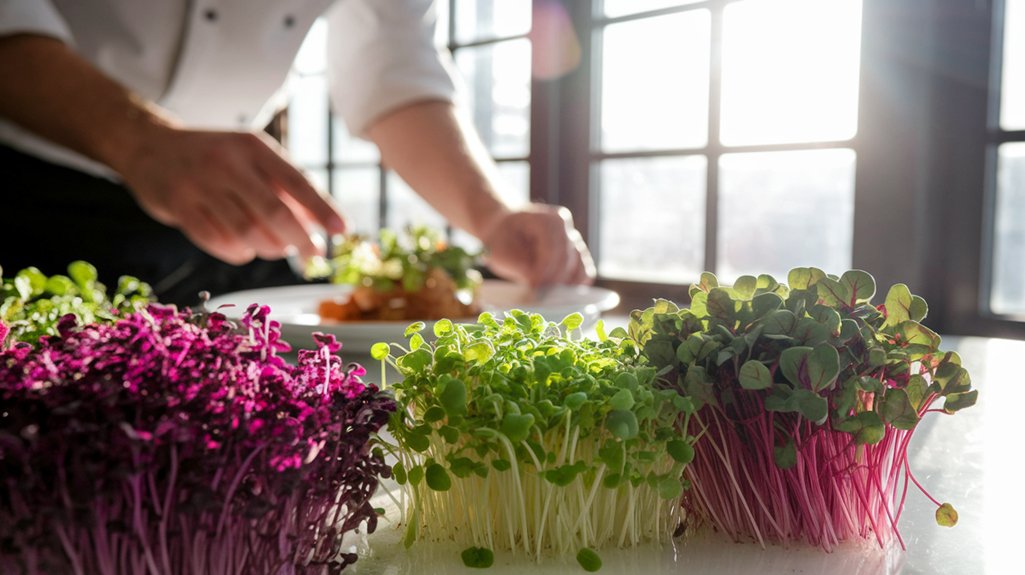
Across the culinary landscape, numerous restaurants have successfully integrated microgreens into their menus, showcasing not only their versatility but also their ability to enhance dishes.
For instance, I’ve seen a local bistro elevate their signature risotto with vibrant radish microgreens, adding a peppery kick that delights diners.
Another success story involves a farm-to-table eatery that uses sunflower microgreens to complement their artisanal sandwiches, providing a fresh crunch that customers rave about.
These examples illustrate how microgreens aren’t just a garnish; they’re integral to flavor profiles and presentation.
As chefs, we’re embracing this trend, understanding that microgreens can transform our culinary creations, boost nutrition, and even reduce food waste by utilizing every part of the plant.
Frequently Asked Questions
How Do Microgreens Differ From Sprouts?
Microgreens and sprouts might seem similar, but they’re quite different.
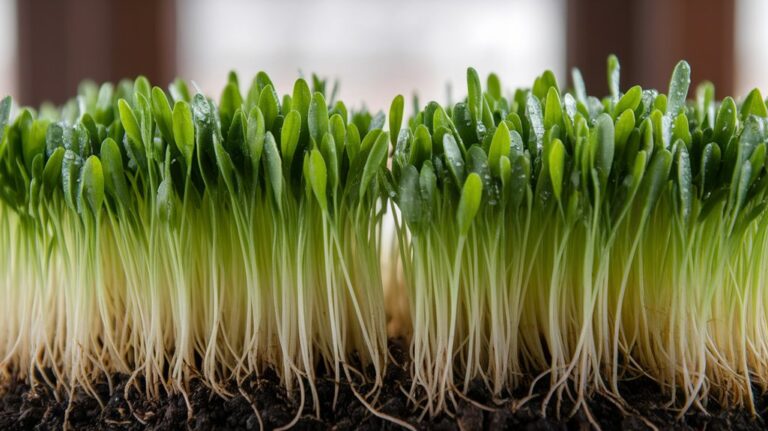
I’ve learned that microgreens are young plants harvested just above the soil after the first true leaves appear, while sprouts are germinated seeds, eaten whole.
Microgreens pack a robust flavor and vibrant color, making them a culinary favorite.
Sprouts, on the other hand, have a crunchy texture and milder taste.
Understanding these differences helps me choose the right ingredient for my dishes.
What Is the Shelf Life of Microgreens?
The shelf life of microgreens typically ranges from 5 to 14 days, depending on how they’re stored.
I’ve found that keeping them in a cool, dark place, preferably in a container with ventilation, helps extend their freshness.
When I notice any wilting or discoloration, I know it’s time to use them.
Proper handling is key; avoiding excess moisture can really make a difference in how long they last.
Can Microgreens Be Grown Indoors?
Absolutely, I’ve grown microgreens indoors with great success!
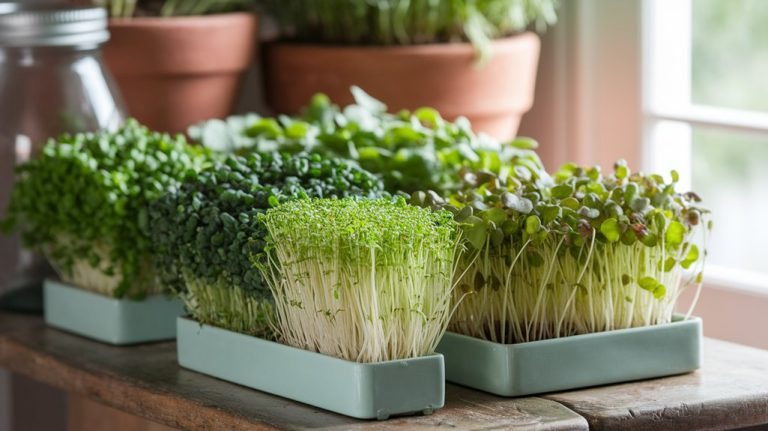
They thrive in well-drained soil and need plenty of light, so I use a grow light to ensure they get enough. I usually keep them in a temperature-controlled environment, which helps them germinate quickly.
With the right setup, I can harvest fresh greens year-round. Plus, it’s a fun and rewarding way to enjoy homegrown produce right from my kitchen!
Are There Any Allergens Associated With Microgreens?
I’ve often wondered about allergens linked to microgreens.
While they’re generally safe, some people might be allergic to specific varieties, such as mustard or arugula. It’s essential to know your own sensitivities.
I recommend introducing microgreens slowly into your diet if you’re unsure. Always consult with a healthcare professional if you suspect you have allergies.
Being informed helps me enjoy these nutritious greens without worry. Let’s explore and savor them safely!
How Should Microgreens Be Stored for Freshness?
To keep microgreens fresh, I store them in a sealed container in the refrigerator.
I make sure they’re dry before storing, as excess moisture can lead to rot. If I notice any wilt, I gently mist them with water before sealing.
I check them regularly, using them within a week for the best flavor and nutrition.
Proper storage helps maintain their vibrant color and crisp texture, enhancing any dish I prepare.
Conclusion
Incorporating microgreens into your culinary repertoire isn’t just a trend; it’s a transformative approach to enhancing flavors and nutrition. As I’ve discovered, these tiny greens pack a powerful punch, elevating dishes while providing essential nutrients. By sourcing them fresh and experimenting with creative applications, you can truly set your restaurant apart. Embrace the farm-to-fork movement, and watch as your menu flourishes with vibrant, healthful microgreens that delight your patrons and inspire your culinary creativity.