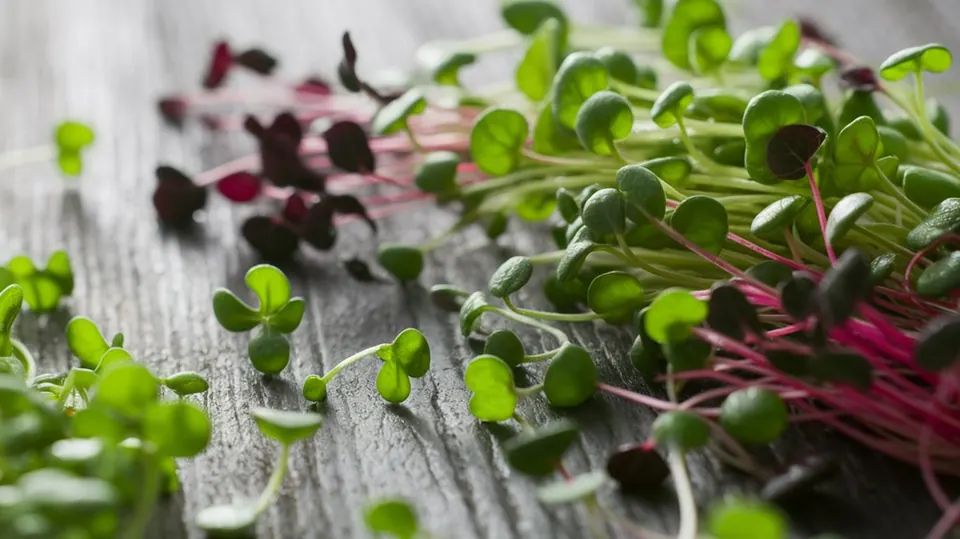
Short answer: microgreens are nutritious vegetables. A USDA study found many microgreens had higher concentrations of some vitamins and carotenoids than the mature leaves of the same plants. Animal studies suggest possible heart and gut benefits, but human research is limited. Eat a variety, eat them fresh, and treat them as part of your vegetables, not a cure.
Why people say microgreens are a superfood
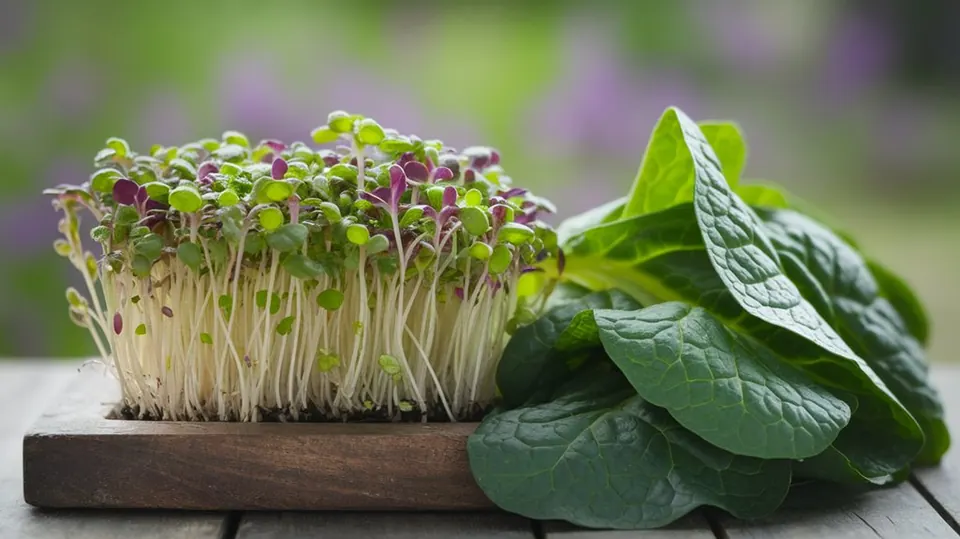
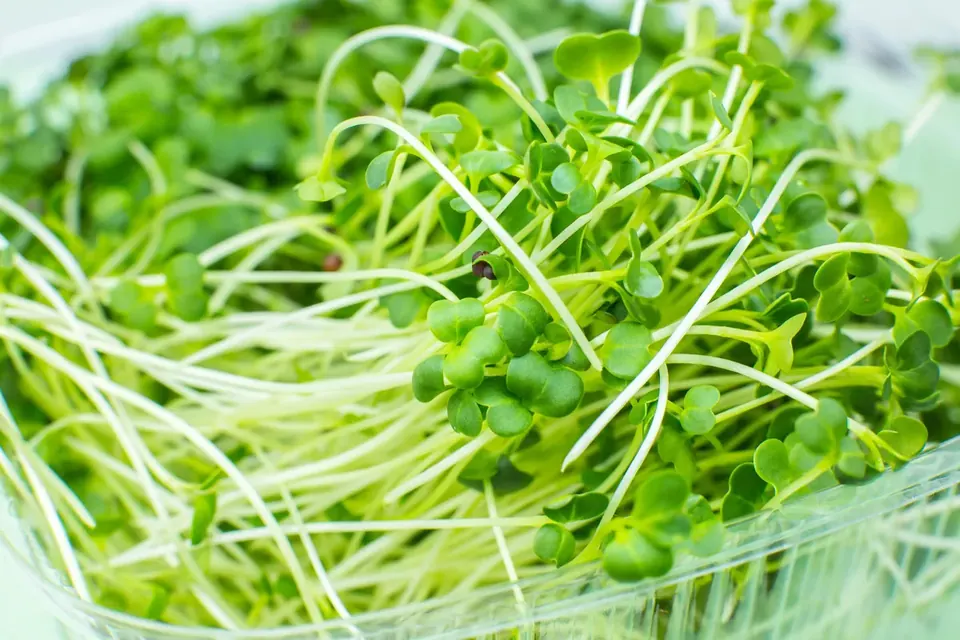
Microgreens are seedlings cut at 7 to 21 days. At that stage, a plant packs its first leaves with nutrients. So a small bite carries a lot of flavour. For some nutrients, it also carries a lot per gram.
"Superfood" isn't a scientific term, though. A better way to put it: microgreens are a nutrient-dense vegetable that's easy to grow and easy to eat more of.
Microgreens benefits: what the studies show
1. More of some vitamins, gram for gram
The best-known study comes from the USDA. In 2012, researchers measured vitamins in 25 kinds of microgreens. Many had more of these nutrients, gram for gram, than the grown leaves of the same plants.1
Some stood out:
| Nutrient | Highest microgreen in the study |
|---|---|
| Vitamin C | Red cabbage |
| Carotenoids (lutein, beta-carotene) | Cilantro |
| Vitamin K | Garnet amaranth |
| Vitamin E | Green daikon radish |
Results varied a lot between crops, so no single microgreen does everything. See the microgreens nutrition chart for more.
2. Antioxidants and plant compounds
A 2020 study compared sprouts with microgreens. Sprouts scored higher for vitamin C and some antioxidants. Microgreens were higher in carotenoids and chlorophyll. The authors said both have a place in a healthy diet.2 These were lab measurements, not studies of people eating them.
3. Possible heart and gut benefits (animal studies)
In a 2016 USDA study, mice ate a high-fat diet. The ones that also ate red cabbage microgreens had lower LDL and liver cholesterol.3 A 2023 mouse study linked red cabbage microgreens to changes in gut bacteria and fewer obesity risk factors.4
These results are interesting, but they're in mice. They don't prove the same effects in people.
4. Sulforaphane from broccoli microgreens
Broccoli microgreens contain glucoraphanin, which your body turns into sulforaphane. A 2023 study found broccoli microgreens had glucoraphanin levels similar to broccoli sprouts, and people who ate them produced sulforaphane.5 See broccoli sprouts vs broccoli microgreens.
5. They help you eat more vegetables
This is the benefit with the most common sense behind it. Microgreens add colour, crunch and strong flavour to meals, which makes it easier to eat more greens. Growing them at home makes them cheap and always on hand.
Microgreens benefits the research hasn't shown
You'll read claims that microgreens boost immunity or prevent cancer. There's no good human evidence for that. Most research measures nutrients in the plant or tests effects in animals. Human studies are still small and few.
Two practical points also matter:
- Portions are small. A garnish might be 10 to 20 g. Even nutrient-dense greens can't replace a full serving of vegetables at that size.
- Variety matters. Different microgreens are high in different nutrients, so a mix beats any single crop.
Read more in microgreens myths and microgreens vs mature greens.
How to get the most microgreens benefits
- Eat a mix. Rotate red cabbage, broccoli, radish, pea shoots and herbs.
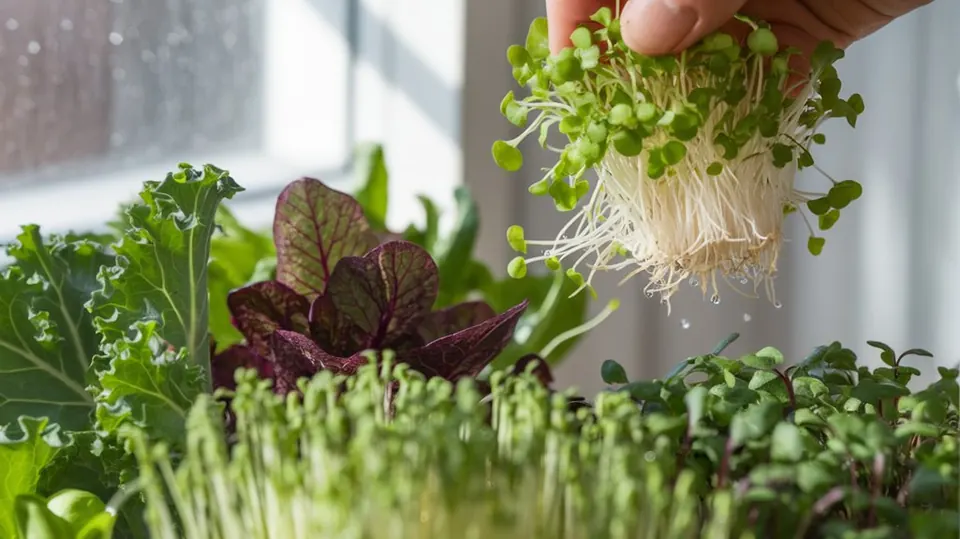
- Eat them fresh. Some vitamins decline in storage. Home-grown microgreens can be cut minutes before eating.
- Eat them raw or add them last. Heat breaks down vitamin C.
- Eat more than a garnish. Use a big handful in salads, sandwiches and smoothies.
Ideas: how to eat microgreens: 20 everyday ideas.
Grow your own
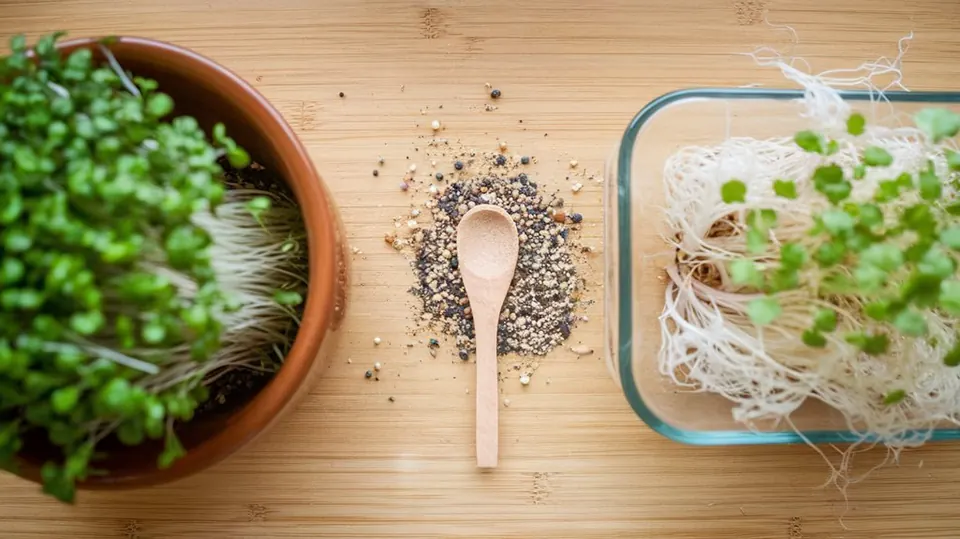
The easiest way to eat more microgreens is to grow them. Radish and broccoli are ready in about 8 to 12 days on a windowsill. Start with our step-by-step microgreens guide, and pick seeds from our guide to microgreen seeds.
Seeds in this article
Frequently asked questions
Are microgreens good for you?
Yes. Microgreens are vegetables, and many are dense in vitamins and plant compounds. A USDA study of 25 microgreens found that many had higher concentrations of some vitamins than mature leaves. They're a good way to add fresh greens to meals.
Are microgreens more nutritious than mature vegetables?
Gram for gram, many microgreens have higher concentrations of certain vitamins and carotenoids than mature leaves. But you usually eat far fewer grams of microgreens, so a garnish doesn't replace a full serving of vegetables.
Which microgreens are the most nutritious?
In the 2012 USDA study, red cabbage was highest in vitamin C, cilantro in carotenoids, garnet amaranth in vitamin K, and green daikon radish in vitamin E. Each crop has its own strengths, so eating a mix is the best approach.
How many microgreens should I eat a day?
There's no official amount. A handful or two, about 25 to 50 g, added to meals is a practical goal. Think of them as part of your daily vegetables, not as a supplement.
Do microgreens lose nutrients when cooked?
Some vitamins, like vitamin C, break down with heat. Most people eat microgreens raw or add them at the end of cooking. Eating them fresh also helps, because some vitamins decline during storage.

Written by Michael
A passionate sprouting professional sharing practical tips for growing sprouts and microgreens at home. More about Michael
Sources
- Xiao Z, Lester GE, Luo Y, Wang Q. Assessment of vitamin and carotenoid concentrations of emerging food products: edible microgreens. Journal of Agricultural and Food Chemistry, 2012. Link
- Wojdyło A, Nowicka P, Tkacz K, Turkiewicz IP. Sprouts vs. microgreens as novel functional foods: variation of nutritional and phytochemical profiles and their in vitro bioactive properties. Molecules, 2020. Link
- Huang H, et al. Red cabbage microgreens lower circulating LDL, liver cholesterol, and inflammatory cytokines in mice fed a high-fat diet. Journal of Agricultural and Food Chemistry, 2016. Link
- Wu Y, et al. Red cabbage microgreen modulation of gut microbiota is associated with attenuation of diet-induced obesity risk factors in a mouse model. Food & Function, 2023. Link
- Sulforaphane bioavailability in healthy subjects fed a single serving of fresh broccoli microgreens. Foods, 2023 (PubMed 37893677). Link