How to Grow Fenugreek Sprouts at Home (Without the Bitterness)
How do you grow fenugreek sprouts at home?
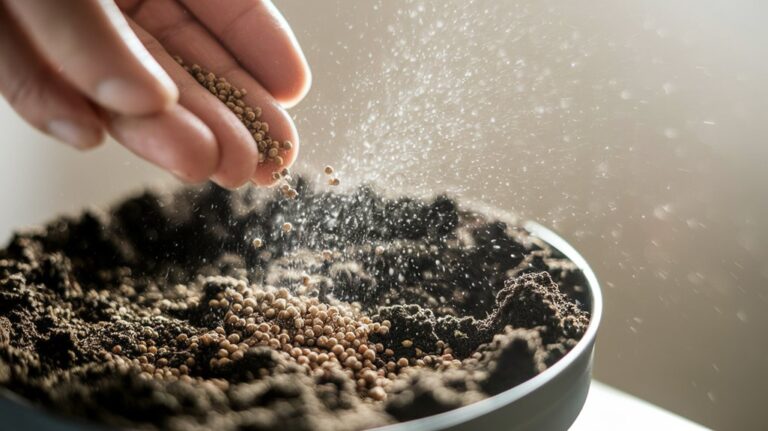
To grow fenugreek sprouts, soak 2 to 3 tablespoons of whole fenugreek seeds in water for 6 to 8 hours, then rinse and drain them in a jar or sprouting tray twice a day. Tiny white sprouts appear within 24 hours, and they are ready to eat in 3 to 4 days, before the sprouts turn bitter.
Fenugreek sprouts are one of the fastest, cheapest sprouts you can grow at home, and one of the few where timing your harvest matters more than the method you use. Get the timing wrong and you end up with a mouthful of bitter, stringy sprouts. Get it right and you get a mild, slightly nutty sprout that works in everything from salads to curries.
Why grow fenugreek sprouts
Fenugreek seeds are a legume, and like most legumes they carry a surprising amount of nutrition packed into a tiny package. Whole fenugreek seeds contain about 23.8 grams of protein and 22.75 grams of fiber per 100 grams, along with roughly 30 milligrams of iron per 100 grams, according to USDA nutrient data. A single tablespoon of dry seeds (about 11 grams) works out to roughly 2.5 grams of protein, 2.5 grams of fiber, and close to 20 percent of the daily value for iron, making a small handful of sprouts a meaningful addition to a meal.
Fenugreek’s other claim to fame is its long history in blood sugar research. A 2023 systematic review and meta-analysis covering 14 randomized controlled trials and 894 participants found that fenugreek seed supplementation produced a statistically significant reduction in HbA1c of 0.88 percent, though the effect on fasting blood glucose was not statistically significant across the pooled studies. Those trials tested fenugreek seed supplements, not sprouted seeds specifically, so treat sprouting as a tasty way to eat the same seed rather than a clinically tested method on its own. If you manage diabetes or take blood sugar medication, talk to your doctor before adding fenugreek in any form to your routine.
What you need to get started
Fenugreek sprouts are one of the simplest, lowest-cost sprouts to grow. You do not need soil, grow lights, or special equipment. Here is what works:
- 2 to 3 tablespoons of whole fenugreek seeds (look for seeds sold specifically for sprouting, since some culinary fenugreek is treated or old stock that germinates poorly)
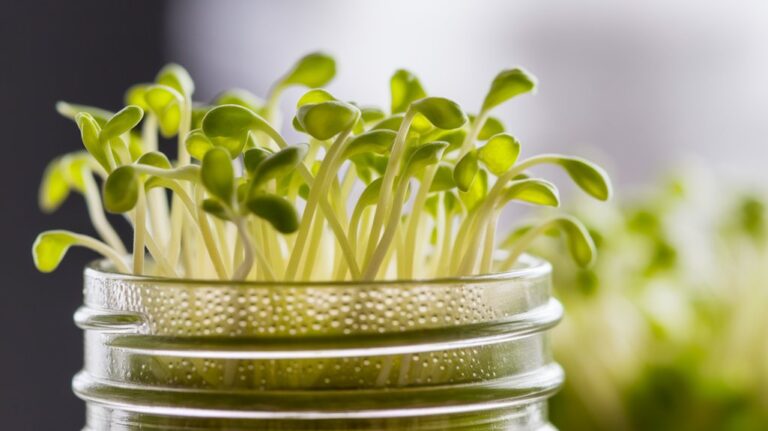
- A wide-mouth mason jar, a mesh sprouting lid or a piece of cheesecloth and a rubber band
- A bowl or small sprouting tray as an alternative to a jar
- Fresh, cool water
- A spot out of direct sunlight at room temperature
Fenugreek seeds are small and dense, so a little goes a long way. Two tablespoons of dry seed will expand into a surprising volume of sprouts, more than most people expect from such a small starting amount.
Step-by-step: growing fenugreek sprouts in a jar
- Rinse the seeds. Give the dry seeds a quick rinse in cool water to remove any dust or debris.
- Soak for 6 to 8 hours. Cover the seeds with two to three times their volume in water and let them soak, ideally overnight. The seeds will plump up and the skins may start to loosen slightly.
- Drain thoroughly. Tip the jar upside down at an angle (propped in a bowl or dish rack) so excess water drains away completely. Standing water is the main cause of moldy or slimy sprouts.
- Rinse and drain twice a day. Every morning and evening, run cool water through the seeds, swirl gently, and drain fully again. Consistency matters more than exact timing here.
- Watch for sprouts. Small white tails typically appear within 24 hours. By day 2 or 3 they will look like proper sprouts, roughly half an inch to an inch long.
- Harvest by day 3 or 4. This is the step most guides skip, and it is the one that decides how your sprouts taste.
Why do fenugreek sprouts turn bitter, and how do you avoid it
This is the part most growing guides gloss over, and it is the single biggest factor in whether you enjoy your fenugreek sprouts or throw them out. Fenugreek sprouts start out mild and slightly nutty. Left to keep growing, they develop a sharp, medicine-like bitterness that gets stronger the longer the sprout grows, especially once tiny green leaves start to unfurl at the tip.
The fix is simple: harvest early. Most home growers find the sweet spot is day 3 or day 4, when the white sprout tail is roughly half an inch to an inch long and still pale. Once the sprout stretches past an inch or two and starts showing a hint of green at the tip, the bitterness ramps up quickly. If a batch already tastes too bitter for eating raw, a quick 30-second blanch in boiling water or a light saute will tame the flavor considerably, though it will not eliminate it entirely.
If you are growing fenugreek specifically for a milder flavor, set a reminder to check the jar on day 3 rather than waiting for the sprouts to “look bigger.” With fenugreek, bigger is not better.
Storing your fenugreek sprouts
Fresh fenugreek sprouts keep in the refrigerator for about a week when stored dry in a container lined with a paper towel to absorb excess moisture. Rinse them again just before eating. If you are seeing sliminess, a sour smell, or fuzzy growth on your sprouts before that point, something went wrong earlier in the process, usually not enough drainage or a batch that sat too warm. Our sprout troubleshooting guide covers exactly how to fix and prevent that.
How to eat fenugreek sprouts
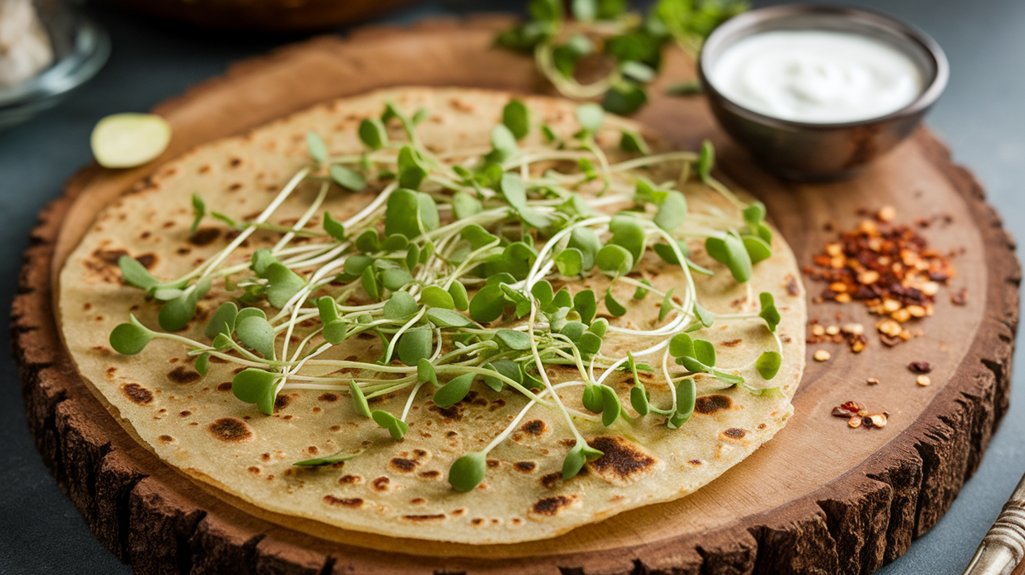
Fenugreek sprouts have a mild, slightly nutty, faintly grassy flavor when harvested young, closer to alfalfa than to the strong curry-spice aroma of dried fenugreek. Common ways to use them:
- Tossed into salads for texture and a light crunch
- Added to sandwiches and wraps in place of alfalfa sprouts
- Stirred into curries, dals, or stir-fries in the last minute of cooking
- Blended into a green smoothie in small amounts
- Scattered over eggs, rice bowls, or soup just before serving
Start with a small amount the first time you try them raw. Fenugreek has a distinct flavor even when mild, and it is easier to add more than to fix an overpowered dish.
Is fenugreek safe for everyone?
Fenugreek is a legume, related to peanuts and chickpeas, so people with legume or peanut allergies should be cautious and consider a small test amount first. Fenugreek is also traditionally avoided in larger amounts during pregnancy, since it can affect blood sugar and has been linked to uterine activity in some research. If you are pregnant, breastfeeding, managing diabetes, or on blood-thinning medication, check with your doctor before adding fenugreek sprouts to your regular diet.
As with any raw sprout, food safety practices matter: use seeds sold for sprouting, keep your jar clean, drain thoroughly, and refrigerate promptly once sprouted.
Frequently asked questions
How long does it take to grow fenugreek sprouts?
Fenugreek sprouts are ready to eat in 3 to 4 days from the start of soaking, faster than most bean sprouts.
Can you grow fenugreek sprouts without a jar?
Yes. A shallow tray or bowl lined with a damp paper towel works, as long as you rinse and drain the seeds twice a day to keep them from sitting in standing water.
Why are my fenugreek sprouts slimy?
Slimy sprouts almost always mean too much moisture and not enough airflow or drainage between rinses. Drain the jar at an angle so no water pools at the bottom, and make sure the room stays cool rather than warm and humid.
Do fenugreek sprouts taste like the spice?
Not really. Dried fenugreek seed and powder have a strong, slightly maple-like, curry-adjacent aroma. Fresh sprouts, harvested young, taste much milder and closer to alfalfa or clover sprouts.
The bottom line
Fenugreek sprouts are one of the fastest, most budget-friendly sprouts to grow at home, ready in under a week with nothing more than a jar and some seeds. The one thing that separates a great batch from a bitter one is timing. Harvest by day 3 or 4, before the tails lengthen and green leaves appear, and you will get a mild, nutty sprout worth adding to your regular rotation.
Try a small batch alongside your mung bean or chickpea sprouts and compare the timelines side by side. You will have fresh sprouts to add to a meal well before the week is out.