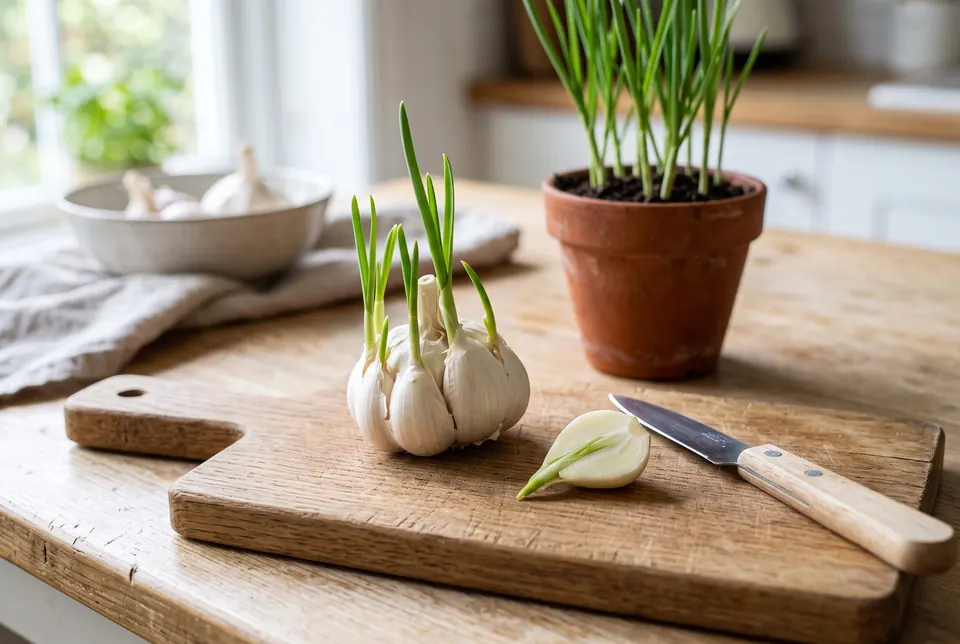
Short answer: yes, you can eat sprouted garlic. If the cloves are still firm and free of mold, they're safe. The green sprout can taste sharper or slightly bitter, so cut it out for raw dishes and leave it in for cooking. Throw garlic out if it's soft, mushy, shrivelled, moldy or spotted brown. Or plant the sprouted cloves in a pot and grow garlic greens.
Can you eat sprouted garlic?
Yes. A garlic clove is a living bud. When it's been stored a while, or kept somewhere cool and damp, it wakes up and starts to grow. The green shoot you see is the start of a new garlic plant.
That doesn't mean the garlic has gone bad. It just means it's older. As long as the clove is firm, dry and smells like garlic, you can use it.
Garlic sprouts fastest between 40 and 60°F (4 and 16°C).1 That's why garlic kept in a cool cupboard, a cold garage or the fridge often sprouts sooner than garlic on the counter.
What does sprouted garlic taste like?
Sprouted garlic usually tastes a little different from fresh garlic:
- The clove can be slightly less sweet and a bit sharper as the bulb ages.
- The green sprout often tastes harsher or a little bitter, especially raw.
- Long green shoots above the clove taste mild and grassy, a bit like chives or green onion.
Cooking smooths most of this out. In soups, stews, curries, sauces and roasts, you probably won't notice any difference.
Is sprouted garlic healthier?
Maybe a little, but don't expect much. In a 2014 lab study, extracts from garlic sprouted for 5 days had the highest antioxidant activity of the samples tested, and raw, unsprouted garlic had relatively low activity. Sprouting also changed the mix of compounds in the garlic.2
That was measured in test tubes, not in people. So sprouted garlic isn't a health food you need to hunt for. It's just garlic you don't need to throw away.
When to throw garlic away
Sprouting isn't a reason to toss garlic, but these are:
- Mold: grey, green, blue or black fuzz or powder on the clove or under the skin.
- Soft or mushy cloves that give when you squeeze them.
- Shrivelled, hollow or dried-out cloves.
- Brown or yellow spots on the flesh. You can cut away one small spot, but toss cloves with many.
- A sour or musty smell instead of a clean garlic smell.
If one clove is bad, check the rest of the bulb. The others are often still fine.
How to use sprouted garlic
- Cook with it as usual. Sprouted garlic works in any cooked dish.
- Remove the sprout for raw dishes. Cut each clove in half lengthwise and flick out the green core with a knife tip. Do this for dressings, aioli, salsa and garlic butter.
- Roast it. Roasting mellows any sharpness. Slice the top off the whole bulb, drizzle with oil and roast at 400°F (200°C) for 35 to 45 minutes, until soft.
- Eat the long shoots. If the green tops have grown out of the clove, snip and use them like chives, on eggs, potatoes, soups and noodles.
How to grow sprouted garlic into garlic greens
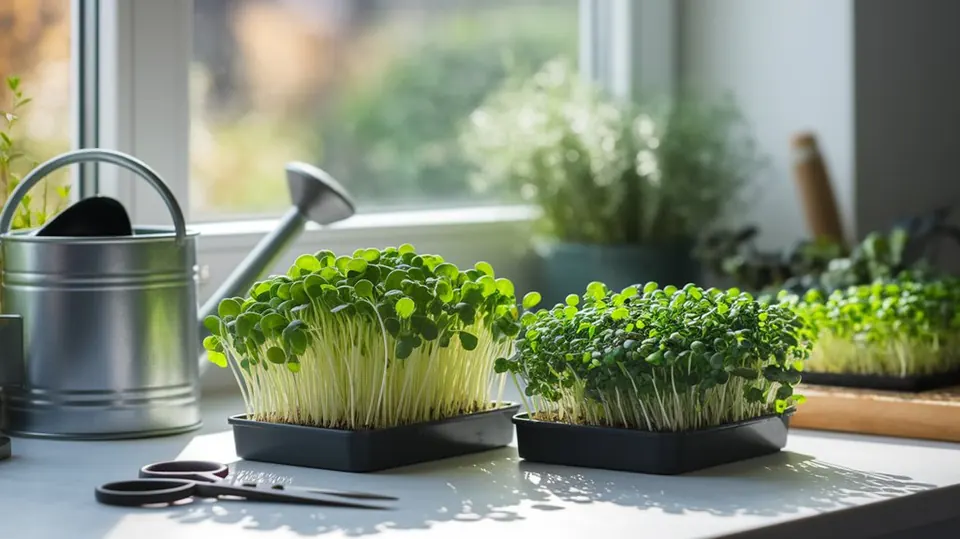
A sprouted clove is halfway to a garlic plant already. Instead of eating it, you can grow a pot of fresh garlic greens on a windowsill.
- Day0
Plant
Fill a small pot with damp potting mix. Push the cloves in pointed end up, about 1 inch (2.5 cm) apart, with the tips just showing.
- Day0–7
Water and light
Set the pot in a bright window. Keep the mix damp but not soggy. Green shoots grow fast from cloves that have already sprouted.
- Day7–14
First harvest
When the greens are 4 to 7 inches (10 to 18 cm) tall, snip the top two-thirds with scissors. Leave the base to regrow.
- Day14+
Cut again
Each clove gives a few cuttings over several weeks. When the shoots come back thin and weak, compost the clove and plant a new one.
In water instead: stand sprouted cloves in a shallow glass with water covering only the base, not the whole clove. Change the water every day or two. Greens grow just as well, but the cloves rot faster than in soil.
Planting outdoors: you can plant sprouted cloves in the garden in fall for bulbs the next summer. Supermarket garlic is chosen for storage, not for growing, and may not suit your winters. For a real crop, buy seed garlic from a local garden centre.
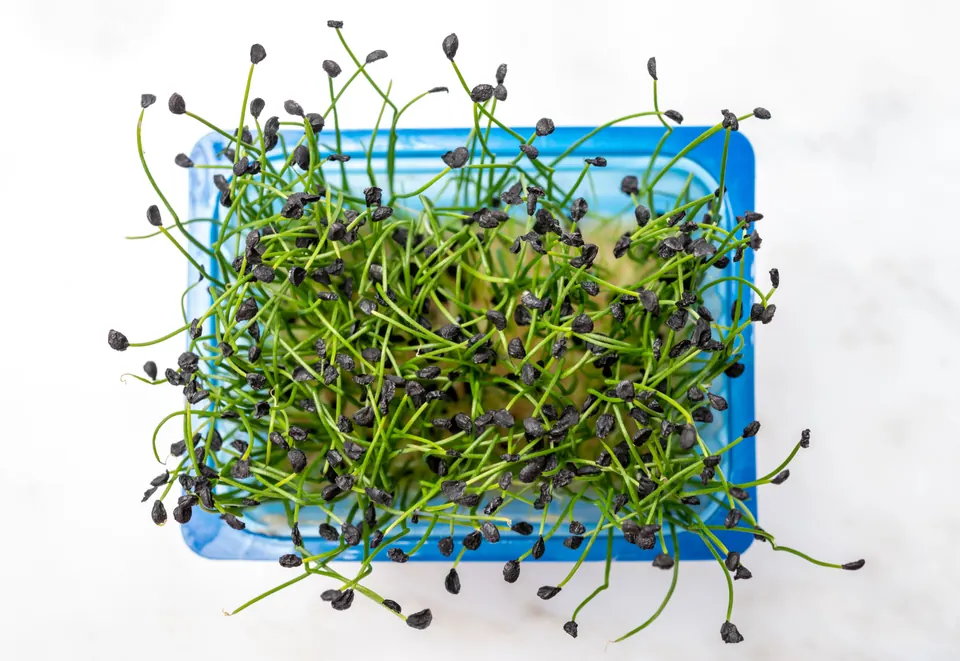
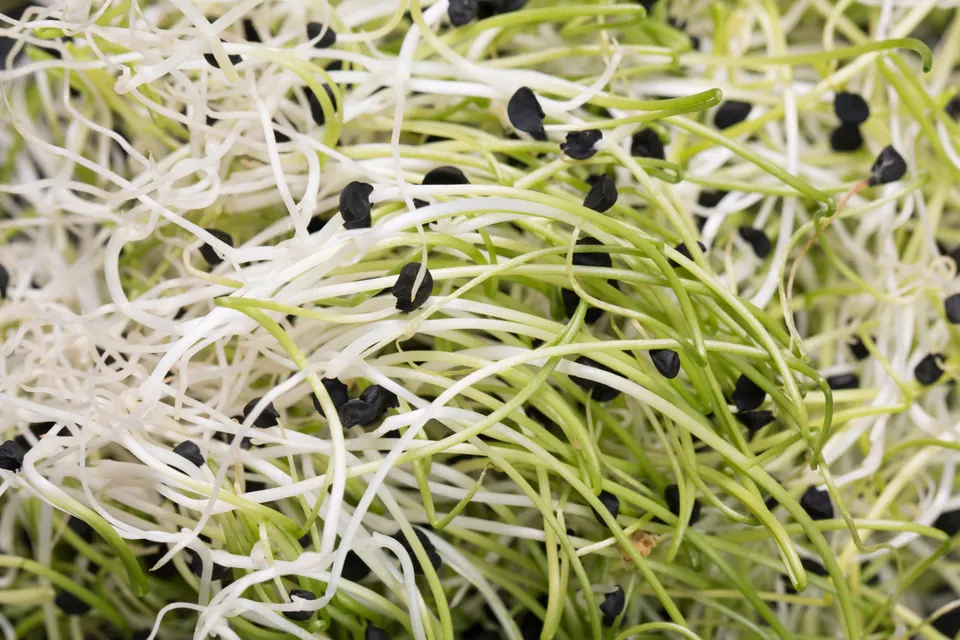
Like the taste of garlic greens? Garlic chives grow from seed into mild, garlicky microgreens on a tray. Sprouting.com sells garlic chive seed. For an oniony version, see onion microgreens.
How to stop garlic sprouting
You can't stop garlic sprouting forever, but you can slow it down:
- Store it cool, dry and dark, with good airflow, like a mesh bag or an open basket in a cupboard away from the stove.
- Avoid the 40 to 60°F (4 to 16°C) zone where it sprouts fastest. The ideal storage temperature is 32 to 38°F (0 to 3°C) with low humidity. Stored well, softneck garlic keeps for up to 9 months and hardneck for up to 6.1 A home kitchen rarely matches that, so buy only what you'll use in a few weeks.
- Keep bulbs whole. Loose cloves dry out and sprout sooner, so use them first.
- Don't wash it before storing. Damp garlic sprouts and molds sooner.
Never store raw garlic in oil at room temperature. Garlic in oil can grow Clostridium botulinum, the bacteria behind botulism. Keep garlic in oil in the fridge and use it within 4 days, or freeze it for longer storage.1
The 10-minute garlic rule
You may have heard that you should chop or crush garlic and let it sit for 10 minutes before cooking it. This comes from studies on rats. Heating garlic straight away, for as little as 60 seconds in a microwave, blocked one of its protective effects. Letting crushed garlic stand for 10 minutes before heating stopped all of that effect being lost. The researchers linked this to alliinase, an enzyme that heat destroys.3
It's an easy habit and it does no harm. Just know it hasn't been shown to make a measurable difference for people. It works the same with sprouted garlic.
Seeds in this article
Frequently asked questions
Is sprouted garlic safe to eat?
Yes. A green sprout just means the clove has started to grow. If the clove is still firm, smells normal and has no mold, it's safe to eat. Throw it out if it's soft, mushy, shrivelled, moldy or has brown spots.
Is the green part of garlic bad for you?
No. The green sprout in the middle of a clove isn't harmful. It can taste sharper or slightly bitter, so some cooks remove it for raw dishes. In cooked food you usually won't notice it.
Can you eat sprouted garlic raw?
Yes, but it can taste harsh. For raw dishes like dressings, aioli or salsa, cut the clove in half and pull out the green sprout first. Fresh, unsprouted garlic tastes best raw.
Should I remove the green sprout from garlic?
Only if you'll taste it. For raw or lightly cooked dishes, cut the clove in half lengthwise and flick out the green sprout with a knife tip. For soups, stews, sauces and roasts, leave it in.
Can you plant sprouted garlic?
Yes. Plant sprouted cloves in a pot of potting mix, pointed end up, and you'll have garlic greens to snip in 1 to 2 weeks. For full bulbs outdoors, plant in fall, but seed garlic from a garden centre grows a much more reliable crop than supermarket garlic.
Is sprouted garlic safe during pregnancy?
Sprouting doesn't make garlic unsafe. If garlic is fine for you to eat, firm sprouted garlic is too. Throw out any cloves that are moldy or soft, and ask your doctor or midwife if you have questions about your diet.
What is the 10-minute garlic rule?
It's the idea of letting chopped or crushed garlic sit for about 10 minutes before you cook it. Studies in rats found that standing time helped garlic keep some of its active compounds through heating. It's a harmless habit, but the human benefit isn't proven.

Written by Michael
A passionate sprouting professional sharing practical tips for growing sprouts and microgreens at home. More about Michael
Sources
- Oehler N. Preserving Garlic (SP 50-645). Oregon State University Extension Service, 2024. Link
- Zakarova A, et al. Garlic sprouting is associated with increased antioxidant activity and concomitant changes in the metabolite profile. Journal of Agricultural and Food Chemistry, 2014. Link
- Song K, Milner JA. The influence of heating on the anticancer properties of garlic. Journal of Nutrition, 2001. Link