In this lesson:
- Why the seed you buy matters more than any other choice
- Garden seed vs sprouting seed vs grocery beans
- What to look for in a supplier, and what to ask them
- How to store seed so it lasts
- How to run a quick germination test
Why seed is where safety starts
When sprouts cause a food poisoning outbreak, investigators often trace it back to the seed. In one 2016 US outbreak linked to alfalfa sprouts, the cause was traced to a single contaminated seed lot. Alfalfa and clover sprouts have appeared in other outbreak reports too, including 2020 and 2022.
The reason is simple. Seeds can carry bacteria on or in the hull. Sprouting multiplies them. Cleaning your jar won't help if the seed arrives contaminated.
You can't eliminate this risk at home. The FDA says that cleaning or disinfecting seed before sprouting does not eliminate the risk.1 What you can do is choose seed from sources that take it seriously, and cook your sprouts.
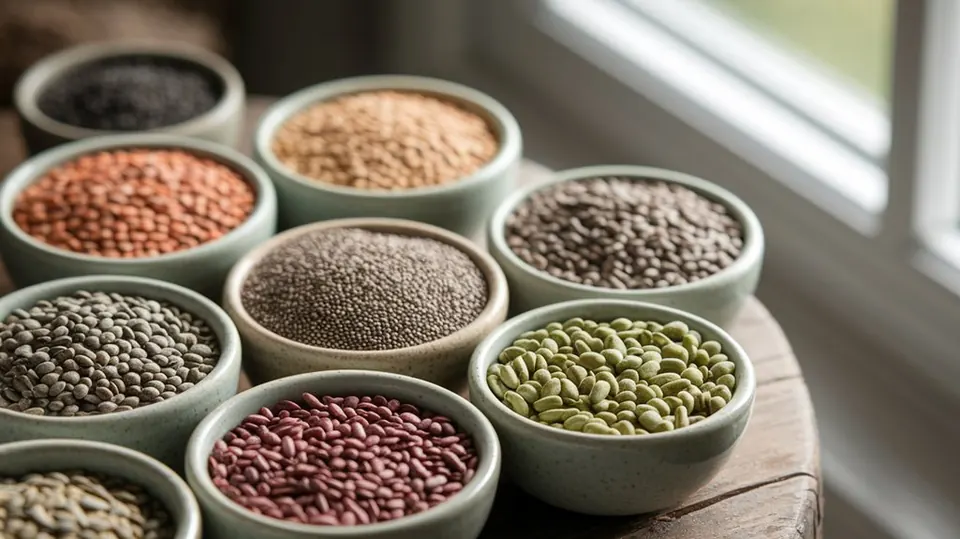
Three kinds of seed, and what to do with each
1. Seed sold for sprouting (best choice)
Look for packaging that says it is for sprouting. These suppliers sell seed intended to be eaten as a sprout, and good ones test for germination and for harmful bacteria.
2. Garden seed packets (don't use)
Seeds sold for planting may be treated with fungicides or coatings. Treated seed is often dyed pink, red, blue or green. Even untreated garden seed isn't handled or tested as food. Do not sprout it for eating.
3. Dried beans and lentils from the grocery store (acceptable with caveats)
Many home sprouters use whole, raw lentils, mung beans and chickpeas from the grocery store. They're cheap and widely available. But:
- They aren't sold or tested for sprouting, so safety isn't guaranteed.
- Germination can be uneven because the stock may be old.
- Split or broken beans will not sprout.
If you use grocery beans, cook the sprouts well, and run a germination test first (see below). Seed meant for sprouting is a better choice.
What to look for in a supplier
A good sprouting seed supplier will:
- Label seed for sprouting. Not "garden" or "planting."
- State that seed is untreated.
- Use lot numbers, so you can track a recall.
- Tell you about testing, including germination rates and bacteria testing.
- Give a date: packed on, tested on, or best before.
- Offer small sizes, so you can try a seed before buying a pound.
- Be easy to contact. If they won't answer a question, don't buy.
Organic is nice but isn't a safety guarantee. Organic seed can carry bacteria just like any other seed.
Questions to ask a supplier
Copy and paste these into an email.
- Is this seed grown and sold specifically for sprouting?
- Do you test seed lots for Salmonella and E. coli? Can I see results?
- What's the germination rate of this lot?
- Do you treat the seed in any way?
- What is the lot number and harvest or packing date?
Our sprouting seeds guide lists the seed we recommend and where to buy it. You can also see growing data for 67 seeds in the Seed Library.
Recommended starter seeds
| Seed | Why start here |
|---|---|
| Green lentils | Easy, fast, forgiving, great cooked |
| Mung beans | Classic bean sprout, crunchy and mild |
| Broccoli | Easy small seed, popular, mild |
| Radish | Fast, peppery |
I suggest holding off on alfalfa and clover until you're comfortable with the basics, since they appear often in outbreak reports.
How much to buy
Start small. A quarter-pound (about 115 g) of each seed gives you many batches. Buying in bulk saves money but only if you'll use the seed within a year or two.
Storing your seed
Seed stays alive longer when it's cool, dry and dark.
- Keep seed in its original bag, or move it to an airtight glass jar.
- Add a label with the seed name, the supplier, the lot number and the date you opened it.
- Store in a cool, dark cupboard. A fridge works too if the container is airtight.
- Keep it dry. Moisture is the enemy.
- Don't mix new seed with old.
Most sprouting seed stays viable for one to three years in good storage. Check your supplier's date.
The germination test
Test any new or old seed before you commit a whole jar.
- Count out 20 seeds.
- Place them on a damp paper towel.
- Fold it, put it in a clean bag or container, and leave it at room temperature.
- After 3 days, count how many have a tail.
| Result | What it means |
|---|---|
| 17 or more of 20 (85%+) | Great. Use as normal. |
| 14–16 of 20 (70–80%) | Okay. Use a little extra seed. |
| Under 14 of 20 | Poor. Replace the seed. |
Low germination isn't only about waste. Dead seed rots in the jar and spoils the whole batch.
Keep a seed log
A simple table in a notebook or phone is enough.
| Date | Seed | Supplier | Lot # | Germination test | Notes |
|---|---|---|---|---|---|
If a recall is ever announced, you'll know right away whether it affects you. You can also follow recall notices from the FDA and the Canadian Food Inspection Agency.
Do this now
- Choose your three starter seeds.
- Write your supplier questions and send them, or check the supplier's website for the answers.
- Start your seed log.
Key takeaways
- Buy seed sold for sprouting. Never use garden seed.
- Ask suppliers about testing, lot numbers and dates.
- Disinfecting at home does not remove the risk. Cooking lowers it.
- Store seed cool, dry and dark, and test germination before big batches.

Written by Michael
A passionate sprouting professional sharing practical tips for growing sprouts and microgreens at home. More about Michael
Sources
- U.S. Food and Drug Administration. Selecting and Serving Produce Safely. Link