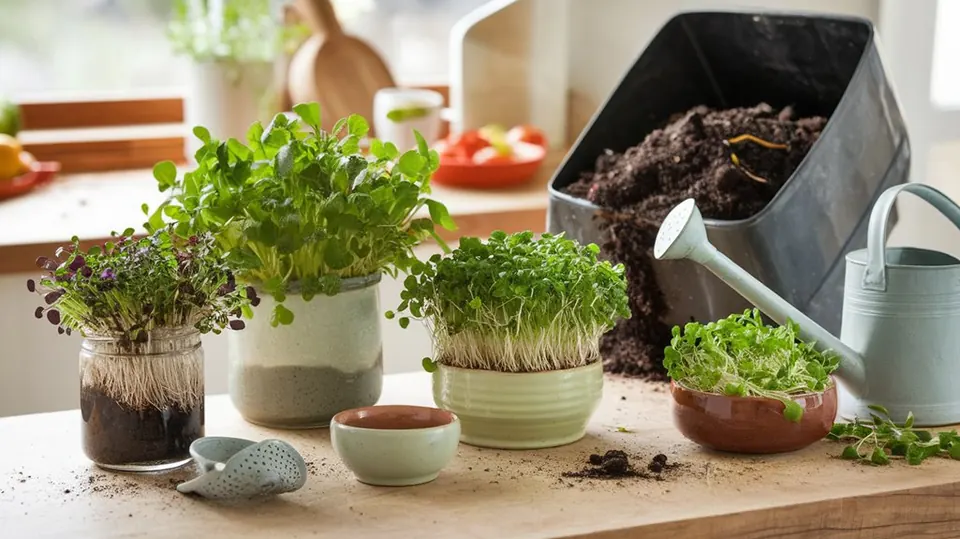
Short answer: home-grown greens mean less food waste because you cut only what you'll eat and leave the rest growing. You skip plastic packaging, compost the roots and soil, and reuse trays and jars. Plan small batches, use extras in smoothies or pesto, and store what you cut dry and cold.
How growing your own means less food waste
| Store-bought greens | Home-grown microgreens and sprouts |
|---|---|
| Plastic clamshells and bags | Reusable trays and jars |
| Often wilt before use | Cut fresh as needed |
| Shipped long distances | Grown on your counter |
| Leftovers thrown out | Spent roots composted |
Harvest only what you need
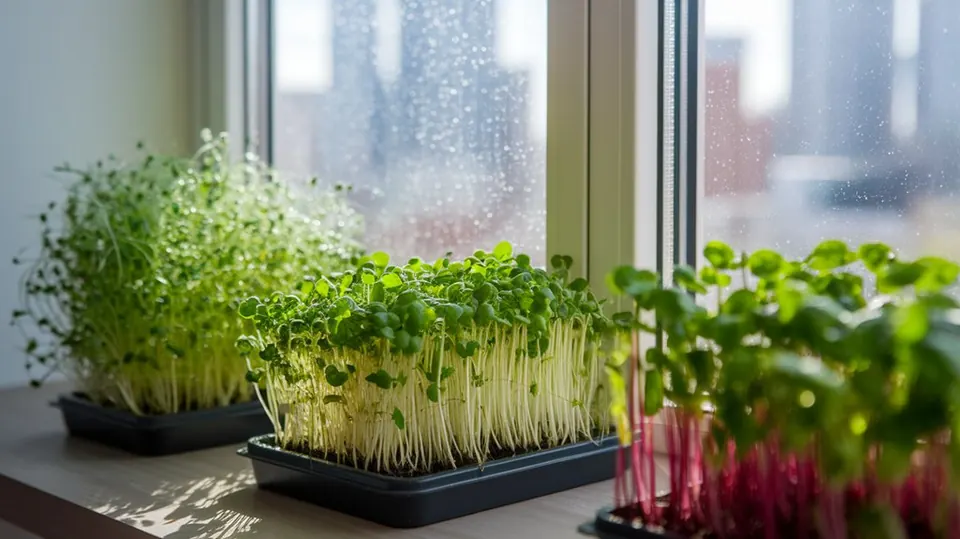
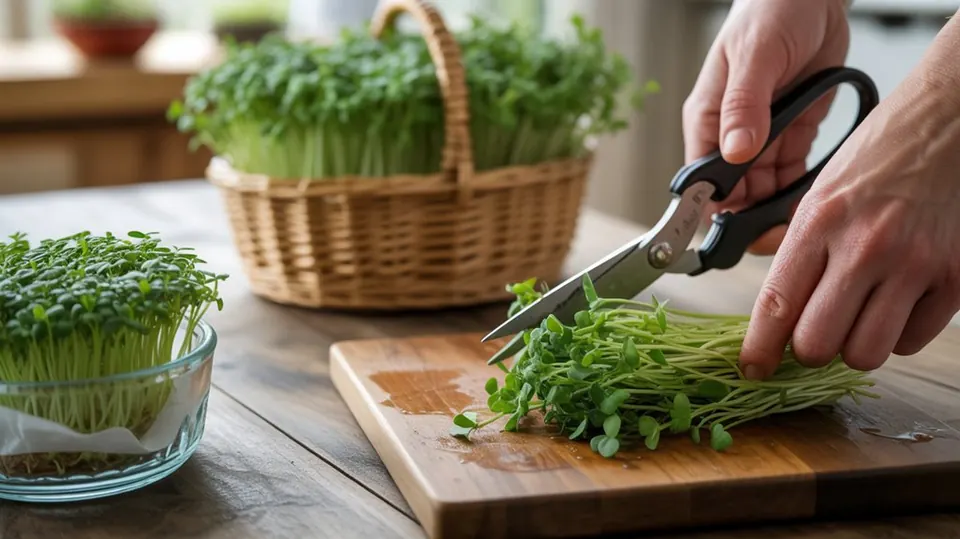
Microgreens keep growing for a short while in the tray. Cut a handful for tonight's dinner and leave the rest for tomorrow. Sprouts are best eaten within a few days, so grow small batches. Our sprouting calculator helps you plan how much seed to use.
Plan small, frequent batches
- Microgreens: sow a small tray every 4 or 5 days.
- Sprouts: start a new jar every 2 or 3 days.
You'll always have fresh greens and very little left over.
Use up the extras for less food waste
- Smoothies: a handful blends in easily. See microgreens smoothie recipes.
- Pesto: see microgreen pesto three ways.
- Soups and stir-fries: add at the end.
- Freeze: for cooking only. See how to store microgreens.
Compost what's left
Root mats, soil and seed hulls all compost well. Hemp mats and coco coir are compostable too. Add them to a garden compost bin or a worm bin, then use the compost on houseplants or a garden.
Reusable gear
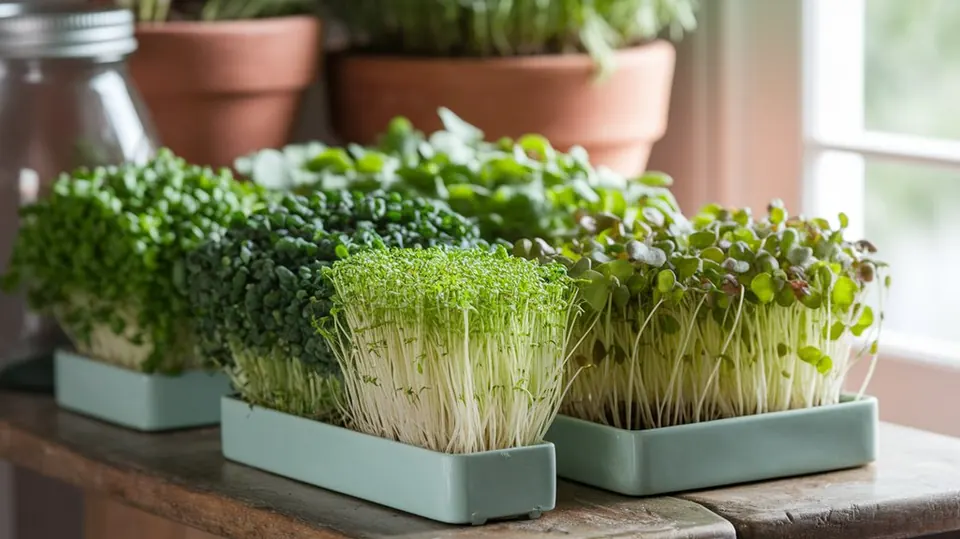
- Trays: sturdy 10 × 20 trays last for many crops.
- Jars and mesh lids: last for years.
- Spray bottles and scissors: buy once.
Wash everything in hot, soapy water between uses.
Less packaging, fewer miles
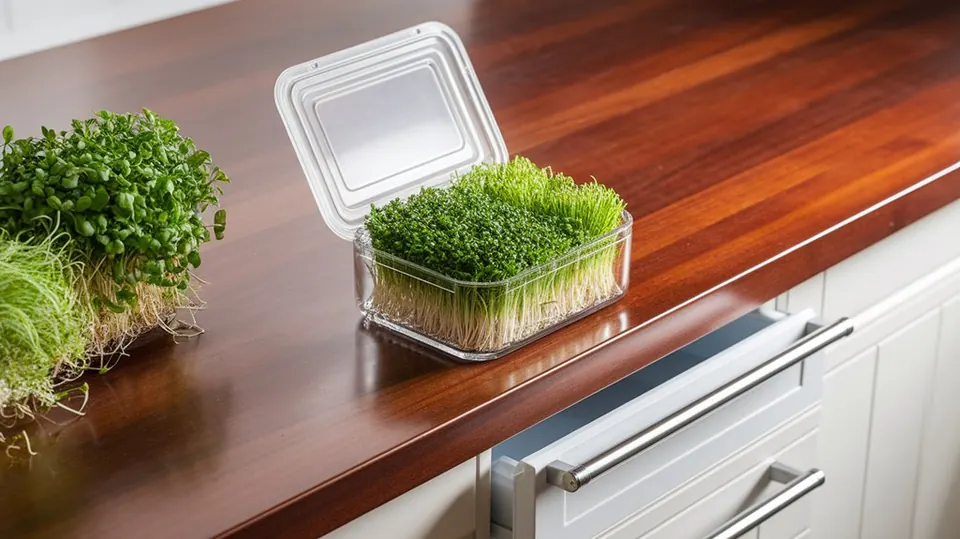
Store-bought microgreens usually come in plastic clamshells. Growing them yourself cuts that packaging out. It also cuts the trip from farm to store to fridge.
Want to start? Try growing microgreens in an apartment or microgreens on a budget.
Seeds in this article
Frequently asked questions
Do microgreens reduce food waste?
They can. Because microgreens keep growing in the tray, you can cut just what you need for a meal. That avoids the wilted half-bag of salad greens many people throw away.
Can you compost microgreen soil and roots?
Yes. Spent root mats and soil go into a compost bin or worm bin. Hemp and coco coir mats are compostable too.
Are microgreen trays reusable?
Yes. Sturdy trays last for many crops. Wash them in hot, soapy water between uses.
What can I do with extra microgreens?
Blend them into smoothies, make pesto, stir them into soups, or freeze them in portions for cooking. See our storage guide for tips.

Written by Michael
A passionate sprouting professional sharing practical tips for growing sprouts and microgreens at home. More about Michael