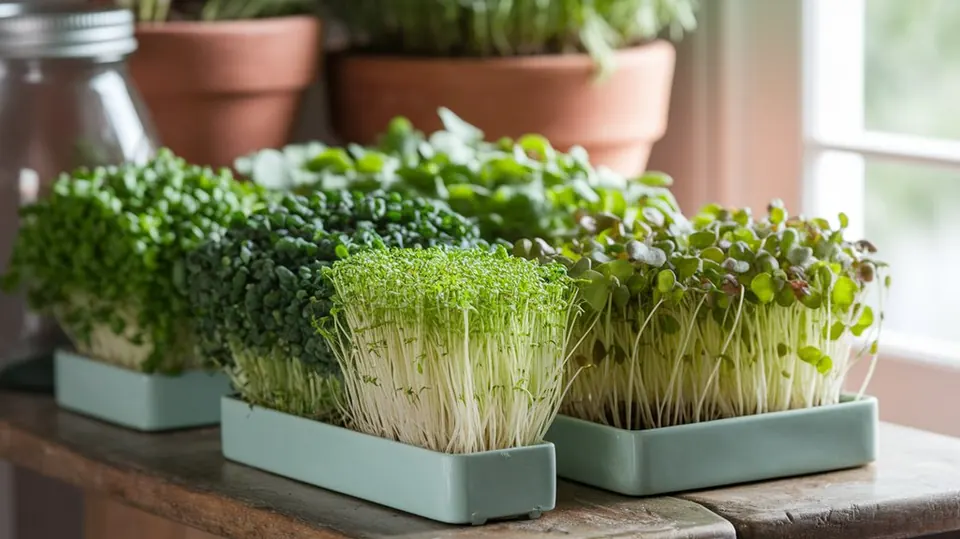
Short answer: to grow microgreens on a budget, reuse clean food containers as trays, use a bright window instead of a light, and pick fast crops like radish and broccoli. For the lowest cost of all, sprout mung beans or lentils in a mason jar. Buy seed in larger bags once you know what you like, and always use seed sold for sprouting.
The cheapest way to start
| Option | What you need | Cost level |
|---|---|---|
| Jar sprouts | Mason jar, mesh lid or cheesecloth, seed | Lowest |
| Plate sprouts | A plate, paper towel, cress or chia | Lowest |
| Reused container microgreens | Clean food container with holes, potting mix, seed | Low |
| Tray microgreens | 10 × 10 tray set, potting mix, seed | Low to medium |
| Rack with lights | Shelf, LEDs, timer, trays | Higher |
Growing microgreens on a budget
- Reuse containers. Clean salad clamshells or takeout trays work. Poke drainage holes in one, and set it inside another.
- Use a window. A bright, south-facing window saves the cost of a light, especially in summer.
- Pick high-yield crops. Pea shoots and sunflower give big harvests.
- Pick cheap-per-tray crops. Small seeds like broccoli and radish use only a few grams per small tray.
- Grow small and often so nothing goes to waste.
- Compost spent soil and roots for your garden or houseplants.
Sprouting on a budget
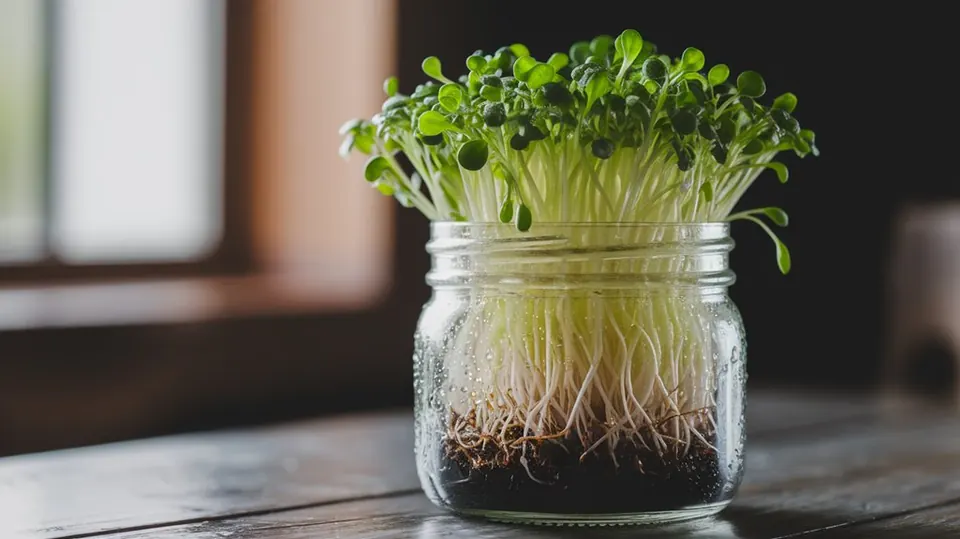
Sprouts are the cheapest fresh food you can grow. A small amount of dry seed grows into several times its volume.
- Mung beans: ½ cup of dry beans fills a quart jar.
- Lentils: fast, cheap and crunchy.
- Alfalfa: 1 tablespoon makes 3 to 4 cups.
Read sprouting in a mason jar for the method.
Where not to cut corners
- Seed. Use seed sold for sprouting or microgreens. Garden seed may be treated, and old seed sprouts poorly.
- Cleanliness. Wash jars, lids and trays in hot, soapy water every time.
- Food safety. The FDA says higher-risk groups should not eat raw sprouts, and Health Canada advises everyone to cook them.12
Buying seed for less
- Buy larger bags of your favourite seeds once you know you like them.
- Try a mix or sampler kit before buying many single packs.
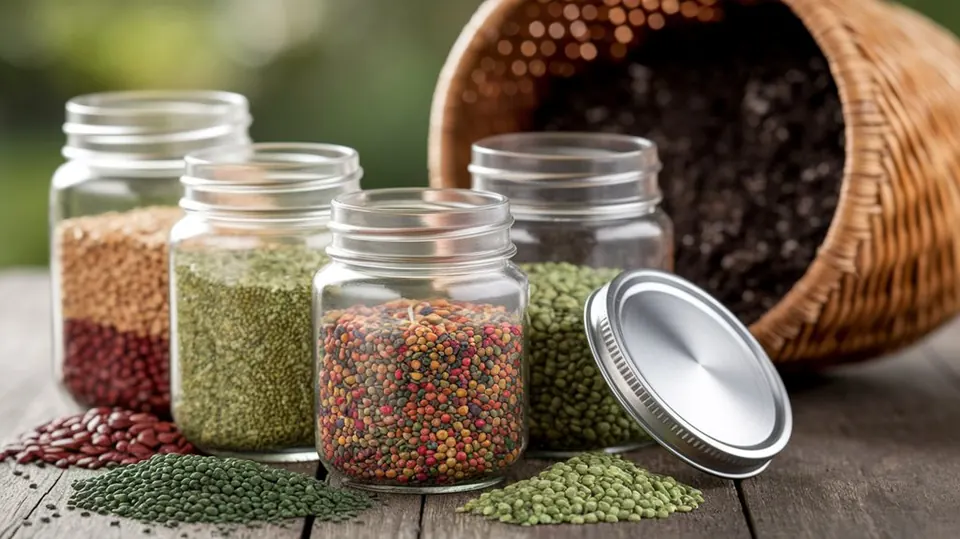
- Store seed cool, dry and dark so it lasts. A sealed jar in a cupboard works.
Simple budget gear list
- Two mason jars and two mesh lids
- A 10 × 10 tray set or reused containers
- A small bag of potting mix
- A spray bottle
- Two or three seeds: mung beans, radish, broccoli
See sprouting kit and supplies and microgreens supplies for full lists.
Seeds in this article
Frequently asked questions
What's the cheapest way to grow microgreens?
Use a reused shallow food container with holes poked in the bottom, a second container underneath, a little potting mix, and a fast crop like radish or broccoli. A bright window instead of a grow light saves more.
Are sprouts cheaper than microgreens?
Usually, yes. Sprouts need only a jar and seed, no soil or light. Beans and lentils give a big harvest from a small amount of seed.
Is it cheaper to grow microgreens than to buy them?
For most home growers, yes, especially once you have trays. Seed is the main ongoing cost, and a little seed goes a long way for small-seeded crops.
Can I use grocery store beans for sprouting?
It's better to use seed sold for sprouting. It's tested and cleaned for sprouting and germinates reliably. Old or treated seed may sprout poorly or not be suitable to eat raw.

Written by Michael
A passionate sprouting professional sharing practical tips for growing sprouts and microgreens at home. More about Michael