Short answer: rinse 1 cup of raw brown rice and soak it in warm water for 12 to 24 hours, changing the water once or twice. Drain, then rinse and drain it twice a day until most grains show a tiny white tip, usually within another 12 to 24 hours. Cook it like brown rice, but with a little less water and time.
What is sprouted brown rice?
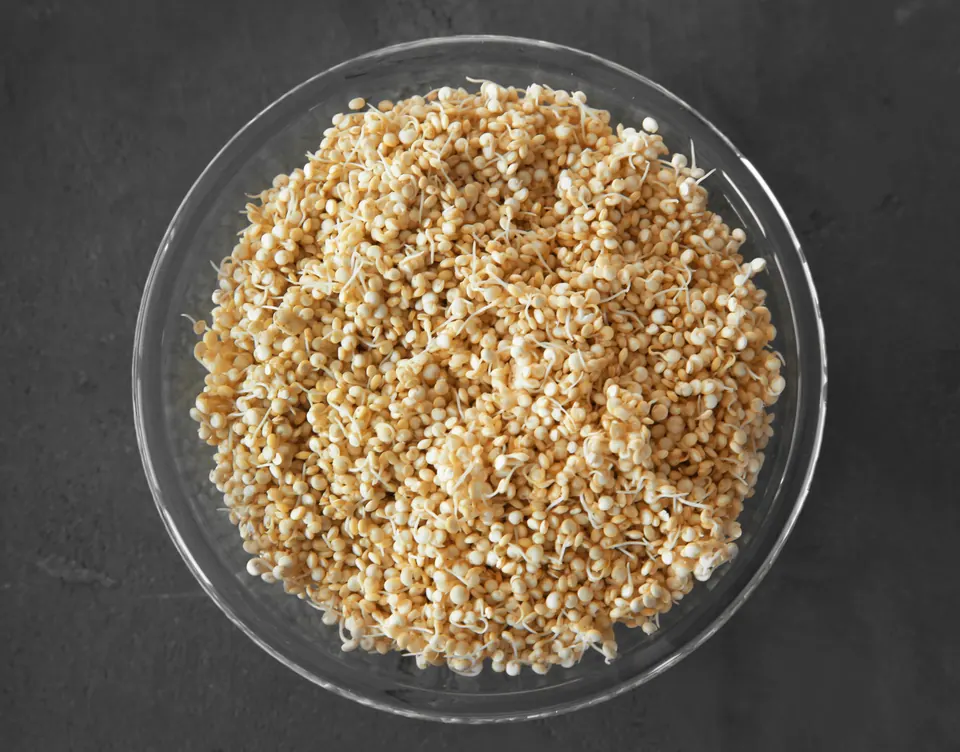
Sprouted brown rice, often called germinated brown rice or GBR, is whole brown rice that's been soaked until the germ starts to grow. You'll see a tiny white tip, about 1 mm long, at one end of each grain. It's popular in Japan and Korea, where it's sold as a staple.
Sprouting changes the rice a little:
- Softer texture. The bran softens, so it's less chewy than regular brown rice.
- Sweeter, nuttier taste. Some starch is broken down into sugars.
- Faster cooking. It usually needs less time and water.
- More GABA. Germinated brown rice has much more GABA, a natural compound, than regular brown rice. A review found that soaking for about 3 hours and sprouting for about 21 hours gave the highest GABA levels in one study.1
You'll see claims that sprouted brown rice helps blood sugar or blood pressure. These come mostly from small or animal studies, so treat them as interesting rather than proven.
Which rice will sprout?
| Rice | Will it sprout? |
|---|---|
| Raw whole brown rice | Yes |
| White rice | No, the germ is removed |
| Parboiled or quick-cook brown rice | No, it's been heated |
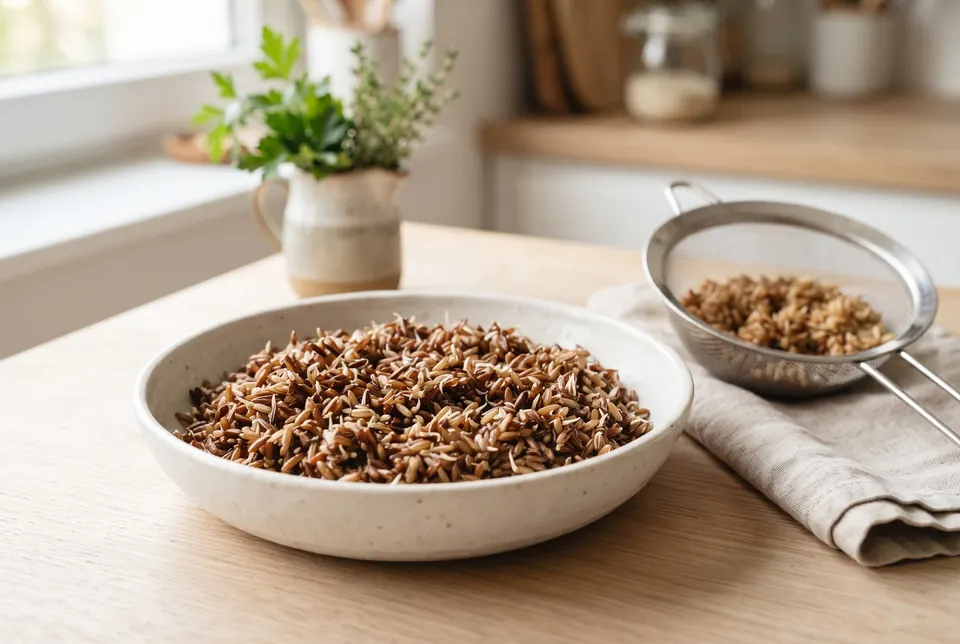
| Wild rice | Sometimes, if very fresh and raw |
How to sprout brown rice, step by step
- Day0
Rinse and soak
Rinse 1 cup of raw brown rice. Cover it with warm (not hot) water and soak for 12 to 24 hours. Change the water once or twice, especially in a warm kitchen.
- Day1
Drain and rinse
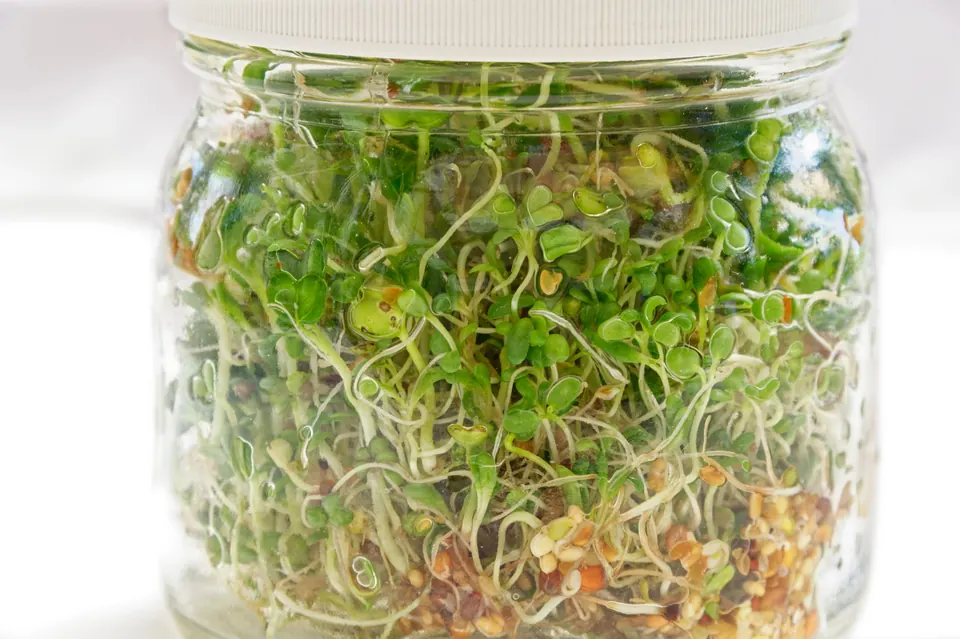
Drain well. Put the rice in a jar with a mesh lid or a fine sieve over a bowl.
- Day1–2
Rinse twice a day
Rinse and drain morning and evening. Keep it at room temperature, covered loosely.
- Day1–3
Watch for the tip
Stop when most grains show a tiny white tip, about 1 mm. Don't let them grow longer.
- Day2–3
Cook
Cook right away, or refrigerate for up to 2 days. You can also dry it at a low temperature to store.
Smell it. Soaking rice can turn sour, especially in a warm room. Change the soak water once or twice and rinse well. If it smells unpleasant after rinsing, throw it out.
How to cook sprouted brown rice
Sprouted brown rice cooks faster than regular brown rice:
- Stovetop: use about 1½ cups of water per cup of sprouted rice. Bring it to a boil, cover and simmer for 25 to 35 minutes, then rest it for 10 minutes.
- Rice cooker: use the brown rice setting with slightly less water than usual.
Cooking to lower arsenic
Rice can take up arsenic from soil and water, and sprouting doesn't remove it. Studies show that cooking rice in plenty of water, like pasta, and draining off the excess lowers the arsenic in the cooked grain.2 Use about 6 parts water to 1 part rice, boil until tender, then drain. Some water-soluble nutrients drain away too, so it's a trade-off.
Storing sprouted rice
- Fresh: refrigerate sprouted, uncooked rice and cook it within 2 days.
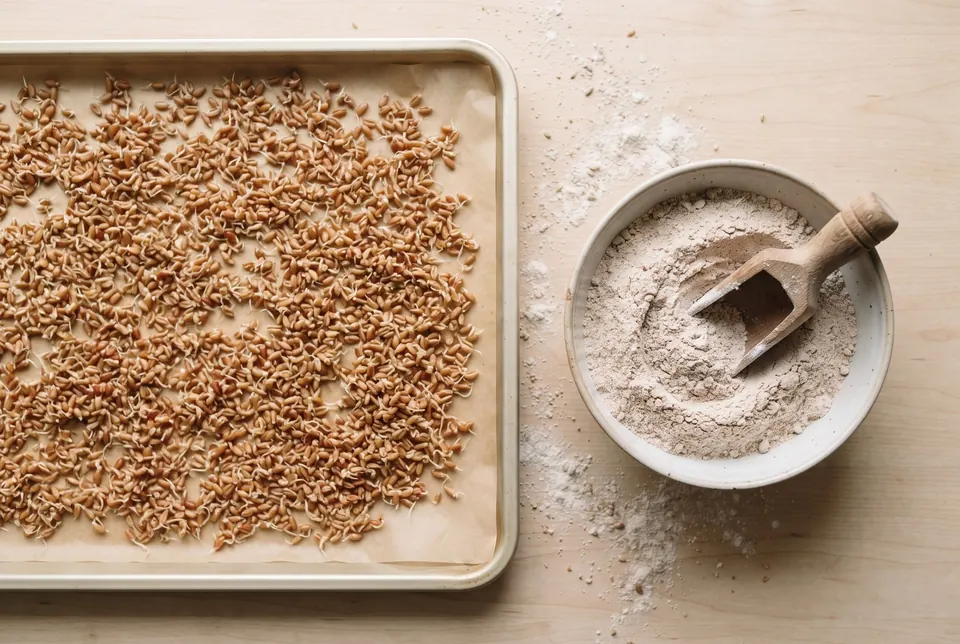
- Dried: dry it at about 115 to 140°F (46 to 60°C) until hard, then store it in a sealed jar for a few months. Cook it like regular brown rice.
- Cooked: refrigerate within an hour of cooking and eat within 1 to 2 days, as with any cooked rice.
Food safety
Sprouted grains grow in warm, damp conditions, which suit bacteria. Keep everything clean, change the soak water, and always cook sprouted rice thoroughly. Health agencies advise cooking sprouts, and the FDA says higher-risk groups should not eat raw sprouts.34
Other grains to try
- Quinoa: sprouts in 2 to 3 days and can be eaten after a short cook.
- Oats: sweet sprouts from hulless oats.
- Wheat: the base for sprouted flour and sprouted bread.
- Buckwheat: quick, gluten-free sprouts.
Frequently asked questions
Can all brown rice sprout?
Only whole, raw brown rice can sprout. White rice has had its germ removed, so it can't. Parboiled or quick-cook brown rice has been heated and won't sprout either. Fresh brown rice from a recent harvest sprouts best.
How long does it take to sprout brown rice?
Usually 1 to 3 days in total: 12 to 24 hours of soaking, then 12 to 24 hours of rinsing and draining until a tiny white tip, about 1 mm long, appears. Warm rooms are faster.
What is GABA in sprouted brown rice?
GABA, or gamma-aminobutyric acid, is a compound that rises when brown rice germinates. Research has measured much higher GABA in germinated brown rice than in regular brown rice. Claims about its health effects come mostly from small or lab studies.
Do I need to cook sprouted brown rice?
Yes. Always cook sprouted rice. Raw rice isn't meant to be eaten, and cooking also makes sprouts safer. Sprouted brown rice cooks faster than regular brown rice, often in 25 to 35 minutes.
Does sprouting remove arsenic from rice?
No. Sprouting doesn't remove arsenic. Cooking rice in plenty of water and draining off the extra, like pasta, has been shown to lower arsenic in cooked rice.

Written by Michael
A passionate sprouting professional sharing practical tips for growing sprouts and microgreens at home. More about Michael
Sources
- Patil SB, Khan MK. Germinated brown rice as a value added rice product: a review. Journal of Food Science and Technology, 2011. Link
- Gray PJ, et al. Cooking rice in excess water reduces both arsenic and enriched vitamins in the cooked grain. Food Additives & Contaminants: Part A, 2015. Link
- Health Canada. Food safety tips for sprouts. Link
- U.S. Food and Drug Administration. Selecting and Serving Produce Safely. Link