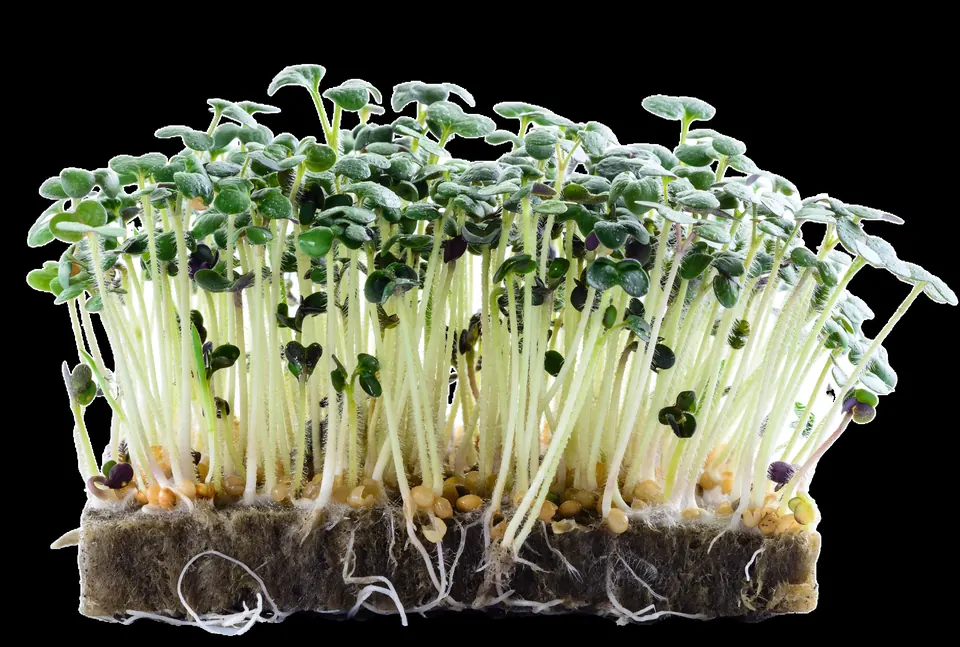
Short answer: soak wasabi (oriental) mustard for 1 to 2 hours; sow yellow mustard dry. Grow 1 tablespoon in a jar, or on a damp tray if the seed turns sticky. Rinse or mist twice a day and harvest in 4 to 5 days. For microgreens, sow 10 to 15 g per 10 × 20 inch tray and cut at 8 to 12 days.
What are mustard sprouts?
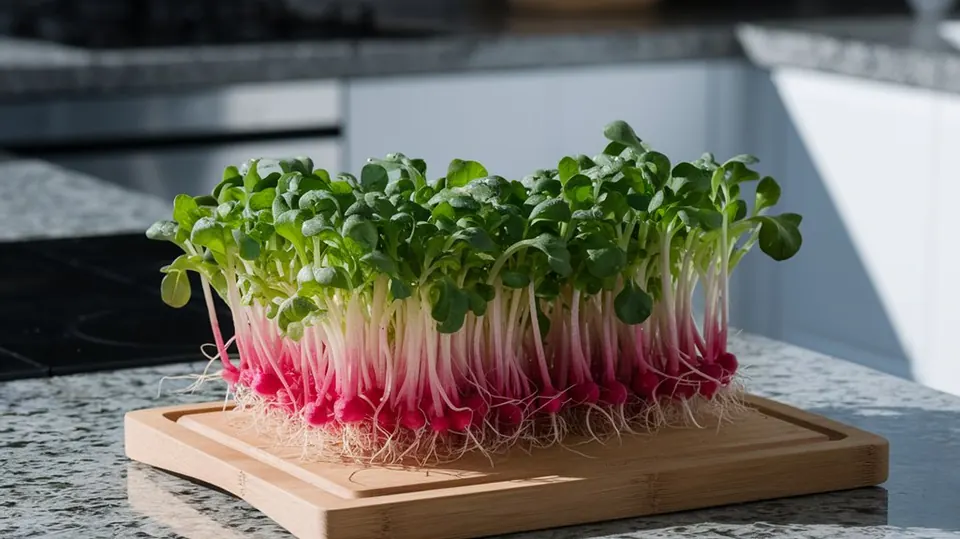
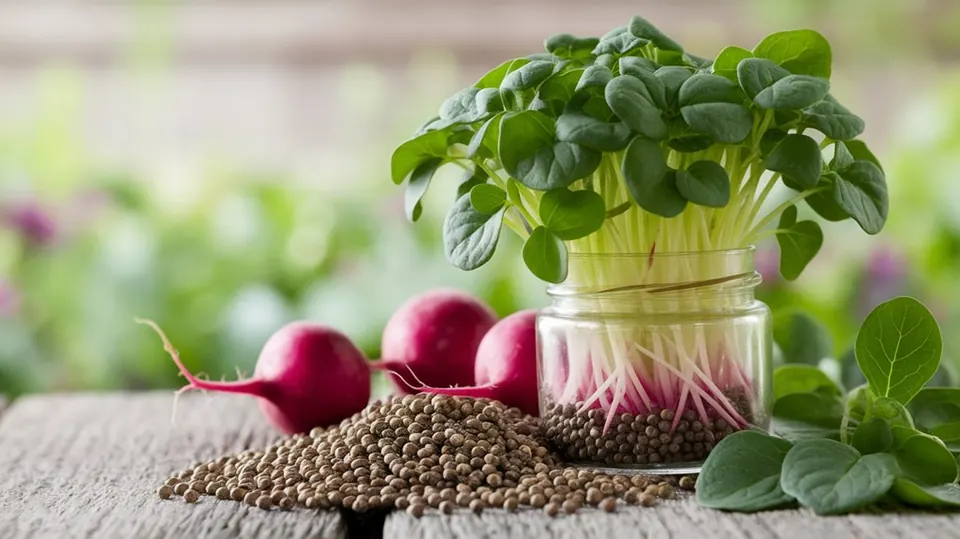
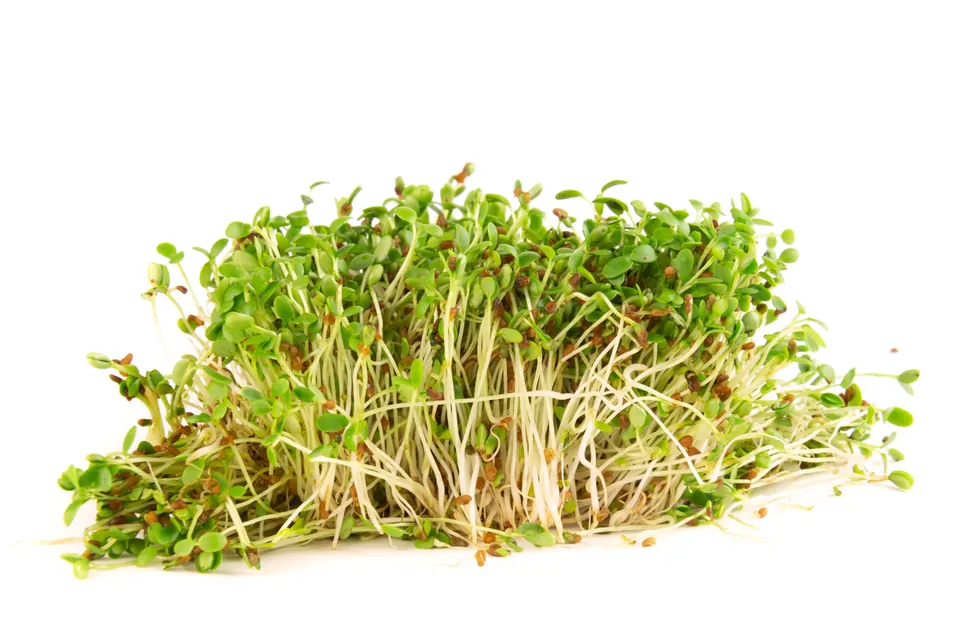
Mustard sprouts come from several related plants, mainly Brassica juncea (brown, oriental and red mustards, and mizuna) and Sinapis alba (yellow mustard). They all taste peppery, with heat that ranges from mild to wasabi-hot. Sprouting.com gives mustard 4 to 5 days as sprouts and 8 to 12 as microgreens.1
Mustard varieties
| Variety | Heat | Soak | Notes |
|---|---|---|---|
| Oriental (wasabi) | Very hot | 1–2 hours | The spiciest |
| Brown | Hot | Short or none | Classic mustard |
| Yellow | Medium, tangy | None | Gels when wet |
| Red | Medium | Short or none | Purple leaves in light |
| Ruby Streaks | Mild to medium | Short or none | Best as microgreens |
| Mizuna, red mizuna | Mild | Short or none | Jagged leaves |
How to grow mustard sprouts
- Day0
Soak or sow dry
Soak wasabi mustard for 1 to 2 hours. Sow yellow mustard dry. Brown and red can go either way.
- Day0
Choose jar or tray
Non-sticky seed goes in a jar with a mesh lid. If seed turns gel-like, spread it thinly on a damp tray or plate.
- Day0–4
Rinse or mist
Rinse and drain jars twice a day. Mist trays twice a day and keep them loosely covered.
- Day4–5
Harvest
Give the leaves a few hours of indirect light, then harvest, dry and refrigerate.
Mustard microgreens
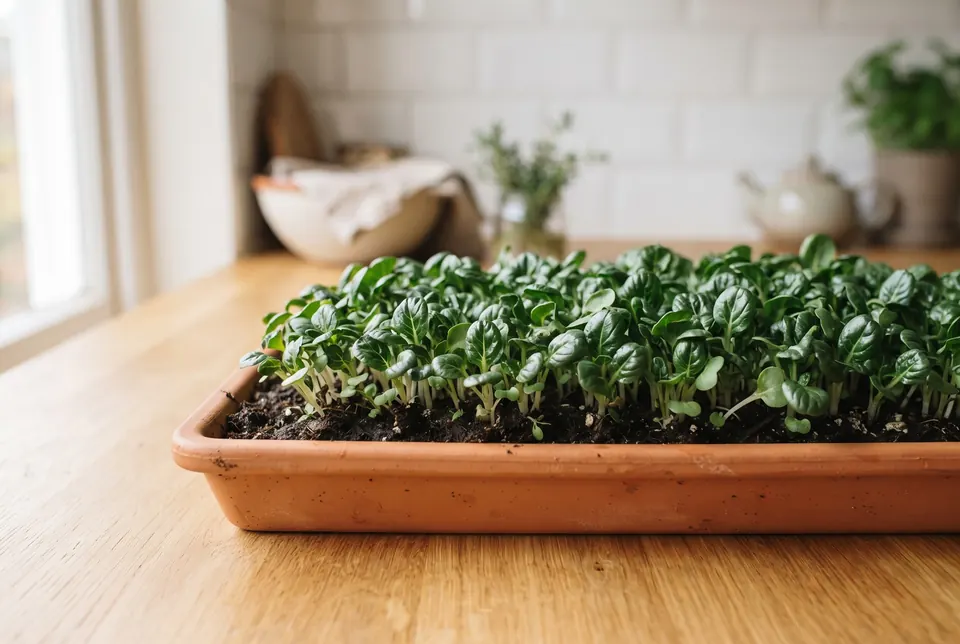
Mustard makes some of the most colourful microgreens. Sow 10 to 15 g on a 10 × 20 inch tray, keep it dark for 2 to 3 days, then give strong light for the best red colour. Cut at 8 to 12 days. Full guide: mustard microgreens.
Problems and fixes
| Problem | Likely cause | Fix |
|---|---|---|
| Seeds clump in the jar | Gel-forming seed | Grow on a tray or plate, mist |
| Slimy patches | Too wet, no airflow | Mist less, uncover for an hour daily |
| Too hot | Grown too long, or a hot variety | Harvest earlier, mix with mild sprouts |
Storing mustard sprouts
Dry them well and keep them in a lined container in the fridge for up to about 5 days.
How to eat mustard sprouts
- A pinch on sandwiches, burgers and hot dogs
- With sushi and poke
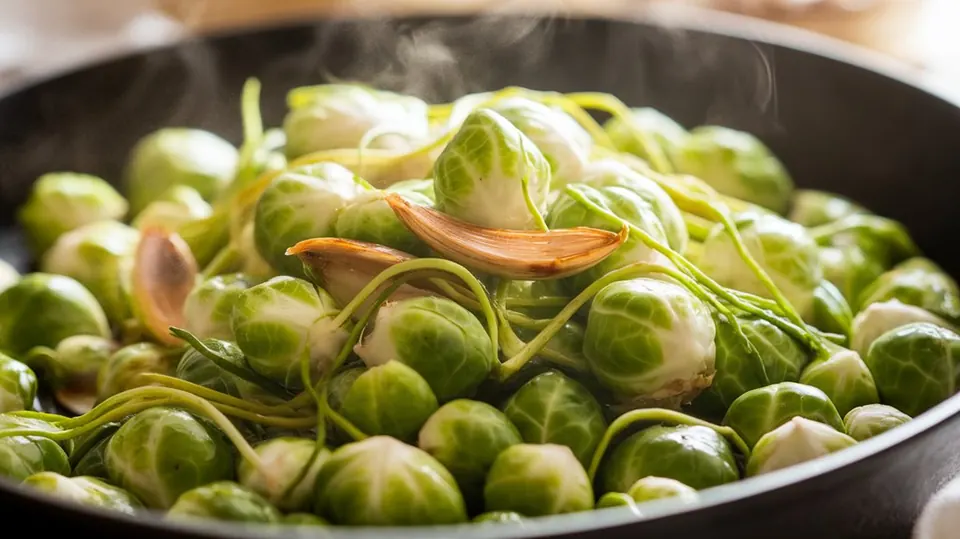
- Sautéed with garlic: see sautéed sprouts
- In a turmeric cauliflower stir-fry: see mustard sprouts recipe
Safety
The FDA says higher-risk groups should not eat raw or lightly cooked sprouts, and Health Canada advises everyone to cook them.23 If you're allergic to mustard, avoid mustard sprouts and microgreens.
Recipes with mustard

Mustard FAQ
How do you grow mustard sprouts?
Soak wasabi mustard for 1 to 2 hours; sow yellow mustard dry. Grow them in a jar or on a damp tray, rinsing or misting twice a day. Harvest in 4 to 5 days.
Why are my mustard seeds sticky?
Some mustard seed, especially yellow, forms a light gel when wet. That's normal. Grow it on a tray or plate and mist it instead of rinsing in a jar.
What do mustard sprouts taste like?
Hot and peppery, from mild mizuna to sinus-clearing wasabi mustard. A small amount adds a lot of flavour.
Can you cook mustard sprouts?
Yes. A quick sauté or stir-fry softens the heat and lowers the food-safety risk.

Written by Michael
A passionate sprouting professional sharing practical tips for growing sprouts and microgreens at home. More about Michael