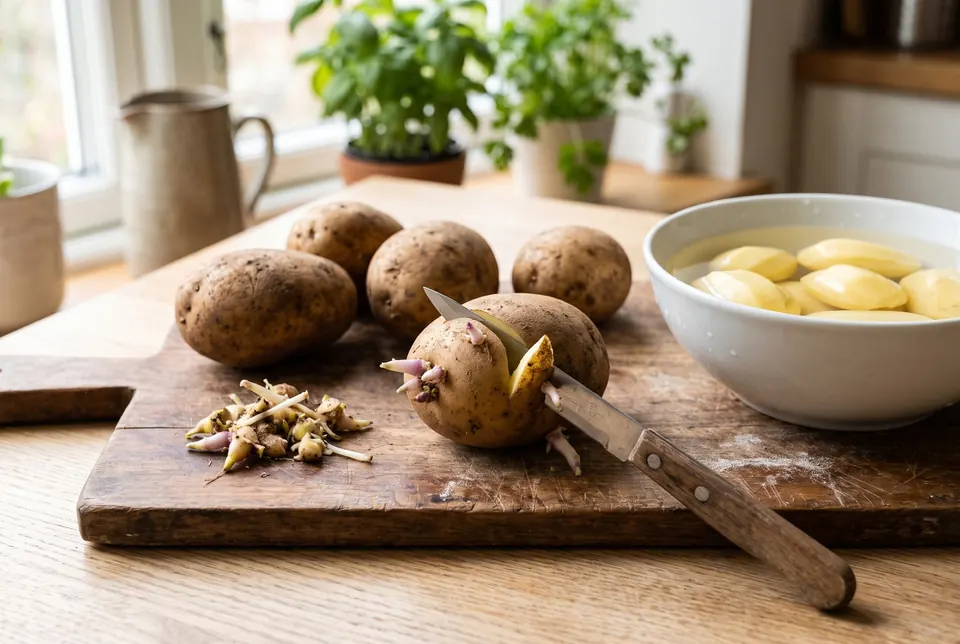
Short answer: sprouted potatoes are safe to eat if they're firm, not green and only lightly sprouted. Cut the sprouts and eyes out generously, peel the potato and cook it. Throw it out if it's soft, wrinkled, shrivelled, green or heavily sprouted, or if the cooked potato tastes bitter. Never eat the potato sprouts themselves.
Why sprouted potatoes can be a problem
Potatoes make natural toxins called glycoalkaloids, mainly solanine and chaconine. The plant uses them to fight off pests and disease. Every potato contains a little, mostly in the skin. Well-grown and well-stored potatoes usually have low levels.1
The trouble is where those toxins collect. The sprouts and the eyes hold especially high amounts, and green parts are a sign of higher levels too.1 So a potato that's sprouting or turning green carries more toxin than a fresh one, concentrated in the parts you can see.
This is why potato sprouts are different from the sprouts we grow on this site. Mung bean, lentil and broccoli sprouts are grown from seed for eating. Potato sprouts are never food. Cut them off and throw them away.
When are sprouted potatoes safe to eat?
Use this as a rough guide:
| What you see | What to do |
|---|---|
| Firm potato, small bumps or sprouts under ½ inch (1 cm) | Cut out the sprouts and eyes generously, peel, cook. |
| Firm potato, a small green patch | Cut the green away generously, peel, cook. |
| Long sprouts, or sprouts all over | Throw it out. |
| Soft, wrinkled, shrivelled or spongy | Throw it out. |
| Green over a large area | Throw it out. |
| Mold, rot, or a bad smell | Throw it out. |
| Cooked potato tastes bitter or burns your mouth | Stop eating it. |
Germany's Federal Institute for Risk Assessment (BfR) says old, dried-up, green or strongly sprouting potatoes aren't suitable to eat.1 Health Canada gives similar advice: cut away green, damaged, rotting or sprouted parts, and in severe cases throw out the whole potato.2
How to make sprouted potatoes safe to eat
- Snap or cut off the sprouts.
- Cut out each eye with a thick wedge, not just a scrape. Use the tip of a paring knife or a peeler's scoop.
- Cut away any green generously, including the flesh just under it.
- Peel the potato. Most of the toxins sit in or just under the skin.2
- Cook it as usual, and taste a little first. If it's bitter, don't eat it.
Peeling and trimming are what work. Cooking doesn't. Health Canada says baking, boiling, frying and microwaving don't do much to reduce these toxins.2 BfR adds that a little does pass into boiling water, so don't reuse potato cooking water for soups or gravy.1
One more catch: if a green potato fades back to brown after a few days in the dark, the toxin level hasn't necessarily gone down. Trim the green area anyway.2
What happens if you eat too much solanine?
The first warning is usually the taste. Potatoes high in these toxins taste bitter and can cause a burning feeling in the mouth. Milder poisoning causes nausea, stomach pain, vomiting and diarrhea, sometimes with a fever.1 Health Canada describes these as flu-like symptoms.2
Serious poisoning is rare. BfR knows of no deaths from potato glycoalkaloids in the last 50 years, partly because the bitter taste puts people off.1 The European Food Safety Authority found that symptoms can start at about 1 mg of these toxins per kg of body weight in a day. It found no evidence of harm from eating normal potatoes over the long term.3
If you or a child feels unwell after eating green, bitter or sprouted potatoes, call your doctor or your local poison centre.
Children are more at risk
Because children are smaller, the same amount of potato gives them a bigger dose. EFSA found the highest exposures in younger age groups.3 BfR advises that small children in particular should eat only peeled potatoes.1 Give children only firm, fresh, well-trimmed potatoes, and skip skin-on recipes made from older ones.
Is it safe during pregnancy?
The same rules apply: eat only firm potatoes with the sprouts, eyes and green parts cut away, peeled and cooked, and stop if a dish tastes bitter. If you're unsure, ask your doctor or midwife.
What to do with sprouted potatoes
- Trim and use them soon. Lightly sprouted, firm potatoes are fine in mash, soups and roasts once trimmed and peeled. Use them within a few days, before they soften.
- Plant them. A sprouted potato is a seed potato. Plant it sprouts up under 4 inches (10 cm) of soil, in a garden bed or a large tub in spring. Kitchen potatoes can carry disease, so certified seed potatoes give a more reliable crop.
- Compost them. Soft, shrivelled, green or heavily sprouted potatoes go in the compost, not the pot.
How to keep potatoes from sprouting
Store potatoes in a cool, dark, dry place.2 1
- Keep them dark. Light turns potatoes green. Use a paper bag, a cardboard box or a closed cupboard, not a clear plastic bag on the counter.
- Keep them cool, away from the stove, dishwasher and sunny windows. Warmth speeds up sprouting.
- Keep them dry and airy. Don't wash potatoes before storing them, and don't seal them in plastic.
- Buy smaller amounts. Old potatoes sprout. Buy what you'll use in a couple of weeks.
- Check them weekly and use any that start to bud first.
Want sprouts you can eat?
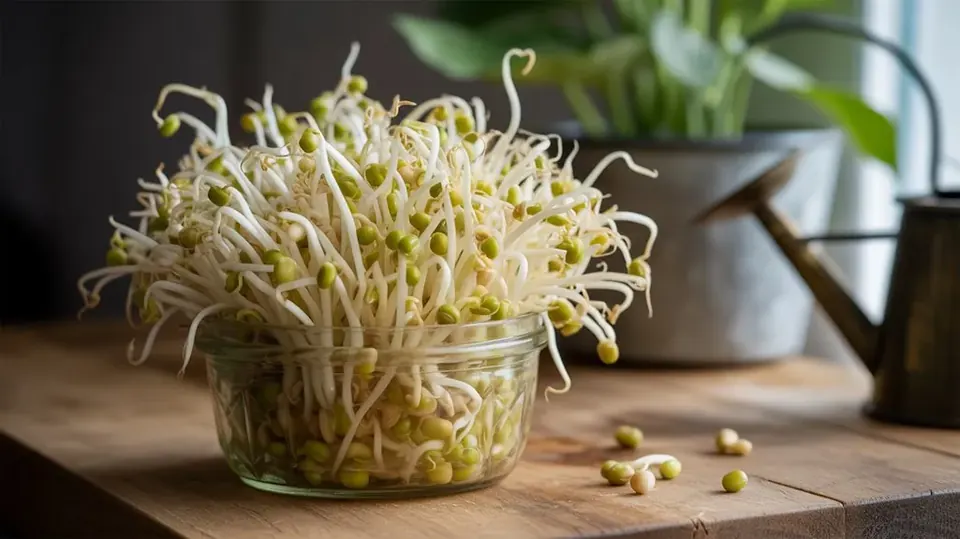
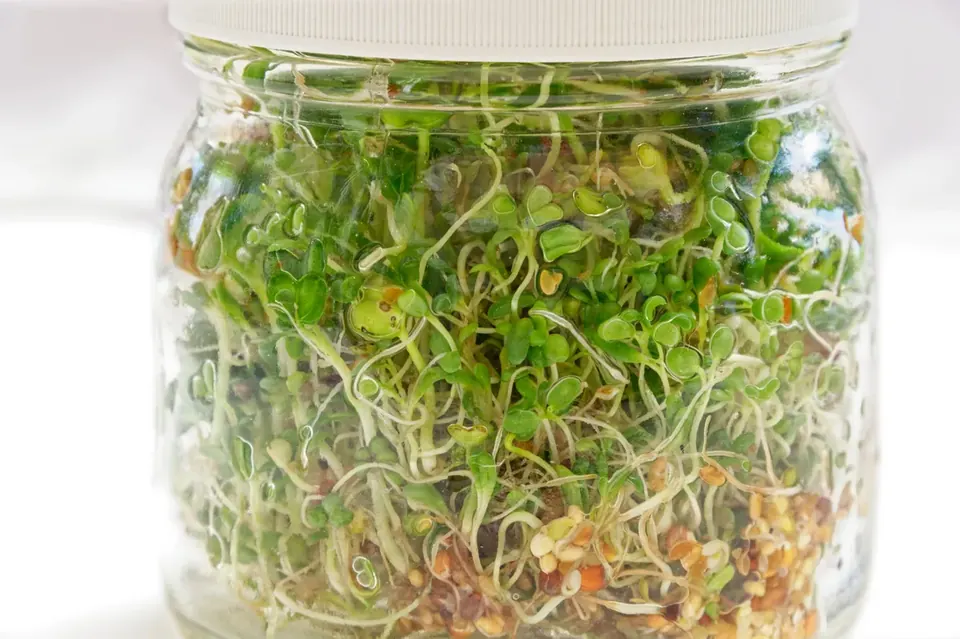
Potato sprouts aren't food, but plenty of sprouts are. Mung beans and lentils sprout in a jar in 2 to 3 days and taste great in stir-fries and salads. See what bean sprouts are, or start with our step-by-step guide to growing sprouts. For the kitchen garlic question, see can you eat sprouted garlic.
Seeds in this article
Frequently asked questions
Are sprouted potatoes safe to eat?
Usually, if the sprouts are small and the potato is still firm and not green. Cut the sprouts and the eyes out generously, peel the potato and cook it. Throw it out if it's soft, wrinkled, green, strongly sprouted or tastes bitter.
How sprouted is too sprouted to eat a potato?
Small buds or short sprouts on a firm potato can be cut out. Long sprouts, lots of sprouts, a soft or wrinkled feel, or green patches mean the potato has gone too far. Health agencies advise against eating old, shrivelled or strongly sprouting potatoes.
Does cooking make sprouted potatoes safe?
No. Health Canada says baking, boiling, frying and microwaving don't do much to reduce the natural toxins in potatoes. What makes a potato safer is cutting away the sprouts, eyes and green parts, and peeling it.
What happens if you eat a sprouted potato?
Usually nothing, if you trimmed it well. Eating sprouts or green, bitter potato can cause a bitter or burning taste in the mouth, nausea, stomach cramps, vomiting and diarrhea. Serious poisoning is rare. If you feel unwell, call your doctor or a poison centre.
Can you eat potato sprouts like bean sprouts?
No. Potato sprouts hold some of the highest levels of the potato's natural toxins. Never eat them. Edible sprouts come from seeds and beans sold for sprouting, like mung beans, lentils and broccoli.
Can children eat sprouted potatoes?
Give children only firm, well-trimmed potatoes, and peel them. Germany's food safety agency advises that small children in particular should eat only peeled potatoes, and Europe's food safety authority found young children have the highest exposure.
Can you plant sprouted potatoes?
Yes. A sprouted potato can grow new potatoes in a garden bed or a big container. Plant it in spring, sprouts up, with about 4 inches (10 cm) of soil on top. For a reliable crop, certified seed potatoes from a garden centre are a better bet than kitchen potatoes.

Written by Michael
A passionate sprouting professional sharing practical tips for growing sprouts and microgreens at home. More about Michael
Sources
- German Federal Institute for Risk Assessment (BfR). Frequently asked questions about solanine (glycoalkaloids) in potatoes. Link
- Health Canada. Glycoalkaloids in Foods. Link
- EFSA Panel on Contaminants in the Food Chain. Risk assessment of glycoalkaloids in feed and food, in particular in potatoes and potato-derived products. EFSA Journal, 2020. Link