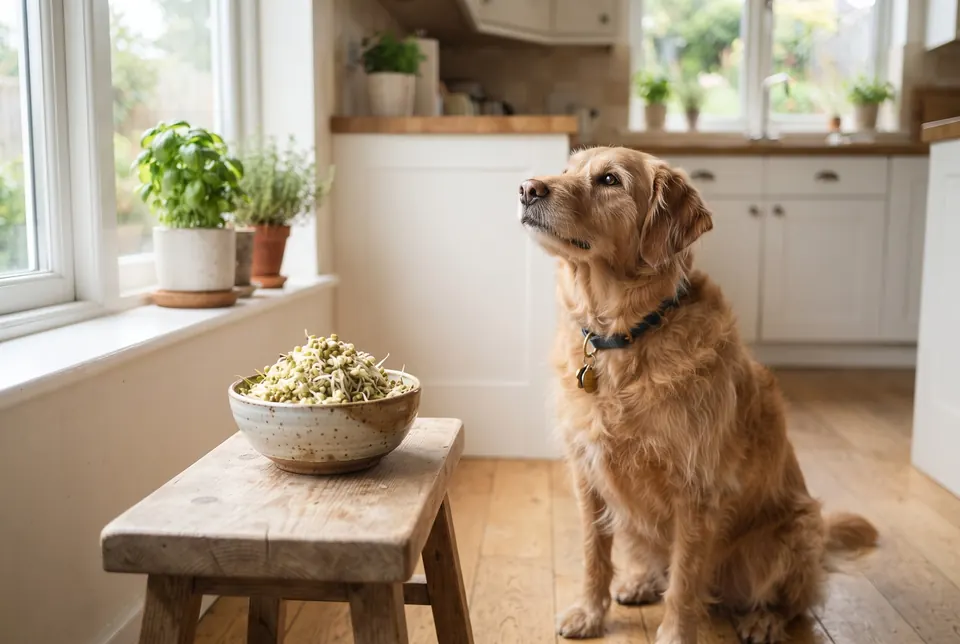
Short answer: yes, in small amounts. Plain mung bean sprouts aren't toxic to dogs and are mostly water, so a few make a low-calorie treat. Cook them briefly to lower the risk of bacteria, never add seasoning, and never feed onion or garlic sprouts. Ask your vet before adding new foods, especially for dogs with health problems.
Are bean sprouts safe for dogs?
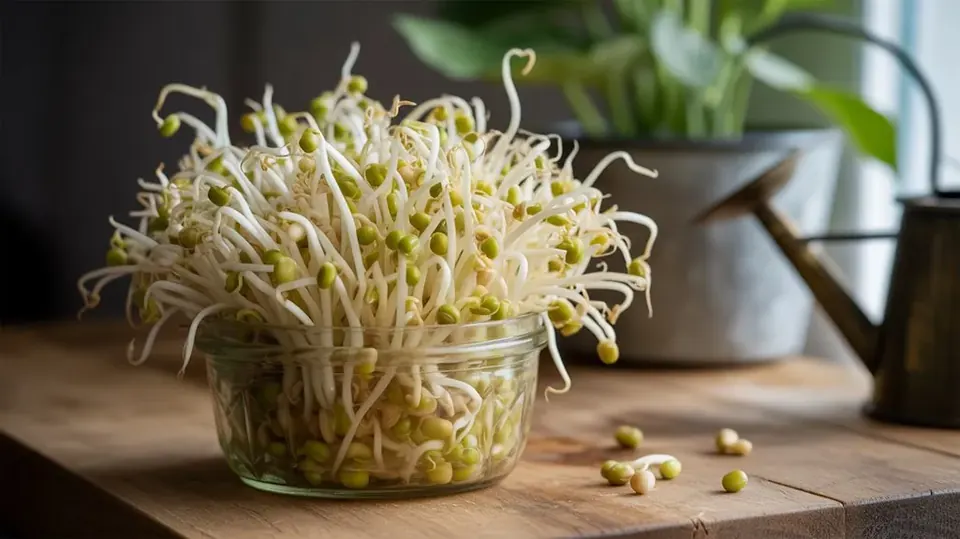
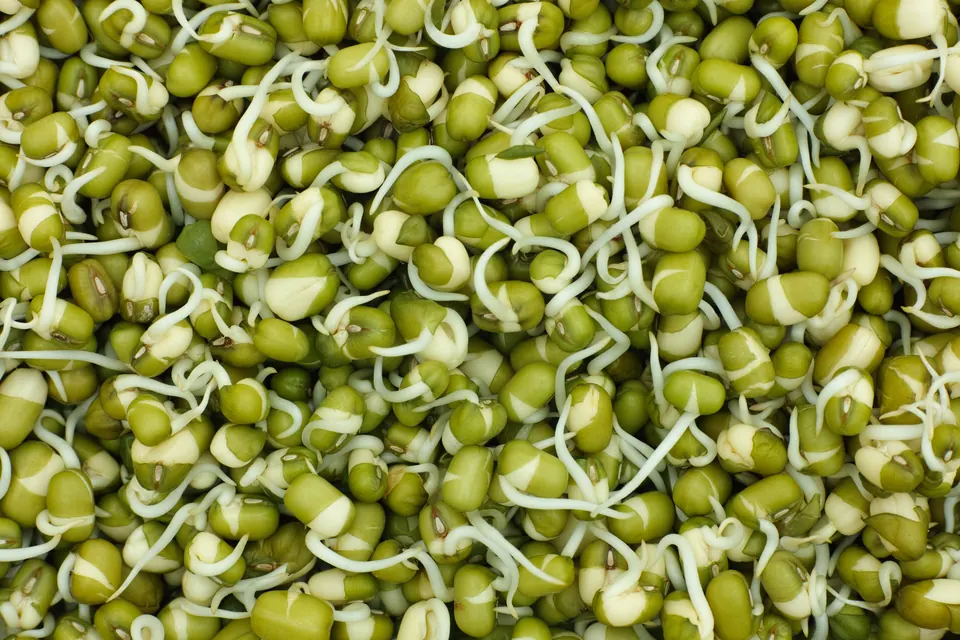
Most "bean sprouts" are mung bean sprouts. They're crunchy and low in calories: USDA data gives about 30 calories per 100 g raw.1 Plain mung bean sprouts aren't known to be toxic to dogs, and many dogs enjoy the crunch.
That said, every dog is different. The American Kennel Club advises checking with your vet before sharing people food, and warns that some vegetables, including onions and garlic, are dangerous for dogs.2
Can dogs eat bean sprouts raw or cooked?
Cooked is the safer choice. Raw sprouts can carry bacteria such as Salmonella and E. coli. Health agencies advise people to cook sprouts for the same reason.3 Raw sprouts can make your dog sick, and handling them can expose your family too.
To prepare them:
- Rinse plain mung bean sprouts.
- Blanch them in boiling water for 1 to 2 minutes, or steam them briefly.
- Cool them, then chop them small for small dogs.
- Serve them plain. Skip the salt and sauces, and never add garlic or onion.
How much to give
Treats of any kind should be a small part of your dog's diet. As a rough guide:
| Dog size | Bean sprouts per day |
|---|---|
| Small (under 20 lb / 9 kg) | A few sprouts |
| Medium (20–50 lb / 9–23 kg) | A small spoonful |
| Large (over 50 lb / 23 kg) | A small handful |
Start with less, and stop if your dog gets an upset stomach.
Which sprouts to avoid
- Onion-family sprouts (onion and garlic chives, leek): never. The onion family is toxic to dogs.2
- Seasoned or stir-fried sprouts: sauces often contain onion and lots of salt.
- Raw kidney beans and similar beans: they contain a lectin that causes poisoning unless thoroughly cooked.4
- Moldy or slimy sprouts: if you wouldn't eat them, don't give them to your dog.
What about other sprouts?
| Sprout | For dogs |
|---|---|
| Mung bean | Generally fine, plain and cooked, in small amounts |
| Lentil | Generally fine cooked, in small amounts |
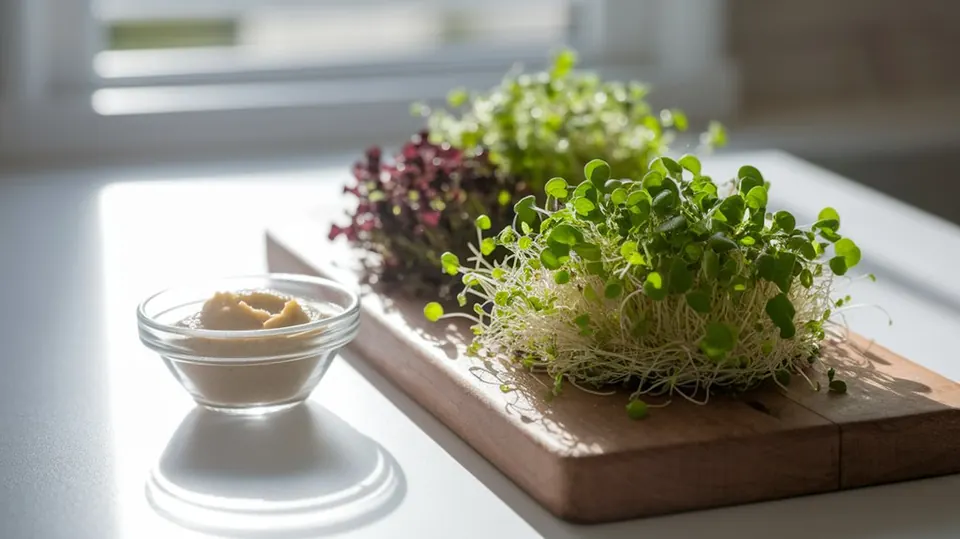
| Alfalfa | Small amounts are generally not toxic |
| Broccoli | Small amounts; too much can cause gas |
| Onion, garlic chives, leek | Never: toxic to dogs |
The bottom line
Plain, cooked bean sprouts are an occasional crunchy treat that most dogs can enjoy in small amounts. They're not a necessary part of a dog's diet. If your dog has health problems or eats a prescription diet, ask your vet first.
Learn more about what bean sprouts are, or grow your own: how to grow mung bean sprouts.
Seeds in this article
Frequently asked questions
Are bean sprouts safe for dogs?
Plain mung bean sprouts are generally considered safe for dogs in small amounts. They're mostly water and low in calories. Introduce them slowly, give them plain, and stop if your dog has an upset stomach. Ask your vet if your dog has health problems.
Should dogs eat bean sprouts raw or cooked?
Cooked is safer. Raw sprouts can carry bacteria such as Salmonella and E. coli, which can make dogs and the people handling them sick. Briefly blanching or steaming plain sprouts lowers that risk.
How many bean sprouts can my dog eat?
Keep it small. Treats of any kind should make up only a small share of a dog's daily calories. A few sprouts for a small dog, or a small handful for a large dog, is plenty.
Can dogs eat other sprouts?
Plain alfalfa, broccoli and lentil sprouts are generally not toxic in small amounts, but too much cabbage-family food can cause gas. Never give dogs onion-family sprouts like garlic chives or leeks, which are toxic to dogs.

Written by Michael
A passionate sprouting professional sharing practical tips for growing sprouts and microgreens at home. More about Michael
Sources
- U.S. Department of Agriculture, Agricultural Research Service. FoodData Central (SR Legacy and Foundation Foods), values per 100 g. Link
- American Kennel Club. Fruits and Vegetables Dogs Can or Can't Eat. Link
- Health Canada. Food safety tips for sprouts. Link
- Rodhouse JC, et al. Red kidney bean poisoning in the UK: an analysis of 50 suspected incidents between 1976 and 1989. Epidemiology and Infection, 1990. Link