In this lesson:
- A day-by-day plan for sprouting lentils
- How the same plan works for mung beans and chickpeas
- How to know when a batch is ready
Before you start
- You've read Lessons 2, 3 and 4.
- Your jar and lid are clean.
- You have seed meant for sprouting. (Not sure? Re-read Lesson 3.)
The method at a glance
- Soak.
- Drain and rinse, twice a day.
- Harvest when the tails are the right length.
- Dry, chill and cook.
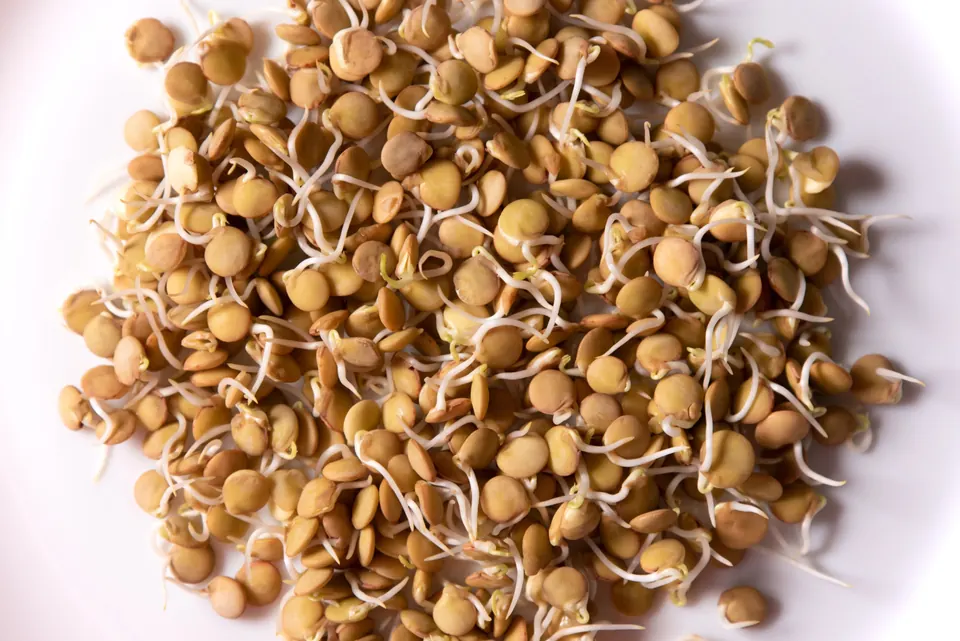
Green lentils, day by day
Day 0 (evening): soak
- Wash your hands. Wash the jar and lid in hot, soapy water.
- Measure ½ cup lentils into the jar.
- Rinse once with cool water and drain.
- Add about 3 times as much cool water as seed.
- Cover with the lid. Leave on the counter for 6–12 hours, out of direct sun.
Day 1 (morning): first rinse
- Drain the soak water through the lid. Throw it out.
- Fill the jar with cool water, swirl and drain well.
- Prop the jar upside down at an angle in a bowl.
- Out of sun, ideally at 65–75°F (18–24°C).
Day 1 (evening): second rinse
Repeat the rinse. If your kitchen is hotter than about 80°F (27°C), add a third rinse in the afternoon.
You'll see lentils swell. Some will show a tiny white tail.
Day 2: rinse morning and evening
Tails grow. Seeds fill more of the jar. If the jar looks crowded, split it into two jars so air and water can move.
Day 3: harvest
Lentil sprouts are ready when tails are about ¼ to 1 inch (6–25 mm) long. Most people like them at about ½ inch. If tails are shorter, give them another 12 hours.
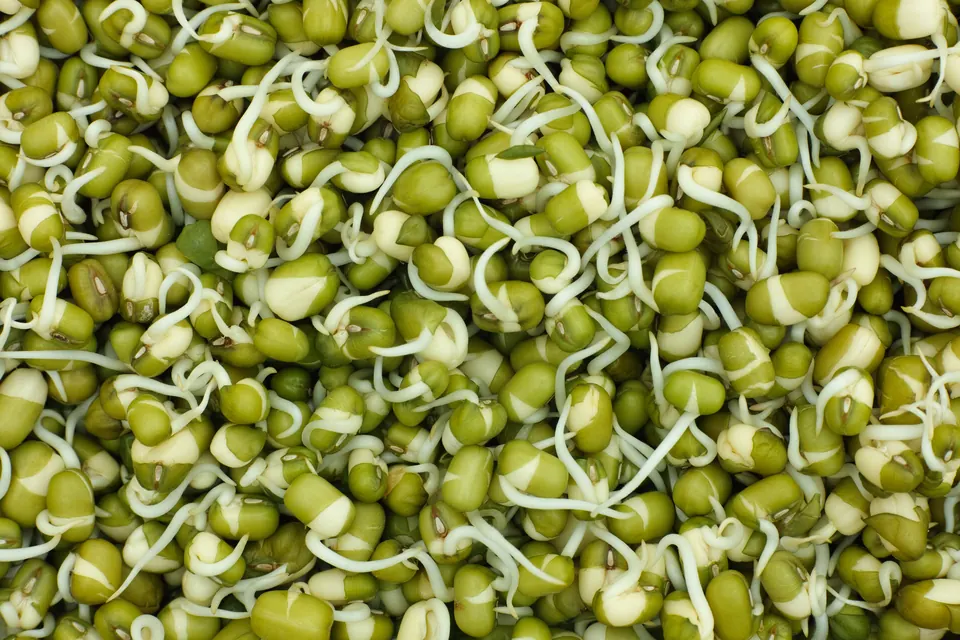
Mung beans
Mung beans follow the same method with small changes.
| Mung beans | |
|---|---|
| Seed per quart jar | ¼ cup |
| Soak | 6–12 hours |
| Rinse | 2–3 times a day |
| Light | Dark. Cover the jar with a cloth or place it in a cupboard. |
| Ready | 2–4 days, when tails are 1–2 inches long |
Light turns bean sprouts bitter. Keep them dark.
For a crisper, thicker mung bean sprout, set a small weight (like a clean, small plate) on top of the sprouts. This is the technique used for the long, white sprouts in restaurants. For beginners, a jar works fine.
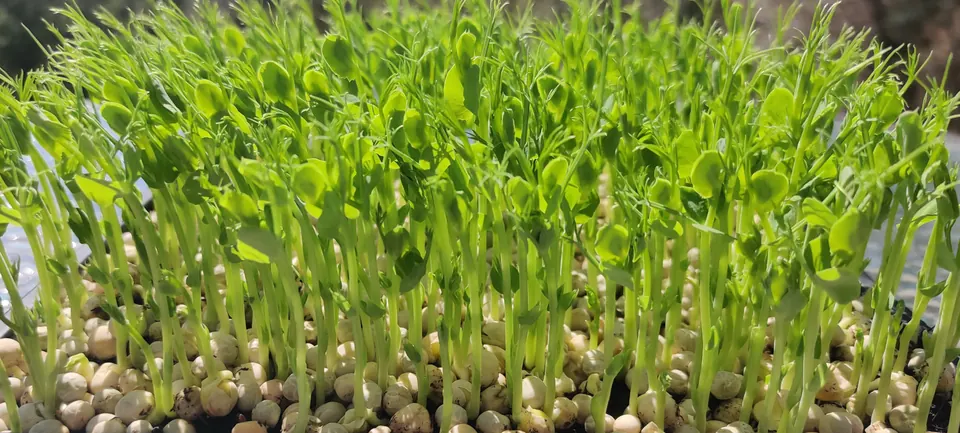
Chickpeas
Chickpeas have short tails and a firm texture.
| Chickpeas | |
|---|---|
| Seed per quart jar | ½ cup |
| Soak | 8–12 hours |
| Rinse | 2 times a day, a third time if warm |
| Ready | 2–3 days, with tails about the length of the chickpea |
Always cook them. Roasted chickpea sprouts make a great crunchy snack (Lesson 11). You can find more in our guide to sprouting chickpeas.
Is it ready? A checklist
- Tails are the right length for the seed
- The sprouts smell clean and fresh
- No slime, no sour or musty odour
- No patchy fuzz
If anything seems off, go to Lessons 8 and 9.
What a normal batch looks like
- Not every seed sprouts. 85–95% is a good result.
- Hulls and a few unsprouted seeds are normal.
- Tails vary in length.
- A fine white fuzz on root tips can be harmless root hairs. Lesson 9 shows you how to tell the difference between root hairs and mold.
After harvest
Move straight to Lesson 7 for drying and storage. Then try the recipes in Lesson 11 and cook your sprouts until steaming hot.
Do this now
- Start your first batch tonight. Write the date and time on a piece of tape on the jar.
- Set two daily reminders for rinsing.
- Take a photo each day. You'll learn quickly what normal looks like.
Key takeaways
- Soak, rinse twice a day, harvest in 2–4 days.
- Measure the seed. A crowded jar goes sour.
- Keep bean sprouts in the dark.
- Smell and look at your jar at every rinse.

Written by Michael
A passionate sprouting professional sharing practical tips for growing sprouts and microgreens at home. More about Michael